
Swords to Plowshares: How 'Cozy Fantasy' Became Publishing's Most Comforting Trend
Trading apocalyptic battles for coffee shops and found families, the 'cozy fantasy' subgenre has exploded into a major literary movement, offering readers a gentle escape from real-world anxieties.
By Factlen Editorial Team
- Cozy Fiction Advocates
- Readers and authors who believe that optimism, comfort, and low-stakes narratives are vital and legitimate artistic choices.
- Publishing Industry Analysts
- Professionals tracking the commercial viability of the trend, noting its high reader retention and crossover appeal.
- Traditional Fantasy Purists
- Fans of epic fantasy who prefer high-stakes conflict, complex magic systems, and sprawling world-building over domestic narratives.
What's not represented
- · Independent bookstore owners curating these titles
- · Psychologists studying the mental health benefits of comfort reading
Why this matters
The surge in low-stakes, high-comfort fiction reflects a broader cultural shift in how we consume media to manage stress. By validating optimism and gentleness as legitimate artistic choices, cozy fantasy is reshaping the publishing industry and offering readers a much-needed psychological sanctuary.
Key points
- The 'cozy fantasy' subgenre trades epic, world-ending battles for low-stakes narratives focused on community and everyday life.
- The trend exploded in 2022 following the viral success of Travis Baldree's self-published novel 'Legends & Lattes'.
- Industry analysts attribute the genre's rise to readers seeking 'active comfort' as an antidote to real-world anxieties.
- Cozy fantasy has brought new demographics into the fantasy genre and is now expanding into sci-fi and horror.
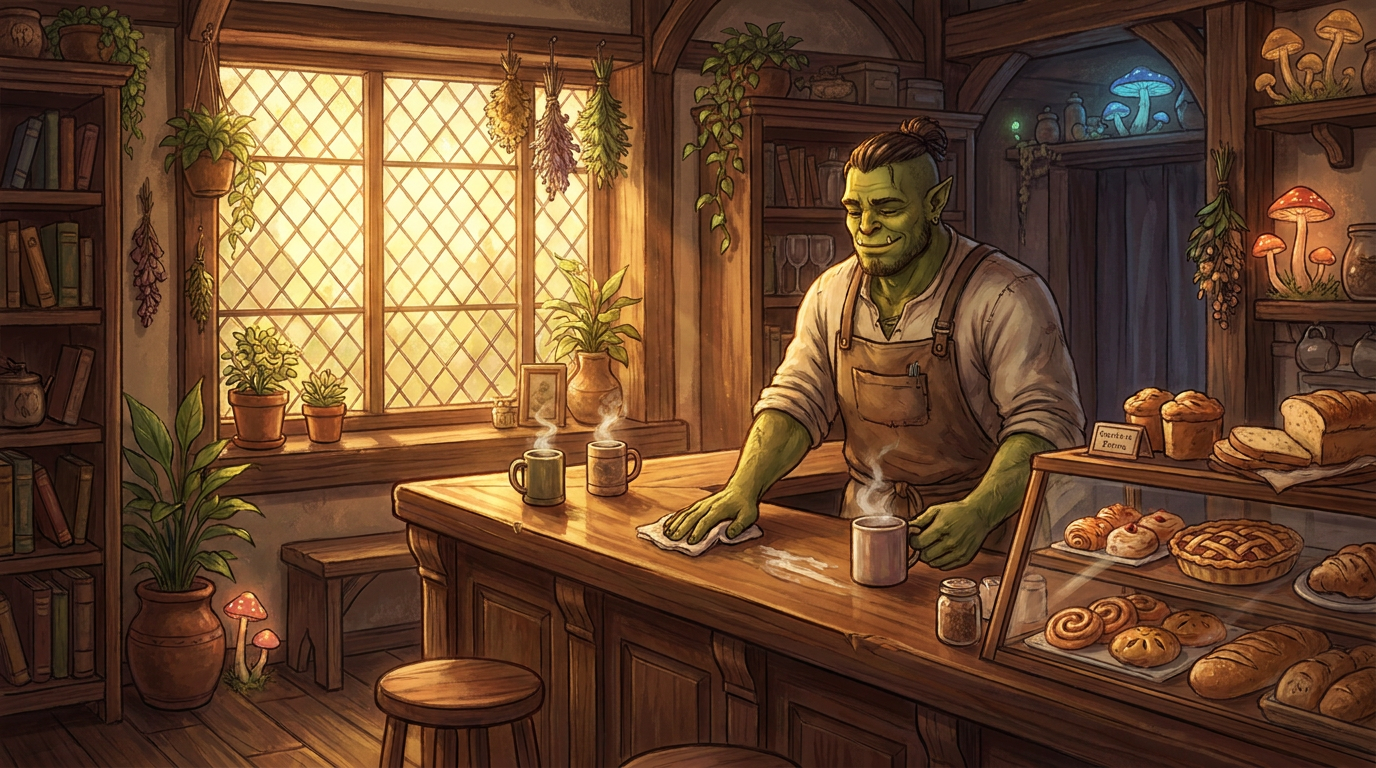
For decades, the fantasy genre has been defined by its epic scale. Readers expected dark lords, world-ending prophecies, sprawling magical wars, and chosen ones destined to save the universe. But in recent years, a quiet rebellion has taken root in the publishing world. Instead of marching to Mordor, protagonists are opening bakeries, brewing tea, and renovating abandoned inns. This is the era of "cozy fantasy," a subgenre that trades apocalyptic stakes for personal growth, community building, and a warm cup of coffee.[3][6]
Cozy fantasy is characterized by its focus on comforting, low-stakes narratives set within magical worlds. It emphasizes themes of friendship, healing, and everyday life, deliberately eschewing the violence and grimdark politics typical of traditional high fantasy. In these stories, magic is often domestic and mundane—used to keep a hearth fire burning or perfectly froth a latte, rather than to smite enemies on a battlefield.[4]
While the aesthetic of cozy fantasy has roots stretching back to J.R.R. Tolkien's idyllic Shire and Diana Wynne Jones's 1986 classic Howl's Moving Castle, the modern iteration of the genre truly crystallized in 2022. That year, author Travis Baldree self-published Legends & Lattes, a novel about a battle-weary orc who retires from adventuring to open a coffee shop. Billed as a tale of "high fantasy and low stakes," the book became a viral sensation on BookTok, was quickly acquired by Tor Books, and hit the New York Times bestseller list.[4][5]
Baldree wrote the novel during the height of the COVID-19 pandemic, explicitly seeking an antidote to the anxiety of the real world. "During COVID, I didn't want to watch any characters I liked get beheaded," he explained in an interview. "I wanted to feel okay, because it seemed like the world was just hanging fire." That sentiment resonated with millions of readers who were similarly exhausted by doomscrolling and global uncertainty.[5]

Industry analysts note that the timing of the trend is no accident. As readers navigated a global pandemic, political polarization, and economic stress, traditional epic fantasy began to feel less like an escape and more like an additional burden. Literary agents and publishers began seeing a massive spike in demand for "active comfort"—stories that engage the imagination without spiking the reader's cortisol levels.[1][2]
Industry analysts note that the timing of the trend is no accident.
According to a recent K-lytics report by publishing analyst Alex Newton, cozy fantasy has become one of the most complex and rapidly growing categories in the industry. Because it cuts across multiple traditional genres, it can be difficult to quantify, but searches for "cozy reading" and "cozy fantasy" have grown exponentially since 2022. Newton likens the genre to a "literary ASMR experience," tied directly to a rising cultural demand for comfort-focused media.[1]
But how does a writer maintain narrative momentum without life-or-death conflict? Cozy fantasy authors borrow heavily from the mechanics of the "cozy mystery" genre—which has thrived for decades on small-town settings and amateur sleuths—but they remove the murder entirely. Instead, the tension in a cozy fantasy is deeply personal. A business might fail, a community festival might be ruined, or a protagonist might struggle to confess their feelings to a friend.[2][3]
This shift in focus allows the narrative to linger on sensory details and relationship dynamics. The "found family" trope is a cornerstone of the genre, with protagonists often building a quirky, supportive network of friends—ranging from grumpy dwarves to anxious tea dragons. These relationships provide the emotional core of the story, proving that wonder and small-scale problem-solving can be just as compelling as a sword fight.[2][5]

The trend is also heavily influenced by international media, particularly the "slice-of-life" anime genre and Asian magical realism. Books like Toshikazu Kawaguchi's Before the Coffee Gets Cold—where a Tokyo cafe allows patrons to travel back in time, provided they return before their coffee cools—share the same DNA. They offer a gentle, melancholic warmth that perfectly aligns with the cozy fantasy ethos.[5]
For the publishing industry, the economics of cozy fantasy are highly attractive. The genre inspires fierce series loyalty, as readers who find a comforting world are eager to return to it again and again. Furthermore, it has brought entirely new demographics into the fantasy fold—readers who previously avoided the genre because they found epic fantasy too dense, violent, or intimidating.[2]
The success of cozy fantasy is now bleeding into other speculative genres. Publishers are seeing the rise of "cozy sci-fi" (focusing on peaceful space exploration and intergalactic found families) and even "cozy horror" (where spooky aesthetics are played for charm rather than terror). It represents a broader cultural recognition that "serious" literature does not inherently require darkness or grit.[2][6]
Ultimately, the rise of cozy fantasy is a testament to the enduring power of optimism. In a culture that often equates cynicism with sophistication, these books insist that kindness, empathy, and comfort are legitimate artistic choices. They offer a literary sanctuary—a place where the biggest problem of the day can be solved with a warm pastry and a good friend.[1][2][6]
How we got here
1937
J.R.R. Tolkien publishes 'The Hobbit', introducing the idyllic, peaceful Shire, which serves as an early blueprint for cozy fantasy settings.
1986
Diana Wynne Jones publishes 'Howl's Moving Castle', a foundational text blending domestic life with whimsical magic.
2020
The COVID-19 pandemic drives a massive shift in reader habits, with audiences seeking comfort reads and popularizing the 'cozy' aesthetic on social media.
2022
Travis Baldree self-publishes 'Legends & Lattes', which goes viral on BookTok and codifies the modern cozy fantasy genre.
2026
Cozy fantasy solidifies as a major, permanent fixture in the publishing industry, expanding into adjacent genres like cozy sci-fi.
Viewpoints in depth
Cozy Fiction Advocates
Argue that fiction doesn't need to be gritty to be meaningful, and that comfort is a valid artistic goal.
For advocates and authors within the genre, cozy fantasy is a necessary corrective to decades of 'grimdark' literature that equated seriousness with violence and cynicism. They argue that writing a compelling story without relying on life-or-death stakes actually requires immense narrative skill, as the author must keep the reader engaged purely through character development, relationship dynamics, and sensory world-building. To this camp, providing a psychological sanctuary for readers is a profound and legitimate artistic achievement.
Publishing Industry Analysts
View the trend as a highly lucrative response to reader fatigue and a gateway for new fantasy readers.
From a commercial perspective, industry analysts see cozy fantasy as a goldmine. The genre boasts incredibly high reader retention rates; when readers find an author who reliably delivers a comforting experience, they tend to buy every book in the series. Furthermore, analysts note that cozy fantasy has successfully captured demographics that traditionally avoided the fantasy genre, such as contemporary romance readers and fans of women's fiction, making it one of the most reliable growth sectors in modern publishing.
Traditional Fantasy Purists
Maintain that true fantasy requires epic stakes and complex conflict to drive a compelling narrative.
While generally accepting of the subgenre's existence, some traditional fantasy purists argue that the 'low-stakes' nature of cozy fantasy limits its narrative potential. To this camp, the core appeal of speculative fiction lies in its ability to explore grand philosophical themes, complex political systems, and the ultimate battle between good and evil. They sometimes critique cozy fantasy as being overly saccharine or lacking the narrative tension required to make a story truly memorable, viewing it more as a passing aesthetic trend than a structural evolution of the genre.
What we don't know
- Whether the cozy fantasy trend will maintain its current explosive growth or eventually plateau as a stable, niche subgenre.
- How traditional 'grimdark' and epic fantasy authors will adapt their writing styles in response to changing reader preferences.
- If the 'cozy' aesthetic will successfully translate into major film and television adaptations beyond animation.
Key terms
- Cozy Fantasy
- A subgenre of fantasy fiction characterized by low-stakes narratives, a focus on community and relationships, and a comforting, optimistic tone.
- Found Family
- A popular literary trope where characters form deep, familial bonds with non-relatives, often serving as the emotional core of cozy narratives.
- Slice-of-Life
- A storytelling style that depicts everyday experiences and mundane activities rather than epic, plot-driven adventures.
- Grimdark
- A subgenre of speculative fiction characterized by a tone that is dystopian, amoral, or particularly violent—the exact opposite of cozy fantasy.
Frequently asked
What is the difference between cozy fantasy and epic fantasy?
Epic fantasy focuses on high-stakes, world-ending conflicts, large-scale battles, and complex political systems. Cozy fantasy focuses on low-stakes, personal conflicts, everyday life, and community building within a magical setting.
What book started the cozy fantasy trend?
While books like 'Howl's Moving Castle' laid the groundwork decades ago, Travis Baldree's 2022 novel 'Legends & Lattes' is widely credited with codifying the modern genre and launching the current publishing trend.
Why is cozy fantasy so popular right now?
Industry experts attribute its rise to a collective desire for escapism and comfort following the COVID-19 pandemic and ongoing real-world anxieties. Readers are actively seeking stories that lower their stress levels.
Sources
Source coverage
6 outlets
3 viewpoints surfaced






[1]Jane FriedmanPublishing Industry Analysts
The Rise of Cozy Fantasy
Read on Jane Friedman →[2]Novelists, Inc.Cozy Fiction Advocates
Why Cozy Fantasy is Popular
Read on Novelists, Inc. →[3]ReedsyCozy Fiction Advocates
Cozy Fantasy Genre Explainer
Read on Reedsy →[4]Wikipedia
Cozy fantasy
Read on Wikipedia →[5]MediumPublishing Industry Analysts
The Rise of the 'Cozy' Fantasy Novel
Read on Medium →[6]Factlen Editorial Team
Synthesis by Factlen editorial team
Read on Factlen Editorial Team →
More in entertainment
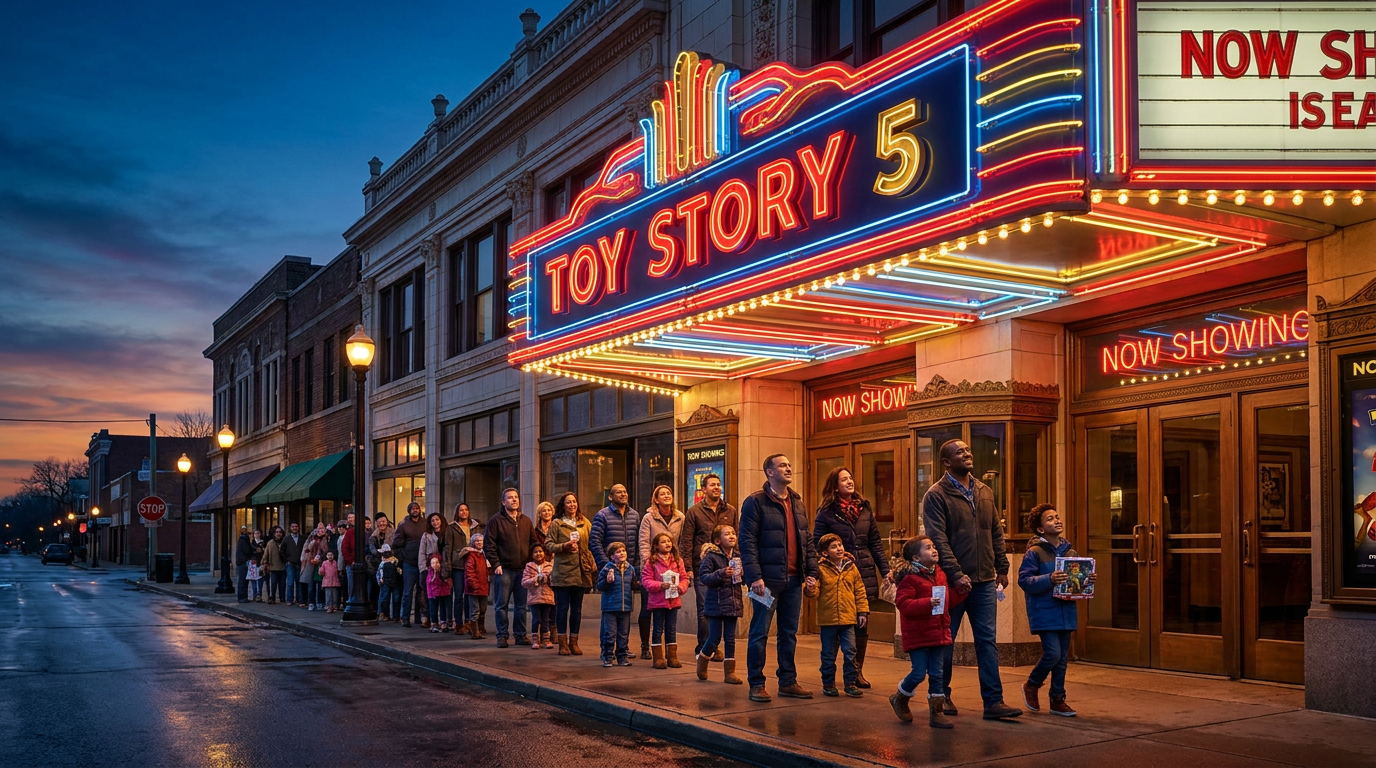
See all 5 stories →Toy Story 5
Pixar's 'Toy Story 5' Takes on Screen Time as Beloved Franchise Returns to Theaters
6 sources
Awards Mechanics
Behind the Ballot: How the Tony Awards Actually Decide Broadway's Best
6 sources

Streaming Bundles
Viu and iQiyi International Partner to Launch Southeast Asian Streaming Bundle
6 sources
Every angle. Every day.
Get entertainment stories with full source coverage and perspective breakdowns delivered to your inbox.