
How the Science of Neuroaesthetics is Rewiring Interior Design
Advances in brain-imaging technology are proving that interior design is not just an aesthetic choice, but a biological intervention that can measurably lower stress and improve cognitive health.
By Factlen Editorial Team
- Evidence-Based Designers
- Architects and interior designers who use biometric data to create spaces that actively lower stress and improve well-being.
- Neuroscience Researchers
- Scientists studying the biological mechanisms of how the brain processes spatial geometry, light, and beauty.
- Inclusive Design Advocates
- Professionals focused on ensuring built environments accommodate the full spectrum of neurodiversity and sensory needs.
What's not represented
- · Traditional interior decorators who prioritize historical preservation or avant-garde artistic expression over biometric optimization.
- · Budget-conscious developers who argue that implementing advanced neuroaesthetic materials and circadian lighting is cost-prohibitive for standard housing.
Why this matters
Understanding how your environment affects your brain empowers you to make intentional changes to your home or workspace. Simple adjustments to lighting, acoustics, and natural textures can actively lower your daily stress levels and improve your focus.
Key points
- Neuroaesthetics uses brain-imaging technology to measure how interior spaces physically alter human biology.
- Pleasing environments activate the brain's orbitofrontal cortex, releasing dopamine and serotonin.
- Biophilic design elements, like wood grain and plants, can measurably lower blood pressure and heart rates.
- The 'Neuro-Architecture Triad' focuses on coherence, fascination, and hominess to create restorative spaces.
- Hospitals and schools using these principles report faster recovery times and improved student concentration.
Almost everyone has experienced the sensation of walking into a room and feeling an immediate, inexplicable sense of calm—or, conversely, a sudden spike in anxiety. For decades, the interior design industry treated this phenomenon as an intangible "vibe" or a matter of highly subjective personal taste. Designers relied on intuition to create spaces that felt right, while clients struggled to articulate why certain rooms left them feeling drained.[1]
Today, advanced brain-imaging technology is proving that our reaction to a room is not just an aesthetic preference—it is a measurable biological event. Welcome to the era of neuroaesthetics, a rapidly growing scientific discipline that studies how beauty, architecture, and interior spaces physically alter our brains and bodies. By bridging the gap between art and biology, this field is transforming how we build the environments where we live, work, and heal.[1][4]
"Design isn't an aesthetic choice. It's a biological intervention," notes Kay Sargent, director of thought leadership for interiors at the global architecture firm HOK. By leveraging functional MRI (fMRI) and electroencephalography (EEG) scans, researchers are now able to map exactly what happens to the human nervous system when we cross a threshold into a new environment.[3]
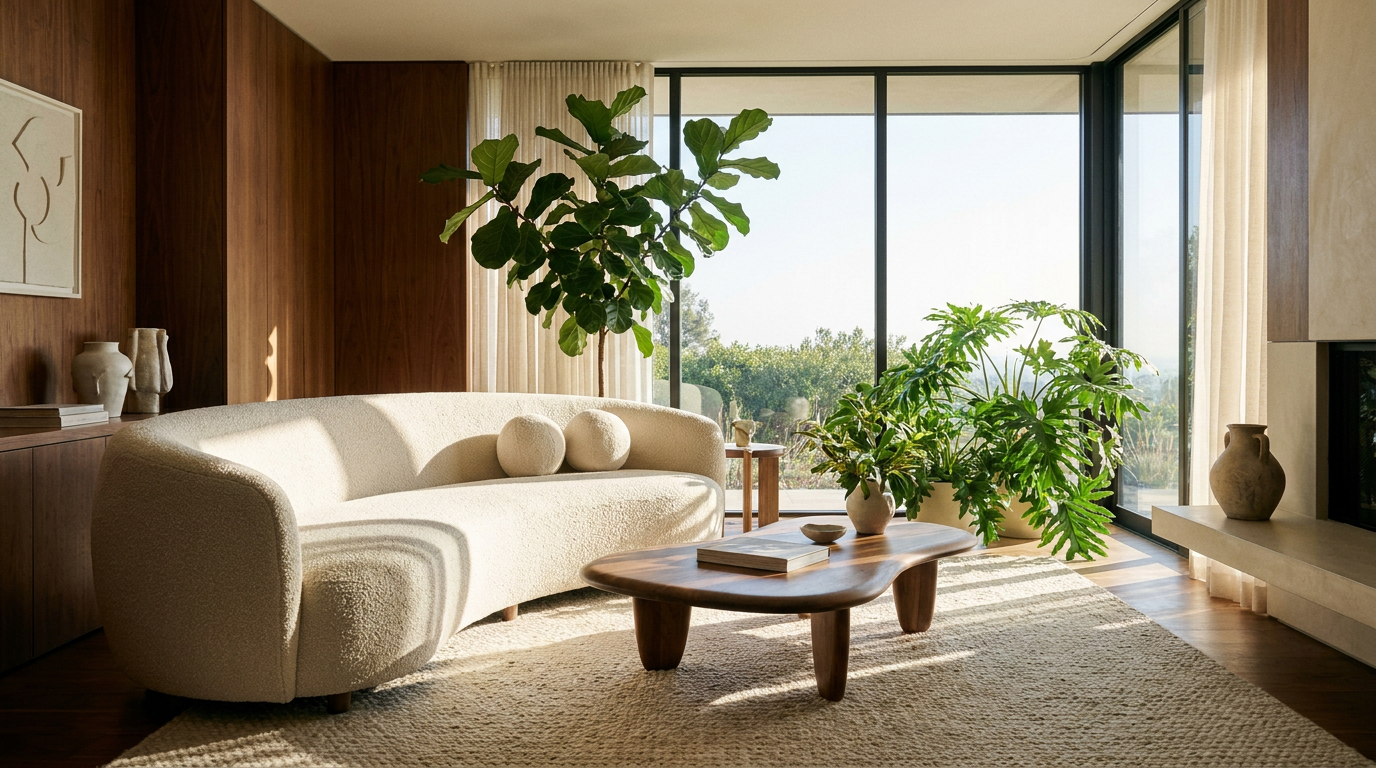
The mechanism begins the moment visual and spatial data hits the brain. When a person enters a space designed with specific neuroaesthetic principles—such as soft curves, natural light, and organized patterns—the brain's orbitofrontal cortex activates. This region, which is heavily linked to emotional regulation and reward, triggers the release of "happy hormones" like dopamine, serotonin, and oxytocin, creating a profound sense of well-being.[4][6]

Conversely, environments filled with sharp angles, harsh artificial glare, and visual clutter keep the nervous system in a state of low-level "high alert." Unpredictable noise and chaotic layouts elevate cortisol, the body's primary stress hormone. This maintains a heightened state of anxiety that slowly drains cognitive resources, making it harder to focus, relax, or connect with others.[4][6]
The term "neuroaesthetics" was originally coined in the late 1990s by Semir Zeki, a neurobiologist at University College London, who initially studied how the brain reacts to visual art. Over the past decade, the field has expanded to encompass the built environment, effectively shifting interior design from an intuitive art form into an evidence-based science.[6]
A core pillar of this emerging science is biophilic design—the intentional integration of natural elements into built spaces. Evolutionary psychology suggests that because our brains developed in natural landscapes over millennia, we retain deep-seated neurological preferences for environmental cues that signal safety, shelter, and resource availability.[1][4]
These evolutionary cues are remarkably potent. Scientific research demonstrates that simply viewing wood grain, whether it is real timber or an accurate mimicry, can reduce a person's blood pressure by an average of five beats per minute. Similarly, visual access to greenery or indoor plants has been shown to rapidly lower anxiety and improve working memory.[4][6]

Similarly, visual access to greenery or indoor plants has been shown to rapidly lower anxiety and improve working memory.
Fractal patterns—complex, repeating geometric shapes commonly found in nature, such as the branching of trees, the structure of a fern, or the ripples of water—are particularly soothing to the human brain. Exposure to fractal-rich environments induces a mild meditative state, slowing the heart rate and allowing the mind to wander creatively without becoming cognitively overwhelmed.[1][6]
Lighting also plays a profound physiological role in how a space feels. The human circadian rhythm is deeply tied to the color temperature and intensity of light. Dynamic lighting that mimics the natural progression of the sun—cool and bright in the morning, warm and dim in the evening—regulates melatonin production, which directly improves sleep quality and daytime cognitive clarity.[7]
Beyond the visual realm, neuroaesthetics encompasses the acoustic environment. Unpredictable, jarring sounds elevate stress markers and trigger the body's fight-or-flight response. Pleasant ambient acoustics—achieved through sound-absorbing textiles, intentional furniture placement, or subtle white noise systems—improve concentration and significantly reduce daily fatigue.[4]
Researchers often categorize these successful design elements into the "Neuro-Architecture Triad": coherence, fascination, and hominess. Coherence refers to how easily the brain can comprehend a space without suffering cognitive overload. Fascination involves elements that gently capture attention, like a fireplace or a view of nature. Hominess provides the evolutionary signal of a safe, protected refuge.[3]
The healthcare industry was among the first to adopt these principles at scale, yielding dramatic results. At facilities like Khoo Teck Puat Hospital in Singapore, neuroaesthetic design has been linked to shortened patient recovery times, reduced requirements for pain medication, and significantly lower stress levels compared to traditional, sterile clinical environments.[4]

Educational institutions are also seeing the benefits of designing for the brain. Studies on learning spaces reveal that classrooms with dynamic daylighting and warm, natural finishes enhance student concentration and emotional stability. In underserved communities, co-creating vibrant, neuro-supportive environments has been shown to increase student enrollment and foster a deep sense of safety and connection.[5][6]
Now, this science is rapidly reshaping residential and commercial real estate. Buyers and tenants are increasingly seeking "wellness architecture," prioritizing homes and offices that actively support their daily recovery, emotional regulation, and long-term health.[2]
"Our homes are no longer just a place to live. They are environments that shape how we regulate, recover and connect," explains Linda Kafka, founder of the NeuroDesign Academy. Real estate professionals note that while buyers may not use clinical terms like "neuroaesthetics," they intuitively gravitate toward—and consistently pay a premium for—spaces that actively lower their stress.[2]

The implications for the future of design are profound. As the industry moves away from fleeting aesthetic trends and toward human-centered biology, the focus is shifting to inclusive design that accommodates the full spectrum of neurodiversity and sensory sensitivities, ensuring spaces work for everyone.[5]
How we got here
Late 1990s
Neurobiologist Semir Zeki coins the term 'neuroaesthetics' to describe the brain's reaction to visual art.
2010s
Advances in portable EEG and fMRI technology allow researchers to measure real-time biological responses to architectural spaces.
2015
Major studies confirm that classrooms with dynamic daylighting and natural materials significantly improve student concentration.
2025–2026
Neuroarchitecture becomes a defining trend in commercial and residential real estate, shifting focus from pure aesthetics to measurable wellness outcomes.
Viewpoints in depth
Evidence-Based Designers
Architects shifting from intuitive aesthetics to data-driven biological interventions.
For decades, interior design was treated as a subjective art form reliant on a designer's intuition and a client's personal taste. Today, evidence-based designers argue that spaces are active biological agents. By utilizing biometric sensors and brain-imaging data, these professionals design environments specifically engineered to lower cortisol, reduce heart rates, and accelerate healing. They view beauty not as a luxury, but as a measurable health intervention that should be standard practice in homes, hospitals, and offices.
Neuroscience Researchers
Scientists mapping the brain's evolutionary response to spatial environments.
Researchers in this camp focus on the underlying biological mechanisms that explain why certain spaces feel good. They point to evolutionary psychology, noting that the human brain developed in natural landscapes and remains hardwired to seek out cues of safety, shelter, and resources. Through fMRI studies, they have demonstrated that elements like fractal patterns and natural light directly stimulate the orbitofrontal cortex, proving that our preference for nature-inspired design is a deeply ingrained survival mechanism rather than a modern cultural trend.
Inclusive Design Advocates
Professionals ensuring that neuroaesthetic principles serve diverse populations.
While the science of neuroaesthetics offers broad principles for human well-being, inclusive design advocates emphasize that sensory processing varies wildly across the population. They argue that true neuro-architecture must account for neurodivergence, ensuring that spaces do not overwhelm individuals with heightened sensory sensitivities. Furthermore, they advocate for the democratization of these design principles, stressing that access to restorative, nature-inspired environments should not be restricted to luxury real estate, but integrated into public schools, affordable housing, and community centers.
What we don't know
- How long the physiological benefits of a neuroaesthetic space last after a person leaves the environment.
- The exact threshold at which visual complexity transitions from being 'fascinating' to 'cognitively overwhelming' for different individuals.
- How long-term exposure to highly optimized, artificial 'perfect' environments might affect human resilience to natural environmental stressors.
Key terms
- Neuroaesthetics
- A scientific discipline that studies how the human brain and nervous system respond to aesthetic experiences and built environments.
- Orbitofrontal Cortex
- A region of the brain involved in emotional regulation and decision-making that activates in response to pleasing environments.
- Biophilic Design
- An architectural framework that incorporates nature and natural patterns into the built environment to improve human health.
- Fractal Patterns
- Complex, repeating geometric shapes found in nature, such as tree branches or snowflakes, which have a calming effect on the human brain.
- Circadian Lighting
- Artificial lighting systems designed to mimic the natural progression of sunlight throughout the day to support the body's internal clock.
Frequently asked
What exactly is neuroaesthetics?
It is the scientific study of how the human brain and nervous system respond to beauty, art, and the built environment, often measured using tools like fMRI and EEG scans.
How does interior design affect stress?
Environments with sharp angles, poor lighting, and clutter elevate cortisol levels. Conversely, natural materials, soft curves, and good acoustics trigger the release of calming neurotransmitters like serotonin.
What is biophilic design?
Biophilic design is an architectural approach that integrates natural elements—such as indoor plants, natural light, and organic textures—into indoor spaces to mimic the outdoors and lower physiological stress.
Can the design of a room really lower blood pressure?
Yes. Scientific studies show that visual exposure to natural elements, such as wood grain or fractal patterns, can measurably reduce heart rate and lower blood pressure.
Sources
Source coverage
7 outlets
3 viewpoints surfaced







[1]Factlen Editorial TeamInclusive Design Advocates
Synthesis by Factlen editorial team
Read on Factlen Editorial Team →[2]ForbesEvidence-Based Designers
How Neurodesign Can Enhance Your Well-Being And Home Value
Read on Forbes →[3]HOKEvidence-Based Designers
HOK Forward 2026: Neuroaesthetics and the Built Environment
Read on HOK →[4]Science in DesignEvidence-Based Designers
The Convergence of Neuroscience and Interior Design
Read on Science in Design →[5]BIFMAInclusive Design Advocates
Designing for the Mind: How Neuroaesthetics is Reshaping the Built Environment
Read on BIFMA →[6]Pearl AcademyNeuroscience Researchers
Neuroaesthetics in Interior Spaces: Designing for Mental Well-Being
Read on Pearl Academy →[7]Journal of Clinical Sleep MedicineNeuroscience Researchers
Impact of windows and daylight exposure on overall health and sleep quality of office workers
Read on Journal of Clinical Sleep Medicine →
Every angle. Every day.
Get home stories with full source coverage and perspective breakdowns delivered to your inbox.