
Supreme Court Strikes Down Executive Order Limiting Birthright Citizenship
In a landmark ruling, the Supreme Court has invalidated a 2025 executive order that sought to end automatic citizenship for children born in the U.S. to undocumented immigrants and temporary visa holders.
By Factlen Editorial Team
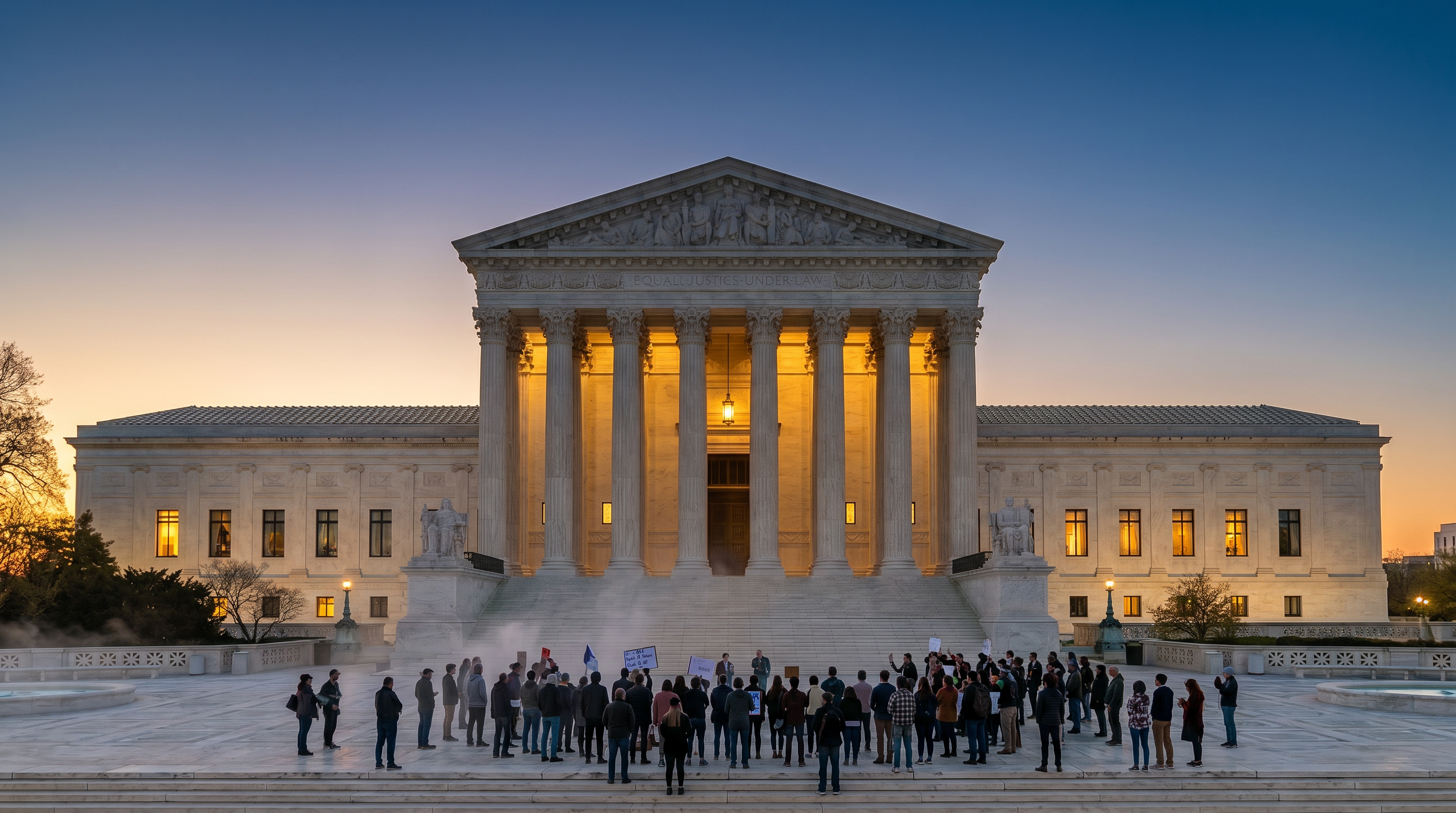
- Civil Rights Advocates & Immigration Defenders
- Maintain that the Constitution unambiguously guarantees citizenship to anyone born on U.S. soil, serving as a bedrock of American equality.
- Constitutional Originalists & Restrictionists
- Argue that the 14th Amendment was never intended to grant citizenship to the children of foreign nationals who lack political allegiance to the U.S.
- Legal & Institutional Scholars
- Focus on the separation of powers, emphasizing that the executive branch cannot unilaterally rewrite constitutional amendments.
What's not represented
- · Undocumented parents directly affected by the policy uncertainty
- · Local government officials who manage birth registries
Why this matters
This ruling preserves the automatic U.S. citizenship of hundreds of thousands of children born to non-citizens each year. Had the executive order been upheld, every American parent would have faced new bureaucratic hurdles to prove their own legal status before obtaining a birth certificate for their newborn.
Key points
- The Supreme Court struck down a 2025 executive order that attempted to end automatic birthright citizenship.
- The 14th Amendment's guarantee that anyone born on U.S. soil is an American citizen remains intact.
- The administration argued the Constitution requires political allegiance, not just physical presence, for citizenship.
- Civil rights groups warned the order would have created a permanent underclass of stateless residents.
- The ruling prevents a scenario where all American parents would need to prove their legal status to obtain a newborn's birth certificate.
The Supreme Court has struck down a sweeping 2025 executive order that sought to end automatic birthright citizenship for the children of undocumented immigrants and temporary visa holders, reaffirming a constitutional principle that has defined American identity for more than a century and a half.[1][8]
The landmark ruling in Trump v. Barbara delivers a significant defeat to the Trump administration's efforts to unilaterally redefine the 14th Amendment. The justices concluded that the executive branch lacks the authority to alter the long-standing interpretation of the Citizenship Clause without an act of Congress or a constitutional amendment.[7][8]
At the center of the constitutional clash was Executive Order 14,160, titled "Protecting the Meaning and Value of American Citizenship." Signed on the president's first day back in office in January 2025, the directive instructed federal agencies to deny citizenship status to newborns unless at least one parent was a U.S. citizen or a lawful permanent resident.[5][6]
The policy was immediately met with a barrage of lawsuits from civil rights organizations and state attorneys general, resulting in nationwide injunctions that prevented the order from ever taking effect.[3][4]

During oral arguments in April, the administration's legal team, led by Solicitor General John Sauer, presented a novel interpretation of the 14th Amendment. They argued that the framers of the 1868 amendment intended to limit birthright citizenship to those whose parents were legally "domiciled" in the United States.[4][5]
The government contended that the amendment's qualifying phrase—"subject to the jurisdiction thereof"—was meant to require a formal political allegiance to the United States, an allegiance they argued undocumented immigrants and short-term visitors inherently lack.[2][4]
Civil rights advocates and the plaintiffs in the class-action suit countered that the text of the Constitution is unambiguous. They argued that "subject to the jurisdiction" simply means being subject to U.S. laws and courts while physically present on American soil, with narrow historical exceptions only for the children of foreign diplomats or occupying enemy forces.[3][5]
Civil rights advocates and the plaintiffs in the class-action suit countered that the text of the Constitution is unambiguous.
The plaintiffs relied heavily on the bedrock 1898 Supreme Court precedent, United States v. Wong Kim Ark. In that case, the Court ruled that a child born in San Francisco to Chinese parents—who were themselves legally barred from naturalizing as U.S. citizens at the time—was automatically an American citizen by birth.[1][5]

The Court's decision to uphold this precedent averts what immigration advocates and administrative experts warned would be a logistical nightmare. Had the executive order survived, a standard U.S. birth certificate would no longer have served as definitive proof of citizenship.[4][6]
Instead, every parent in America would have been forced to navigate a complex bureaucratic process, submitting documentation to prove their own legal immigration or citizenship status before their newborn could be officially registered as an American.[4][6]
Opponents of the order also highlighted the severe societal consequences of the administration's plan. They warned that stripping birthright citizenship would create a permanent, multi-generational underclass of stateless residents living within the United States, fundamentally altering the nation's social fabric.[3][4]
The administration and its conservative allies have long argued that the United States is an anomaly on the global stage. They frequently point out that almost every other developed nation—with the notable exception of Canada—has abandoned unrestricted jus soli (right of the soil) in favor of citizenship laws based on bloodline or legal residency.[8]

Anticipating the defeat, President Trump took to his Truth Social platform over the weekend to criticize the judicial process. He labeled the court system "RIGGED" and reiterated his campaign promise to continue fighting for stricter immigration controls, framing the expected ruling as an establishment effort to thwart his mandate.[2]
While the ruling definitively blocks the president from ending birthright citizenship via executive fiat, it does not necessarily extinguish the political debate. Some conservative legal scholars maintain that Congress could theoretically pass a statute redefining the jurisdiction clause, though such a law would immediately face its own formidable constitutional challenges.[5][8]
Most mainstream constitutional experts agree that permanently altering the nation's birthright citizenship laws would require the arduous process of passing a constitutional amendment.[5]
For now, the Supreme Court's decision maintains the status quo. The ruling ensures that the foundational promise of the 14th Amendment remains intact, guaranteeing that anyone born on American soil—regardless of their parents' origins or legal status—is recognized as a citizen of the United States.[1][3]
How we got here
1868
The 14th Amendment is ratified, establishing the Citizenship Clause.
1898
The Supreme Court rules in United States v. Wong Kim Ark, cementing birthright citizenship for children of immigrants.
Jan 2025
President Trump signs Executive Order 14,160 seeking to end automatic citizenship for children of undocumented immigrants.
Feb 2025
Federal judges issue nationwide injunctions blocking the order from taking effect.
Apr 2026
The Supreme Court hears oral arguments in the consolidated case, Trump v. Barbara.
Jun 2026
The Supreme Court strikes down the executive order, upholding the traditional interpretation of birthright citizenship.
Viewpoints in depth
Constitutional Originalists & Restrictionists
Argue that the 14th Amendment was never intended to grant citizenship to the children of foreign nationals who lack political allegiance to the U.S.
This camp, which includes the administration's legal architects and conservative immigration hardliners, contends that the phrase 'subject to the jurisdiction thereof' requires a formal, legal domicile in the United States. They argue that the drafters of the 14th Amendment intended only to guarantee citizenship for emancipated slaves, not to create a universal loophole for the children of undocumented immigrants or temporary visitors. Furthermore, they point out that the United States is a global outlier, as almost all other developed nations have abolished unrestricted birthright citizenship to prevent incentivizing unauthorized immigration.
Civil Rights Advocates & Immigration Defenders
Maintain that the Constitution unambiguously guarantees citizenship to anyone born on U.S. soil, serving as a bedrock of American equality.
Immigration advocates and civil rights organizations view the executive order as a dangerous, unconstitutional overreach that threatens the fabric of American society. They rely on the 1898 Wong Kim Ark precedent to argue that physical presence on U.S. soil is the only requirement for jurisdiction, with exceptions limited only to the children of invading armies or foreign diplomats. This camp warns that ending birthright citizenship would create a permanent, multi-generational underclass of stateless individuals, fundamentally betraying the nation's identity as a country of immigrants.
Legal & Institutional Scholars
Focus on the separation of powers, emphasizing that the executive branch cannot unilaterally rewrite constitutional amendments.
For many constitutional scholars, the primary issue is not immigration policy, but executive overreach. This perspective emphasizes that regardless of one's stance on birthright citizenship, a president cannot alter a constitutional amendment through an executive order. They note that the proper, legal mechanism for changing the definition of citizenship would require the arduous process of passing a new constitutional amendment, or at the very least, an act of Congress. By striking down the order, they argue, the Court preserved the essential checks and balances between the branches of government.
What we don't know
- Whether conservative lawmakers will attempt to pass federal legislation redefining the 14th Amendment's jurisdiction clause.
- How the ruling will impact the administration's broader immigration enforcement agenda heading into the midterm elections.
- If the administration will pursue other administrative avenues to restrict benefits for the U.S.-born children of undocumented immigrants.
Key terms
- Birthright Citizenship (Jus Soli)
- The legal principle that anyone born within the territory of a state automatically acquires citizenship of that state, regardless of their parents' nationality.
- 14th Amendment
- An 1868 amendment to the U.S. Constitution that granted citizenship to all persons born or naturalized in the United States.
- Subject to the jurisdiction thereof
- A qualifying clause in the 14th Amendment that courts have historically interpreted to mean anyone subject to U.S. laws while physically present in the country.
- United States v. Wong Kim Ark
- An 1898 Supreme Court decision establishing the precedent that children born in the U.S. to foreign citizens are automatically American citizens.
Frequently asked
What did the executive order try to do?
Executive Order 14,160 directed federal agencies to deny automatic U.S. citizenship to children born on American soil if their parents were undocumented immigrants or temporary visa holders.
How did the administration justify the order?
The administration argued that the 14th Amendment's phrase 'subject to the jurisdiction thereof' requires political allegiance or legal domicile, which they claimed undocumented immigrants and temporary visitors lack.
What would have happened to birth certificates?
Had the order been upheld, a standard U.S. birth certificate would no longer prove citizenship. All parents would have needed to submit documentation proving their own legal status to register their newborn as an American.
Can birthright citizenship still be changed?
The ruling struck down the president's ability to change it via executive order. Most legal scholars agree that formally ending birthright citizenship would now require a constitutional amendment.
Sources
Source coverage
8 outlets
3 viewpoints surfaced








[1]Los Angeles TimesCivil Rights Advocates & Immigration Defenders
Supreme Court heads into the final month facing decisions on birthright citizenship
Read on Los Angeles Times →[2]NewsweekLegal & Institutional Scholars
Trump Says 'Rigged' Court System Could Sink His Birthright Citizenship Order
Read on Newsweek →[3]NPRLegal & Institutional Scholars
The Supreme Court races to decide several explosive cases before its recess
Read on NPR →[4]American Immigration CouncilCivil Rights Advocates & Immigration Defenders
Federal Court Blocks Trump Birthright Citizenship Order
Read on American Immigration Council →[5]National Constitution CenterLegal & Institutional Scholars
Supreme Court hears historic birthright citizenship arguments
Read on National Constitution Center →[6]Ogletree DeakinsLegal & Institutional Scholars
Supreme Court to Decide Constitutionality of Executive Order Limiting Birthright Citizenship
Read on Ogletree Deakins →[7]Fox NewsConstitutional Originalists & Restrictionists
Supreme Court delivers blow to Trump administration on birthright citizenship
Read on Fox News →[8]The Wall Street JournalConstitutional Originalists & Restrictionists
Supreme Court Rejects Executive Order on Birthright Citizenship
Read on The Wall Street Journal →


Every angle. Every day.
Get news politics stories with full source coverage and perspective breakdowns delivered to your inbox.