
Supreme Court Strikes Down EPA's Landmark Power Plant Emissions Mandate
In a 6-3 decision, the Supreme Court has invalidated the Environmental Protection Agency's 2024 rule requiring coal and natural gas power plants to capture 90% of their carbon emissions.

In a highly anticipated 6-3 decision handed down Monday morning, the US Supreme Court struck down the Environmental Protection Agency’s sweeping 2024 regulations aimed at drastically reducing greenhouse gas emissions from the nation's power sector. The ruling invalidates a mandate that would have required existing coal-fired and new natural gas-fired power plants to capture 90% of their carbon emissions by 2032, a cornerstone of the federal government's broader climate strategy.[1][2][6]
Writing for the conservative majority, Chief Justice John Roberts argued that the EPA had overstepped the authority granted to it by Congress under the Clean Air Act. The majority opinion heavily relied on the "Major Questions Doctrine," asserting that an agency cannot impose regulations with such vast economic and political significance without explicit, specific authorization from the legislative branch.
"The EPA has discovered an unheralded power representing a transformative expansion in its regulatory authority," Roberts wrote, concluding that Congress did not intend to grant the agency the power to effectively force a nationwide transition away from fossil fuels.[4][6]
The decision represents a massive victory for the coalition of 25 Republican-led states, spearheaded by Texas and West Virginia, as well as rural electric cooperatives and fossil fuel industry groups that brought the lawsuit. These plaintiffs argued that the 2024 rules were technologically unfeasible, economically ruinous, and would severely compromise the reliability of the US electrical grid by forcing the premature retirement of reliable baseload power plants before renewable alternatives and battery storage could adequately replace them.[3][4]
In a sharp dissent joined by Justices Sonia Sotomayor and Ketanji Brown Jackson, Justice Elena Kagan accused the majority of judicial overreach, arguing that the Clean Air Act explicitly tasks the EPA with regulating dangerous pollutants, which the Court itself previously recognized includes greenhouse gases. Kagan wrote that the Court was substituting its own policy preferences for the scientific and technical expertise of the agency, effectively stripping the federal government of its most potent tool to combat a rapidly escalating global crisis.[2][5][6]
The invalidated 2024 rule was designed to leverage Carbon Capture and Storage (CCS) technology. By setting an emissions standard based on a 90% capture rate, the EPA aimed to force utility companies to either invest heavily in retrofitting their fossil fuel plants with nascent CCS technology, switch to co-firing with clean hydrogen, or shut down the plants entirely in favor of wind, solar, and nuclear generation. Industry groups maintained that CCS technology is not yet commercially viable at the scale required by the mandate.[1]
For the US power sector, the ruling brings a sudden wave of regulatory certainty, albeit by removing a major compliance hurdle. Utility companies had been operating in a state of limbo, hesitant to commit billions of dollars to carbon capture infrastructure while the legal challenge wound its way through the courts. Analysts note that while the immediate threat of federal closure mandates has evaporated, utilities still face a complex, fragmented landscape of state-level clean energy standards that will continue to drive a gradual shift toward renewables.
Environmental advocates and progressive policymakers have condemned the ruling, warning that it severely jeopardizes the United States' ability to meet its commitments under the Paris Agreement, which targets a 50% to 52% reduction in economy-wide greenhouse gas emissions by 2030. Without the ability to strictly regulate the power sector—which accounts for roughly a quarter of US emissions—climate experts warn that the math for achieving national decarbonization targets becomes nearly impossible without literal acts of Congress.[2][5]
The decision is the latest in a series of Supreme Court rulings that have systematically curtailed the administrative state's reach over environmental policy. It builds directly upon the 2022 precedent set in West Virginia v. EPA, which limited the agency's ability to mandate system-wide generation shifting, and the 2024 Loper Bright decision, which overturned the Chevron deference doctrine, making it easier for courts to second-guess federal agency interpretations of ambiguous laws.[1][4][6]
Looking ahead, the battle over power plant emissions will likely fracture into 50 separate state-level fights. States with aggressive climate goals, such as California, New York, and Washington, are expected to double down on their own stringent grid decarbonization mandates. Conversely, states heavily reliant on fossil fuels will likely extend the operational lifespans of their existing coal and gas fleets, potentially leading to a widening divergence in electricity generation profiles and carbon footprints across different regions of the country.[3]
Despite the legal victory for fossil fuels, energy market analysts point out that the fundamental economics of the grid continue to favor renewables. The combination of falling costs for solar and wind generation, coupled with the massive tax incentives preserved within the Inflation Reduction Act, means the transition away from coal will continue, albeit at a pace dictated by market forces and state policies rather than federal mandates.[1]
Viewpoints in depth
Conservative Legal & Industry Advocates
Argues the EPA exceeded its congressional authority and that the rule would have compromised grid reliability.
This camp views the ruling as a necessary restoration of the constitutional separation of powers. They argue that unelected bureaucrats at the EPA attempted to unilaterally restructure the American energy economy without a clear mandate from Congress. Furthermore, industry groups maintain that the 90% carbon capture requirement was a "technology-forcing" mandate reliant on systems that are not yet commercially viable at scale. They assert that enforcing the rule would have forced the premature retirement of reliable baseload power plants, inevitably leading to rolling blackouts and surging electricity costs for consumers.
Environmental & Climate Advocates
Views the ruling as a devastating setback for global climate goals and a misinterpretation of the Clean Air Act.
Climate advocates and progressive legal scholars argue that the Clean Air Act was explicitly written broadly by Congress to allow the EPA to adapt to new scientific understandings of dangerous pollutants, including greenhouse gases. They view the Court's reliance on the "Major Questions Doctrine" as a judicially invented tool used to strike down regulations the conservative majority ideologically opposes. From a practical standpoint, this camp warns that stripping the federal government of its ability to regulate the power sector—the second-largest source of US emissions—makes it virtually impossible for the United States to meet its international climate obligations and avert the worst impacts of global warming.
Energy Markets & Utility Operators
Focuses on the immediate regulatory certainty the ruling provides, while noting that market economics will still drive a renewable transition.
For the utility sector, the primary reaction is relief from regulatory whiplash. Power companies plan infrastructure investments on multi-decade timelines, and the looming threat of the 2032 carbon capture mandate had created a paralyzing environment of uncertainty. While utilities welcome the removal of the federal mandate, market analysts point out that the ruling does not save the coal industry. The fundamental economics of energy generation have shifted; wind, solar, and battery storage are now frequently cheaper to build and operate than fossil fuel plants. Consequently, the grid will continue to decarbonize driven by market forces, federal tax incentives, and aggressive state-level clean energy standards, rather than top-down EPA mandates.
Key points
- The Supreme Court ruled 6-3 to invalidate the EPA's 2024 emissions rules for power plants.
- The struck-down rule would have required coal and gas plants to capture 90% of their carbon emissions by 2032.
- The conservative majority cited the Major Questions Doctrine, ruling the EPA lacked explicit congressional authority for such a sweeping mandate.
- The decision is a major victory for fossil fuel groups and 25 Republican-led states that sued to block the rule.
What we don’t know
- How this ruling will impact the United States' negotiating leverage at upcoming international climate summits.
- Whether Congress will attempt to pass new, explicit legislation granting the EPA the authority the Court says it currently lacks.
- Exactly how much the pace of US grid decarbonization will slow down without the federal mandate in place.
How we got here
2007
In Massachusetts v. EPA, the Supreme Court rules that the Clean Air Act gives the EPA authority to regulate greenhouse gases.
June 2022
In West Virginia v. EPA, the Court limits the EPA's ability to mandate "generation shifting" from coal to renewables across the entire power grid.
April 2024
The EPA finalizes new rules requiring existing coal and new gas plants to capture 90% of their emissions by 2032, utilizing carbon capture technology.
May 2024
A coalition of 25 states and industry groups file lawsuits to block the new EPA mandates.
June 2026
The Supreme Court strikes down the 2024 EPA rule, citing executive overreach.
- Conservative Legal & Industry Advocates
- Argues the EPA exceeded its congressional authority and that the rule would have compromised grid reliability and raised consumer costs.
- Environmental & Climate Advocates
- Views the ruling as a devastating setback for global climate goals, arguing the Clean Air Act clearly authorizes the EPA to regulate greenhouse gases.
- Energy Markets & Utility Operators
- Focuses on the immediate regulatory certainty the ruling provides, while noting that market economics and state laws will still drive a gradual renewable transition.
- Legal Analysts
- Analyzes the decision as part of a broader, multi-year judicial trend of utilizing the Major Questions Doctrine to rein in the administrative state.
Perspectives this story doesn't cover
- Communities living near heavily polluting coal and gas facilities
- International climate negotiators assessing US commitments
Sources
Source coverage
6 outlets
4 viewpoints surfaced






- [1]ReutersEnergy Markets & Utility Operators
Supreme Court blocks EPA power plant carbon capture rules
Read on Reuters → - [2]The New York TimesEnvironmental & Climate Advocates
In a Blow to Climate Goals, Supreme Court Strips EPA of Key Power Plant Authority
Read on The New York Times → - [3]Fox NewsConservative Legal & Industry Advocates
Supreme Court strikes down limit on party campaign spending in coordination with candidates
Read on Fox News → - [4]The Wall Street JournalConservative Legal & Industry Advocates
Justices Reject EPA's Sweeping Emissions Rule for Power Sector
Read on The Wall Street Journal → - [5]The GuardianEnvironmental & Climate Advocates
First Thing: Supreme court backs Trump’s ability to fire agency chiefs but rules against him on mail-in ballots
Read on The Guardian → - [6]SCOTUSblogLegal Analysts
Court strikes down EPA power plant emissions rule in 6-3 decision
Read on SCOTUSblog →

More in News & Politics
See all →UN Climate Talks
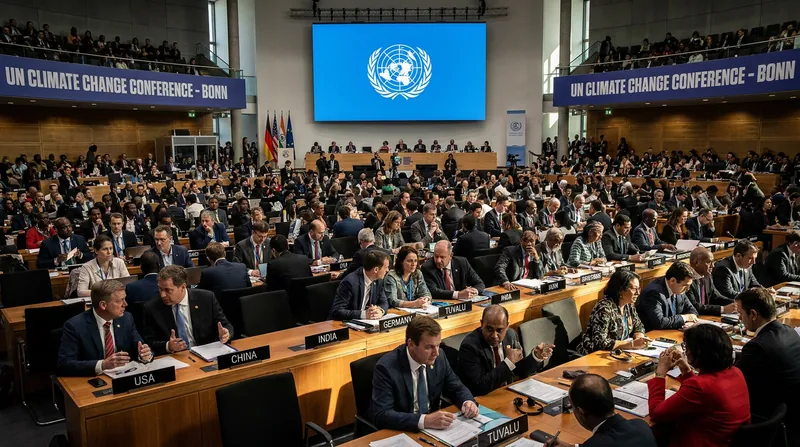
Fossil Fuel Nations Accused of 'Coordinated Attacks' to Undermine Climate Science at UN Bonn Talks
4 sources
PFAS Regulation
Chemours to Pay $450 Million in First Federal Settlement Over PFAS 'Forever Chemicals'
6 sources

Critical Minerals
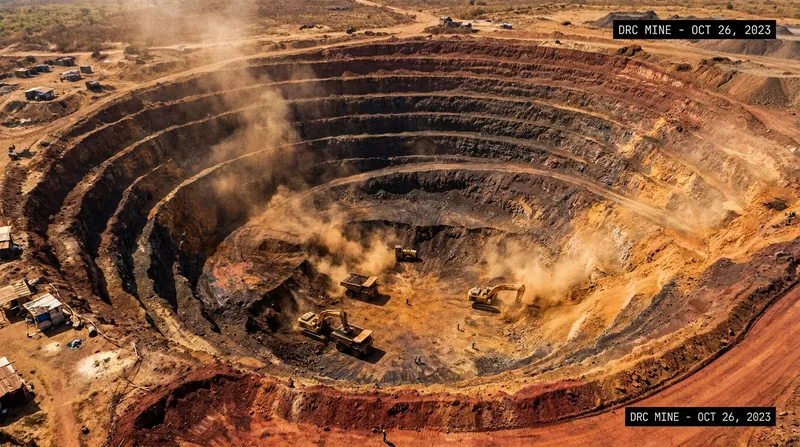
U.S. Secures Major Congolese Cobalt Mine in Escalating Minerals Race with China
3 sources
UN Climate Talks
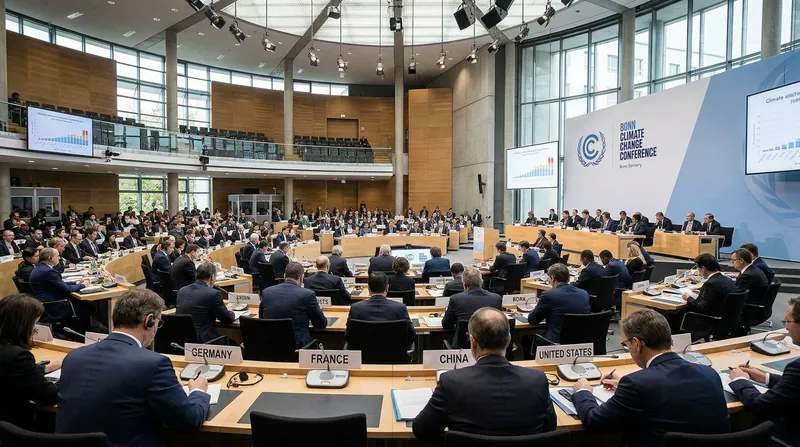
UN Climate Talks in Bonn End in Deadlock Over Adaptation Finance
3 sources
Comments
Every angle. Every day.
Get News & Politics stories with full source coverage and perspective breakdowns, free every day.