
Star Climbers Make Triumphant Returns to the Wall as 2026 IFSC World Cup Season Heats Up
Following a grueling off-season marked by severe injuries, top sport climbers like Natalia Grossman and Hannes Van Duysen are making remarkable comebacks on the 2026 IFSC World Cup circuit.
- Rehabilitating Athletes
- Athletes emphasize the psychological toll of recovery and the importance of pacing their return.
- Sports Medicine Professionals
- Medical experts are pushing for climbing-specific data and standardized return-to-sport protocols.
- National Federations
- Governing bodies must balance athlete welfare with the demands of fielding competitive international rosters.
- 3 months
- Van Duysen's recovery time
- 17.2%
- Rise in general climbing injuries
- 8–12 weeks
- Base tissue healing time
Fast facts
- Natalia Grossman won the USA Boulder National Championship just a month after a shoulder dislocation.
- Hannes Van Duysen reached the IFSC Keqiao finals two months after returning from elbow surgery.
- Jessica Pilz withdrew from the Innsbruck World Cup to rehab a severe finger inflammation.
- Sports medicine professionals are pushing for climbing-specific return-to-sport protocols.
- Emergency department data shows a 17.2% increase in general climbing injuries over the last decade.
How we got here
August 2025
Natalia Grossman returns to Lead climbing six months after undergoing ACL and meniscus surgery.
February 2026
Grossman wins the USA Boulder National Championship despite suffering a shoulder dislocation a month prior.
May 2026
Hannes Van Duysen advances to the IFSC Keqiao World Cup finals just two months after returning from elbow surgery.
June 2026
Jessica Pilz withdraws from the Innsbruck World Cup to prioritize rehabilitating a severe finger inflammation.
The 2026 International Federation of Sport Climbing (IFSC) World Cup season is well underway, and while the leaderboards feature familiar names, the real story lies in the medical charts. Across the global circuit, elite climbers are making triumphant returns from severe musculoskeletal injuries that threatened to derail their careers. From Keqiao, China, to Innsbruck, Austria, the narrative of the season has shifted from pure dominance to profound resilience. As the sport continues to push the boundaries of human biomechanics, the ability to bounce back from devastating physical setbacks has become just as crucial as finger strength or tactical route-reading.
At the forefront of this comeback wave is American standout Natalia Grossman. After sitting out much of the 2025 season to recover from a torn ACL and meniscus in her left knee, Grossman faced another massive setback in early 2026: a partially dislocated right shoulder. For an athlete whose dominance relies on explosive power and dynamic shoulder stability, the compounding injuries could have easily signaled the end of her competitive prime. Instead, Grossman embarked on a grueling rehabilitation program, determined to reclaim her spot at the top of the international podium.[1][2]
Despite the immense physical toll, Grossman’s return to the wall has been nothing short of spectacular. She captured the gold medal at the 2026 USA Climbing Boulder National Championships in February, an astonishing feat given her shoulder dislocation occurred just a month prior. Navigating a highly technical final round, Grossman flashed three of the four boulder problems, securing her victory in a dramatic display of technical precision and raw determination. The win not only cemented her national title but also signaled to the global field that she was ready for the World Cup circuit.[1]
Grossman has been remarkably transparent about the psychological hurdles that accompanied her physical recovery. "The pain, uncertainty, and constant decision-making can feel unbearable," she noted, highlighting the severe anxiety that often accompanies a return to high-impact dynamic movements. For elite climbers, trusting an injured joint during a split-second, gravity-defying leap requires immense mental fortitude. By openly discussing the stress and pressure of her rehabilitation, Grossman has helped normalize the mental health struggles that athletes face when isolated from their sport and their competitive identity.[1]
The men's circuit has witnessed equally dramatic and inspiring returns. Belgium's Hannes Van Duysen stunned the international field at the IFSC Boulder World Cup in Keqiao this May by advancing to the finals just months after undergoing major elbow surgery. In a discipline that places extraordinary torque and sheer force on the elbow joints, returning to elite competition so rapidly is a testament to both Van Duysen's work ethic and the advancements in modern orthopedic care. His performance in China proved that a surgically repaired joint could withstand the rigors of world-class bouldering.
"I didn't climb for like three months, so it's only been about two months that I have been back climbing," Van Duysen explained following his finals appearance. He described the grueling rehabilitation process not just as a physical rebuild, but as a severe "mental battle" to regain trust in his body. Spending months off the wall forces climbers to watch their hard-earned calluses soften and their sport-specific musculature atrophy. Van Duysen's ability to fast-track his conditioning and immediately compete against the world's best underscores the intense dedication required to survive the modern World Cup circuit.
"I didn't climb for like three months, so it's only been about two months that I have been back climbing," Van Duysen explained following his finals appearance.
American climber Melina Costanza has also successfully rejoined the World Cup circuit at full strength. After battling a persistent knee injury throughout the previous season, Costanza secured a bronze medal at the National Championships and returned to the international stage in Keqiao. Expressing immense relief at finally climbing pain-free, Costanza noted that she had not experienced any knee issues during the early stages of the 2026 season. Her successful return adds critical depth to the American roster and highlights the effectiveness of patient, conservative injury management.[1]
However, the grueling nature of the sport means that not every athlete is cleared to compete, and sometimes the most courageous decision is to step away. Austrian Olympic bronze medalist Jessica Pilz made the difficult choice to withdraw from her home World Cup in Innsbruck this June. Pilz has been managing severe finger inflammation for several months, a common but notoriously stubborn ailment in sport climbing. Despite a strong desire to compete in front of a passionate home crowd, she opted to prioritize her long-term health over immediate gratification.
"Competing would be too risky for the finger and simply doesn't make sense," Pilz stated, acknowledging the reality of her training deficit. She noted that while she can train, she cannot handle the necessary volume to reach top form. Missing the emotionally charged Innsbruck event was a heavy blow, but Pilz is shifting her focus to the upcoming World Championships in Seoul. Her decision reflects a growing maturity within the sport, where athletes are increasingly willing to sacrifice individual World Cup stops to preserve their bodies for pinnacle championship events.
This wave of high-profile injuries has sparked a broader, urgent conversation within the sports medicine community. A 2026 scoping review published in the journal BMJ Open Sport & Exercise Medicine highlighted the pressing need for standardized, climbing-specific rehabilitation protocols and return-to-sport criteria. As climbing has transitioned from a niche outdoor pursuit to a mainstream Olympic sport, the medical infrastructure supporting these athletes has had to rapidly evolve. Researchers are now working to bridge the gap between general orthopedics and the highly specific biomechanical demands of elite sport climbing.[3]
Historically, climbing injuries were treated with generic guidelines that failed to account for the extreme loads placed on isolated finger pulleys, wrists, and shoulders. Now, sports scientists are mapping out exact recovery timelines and objective testing batteries tailored to bouldering and lead climbing. This data-driven approach ensures that athletes like Grossman and Van Duysen are not just pain-free, but possess the structural integrity required to absorb massive dynamic shock loads. The push for better science is slowly replacing the old culture of simply taping up a tweaked finger and climbing through the pain.[3][4]
The necessity for these advanced medical protocols is underscored by alarming data from emergency departments. A recent decade-long analysis revealed a 17.2% increase in climbing-related injuries across the United States, with lower extremity fractures and upper extremity soft-tissue damage leading the diagnoses. As the sport grows in popularity and indoor gyms proliferate, the sheer volume of injuries is rising. For elite competitors pushing the absolute limits of human physiology, having access to cutting-edge medical care and evidence-based rehabilitation is no longer a luxury—it is a fundamental requirement for a sustainable career.[4]
For elite competitors, the pressure to return quickly is immense, given the tightly packed IFSC calendar and the looming World Championships. Yet, athletes are increasingly prioritizing sustainable recovery over immediate glory, a cultural shift driven by open discussions on podcasts, social media, and within team camps. By sharing their vulnerabilities, setbacks, and the tedious reality of physical therapy, climbers are dismantling the toxic narrative that injuries are a sign of weakness. Instead, they are reframing rehabilitation as just another challenging route to be meticulously solved.
As the 2026 season progresses toward the highly anticipated World Championships in Seoul, the field remains fiercely competitive. The successful return of stars like Grossman, Van Duysen, and Costanza not only elevates the level of competition but also serves as a powerful testament to the advancements in modern sports rehabilitation. Their presence on the wall is a victory in itself, proving that with the right medical support, mental resilience, and sheer willpower, the sport's most devastating setbacks can be transformed into its most inspiring triumphs.[2]
Sources
Source coverage
4 outlets
3 viewpoints surfaced




- [1]Gripped MagazineRehabilitating Athletes
One Month After Dislocating Her Shoulder, Natalia Grossman Becomes USA Boulder National Champion
Read on Gripped Magazine → - [2]ClimbingRehabilitating Athletes
Natalia Grossman Takes Gold in Stunning Post-Injury Comeback
Read on Climbing → - [3]BMJ Open Sport & Exercise MedicineSports Medicine Professionals
Return to climbing after musculoskeletal injury: a scoping review protocol
Read on BMJ Open Sport & Exercise Medicine → - [4]National Institutes of HealthSports Medicine Professionals
Rock climbing injuries and trends in the United States
Read on National Institutes of Health →
Comments
More in sports
See all →Preview
2026 Wuhan Open Preview: Xiao Guodong Chases Hat-Trick as World No. 1 Race Heats Up
6 sources
Recap
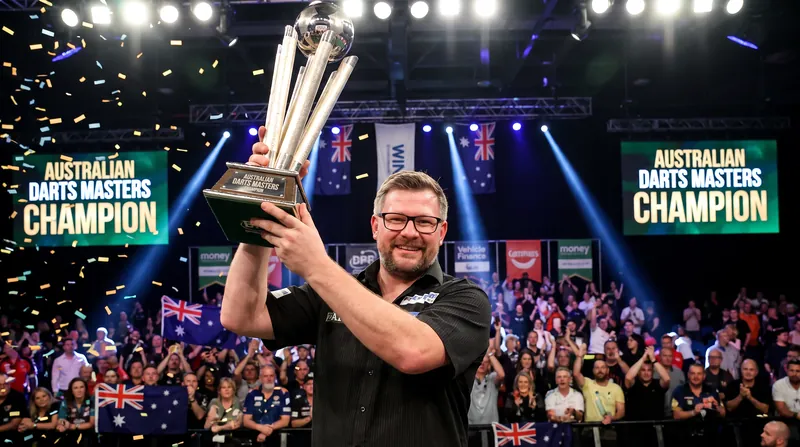
James Wade Ends Five-Year Televised Title Drought with Australian Darts Masters Victory
2 sources
Storyline
Jonny Lynch's First-Half Hat-Trick Powers Ireland Past Malaysia in Historic World Cup Run
6 sources

Storyline
USA Girls' U17 Volleyball Team Achieves Absolute Perfection to Capture World Championship Gold
4 sources
Every angle. Every day.
Get sports stories with full source coverage and perspective breakdowns delivered to your inbox.