
Stablecoins Slash Cross-Border Remittance Fees Under 1% as Major Payment Networks Adopt Blockchain Rails
Traditional remittance fees averaging over 6% are being undercut by stablecoin transactions that settle in minutes for less than 1%, driving massive adoption across Latin America and global B2B markets.
By Factlen Editorial Team
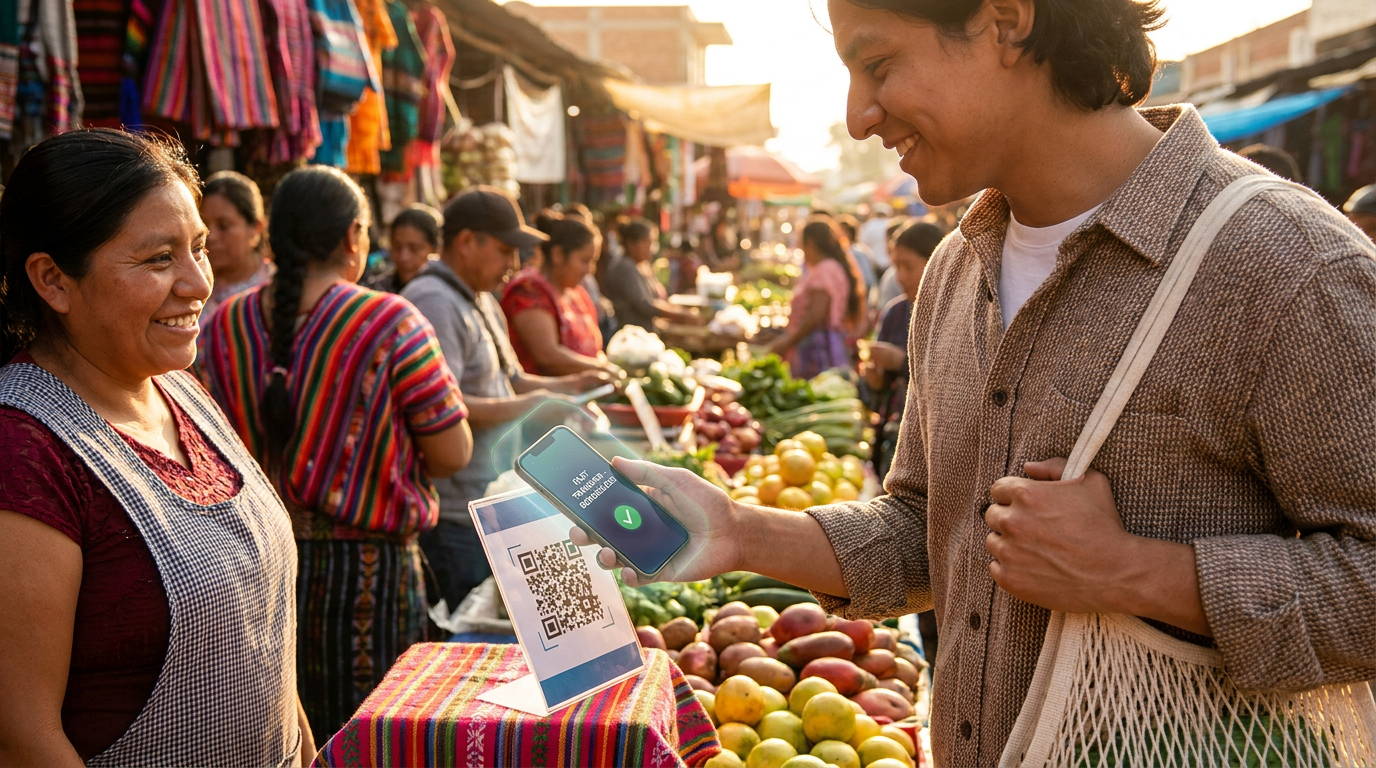
- Payment Networks & Fintechs
- Focuses on blockchain as superior infrastructure to reduce costs and enable instant global settlement.
- Emerging Market Consumers
- Views stablecoins as a vital tool for financial inclusion, bypassing high remittance fees and local currency volatility.
- Traditional Banking & Regulators
- Emphasizes the need for strict compliance, 1:1 fiat reserves, and anti-money laundering controls to prevent systemic risks.
What's not represented
- · Correspondent Banks Losing Revenue
- · Local Currency Central Banks
Why this matters
For decades, sending money across borders meant losing up to 7% of the transfer to intermediary banks and waiting days for settlement. The integration of stablecoins by major payment networks is turning international money movement into a near-instant, sub-1% transaction, saving billions for families and businesses globally.
Key points
- Stablecoin transactions have reduced cross-border remittance fees to under 1%, compared to the traditional average of 6.49%.
- Settlement times have dropped from three to five business days to mere seconds or minutes.
- Stablecoins are projected to account for up to 22% of the Latin American remittance market by the end of 2026.
- Business-to-business stablecoin payment volume surged by over 730% in 2025, reaching $390 billion.
- Major payment networks like Visa, Mastercard, and Stripe are actively integrating stablecoin rails into their core infrastructure.
- New regulatory frameworks are providing the clarity needed for enterprise-scale adoption by mandating 1:1 fiat reserves.
The global remittance market is undergoing a profound structural transformation as stablecoins—cryptocurrencies pegged to fiat currencies like the US dollar—drastically undercut the fees of traditional cross-border payments. For decades, international money movement has been defined by high friction, slow settlement times, and exorbitant costs that disproportionately affect those sending money to developing nations. Now, as the underlying blockchain technology matures from a speculative trading vehicle into enterprise-grade financial infrastructure, a massive shift is occurring. Consumers and businesses alike are bypassing legacy banking rails in favor of digital dollars that can be transmitted globally in seconds, fundamentally reshaping the economics of international commerce and family support networks.[1][3]
Historically, sending money internationally has been a slow and expensive endeavor, heavily reliant on a fragmented network of correspondent banks. A 2026 World Bank survey highlighted the persistent inefficiencies of this legacy system, revealing that traditional remittance channels charge an average of 6.49% of the total transfer amount. Beyond the explicit fees, senders and recipients routinely absorb hidden costs through unfavorable foreign exchange spreads and intermediary bank charges. Furthermore, because these payments must cross multiple jurisdictions and undergo manual compliance checks at each stop, settlement times frequently stretch out over three to five business days, leaving capital tied up in transit.[3][4]
The integration of stablecoin rails offers a radical simplification of this cross-border commerce by settling transactions peer-to-peer on public blockchains. Because there are no correspondent banks to reconcile accounts or translate financial messages, the structural overhead of the transaction is effectively eliminated. This technological shift has successfully compressed remittance fees to between 0.5% and 1.5%, allowing users to save up to 76% in fees on a standard $500 transfer. Simultaneously, settlement times are reduced from several days to mere seconds or minutes, operating on a 24/7 basis without regard for traditional banking hours or international time zones.[2][3]

The real-world impact of this cost reduction is particularly pronounced in Latin America, a region where remittance inflows reached a staggering $142 billion in 2025. Driven by a massive surge in digital commerce and a clear move away from cash, consumers are rapidly migrating from traditional money transfer operators to digital wallets powered by blockchain networks. Industry projections indicate that by the end of 2026, stablecoins will account for 18% to 22% of the entire Latin American remittance market. This shift represents roughly $25.5 billion to $31.2 billion in transfer volume, keeping billions of dollars in the pockets of local families rather than financial intermediaries.[2]
In countries facing acute macroeconomic challenges, such as severe foreign exchange crises or dollar shortages, stablecoins have evolved from a convenience into a vital economic lifeline. In nations like Bolivia, where official liquid dollar reserves collapsed and strict capital controls were implemented, individuals and businesses have been forced into informal markets. By utilizing USD-backed tokens like USDC and USDT, citizens can bypass local currency volatility and secure their purchasing power. For these populations, stablecoins provide unprecedented access to a global, dollarized economy, offering deep liquidity and a shared unit of account that was previously restricted to large multinational corporations.[4]
By utilizing USD-backed tokens like USDC and USDT, citizens can bypass local currency volatility and secure their purchasing power.
The cost savings and efficiency gains of blockchain rails extend far beyond consumer remittances, driving massive adoption in the corporate sector. Business-to-business (B2B) stablecoin payment volume experienced explosive growth, surging by more than 730% year-over-year in 2025 to reach an estimated $390 billion. Corporate treasuries, international contractors, and global e-commerce platforms are increasingly relying on stablecoins to manage payroll and cross-border settlements. By utilizing instant blockchain settlement, these companies can avoid the massive prefunding requirements of traditional nostro accounts, freeing up millions of dollars in working capital that would otherwise sit idle in correspondent banks around the world.[4][8]

Recognizing this undeniable market shift, major traditional financial institutions are no longer treating cryptocurrency merely as a speculative asset class to be traded on exchanges. Instead, global payment networks, including industry giants like Visa, Mastercard, and Stripe, are actively integrating stablecoin rails directly into their core settlement infrastructure. These companies are utilizing blockchain technology to modernize treasury operations, expand product access, and deliver near-instant cash flows to their merchant networks. This institutional embrace signals a broader recognition that stablecoins are now production-ready infrastructure capable of handling the rigorous demands of global enterprise finance.[5][8]
This transition from experimental technology to foundational infrastructure is heavily evidenced by a wave of massive mergers and acquisitions in the payments sector. Stripe recently made headlines by acquiring the stablecoin platform Bridge for $1.1 billion, while Mastercard expanded its blockchain capabilities by acquiring BVNK for $1.8 billion. Meanwhile, Visa has aggressively scaled its digital asset operations, reaching a $4.5 billion annualized stablecoin settlement run rate as of early 2026. These multi-billion-dollar infrastructure bets by the world's largest payment networks demonstrate a definitive commitment to blockchain as the future rail for international money movement.[5]

The institutional embrace of stablecoins has been largely catalyzed by a maturing regulatory environment that provides much-needed clarity and consumer protection. Legislation such as Europe's comprehensive Markets in Crypto-Assets (MiCA) regulation and the U.S. GENIUS Act have established strict operational standards for the industry. These frameworks now require major stablecoin issuers to hold 1:1 fiat reserves in highly liquid assets and submit to rigorous anti-money laundering controls. By ensuring that digital dollars carry the same risk profile and regulatory oversight as traditional financial instruments, lawmakers have given global enterprises the confidence required to adopt the technology at scale.[1][3]
As blockchain technology increasingly fades into the background of modern financial infrastructure, the industry's focus has decisively shifted from retail speculation to measurable business utility. Industry leaders emphasize that the ultimate opportunity is not simply driving consumer crypto adoption, but executing a complete re-platforming of the $900 trillion global financial system. By moving the underlying rails of payments, assets, and capital markets onto programmable, decentralized networks, the financial sector is poised to deliver faster, cheaper, and vastly more transparent outcomes for end users, fundamentally democratizing access to global commerce.[1]
How we got here
2024
Stablecoin adoption begins accelerating in emerging markets as a hedge against inflation and local currency volatility.
2025
Business-to-business stablecoin payment volume surges by 730% to reach $390 billion.
Late 2025
Stripe acquires Bridge for $1.1 billion, signaling massive institutional interest in blockchain payment rails.
Early 2026
Visa reaches a $4.5 billion annualized stablecoin settlement run rate.
June 2026
Stablecoins are projected to capture up to 22% of the Latin American remittance market.
Viewpoints in depth
Payment Networks & Fintechs
Focuses on blockchain as superior infrastructure to reduce costs and enable instant global settlement.
For global payment networks and fintech innovators, blockchain is viewed fundamentally as a superior database architecture for money movement. By eliminating the need for correspondent banks and manual reconciliation, these companies can offer 24/7 settlement and drastically lower fees. They argue that stablecoins are no longer experimental crypto assets, but essential enterprise infrastructure that will eventually replace the decades-old SWIFT system for international transfers.
Emerging Market Consumers
Views stablecoins as a vital tool for financial inclusion, bypassing high remittance fees and local currency volatility.
In developing nations and emerging markets, stablecoins are seen as a critical tool for financial inclusion and wealth preservation. For families relying on remittances or living under the threat of hyperinflation, the ability to receive digital dollars instantly without losing nearly 7% to intermediary fees is a life-changing utility. Advocates in this camp emphasize that stablecoins democratize access to the US dollar, providing a stable unit of account to populations that have historically been locked out of the global financial system.
Traditional Banking & Regulators
Emphasizes the need for strict compliance, 1:1 fiat reserves, and anti-money laundering controls to prevent systemic risks.
While acknowledging the efficiency gains of blockchain rails, traditional banking institutions and global regulators maintain that the technology must operate under the same stringent rules as the legacy financial system. They emphasize the absolute necessity of 1:1 fiat reserves, strict KYC/AML compliance, and clear supervisory frameworks to prevent systemic risks and illicit finance. For this camp, the widespread adoption of stablecoins is only acceptable if it is accompanied by robust consumer protections and regulatory oversight.
What we don't know
- How traditional correspondent banks will adjust their business models to compete with near-zero fee blockchain settlements.
- Whether emerging market central banks will attempt to restrict stablecoin usage to protect their sovereign currencies.
Key terms
- Stablecoin
- A digital currency pegged to a stable asset, like the US dollar, designed to minimize price volatility.
- Remittance
- Money sent by a person in a foreign country to their home country, often to support family members.
- Correspondent Bank
- A financial institution that provides services on behalf of another financial institution, often used to facilitate cross-border wire transfers.
- Nostro Account
- A bank account held by a bank in a foreign country, denominated in the currency of that country, used to facilitate international trade and settlements.
Frequently asked
What is a stablecoin?
A cryptocurrency designed to maintain a stable value by being pegged to a traditional fiat currency, most commonly the US dollar.
Why are stablecoin remittances cheaper?
They settle directly on a blockchain network, bypassing the multiple intermediary banks and foreign exchange spreads that add costs to traditional international wire transfers.
Are stablecoins regulated?
Increasingly, yes. New frameworks like Europe's MiCA and emerging US legislation require major stablecoin issuers to hold 1:1 cash reserves and comply with standard financial regulations.
Sources
Source coverage
8 outlets
3 viewpoints surfaced








[1]PYMNTSPayment Networks & Fintechs
Crypto Experts Tell PYMNTS Where Digital Assets Go Next
Read on PYMNTS →[2]PayRetailersEmerging Market Consumers
How 2026 payment trends are reshaping LatAm commerce
Read on PayRetailers →[3]OpenDueTraditional Banking & Regulators
Why Stablecoins Matter for Cross-Border Money Movement
Read on OpenDue →[4]RainEmerging Market Consumers
High fees and friction in cross-border payments
Read on Rain →[5]TazapayPayment Networks & Fintechs
The Stablecoin Cost Stack
Read on Tazapay →[6]The CryptonomistTraditional Banking & Regulators
June 2026 Cryptocurrency Market Insights
Read on The Cryptonomist →[7]ForbesTraditional Banking & Regulators
10 Best Cryptocurrencies To Invest In
Read on Forbes →[8]CoboPayment Networks & Fintechs
The stablecoin payments landscape in 2026
Read on Cobo →


Every angle. Every day.
Get finance stories with full source coverage and perspective breakdowns delivered to your inbox.