
Spain's Tactical Evolution: How 'Tiki-Taka 2.0' Makes La Roja a 2026 World Cup Favorite
Under Luis de la Fuente, Spain has blended their traditional possession-based control with explosive vertical threat, relying on dynamic wingers to stretch defenses.
By Factlen Editorial Team
- Tactical Analysts
- Praise the evolution from sterile possession to vertical threat, viewing Spain as the most complete team in the tournament.
- National Team Management
- Emphasizes that individual brilliance must serve the collective structure, prioritizing squad unity over star power.
- Tournament Skeptics
- Question the defensive vulnerability of Spain's high line when facing elite counter-attacking opposition.
- Squad Reporters
- Focus on the physical management of key players, noting the cautious approach required for an eight-game tournament.
What's not represented
- · Opposing Group H Managers
- · Historical Spanish Tacticians
Why this matters
As the 2026 World Cup begins, understanding Spain's tactical shift from sterile possession to dynamic, direct attacks reveals the blueprint for how modern international football is won.
Key points
- Luis de la Fuente has evolved Spain's traditional possession game into a more direct, vertical system dubbed 'Tiki-Taka 2.0.'
- The tactical setup relies heavily on isolating dynamic wingers Lamine Yamal and Nico Williams on the flanks.
- An aggressive high defensive line and man-oriented counter-press suffocate opponents but leave space behind the center-backs.
- Medical staff are taking a cautious approach with Yamal and Williams, potentially resting them for the opening match against Cape Verde.
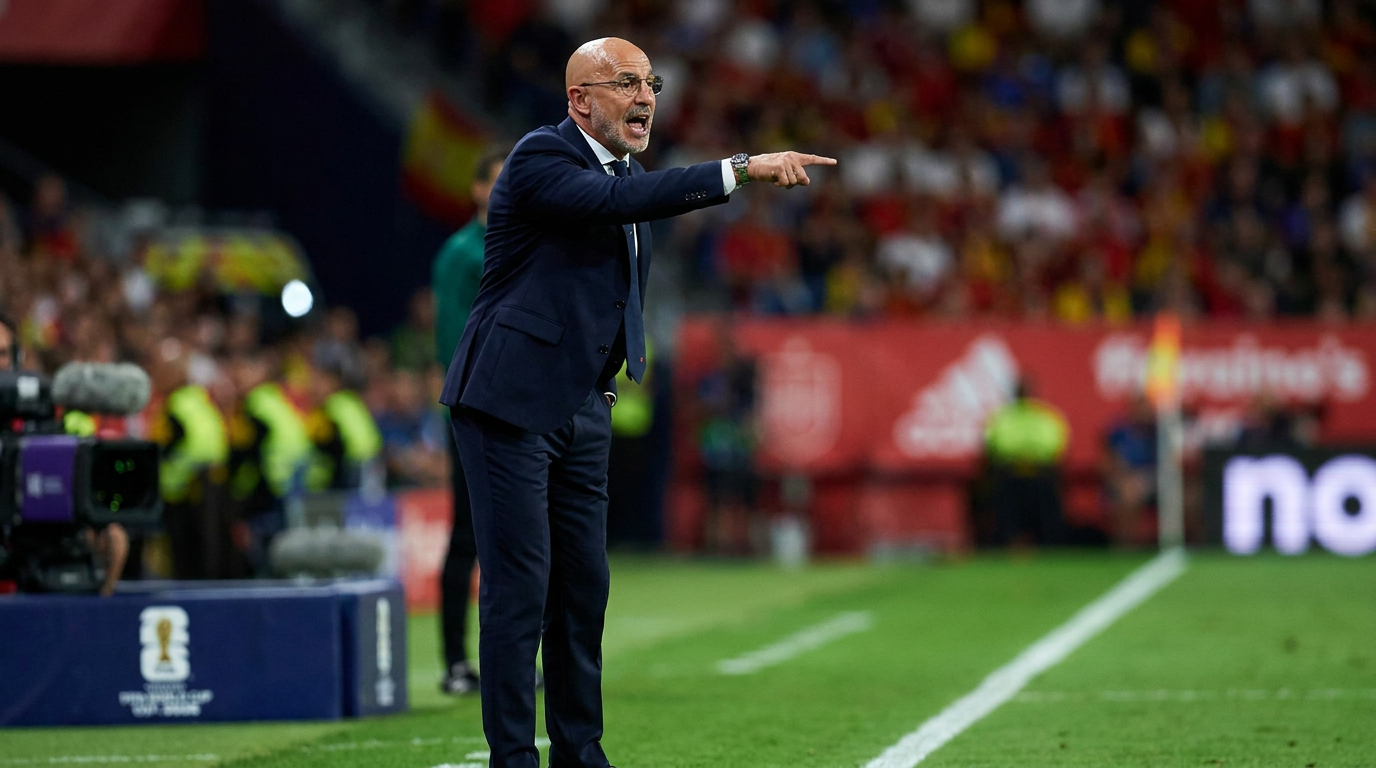
Spain's arrival in North America as the reigning European champions and a consensus favorite for the 2026 FIFA World Cup marks the culmination of a profound tactical rebirth. Gone is the predictable, sterile possession that defined their disappointing early exits in the 2018 and 2022 tournaments. Under head coach Luis de la Fuente, La Roja has evolved into a dynamic, multi-dimensional force that has not suffered a regulation-time defeat since a 2-0 loss to Scotland in March 2023. They touch down in the United States boasting a perfect blend of midfield control and explosive attacking transition, making them arguably the most complete and tactically flexible squad in the expanded 48-team tournament.[3][4]
At the heart of this transformation is a system that analysts have dubbed "Tiki-Taka 2.0." De la Fuente has meticulously retained the foundational principles of Spanish football—building out from the back, establishing positional superiority, and maintaining technical dominance in the center of the pitch—but he has injected a ruthless verticality that was previously missing. Instead of passing simply to retain the ball and exhaust the opponent, Spain now uses possession as an active tool to manipulate defensive blocks and create sudden, direct openings. The manager himself has emphasized that the ultimate goal is to generate overloads in specific areas, dragging opponents out of their defensive shape before striking with rapid, line-breaking passes into the final third.[8]
Structurally, Spain operates out of a fluid 4-3-3 formation that frequently morphs into a 4-2-3-1 depending on the game state and the opposition's pressing triggers. The midfield remains the undisputed engine room of the team, anchored by the peerless Rodri. Operating as a single pivot, Rodri dictates the tempo, shields the vulnerable backline, and initiates attacks with his expansive, pinpoint passing range. Ahead of him, Pedri acts as the primary creative conduit, drifting intelligently into the half-spaces to connect the midfield with the forward line. This central trio, which is usually completed by the tireless Fabián Ruiz, perfectly balances defensive solidity with elite technical creativity, ensuring Spain rarely loses the midfield battle.[1][2]

However, the true devastating edge of De la Fuente's modernized system lies on the flanks. The team is explicitly built to maximize the one-on-one abilities of their dynamic wingers: 18-year-old sensation Lamine Yamal on the right and the electrifying Nico Williams on the left. Yamal, in particular, operates with a tactical gravity that completely distorts opposing defenses. When he receives the ball out wide, he frequently draws double or even triple-teams from terrified defenders. This creates a fascinating tactical paradox for opponents: overcommit to stopping Yamal, and vast expanses of space immediately open up on the opposite flank for the lightning-fast Williams to exploit in pure isolation.[2][8]
This devastating wide play is further enhanced by Spain's aggressive fullbacks, most notably Alejandro Grimaldo and Pedro Porro. As Yamal and Williams cut inside to threaten the penalty area directly, the fullbacks overlap aggressively to provide natural width and stretch the pitch to its absolute limits. This constant, fluid rotation forces defenders to make split-second decisions, often resulting in fatal numerical mismatches. Unlike the Spain of the 2010s, which relied almost exclusively on intricate central combination play to walk the ball into the net, this iteration is perfectly comfortable bypassing the middle entirely and launching rapid, sweeping wide attacks if the opposition attempts to clog the center of the pitch.[1][3]

This devastating wide play is further enhanced by Spain's aggressive fullbacks, most notably Alejandro Grimaldo and Pedro Porro.
Out of possession, Spain is equally relentless and highly coordinated. They employ an aggressive, man-oriented counter-press designed to win the ball back within seconds of losing it. By committing large numbers forward and actively trying to trap opponents near the touchline, Spain turns defensive actions into immediate, highly dangerous attacking opportunities. When forced into a settled defensive posture by sustained opposition possession, they organize seamlessly into a compact 4-4-2 mid-block. In this shape, one of the central midfielders pushes up alongside the central striker—likely Álvaro Morata or Mikel Oyarzabal—to disrupt the opposition's build-up play and block passing lanes through the center.[1][2]
This high-octane, front-foot approach is not without its inherent vulnerabilities. Spain's defensive line pushes aggressively high up the pitch to compress the playing area and support the intense forward press. While this suffocates most opponents, it leaves massive expanses of unprotected space behind the center-backs. If an opposing team possesses the technical quality to bypass the initial wave of pressure, they can brutally expose Spain in transition. The center-backs rarely step into the half-spaces, prioritizing central protection of the penalty area, which means the defensive midfielder must cover immense ground laterally to plug the gaps during rapid counter-attacks.[1][4]

Managing the physical toll of this demanding, high-energy system is currently De la Fuente's primary concern ahead of their June 15 opener against Cape Verde in Atlanta. Both Yamal and Williams recently returned to full training after dealing with minor hamstring and fitness issues that sidelined them during the final preparation phases in early June. Their return to the base camp was met with high spirits, complete with a celebratory gauntlet run from their teammates, signaling a major boost for the squad's overall morale and their tactical readiness for the group stage.[7]
Despite their clean bills of health and return to full training, Spain's medical and coaching staff are reportedly adopting a highly cautious approach with their star wingers. Sources close to the camp indicate that both Yamal and Williams are likely to start on the bench against Cape Verde. De la Fuente is wisely prioritizing long-term fitness over immediate risk, recognizing that a deep run to the July 19 final will require navigating an unprecedented and grueling eight-game schedule. The technical staff plans to use the wingers as second-half substitutes if needed, relying on their immense squad depth to secure the opening three points.[5][7]
Ultimately, Spain's success in North America will hinge on their collective cohesion, a trait De la Fuente has meticulously cultivated since taking the job. Having coached approximately 90% of the current roster at the youth international level, the manager commands absolute buy-in from his players. He has publicly stated that individual talent must always serve the team structure, a philosophy that has unified the dressing room and eliminated the ego clashes of past eras. If they can maintain their tactical discipline, protect their high defensive line, and keep their wide stars healthy, Spain possesses the exact modern blueprint required to conquer the 2026 World Cup.[4][6]
How we got here
Dec 2022
Luis de la Fuente is appointed as Spain head coach following the team's early exit from the 2022 World Cup.
Mar 2023
Spain suffers a 2-0 defeat to Scotland, their last regulation-time loss before embarking on a 33-match unbeaten run.
Jul 2024
Spain wins UEFA Euro 2024, validating De la Fuente's 'Tiki-Taka 2.0' tactical shift on the international stage.
Nov 2025
Spain concludes a dominant World Cup qualifying campaign, scoring 21 goals and conceding just two.
Jun 11, 2026
The 2026 FIFA World Cup officially kicks off across North America.
Jun 15, 2026
Spain opens their Group H campaign against Cape Verde at the Mercedes-Benz Stadium in Atlanta.
Viewpoints in depth
Tactical Analysts
Praise the evolution from sterile possession to vertical threat.
Tactics writers argue that De la Fuente has solved the primary flaw of the 2018 and 2022 squads: an inability to break down low blocks. By empowering natural wingers to isolate defenders, Spain forces opponents to stretch their defensive lines, creating the exact central gaps that Tiki-Taka relies on to function effectively.
Cautious Skeptics
Question the defensive vulnerability of the high line.
Some observers note that Spain's aggressive counter-press leaves massive spaces behind the center-backs. Against teams with elite transitional speed, a single bypassed press can lead to a one-on-one with the goalkeeper, making Rodri's screening role precariously vital to the entire system.
The Manager's Stance
Emphasizes collective unity over individual brilliance.
Luis de la Fuente insists that individual talent must serve the team structure. Having managed the majority of the squad at the youth level, he has cultivated a unified dressing room where tactical discipline and teamwork are prioritized above all else, eliminating the ego clashes that have derailed previous generations.
What we don't know
- Whether Spain's high defensive line will be exposed by elite counter-attacking teams in the knockout stages.
- How the grueling eight-game tournament format will impact the fitness of crucial midfield anchor Rodri.
Key terms
- Tiki-Taka
- A style of play characterized by short passing and movement, working the ball through various channels, and maintaining possession.
- Half-spaces
- The vertical strips of the pitch between the center and the wide flanks, often exploited by creative midfielders to connect the midfield and attack.
- Single Pivot
- A lone defensive midfielder positioned just ahead of the defensive line, responsible for breaking up attacks and initiating possession.
- Mid-block
- A defensive strategy where a team sets up its defensive line near the halfway line, prioritizing compactness over high pressing.
- Overload
- A tactical situation where a team commits more players to a specific area of the pitch than the opposition has defenders, creating a numerical advantage.
Frequently asked
What formation does Spain play under Luis de la Fuente?
Spain primarily utilizes a 4-3-3 formation that fluidly shifts into a 4-2-3-1, relying heavily on a single pivot in midfield and dynamic wingers on the flanks.
Who are Spain's key tactical players for the 2026 World Cup?
Rodri anchors the midfield and dictates tempo, while wingers Lamine Yamal and Nico Williams provide the crucial width and one-on-one threat that defines the team's attack.
Why might Lamine Yamal and Nico Williams not start the first game?
Both players recently recovered from minor fitness issues. The coaching staff is reportedly taking a cautious approach, potentially using them as substitutes against Cape Verde to preserve their long-term fitness.
Sources
Source coverage
8 outlets
4 viewpoints surfaced








[1]Total Football AnalysisTactical Analysts
Spain To Win World Cup Odds: 2026 Betting Preview
Read on Total Football Analysis →[2]SquawkaTactical Analysts
Spain World Cup 2026: Fixtures, key players and tactical analysis
Read on Squawka →[3]Sports MoleSquad Reporters
Spain 2026 World Cup preview: Squad, fixtures and prediction
Read on Sports Mole →[4]The GuardianTournament Skeptics
Spain World Cup 2026 team guide
Read on The Guardian →[5]Africa SoccerSquad Reporters
World Cup 2026: Spain take cautious approach as Nico Williams and Lamine Yamal set for bench role in opener
Read on Africa Soccer →[6]FIFANational Team Management
Luis de la Fuente Interview | Spain | FIFA World Cup
Read on FIFA →[7]GoalSquad Reporters
Lamine Yamal & Nico Williams return to full training with Spain in major boost ahead of World Cup opener vs Cape Verde
Read on Goal →[8]The IndependentTactical Analysts
How Spain have developed 'tiki-taka 2.0' in pursuit of World Cup glory
Read on The Independent →

More in sports
See all 13 stories →Olympic Sustainability
How the LA 2028 Olympics Will Run Entirely on Existing Stadiums
0 sources

NBA Finals
New York Knicks Win 2026 NBA Finals, Ending 53-Year Championship Drought
0 sources
NBA Finals
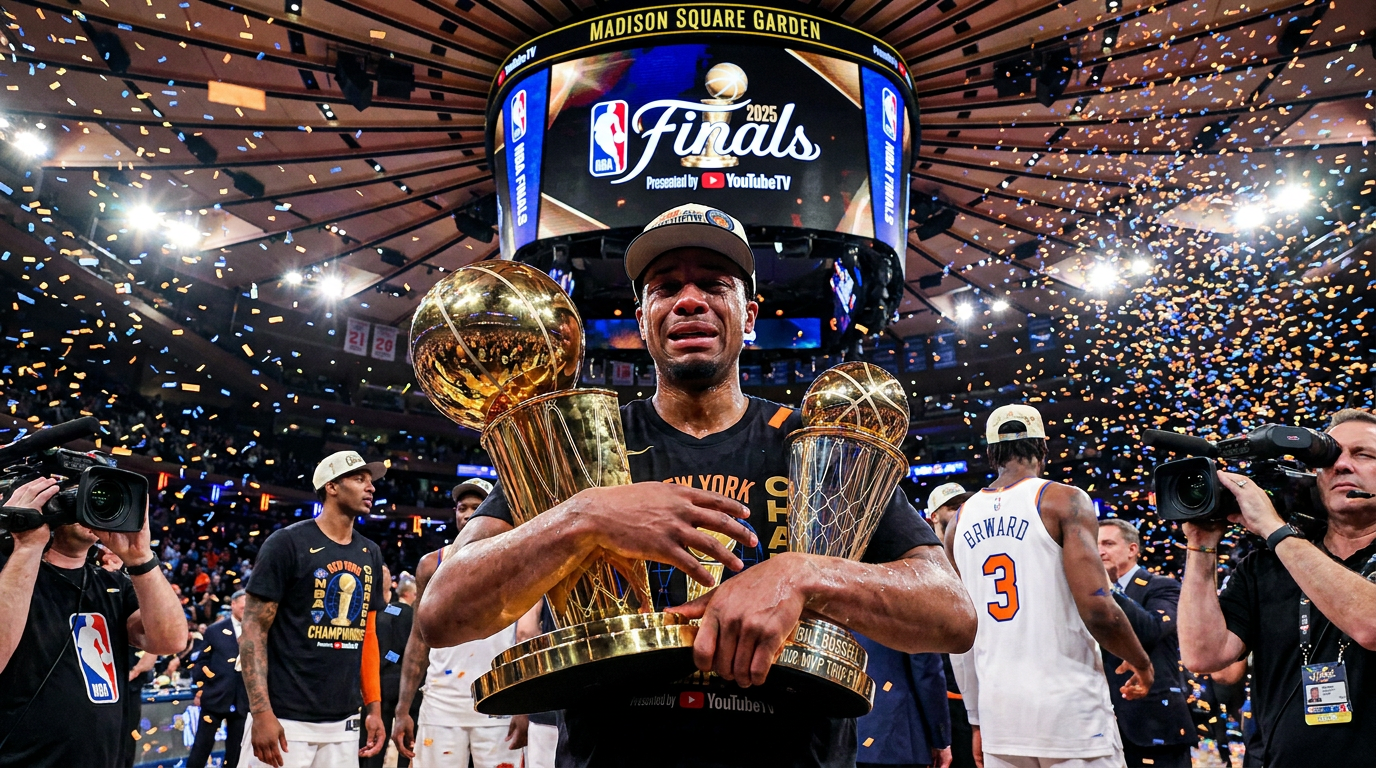
New York Knicks Capture First NBA Championship Since 1973
0 sources

Hockey Strategy
How the PWHL's 'Jailbreak' and 'No Escape' Rules Are Rewriting Hockey Strategy
0 sources
Every angle. Every day.
Get sports stories with full source coverage and perspective breakdowns delivered to your inbox.