
SpaceX Reaches $2.1 Trillion Valuation in Historic IPO, Making Elon Musk the First Trillionaire
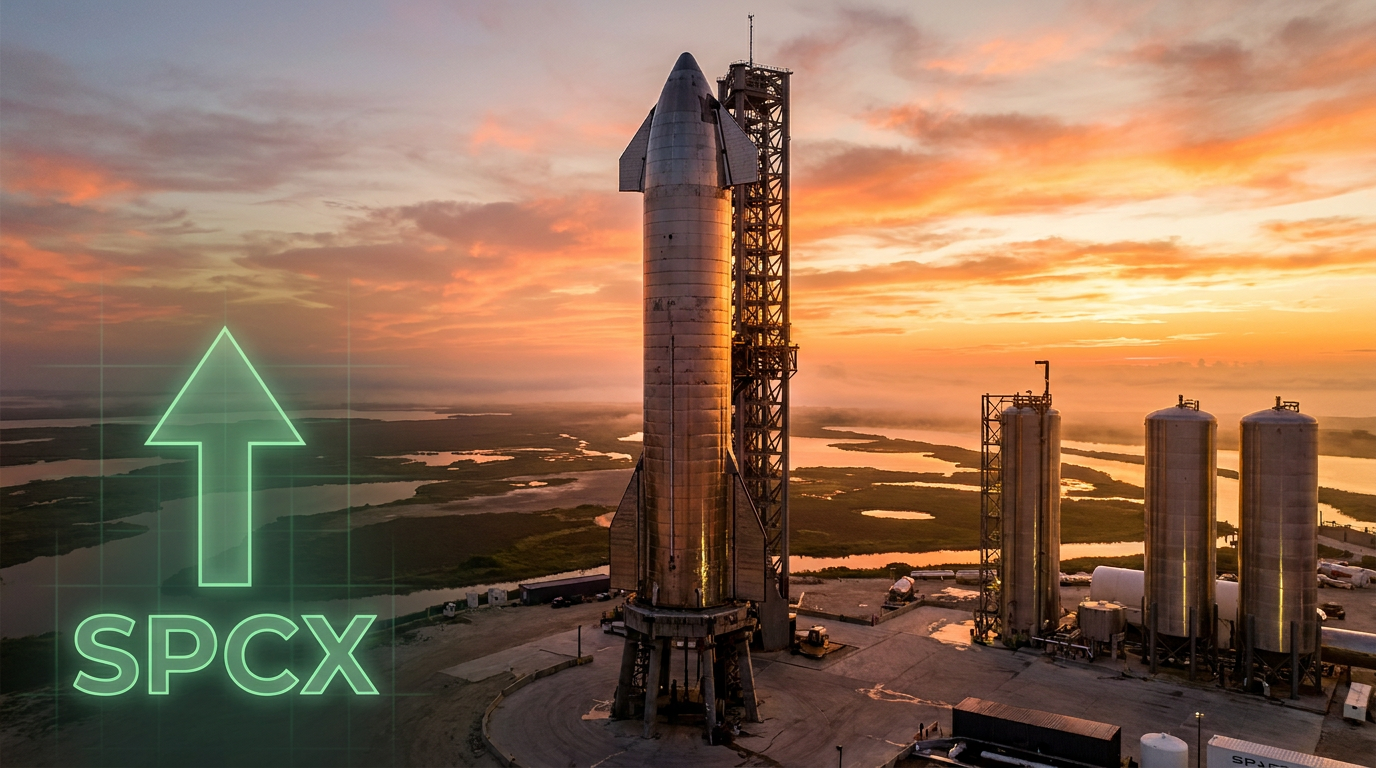
SpaceX shares surged 19% in their Nasdaq debut, cementing the aerospace company as the seventh-largest firm in the world and pushing CEO Elon Musk's net worth past the $1 trillion mark.
By Factlen Editorial Team
- Market Bulls & Retail Investors
- Investors who view SpaceX as the foundational infrastructure of the future space and AI economy.
- Aerospace & Tech Analysts
- Engineers and analysts focused on the technological implications and the funding of the Starship program.
- Governance Skeptics & Broad Observers
- Critics concerned about the lack of traditional corporate guardrails and outsized founder control.
What's not represented
- · Legacy aerospace competitors who may face increased pressure from a publicly funded SpaceX.
- · Astronomers and environmental groups concerned about the rapid expansion of the Starlink satellite constellation.
Why this matters
The successful public debut of SpaceX injects unprecedented capital into the commercial space race, accelerating timelines for reusable rocket technology, global satellite internet expansion, and potential human settlement missions. It also fundamentally reshapes the global wealth hierarchy, marking the first time an individual's net worth has crossed the $1 trillion threshold.
Key points
- SpaceX shares closed up 19% at $160.95 on their first day of trading on the Nasdaq.
- The debut pushed SpaceX's market capitalization to $2.1 trillion, making it the world's seventh-largest company.
- Elon Musk's net worth surpassed $1.1 trillion, making him the first trillionaire in history.
- Retail investors placed over $100 billion in orders ahead of the IPO.
- The integration of Musk's AI startup, xAI, into SpaceX helped fuel investor enthusiasm.
- The capital raised is expected to accelerate the development of the fully reusable Starship rocket.
SpaceX opened trading on the Nasdaq under the ticker SPCX on Friday, marking the largest initial public offering in history and fundamentally altering the financial landscape of the commercial space industry. Shares opened at $150—well above the finalized $135 IPO price—and climbed steadily throughout the day, closing up 19% at $160.95. The highly anticipated debut was met with overwhelming enthusiasm from both institutional heavyweights and retail traders, who scrambled to secure a piece of the aerospace giant.[5][6][7]
The massive first-day surge pushed SpaceX's market capitalization to roughly $2.1 trillion, instantly making it the seventh-largest company in the world, ranking ahead of corporate titans like Broadcom, Saudi Aramco, and Tesla. The historic debut also triggered a monumental shift in global wealth distribution, pushing CEO Elon Musk's personal fortune to an estimated $1.1 trillion and cementing his status as the world's first trillionaire.[2][5][6]

For SpaceX, the $2 trillion valuation represents the culmination of a decades-long gamble. When Musk founded the company in 2002, he famously gave the venture less than a 10 percent chance of survival. Over the ensuing two decades, SpaceX evolved from a far-out idea into an aerospace juggernaut, dominating global satellite communications with its Starlink network and revolutionizing orbital logistics by mastering the landing and reuse of its Falcon 9 rocket boosters.[1]
The public offering also triggered a life-changing liquidity event for thousands of early employees and investors who helped build the company. Tom Mueller, SpaceX's first employee, noted that the equity windfall fulfills a long-standing promise from Musk that stock options would eventually eclipse traditional salaries. Key executives, including President and Chief Operating Officer Gwynne Shotwell, saw their personal stakes valued in the billions at the opening bell.[7]
The public offering also triggered a life-changing liquidity event for thousands of early employees and investors who helped build the company.
The road to the Nasdaq was paved by unprecedented demand across Wall Street and Main Street. Retail investors reportedly placed orders exceeding $100 billion ahead of Friday's debut, while major institutional players like BlackRock sought allocations of at least $5 billion. The frenzy was further fueled by the recent strategic decision to fold Musk's artificial intelligence startup, xAI, into the SpaceX umbrella, adding an AI premium to the aerospace firm's already lofty valuation.[3][5]

The integration of xAI has led some market analysts to view SpaceX not just as a rocket company, but as the foundational infrastructure of a broader technological ecosystem. Ross Gerber, CEO of Gerber Kawasaki Wealth & Investment Management, speculated that a future merger between SpaceX and Tesla is now a "foregone conclusion." Gerber suggested that the IPO has been propping up Tesla's stock as investors look for ways to buy into the expanding "Musk economy."[4]
Despite the market euphoria, the unprecedented offering faced pushback from governance watchdogs. Earlier in the week, Senator Elizabeth Warren sent a 12-page letter to the Securities and Exchange Commission requesting a delay in the IPO. Warren cited concerns over the company's massive valuation, its unique governance structure, and the preservation of strong founder control, which critics argue could limit standard protections for retail investors.[5][6]

For SpaceX's engineering teams, however, the influx of public capital is expected to accelerate the company's most ambitious and capital-intensive projects. The firm remains intensely focused on achieving what industry experts call the "holy grail of space flight"—full and rapid reusability with its massive Starship rocket. With a $2 trillion war chest, SpaceX is now better positioned than ever to fund the development of the vehicle designed to eventually carry humans to Mars and establish a permanent presence beyond Earth.[8]
How we got here
2002
Elon Musk founds Space Exploration Technologies Corp. with a fraction of his payout from the sale of PayPal.
May 2026
The SEC publicly discloses SpaceX's S-1 filing, officially signaling the company's intent to go public.
June 3, 2026
SpaceX discloses its aim to sell shares at $135, targeting a record-breaking $1.77 trillion initial valuation.
June 10, 2026
Senator Elizabeth Warren requests the SEC delay the IPO, citing concerns over governance and investor protections.
June 11, 2026
SpaceX finalizes its IPO price at $135 per share amid massive retail and institutional demand.
June 12, 2026
SpaceX debuts on the Nasdaq under the ticker SPCX, closing up 19% and making Musk the first trillionaire.
Viewpoints in depth
Market Optimists & Retail Investors
Investors who view SpaceX as the foundational infrastructure of the future space and AI economy.
This camp argues that a $2.1 trillion valuation is justified—and perhaps even conservative—given SpaceX's near-monopoly on global launch services and the rapid expansion of its Starlink satellite internet business. Retail investors and bullish analysts point to the recent integration of xAI as proof that SpaceX is evolving into a diversified technology conglomerate. They believe the company's ability to execute on seemingly impossible engineering feats makes it a generational investment opportunity, regardless of traditional valuation metrics.
Aerospace Industry Veterans
Engineers and space analysts focused on the technological implications of the IPO.
For industry insiders, the IPO is less about market capitalization and more about securing the massive capital required to make humanity multi-planetary. This perspective views the public offering as the ultimate vindication of reusable rocket technology, which legacy aerospace firms initially dismissed. They emphasize that the billions raised will directly fund the iterative testing and development of the Starship program, accelerating timelines for lunar base construction and eventual crewed missions to Mars.
Governance Skeptics & Regulators
Critics concerned about the lack of traditional corporate guardrails and outsized founder control.
Skeptics, including progressive lawmakers like Senator Elizabeth Warren, worry that the unprecedented retail frenzy has blinded the market to structural risks. This camp points out that SpaceX's governance model is designed to preserve Elon Musk's absolute control, leaving public shareholders with little recourse if the company's high-risk ventures fail. They argue that a $2 trillion valuation driven heavily by retail momentum and the 'Musk premium' could pose systemic risks to everyday investors if the company faces significant regulatory or engineering setbacks.
What we don't know
- How the transition to a publicly traded company will impact SpaceX's famously high-risk, rapid-iteration engineering culture.
- Whether regulators will introduce new oversight measures given the company's massive valuation and unique governance structure.
- If or when a formal merger between SpaceX and Tesla might occur, as speculated by some market analysts.
Key terms
- Initial Public Offering (IPO)
- The process of offering shares of a private corporation to the public in a new stock issuance, allowing the company to raise capital from public investors.
- Market Capitalization
- The total value of a publicly traded company's outstanding shares, calculated by multiplying the current share price by the total number of shares.
- Reusable Rocket
- A launch vehicle designed to be recovered and flown again, drastically reducing the cost of accessing space compared to traditional expendable rockets.
- Starship
- SpaceX's fully reusable, super-heavy-lift launch vehicle designed to carry massive payloads and eventually transport humans to the Moon and Mars.
- Starlink
- A satellite internet constellation operated by SpaceX, providing high-speed broadband coverage to over 100 countries.
Frequently asked
What is SpaceX's stock ticker?
SpaceX trades on the Nasdaq stock exchange under the ticker symbol SPCX.
How much is Elon Musk worth now?
Following the SpaceX IPO, Elon Musk's net worth is estimated at $1.1 trillion, making him the world's first trillionaire.
Why did SpaceX go public?
The IPO provides massive liquidity for early employees and investors, while raising billions in capital to fund capital-intensive projects like the Starship rocket and the Starlink satellite network.
What happened to Elon Musk's AI company?
Elon Musk's artificial intelligence startup, xAI, was folded into SpaceX prior to the IPO, adding AI capabilities to the aerospace company's portfolio.
Sources
Source coverage
8 outlets
3 viewpoints surfaced







[1]The New York TimesAerospace & Tech Analysts
SpaceX’s Unlikely Journey From Far-Out Idea to $2 Trillion Juggernaut
Read on The New York Times →[2]BBCGovernance Skeptics & Broad Observers
Elon Musk becomes world's first trillionaire as SpaceX soars in stock market debut
Read on BBC →[3]CNBCMarket Bulls & Retail Investors
Top House Republican’s family investment poised to benefit from SpaceX IPO
Read on CNBC →[4]BloombergMarket Bulls & Retail Investors
SpaceX, Tesla Merger A 'Forgone Conclusion,' Says Ross Gerber
Read on Bloomberg →[5]ForbesMarket Bulls & Retail Investors
SpaceX Shares Close Up 19% After Historic IPO Makes Musk World’s First Trillionaire
Read on Forbes →[6]Fox BusinessGovernance Skeptics & Broad Observers
SpaceX makes historic debut; Musk solidifies status as world's first trillionaire
Read on Fox Business →[7]Business InsiderAerospace & Tech Analysts
SPCX stock rises 19% in its first day of trading, cementing Musk as the first-ever trillionaire
Read on Business Insider →Musk Aiming For 'Holy Grail of Space Flight' in Reusability, Says Loren Grush
Read on Bloomberg →
Every angle. Every day.
Get business stories with full source coverage and perspective breakdowns delivered to your inbox.