
SpaceX Raises Record $75 Billion in Historic IPO, Pushing Valuation Past $2 Trillion
SpaceX executed the largest initial public offering in history on Friday, raising $75 billion and catapulting CEO Elon Musk to trillionaire status as shares surged on their Nasdaq debut.
By Factlen Editorial Team
- Bullish Investors & Leadership
- Focuses on SpaceX's insurmountable technological moat and the massive growth potential of the space economy.
- Skeptical Analysts
- Argues that the IPO price is dangerously disconnected from the company's underlying financial realities.
- Retail & Employee Beneficiaries
- Celebrates the unprecedented wealth creation for early staff and the democratization of space investment.
- Institutional Beneficiaries
- Views the mega-IPO primarily as a massive liquidity event and a catalyst for broader market trading volume.
What's not represented
- · Competitors in the commercial launch sector
- · Astronomers impacted by the proliferation of satellite constellations
Why this matters
This record-shattering public debut opens one of the world's most valuable and secretive private companies to everyday investors, while injecting $75 billion into the development of next-generation space infrastructure and artificial intelligence.
Key points
- SpaceX raised $75 billion in its Nasdaq debut, shattering the previous IPO record held by Saudi Aramco.
- Shares jumped from a fixed $135 offering price to over $150, pushing the company's valuation past $2 trillion.
- The surge in valuation officially made SpaceX CEO Elon Musk the world's first trillionaire.
- The company bypassed traditional Wall Street IPO mechanics, offering a fixed price without a standard bookbuilding process.
- Financial analysts warn the stock is highly speculative, trading at 94 times its trailing revenue despite posting net losses.
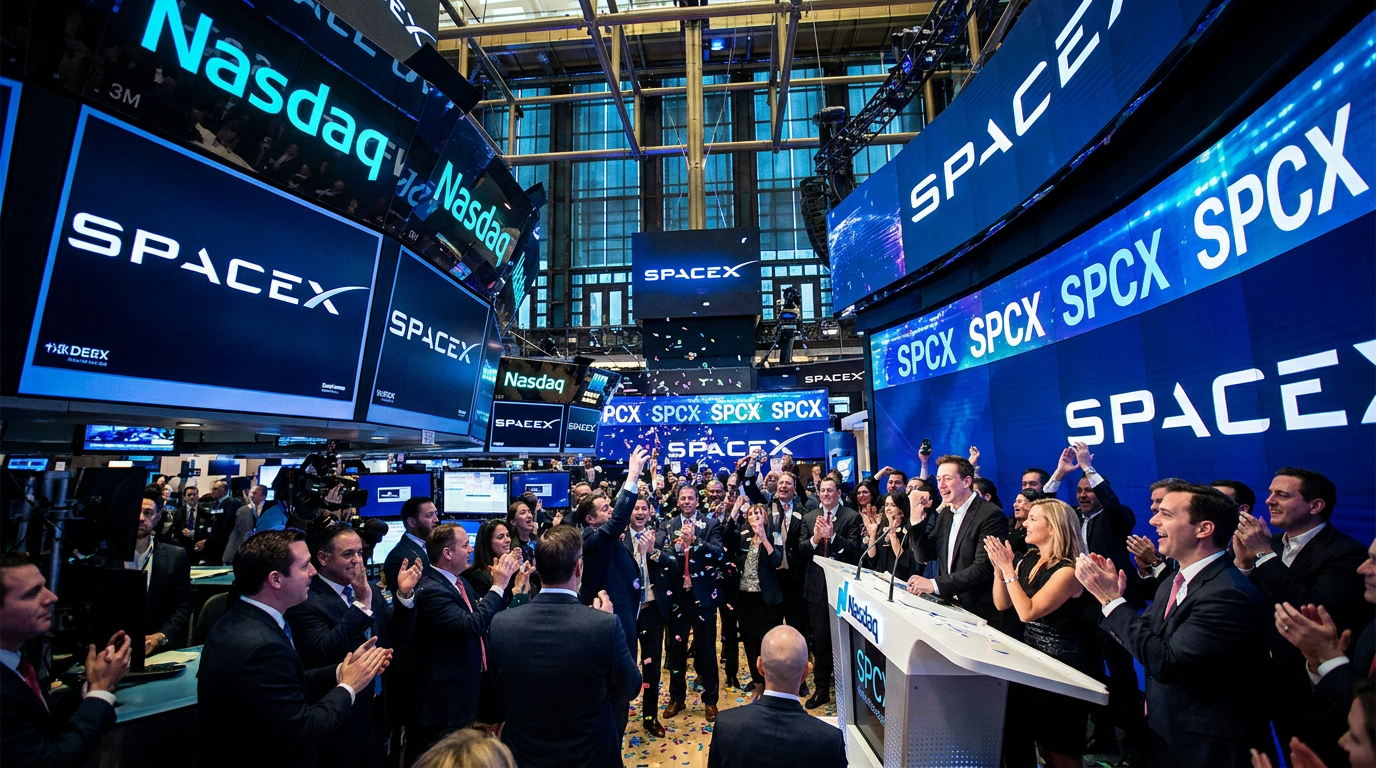
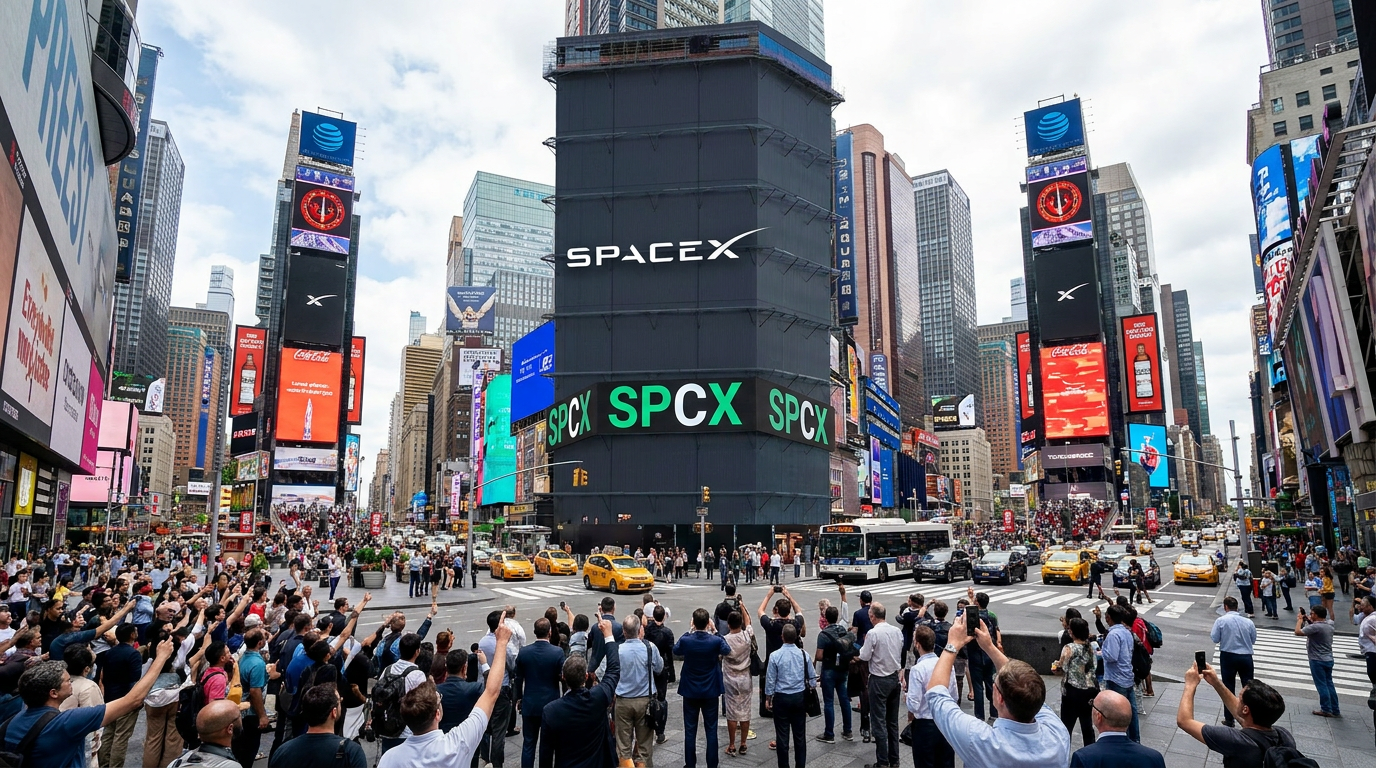
SpaceX officially entered the public markets on Friday, pulling off the largest initial public offering in history and instantly reshaping the landscape of mega-cap technology stocks. Debuting on the Nasdaq under the ticker symbol SPCX, the aerospace and satellite giant raised a staggering $75 billion, nearly tripling the previous global record set by Saudi Aramco in 2019. The stock opened trading at midday and immediately surged from its $135 offering price to over $150 per share, pushing the company's total market capitalization past the $2 trillion threshold.[2][3][4]
The historic debut not only cemented SpaceX as one of the three most valuable companies on Earth, but it also pushed CEO Elon Musk's personal net worth past the $1 trillion mark, making him the world's first trillionaire. Addressing employees at the company's El Segundo headquarters on Friday morning, Musk reflected on the journey from a warehouse startup to a $2 trillion behemoth, reiterating that the newly raised capital is earmarked for making humanity multiplanetary and "taking the fiction out of science fiction."[2]
Behind the scenes, the mechanics of the offering were as unconventional as the company's reusable rockets. Bypassing the traditional Wall Street playbook, SpaceX refused to issue an indicative price range or conduct a standard institutional bookbuilding process. Instead, the company simply handed the market a fixed, take-it-or-leave-it price of $135 per share. The aggressive strategy paid off flawlessly; the offering was reportedly oversubscribed by up to four times, attracting more than $250 billion in total investor demand before the order books were abruptly closed.[1][2][3]

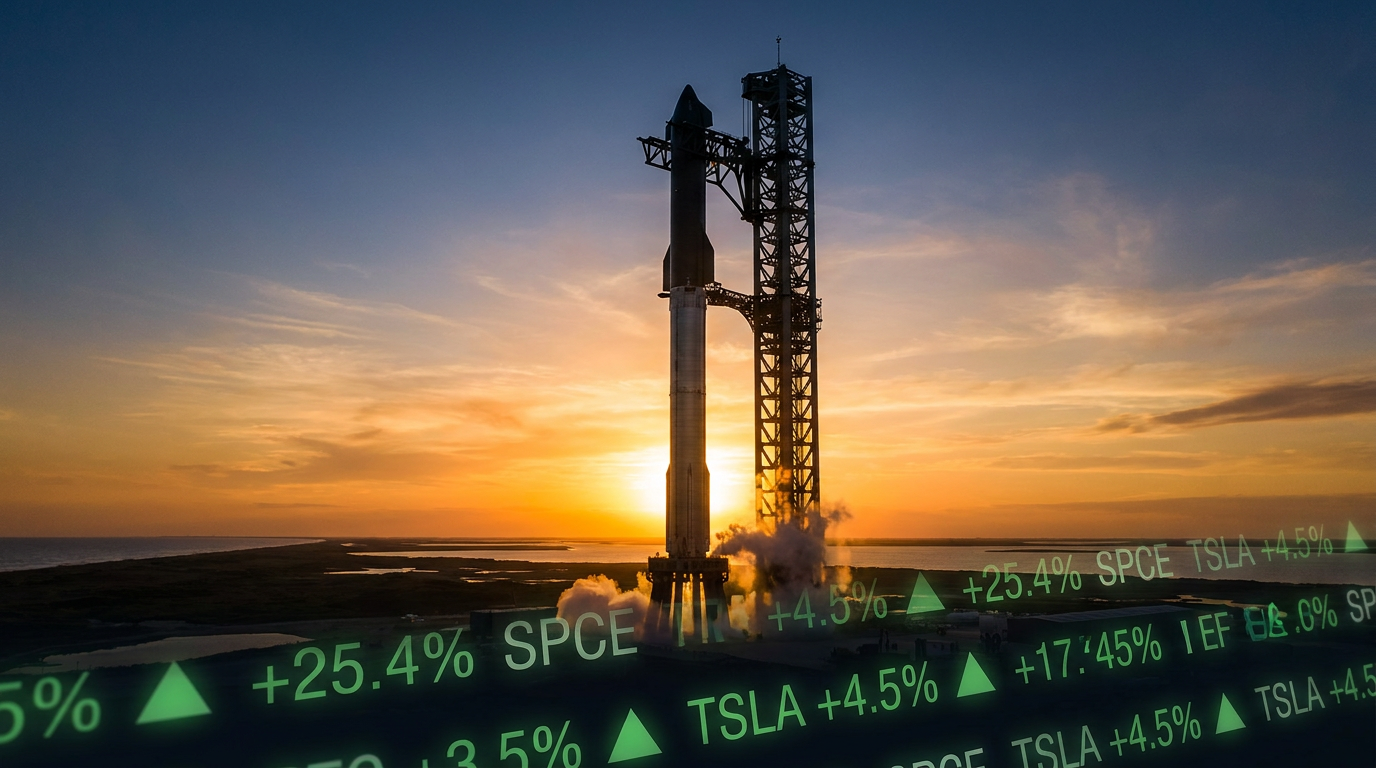
The foundation of that immense investor appetite is Starlink, SpaceX's satellite internet constellation. The service has rapidly evolved from a beta project into a telecommunications juggernaut, boasting over 9 million active subscribers and generating an estimated $15 billion to $18 billion in revenue in 2025. Combined with the Falcon 9 rocket's absolute dominance over the global commercial launch market, investors are betting that SpaceX has established an insurmountable moat in low-Earth orbit.[1][3]
However, aerospace dominance alone does not fully explain the $2 trillion valuation. A significant portion of the premium stems from SpaceX's recent merger with Musk's artificial intelligence startup, xAI. By bringing xAI under the SpaceX umbrella, the company effectively positioned its IPO as a dual-play on both the space economy and the generative AI boom, capturing the immense speculative capital currently flooding the artificial intelligence sector.[2]

However, aerospace dominance alone does not fully explain the $2 trillion valuation.
The wealth generated by the listing extends far beyond Musk. The IPO is expected to mint more than 4,400 new millionaires among current and former SpaceX employees, with roughly 400 early staff members and engineers securing windfalls in excess of $100 million each. Wall Street institutions are also quietly celebrating; analysts at JPMorgan noted that the sheer trading volume and volatility generated by the mega-IPO will provide a massive boost to the trading income of major investment banks in the second quarter.[2][6]
Yet, amid the euphoria on the Nasdaq floor, prominent voices in the financial sector are urging extreme caution. Analysts at Morningstar issued a stark warning to investors, calculating the company's fair value at just $63 per share—less than half of its IPO price. The research firm cited a "major disconnect between market expectations and underlying fundamentals," noting that the current valuation is highly speculative and heavily reliant on unproven AI technologies and orbital infrastructure.[5]
The math behind the skepticism is sobering. At its debut valuation, SpaceX is trading at roughly 94 times its trailing 2025 revenue, a multiple virtually unprecedented for a company of its size. To align with the valuation multiples of mature tech giants like Apple or Alphabet, SpaceX would eventually need to generate upwards of $150 billion in annual revenue. Furthermore, the company remains unprofitable on a GAAP basis, having posted a net loss of nearly $4.9 billion in 2025 as it poured capital into the development of its next-generation Starship rocket.[3][5]

These fundamentals mean that retail investors and pension funds buying into the post-IPO hype are taking on substantial execution risk. The company's future growth relies heavily on the successful commercialization of Starship, the continued expansion of Starlink against emerging competitors like Amazon's Project Kuiper, and maintaining its near-monopoly on lucrative U.S. government and defense launch contracts. Any significant delays or regulatory hurdles could severely punish the stock's high-beta premium.[2][3][5]
Despite the risks, the successful flotation of SpaceX marks a watershed moment for the financial markets in 2026. It proves that public markets still have an immense appetite for hyper-ambitious, capital-intensive tech ventures, provided they are backed by a track record of disrupting entrenched industries. As the dust settles on the largest stock market debut in history, all eyes now turn to the execution of Musk's ultimate vision: utilizing this $75 billion war chest to build the first human settlement on Mars.[1][2][4]
How we got here
Dec 2025
SpaceX conducts a private tender offer valuing the company at roughly $800 billion.
Feb 2026
SpaceX merges with Elon Musk's artificial intelligence startup xAI, significantly boosting its private valuation.
June 4, 2026
The company launches its accelerated IPO roadshow, bypassing traditional pricing ranges.
June 12, 2026
SpaceX debuts on the Nasdaq, raising $75 billion and surpassing a $2 trillion market capitalization.
Viewpoints in depth
Bullish Investors & Leadership
Focuses on SpaceX's insurmountable technological moat and the massive growth potential of the space economy.
Proponents of the $2 trillion valuation argue that traditional financial metrics fail to capture SpaceX's true potential. By dominating the global launch market with the Falcon 9 and rapidly scaling Starlink's high-margin subscription revenue, the company has established a monopoly in low-Earth orbit. Furthermore, leadership views the recent integration of xAI as a force multiplier, positioning SpaceX not just as an aerospace contractor, but as the foundational infrastructure for orbital datacenters and next-generation artificial intelligence.
Skeptical Analysts
Argues that the IPO price is dangerously disconnected from the company's underlying financial realities.
Financial skeptics, led by research firms like Morningstar, point out that a valuation of 94 times trailing revenue is virtually unprecedented and leaves zero room for error. They emphasize that SpaceX is still posting multi-billion-dollar net losses as it funds the Starship program. From this perspective, the IPO premium is driven more by retail euphoria and Elon Musk's personal brand than by near-term profitability, exposing new investors to massive downside risk if the company encounters regulatory hurdles or engineering setbacks.
Institutional Beneficiaries
Views the mega-IPO primarily as a massive liquidity event and a catalyst for broader market trading volume.
For Wall Street banks and institutional underwriters, the mechanics of the SpaceX IPO represent a massive windfall regardless of the stock's long-term trajectory. The sheer size of the $75 billion raise and the intense retail trading volume on day one generate enormous fees and trading income. Analysts at major banks view this event as a bellwether that will unfreeze the broader IPO market, encouraging other highly valued private tech companies—such as OpenAI and Anthropic—to finally make their public debuts.
What we don't know
- Whether the commercialization of the Starship rocket will face further regulatory or engineering delays.
- How effectively SpaceX can maintain Starlink's profit margins against emerging competitors like Amazon's Project Kuiper.
- Exactly how the integration of xAI will generate direct revenue for the core aerospace business.
Key terms
- Initial Public Offering (IPO)
- The process by which a private company offers shares of its stock to the public for the first time, allowing anyone to invest.
- Price-to-Sales Multiple
- A valuation metric that compares a company's total market capitalization to its annual revenue, used to determine if a stock is overvalued or undervalued.
- Bookbuilding
- The traditional process where investment banks gather bids from institutional investors to determine the final price of an IPO, which SpaceX notably bypassed.
Frequently asked
How much money did SpaceX raise?
SpaceX raised $75 billion in its initial public offering, making it the largest IPO in global history.
What is SpaceX's ticker symbol?
SpaceX trades on the Nasdaq stock exchange under the ticker symbol SPCX.
Is SpaceX currently profitable?
No. While its Starlink division generates significant revenue, the broader company posted a net loss of nearly $4.9 billion in 2025 due to heavy investments in the Starship rocket program.
Sources
Source coverage
6 outlets
4 viewpoints surfaced






[1]MarketWatchBullish Investors & Leadership
How Elon Musk nailed the SpaceX IPO: ‘I’m not sure that this could have gone much better’
Read on MarketWatch →[2]The GuardianRetail & Employee Beneficiaries
SpaceX makes largest ever stock market debut, making Elon Musk world's first trillionaire
Read on The Guardian →[3]ReutersBullish Investors & Leadership
SpaceX prices IPO at $135 per share in record $75 billion raise
Read on Reuters →[4]AxiosBullish Investors & Leadership
SpaceX raises $75 billion in its IPO
Read on Axios →[5]MorningstarSkeptical Analysts
SpaceX IPO Valuation Shows Major Disconnect With Fundamentals
Read on Morningstar →[6]JPMorgan ResearchInstitutional Beneficiaries
JPMorgan says investors are overlooking the upside to Wall Street banks that comes from SpaceX and other mega IPOs
Read on JPMorgan Research →
Every angle. Every day.
Get finance stories with full source coverage and perspective breakdowns delivered to your inbox.