
SpaceX Raises $75 Billion in Largest Initial Public Offering in History
Aerospace manufacturer SpaceX has successfully completed the largest initial public offering on record, raising $75 billion and signaling a massive shift in the commercial space economy. The highly anticipated market debut has drawn intense interest from both institutional and retail investors.
By Factlen Editorial Team
- Institutional Investors
- Focused on Starlink's recurring revenue and the stock's impact on major market indices.
- Retail Shareholders
- Driven by the long-term vision of space exploration and Mars colonization.
- Space Economy Analysts
- View the IPO as a catalyst that will lower launch costs and boost the entire aerospace sector.
What's not represented
- · Legacy aerospace competitors facing increased financial pressure
- · Astronomers concerned about the rapid expansion of satellite constellations
Why this matters
The sheer scale of SpaceX's public debut instantly makes it a cornerstone of the modern stock market, opening up the burgeoning space economy to everyday investors. The massive influx of capital will directly fund the next generation of Starlink satellite deployments and accelerate timelines for crewed missions to Mars.
Key points
- SpaceX completed the largest IPO in history, raising $75 billion.
- The offering saw massive demand from both institutional and retail investors.
- Funds will accelerate Starlink satellite deployments and the Starship program.
- Wall Street banks are seeing significant trading and underwriting windfalls.
- The successful listing is reviving the broader mega-cap tech IPO market.
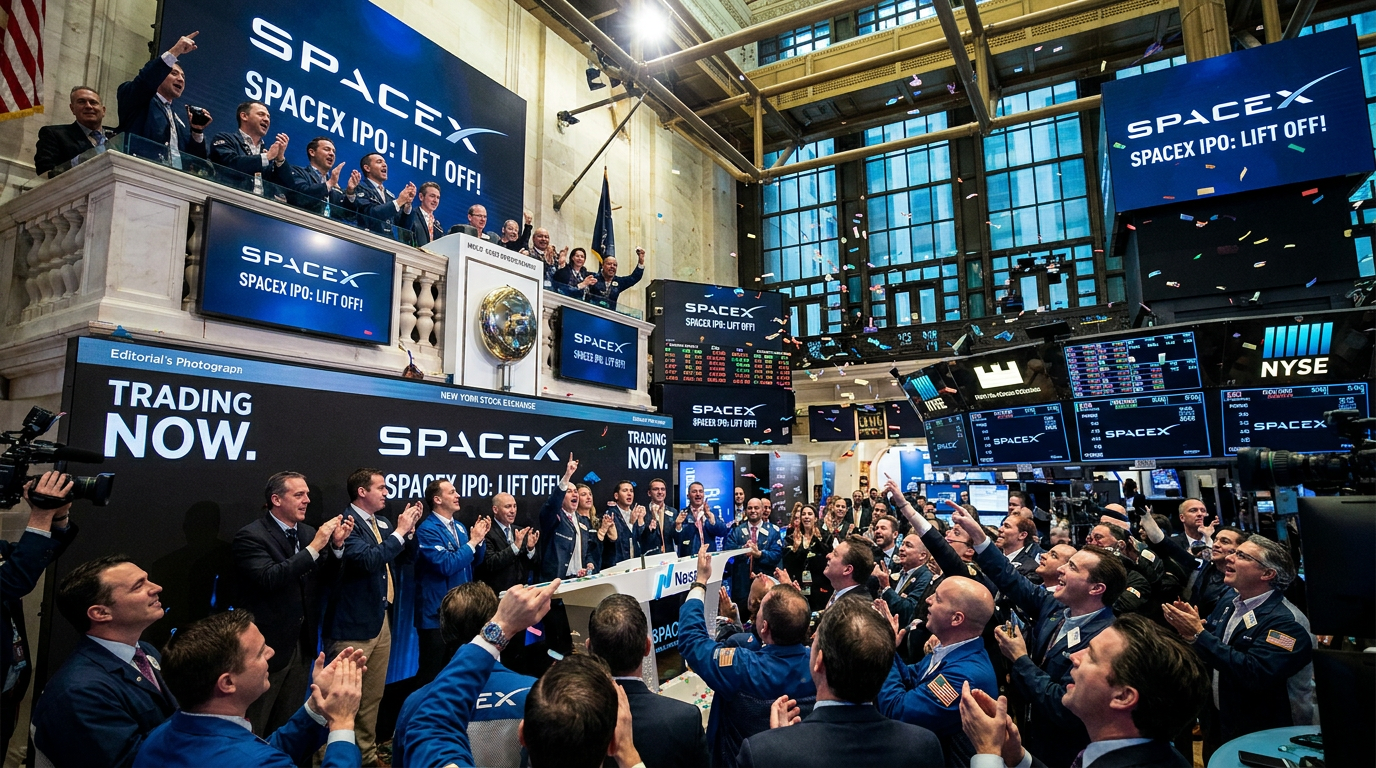
SpaceX has officially entered the public markets, executing the largest initial public offering in financial history by raising a staggering $75 billion. The aerospace giant, founded by Elon Musk, bucked traditional Wall Street norms to deliver a market debut that analysts are already calling a generational milestone for both the tech sector and the broader economy.[1][2]
The sheer scale of the offering eclipses previous record-holders like Saudi Aramco and Alibaba, instantly cementing SpaceX as a mega-cap anchor in major financial indices. Institutional demand far outstripped supply during the roadshow, leading to an upward revision in the pricing of the shares just hours before the opening bell rang on the New York Stock Exchange.[2][3]
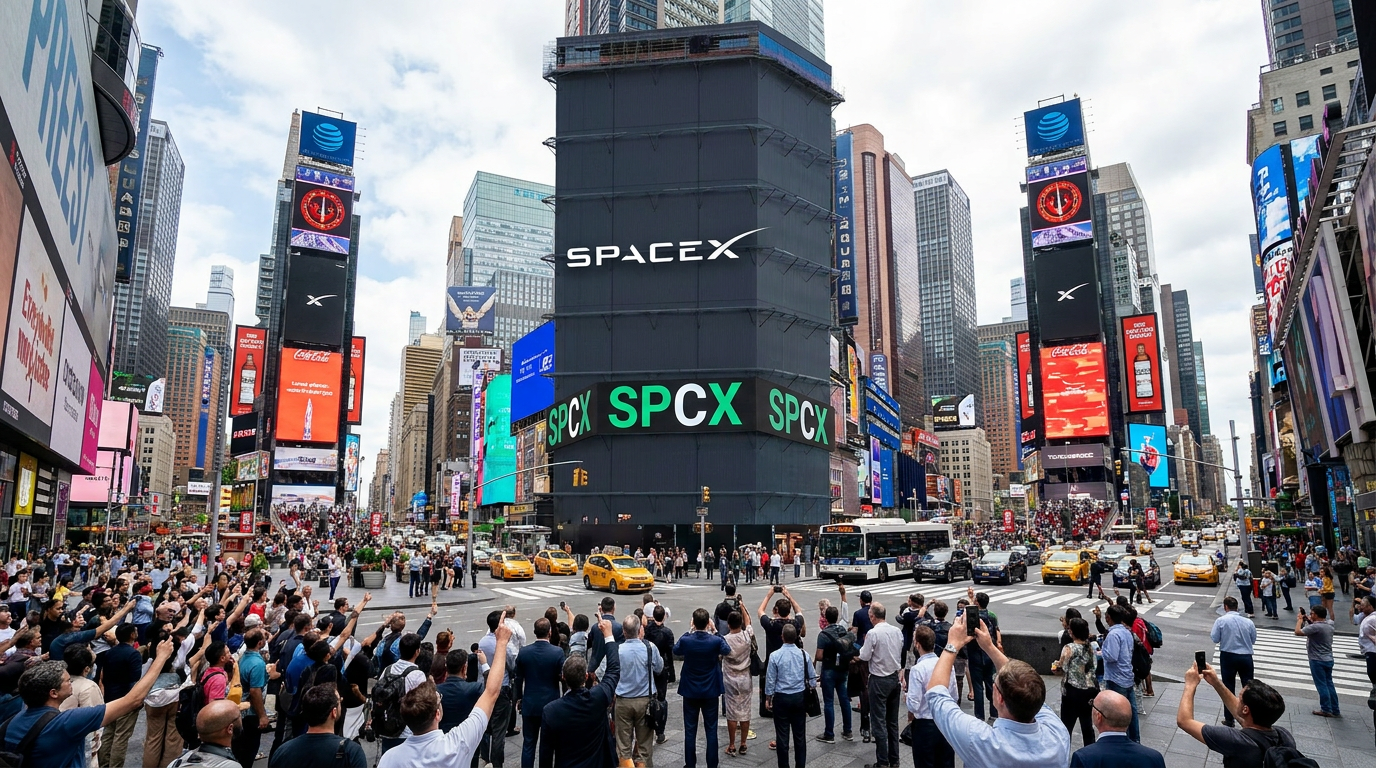
Retail investors have flocked to the stock, driven by years of anticipation and the company's highly visible successes in reusable rocketry and satellite internet. Brokerages reported record trading volumes in the opening hours, with retail participation accounting for a significantly higher percentage of the available float than is typical for massive technology IPOs.[4]

The ripple effects of the massive listing are already being felt across the financial sector. Major Wall Street investment banks are reaping a windfall in underwriting fees and trading income, providing a substantial boost to their second-quarter earnings outlooks and validating the immense effort spent courting the aerospace manufacturer over the past decade.[5]
The ripple effects of the massive listing are already being felt across the financial sector.
Analysts note that the successful execution of such a massive offering is injecting fresh optimism into the broader equities market. The enthusiasm surrounding the listing has helped revive the mega-cap tech IPO pipeline, which had seen a lull in recent years, and reinforces projections that the stock market has a strong chance of ending the year higher despite earlier macroeconomic headwinds.[1][3]
For SpaceX itself, the $75 billion capital injection is earmarked for two primary, capital-intensive initiatives. A significant portion will accelerate the deployment of the next generation of Starlink satellites, expanding the company's high-speed internet constellation to meet surging global demand and solidify its highly profitable, recurring revenue base.[6][7]
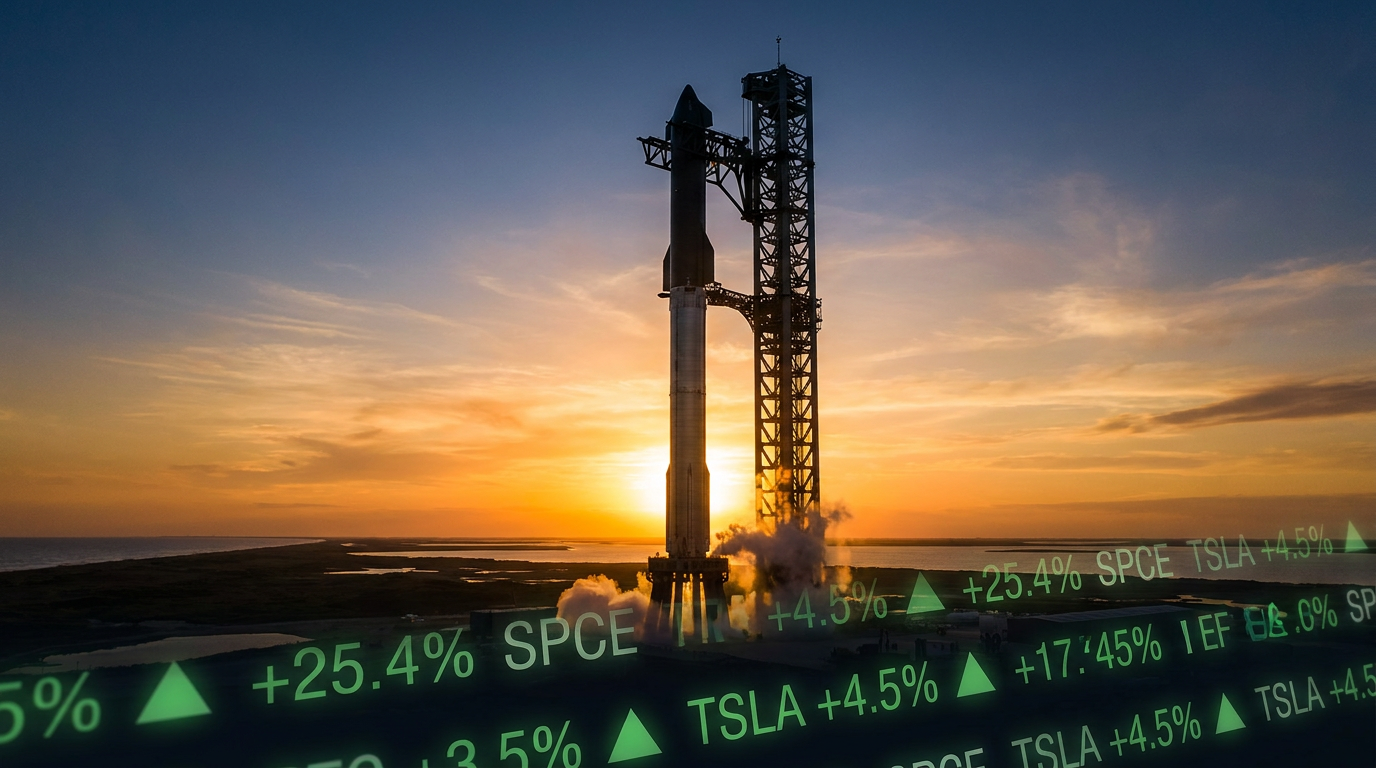
The remaining funds will be directed toward the continued development and rapid scaling of the Starship program. The fully reusable super-heavy lift launch vehicle is central to the company's long-term ambitions of establishing a permanent human presence on the Moon and eventually colonizing Mars, projects that require unprecedented levels of sustained capital.[6]

The public listing is being heralded as a watershed moment for the broader "space economy." By providing a pure-play, mega-cap investment vehicle for space exploration and infrastructure, SpaceX's IPO is expected to attract a new wave of capital to the sector, potentially benefiting smaller aerospace startups, component suppliers, and orbital logistics companies.[7]
As the stock settles into its first few weeks of public trading, market watchers will be closely monitoring its inclusion in major stock indices and the subsequent mandatory buying by passive index funds. For now, the successful debut stands as a testament to the commercial viability of private spaceflight and a historic, uplifting milestone for global financial markets.[3][5]
How we got here
2002
Elon Musk founds Space Exploration Technologies Corp. with the goal of reducing space transportation costs.
2008
Falcon 1 becomes the first privately developed liquid-fueled rocket to reach Earth orbit.
2020
SpaceX becomes the first private company to send human astronauts to the International Space Station.
2024
The Starship launch vehicle completes its first fully successful orbital test flight and recovery.
June 2026
SpaceX executes a historic $75 billion initial public offering, entering the public markets.
Viewpoints in depth
Institutional Investors
Focusing on recurring revenue and index inclusion.
Large asset managers view the Starlink satellite internet business as the primary driver of near-term valuation. They emphasize the predictable, subscription-based revenue model of Starlink as a counterbalance to the high-risk, capital-intensive nature of interplanetary exploration. Furthermore, institutions are heavily focused on the stock's inevitable inclusion in major indices like the S&P 500, which will trigger massive mandatory buying from passive funds.
Retail Shareholders
Investing in the vision of space exploration.
Everyday investors are largely driven by the company's ambitious long-term goals, particularly the colonization of Mars. For this camp, the stock represents a rare opportunity to directly fund and participate in a generational leap in human technological capability. Retail enthusiasm often prioritizes the overarching mission and technological milestones over short-term quarterly earnings reports.
Aerospace Industry Analysts
A catalyst for the broader space economy.
Industry experts argue that SpaceX's massive influx of public capital will lower the cost of access to space for everyone. They predict that the company's accelerated development of Starship will create a booming secondary market for space-based manufacturing, orbital research, and logistics, effectively lifting the entire aerospace sector and creating new business models that were previously financially unviable.
What we don't know
- How quickly the stock will be integrated into major passive indices like the S&P 500.
- The exact timeline for the next generation of Starship commercial payloads.
- How legacy aerospace competitors will adjust their strategies in response to SpaceX's new public capital.
Key terms
- Initial Public Offering (IPO)
- The process of offering shares of a private corporation to the public in a new stock issuance, allowing the company to raise capital from public investors.
- Mega-cap
- A company with a massive market capitalization, typically exceeding $200 billion, representing the largest and most influential companies in the stock market.
- Float
- The regular shares a company has issued to the public that are available for investors to trade on the open market.
- Underwriting
- The process by which investment banks raise investment capital from investors on behalf of corporations issuing securities, often earning significant fees in the process.
Frequently asked
How much did SpaceX raise in its IPO?
SpaceX raised $75 billion, making it the largest initial public offering in financial history.
What will the company do with the money?
The capital will primarily fund the expansion of the Starlink satellite internet network and the development of the Starship rocket program for Mars missions.
Can anyone buy SpaceX stock now?
Yes, following the IPO, SpaceX shares are now trading on the public market and can be purchased through standard retail brokerage accounts.
Sources
Source coverage
7 outlets
3 viewpoints surfaced







[1]MarketWatchRetail Shareholders
How Elon Musk nailed the SpaceX IPO: ‘I’m not sure that this could have gone much better’
Read on MarketWatch →[2]ReutersSpace Economy Analysts
SpaceX raises $75 billion in largest IPO on record
Read on Reuters →[3]BloombergInstitutional Investors
SpaceX $75 Billion IPO Revives Mega-Cap Tech Listings
Read on Bloomberg →[4]Fox BusinessRetail Shareholders
Retail investors flock to SpaceX IPO as Musk delivers on promise
Read on Fox Business →[5]Financial TimesInstitutional Investors
Wall Street banks reap windfall from SpaceX listing
Read on Financial Times →[6]TechCrunchSpace Economy Analysts
What SpaceX's public debut means for Starlink and Mars missions
Read on TechCrunch →[7]Wall Street JournalSpace Economy Analysts
The Space Economy Enters a New Era with SpaceX Public Offering
Read on Wall Street Journal →
Every angle. Every day.
Get finance stories with full source coverage and perspective breakdowns delivered to your inbox.