
SpaceX IPO Anticipation Triggers Historic Foreign Investment and Wall Street Revitalization
As SpaceX prepares for a highly anticipated public offering, a wave of 'mega-IPOs' is drawing record foreign capital and revitalizing Wall Street's investment banking sector.
By Factlen Editorial Team

- Global Tech Investors
- Eager to deploy capital into generational infrastructure and space economy assets without taking on currency risk.
- Wall Street Banks
- Anticipating a massive windfall in underwriting fees and trading volume from the return of mega-IPOs.
- Market Analysts
- Viewing the IPO as a structural shift that will reshape major indices and democratize access to high-growth tech.
What's not represented
- · Private equity firms losing exclusive access
- · Competitor aerospace startups
Why this matters
The return of blockbuster public offerings signals a robust recovery in capital markets, offering retail investors new avenues for growth while injecting substantial liquidity into the broader tech and aerospace sectors.
Key points
- SpaceX's impending IPO is triggering a wave of optimism and revitalizing Wall Street deal-making.
- Major investment banks expect a significant boost in Q2 earnings from underwriting fees and trading volume.
- Foreign investors are showing historic demand for the IPO, utilizing currency hedging strategies to participate.
- The Nasdaq 100 is already restructuring to include more space-tech and AI companies ahead of SpaceX's debut.
- The public listing will democratize access to high-growth tech previously locked in private equity.
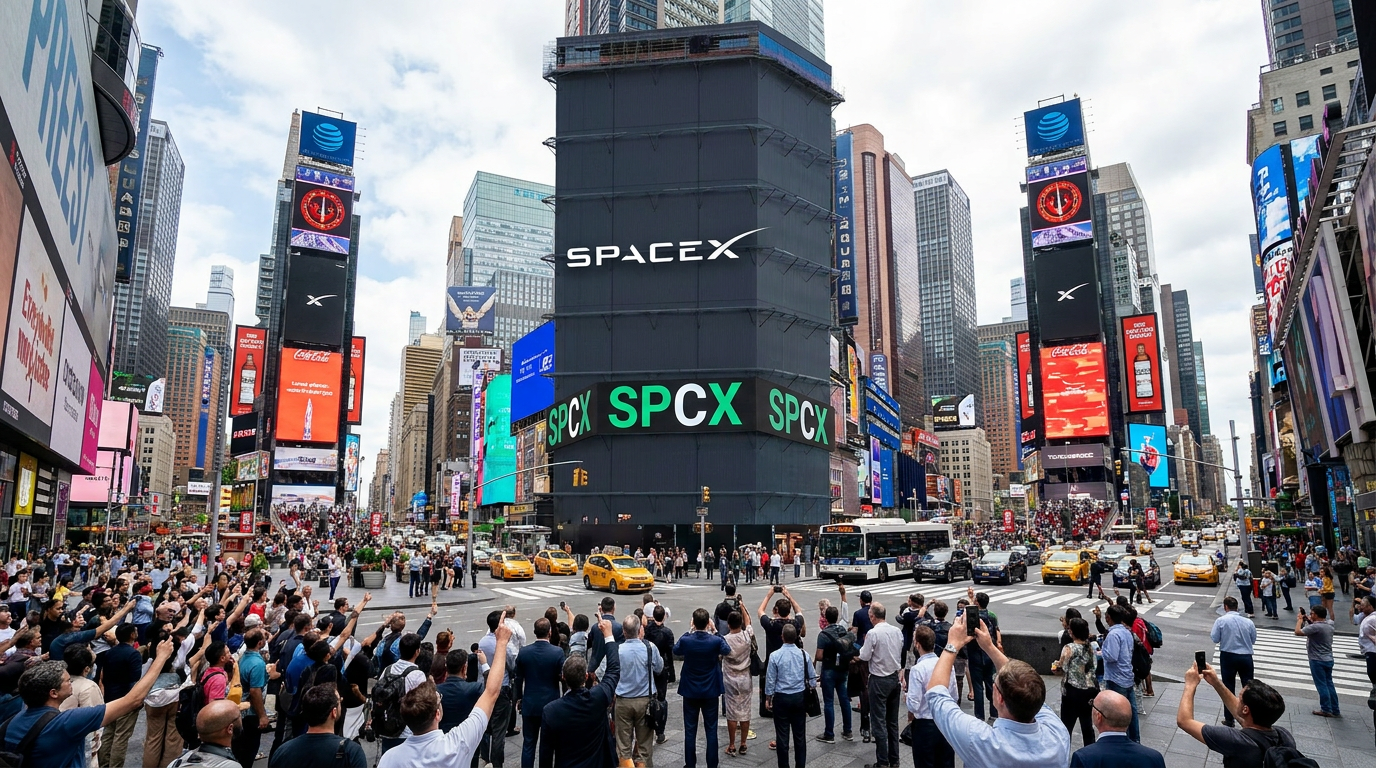
The impending initial public offering of SpaceX is sending ripples of optimism through global financial markets, acting as a powerful catalyst for a broader resurgence in Wall Street activity. After a prolonged period of subdued public listings and cautious capital deployment, the aerospace giant's move toward the public markets has triggered what financial analysts are officially calling a new "mega-IPO" wave. This resurgence is not only lifting the broader technology sector but is also fundamentally improving the financial outlook for major investment banks that facilitate these massive market debuts. The sheer scale of the anticipated SpaceX listing is acting as a bellwether, signaling to other high-growth private companies that the water is finally warm enough to enter the public domain.[3][5]
JPMorgan analysts recently highlighted that everyday investors and institutional players alike are currently underestimating the massive upside these blockbuster listings will bring to Wall Street institutions. The sheer volume of underwriting fees, advisory compensation, and subsequent trading income generated by companies of SpaceX's unprecedented scale is expected to significantly boost second-quarter bank earnings. For years, banks have relied on steady but less spectacular revenue streams, but the return of the mega-IPO promises a return to the highly lucrative deal-making environment that characterized previous bull markets. This shift is prompting a rapid reevaluation of bank stocks, which are suddenly positioned as prime beneficiaries of the aerospace and technology boom.[2][5]
Beyond domestic optimism, the upcoming offering is attracting unprecedented attention from abroad. Foreign investors are demonstrating historic demand for a piece of the United States space economy, eager to capitalize on the rapid commercialization of low-Earth orbit and the global expansion of advanced satellite broadband networks. International capital is actively positioning itself to secure early allocations, recognizing that SpaceX represents a unique intersection of industrial manufacturing, telecommunications, and defense contracting. This global appetite underscores the enduring appeal of American technological innovation and the unmatched depth of U.S. capital markets in funding generational infrastructure projects.[1][4]
Interestingly, foreign exchange analysts note a fascinating dynamic playing out in the currency markets alongside this equity rush. While international capital is flooding into U.S. equities to secure IPO allocations, it has not triggered a corresponding frenzy of dollar-buying. Analysts suggest this points to highly sophisticated hedging strategies by overseas institutions, which are eager to take on the equity risk of American hyper-growth companies without necessarily exposing themselves to the fluctuations of the U.S. dollar. This nuanced approach allows global funds to participate in the upside of the space economy while maintaining strict risk management protocols regarding their currency exposure.[1][4]

Interestingly, foreign exchange analysts note a fascinating dynamic playing out in the currency markets alongside this equity rush.
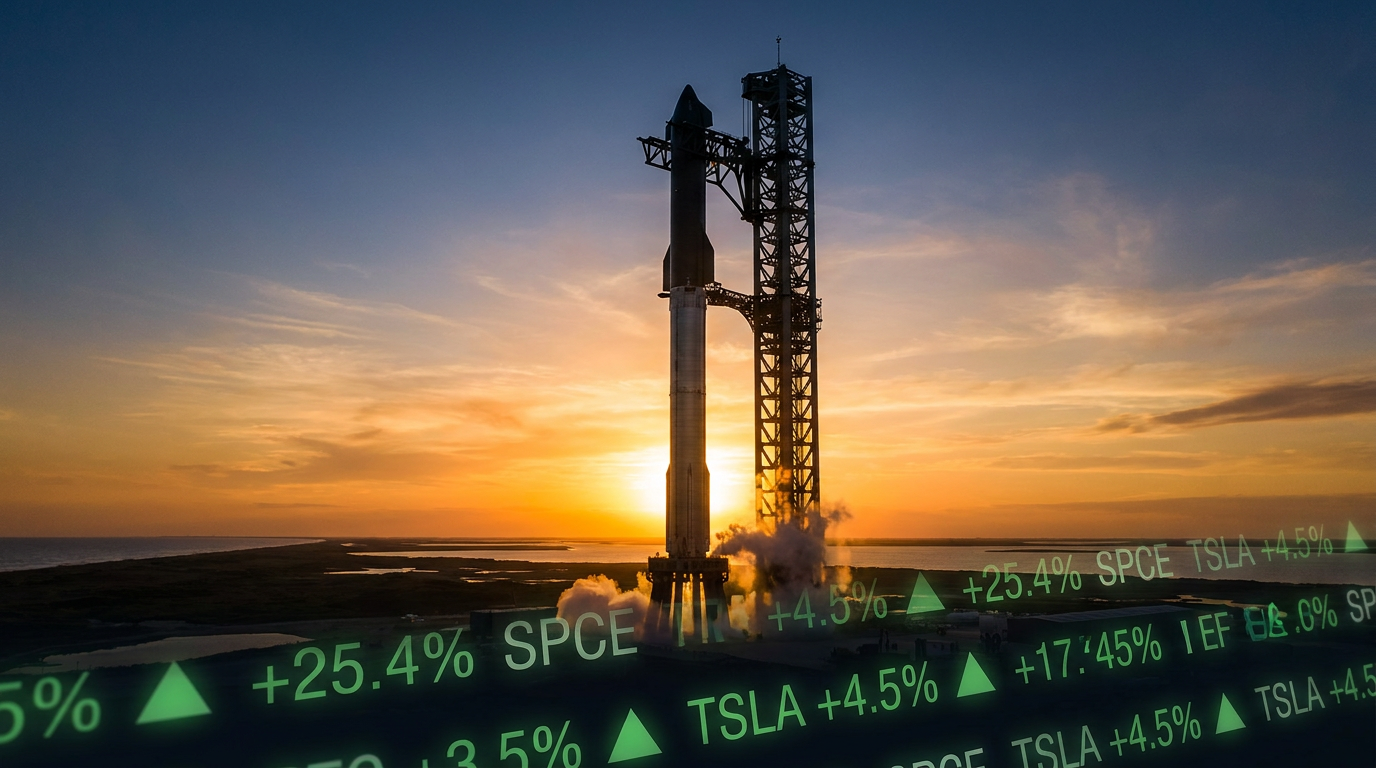
The excitement surrounding the space sector is already actively reshaping major stock indices. The Nasdaq 100, a key benchmark for technology and growth stocks, is currently undergoing a significant structural shakeup. The index recently added space-technology firm Rocket Lab, alongside four prominent artificial intelligence companies, reflecting a broader market pivot toward next-generation infrastructure. Market watchers widely consider this inclusion of Rocket Lab as a strategic precursor to SpaceX eventually dominating the index once it meets the seasoning requirements for inclusion. This index evolution ensures that even passive investors will soon have substantial exposure to the off-planet economy.[6]
Silicon Valley veterans and early-stage venture capitalists are equally bullish on the macroeconomic implications of this transition. Leading tech investors argue that the public market is uniquely positioned to absorb SpaceX's massive ongoing capital requirements, which could dramatically accelerate the company's ambitious timelines for Mars exploration and global broadband expansion. By tapping into the vast pools of public liquidity, SpaceX can fund its capital-intensive Starship program without constantly returning to the private well, setting a template for other capital-heavy deep-tech startups to follow.[7]
For everyday retail investors, this mega-IPO cycle represents a vital thawing of the capital markets and a democratization of access to growth. Over the past decade, a significant portion of value creation in the technology sector has been locked behind private equity doors, accessible only to accredited investors and massive institutions. As more high-growth companies like SpaceX feel confident enough to list publicly, retail portfolios finally gain direct access to transformative technological expansion. This shift allows standard retirement accounts to participate in the wealth generation that defines the modern innovation economy.[3][5]

Looking ahead, the successful execution of the SpaceX IPO is expected to serve as a definitive green light for dozens of other highly valued private companies waiting in the wings. Financial advisors are already fielding increased inquiries from clients eager to position their portfolios for this influx of new public equities. If the market absorbs this mega-IPO smoothly, it could trigger a multi-year cycle of public listings, fundamentally refreshing the composition of the stock market and providing a sustained tailwind for both the financial services sector and the broader economy.[2][5]
How we got here
2024-2025
Capital markets experience a prolonged period of subdued public listings and cautious investment.
Early 2026
SpaceX signals its intent to enter the public markets, triggering a reevaluation of tech valuations.
June 2026
The Nasdaq 100 undergoes a shakeup to include space-tech firms, while foreign capital floods U.S. equities in anticipation.
Viewpoints in depth
Institutional Banks
Wall Street firms are eager for the fee windfall and increased trading volume.
For major investment banks, the return of the mega-IPO represents a critical return to form. After relying on steady but less spectacular revenue streams during the IPO drought, institutions are preparing for a massive influx of underwriting fees and advisory compensation. Analysts note that companies of SpaceX's scale not only generate immediate listing fees but also drive sustained secondary trading volume, fundamentally improving the quarterly earnings outlook for the financial sector.
Foreign Investors
International capital is seeking high-growth U.S. tech exposure without taking on currency risk.
Overseas institutions view the commercialization of low-Earth orbit as a generational investment opportunity and are aggressively positioning themselves to secure early allocations. However, they are executing these trades with sophisticated currency hedging strategies. By participating in the equity upside without buying the U.S. dollar outright, foreign funds are demonstrating a nuanced approach to capturing American technological growth while strictly managing their macroeconomic risk.
Retail Investors
Everyday investors are looking forward to accessing previously private hyper-growth companies.
Retail advocates view this IPO cycle as a necessary democratization of the capital markets. For years, the most significant value creation in the technology sector has occurred while companies were still private, locking out standard retirement accounts. The public debut of a massive entity like SpaceX signals a shift back toward public markets, allowing everyday portfolios to finally participate directly in the wealth generation of the modern space and innovation economy.
What we don't know
- The exact valuation SpaceX will target when it officially prices its shares.
- How quickly other highly valued private companies will follow SpaceX into the public markets.
- The precise timeline for SpaceX's eventual inclusion in the Nasdaq 100 index.
Key terms
- Mega-IPO
- An exceptionally large initial public offering, typically involving a highly valued private company raising billions of dollars, which can significantly impact broader market liquidity.
- Underwriting Fees
- The compensation that investment banks receive for managing a company's initial public offering, assessing risk, and selling the initial shares to investors.
- Nasdaq 100
- A stock market index made up of 100 of the largest non-financial companies listed on the Nasdaq stock exchange, heavily weighted toward the technology sector.
Frequently asked
Why are Wall Street banks excited about the SpaceX IPO?
Mega-IPOs like SpaceX generate massive underwriting fees, advisory compensation, and trading income, which are expected to significantly boost bank earnings in the second quarter.
How are foreign investors reacting to the IPO?
Foreign investors are showing historic demand for SpaceX shares, eager to invest in the U.S. space economy, though they are using hedging strategies to avoid buying U.S. dollars directly.
What does this mean for retail investors?
The return of mega-IPOs allows everyday investors to buy into high-growth technology companies that have previously been restricted to private equity and institutional investors.
Sources
Source coverage
7 outlets
3 viewpoints surfaced







[1]MarketWatchGlobal Tech Investors
The SpaceX IPO is drawing historic demand from foreign investors. But don’t expect a dollar-buying frenzy.
Read on MarketWatch →[2]CNBCWall Street Banks
JPMorgan says investors are overlooking the upside to Wall Street banks that comes from SpaceX and other mega IPOs
Read on CNBC →[3]BloombergMarket Analysts
SpaceX IPO Preparations Spark Tech Sector Rally
Read on Bloomberg →[4]ReutersGlobal Tech Investors
Foreign Capital Floods US Markets Ahead of Anticipated SpaceX Listing
Read on Reuters →[5]Financial TimesWall Street Banks
Wall Street Banks Brace for Windfall from 2026 Mega-IPOs
Read on Financial Times →[6]Wall Street JournalMarket Analysts
Nasdaq 100 Shakeup: Rocket Lab Joins as SpaceX Waits in the Wings
Read on Wall Street Journal →[7]TechCrunchGlobal Tech Investors
Silicon Valley Investors Predict Massive Upside for SpaceX Public Debut
Read on TechCrunch →
Every angle. Every day.
Get finance stories with full source coverage and perspective breakdowns delivered to your inbox.