
SpaceX Completes Record $75 Billion IPO, Pushing Elon Musk's Net Worth Past $1 Trillion
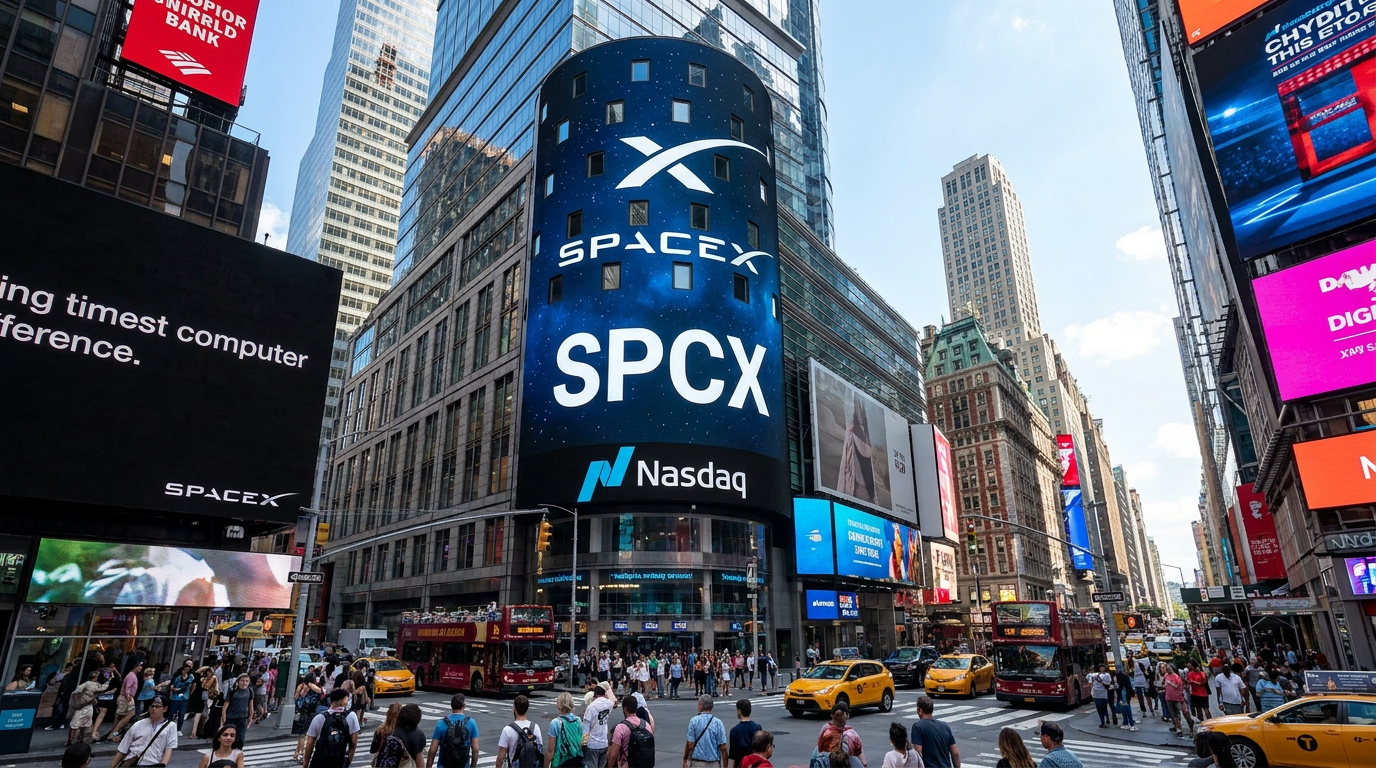
SpaceX has executed the largest initial public offering in history, achieving a $2.2 trillion market capitalization on its first day of trading. The landmark debut signals a maturing commercial space sector and makes founder Elon Musk the world's first trillionaire.
By Factlen Editorial Team
- Space Economy Bulls
- Argue that the IPO validates the commercial space sector and provides the necessary capital to fund deep space exploration.
- Market Pragmatists
- Emphasize the inherent physical and capital risks of space exploration, cautioning against treating the stock like a traditional tech investment.
- Socioeconomic Critics
- Focus on the unprecedented concentration of wealth represented by the world's first trillionaire and the implications of corporate monopolies.
What's not represented
- · Retail investors who were priced out of the initial offering allocation.
- · NASA and government defense officials evaluating their reliance on a now-public mega-corporation.
Why this matters
The public listing of the world's dominant space company opens the commercial space economy to everyday investors and establishes a massive new heavyweight in global equity markets. It also marks an unprecedented concentration of individual wealth, fundamentally altering the landscape of corporate mega-cap valuations.
Key points
- SpaceX raised $75 billion in the largest initial public offering in global financial history.
- The company's market capitalization reached $2.2 trillion after shares surged 19% on the first day of trading.
- The IPO's success pushed founder Elon Musk's personal net worth past the $1 trillion mark.
- Industry leaders view the successful listing as proof of a maturing, profitable commercial space sector.
- Analysts caution that investors must treat the stock as a long-term bet due to the inherent risks of space exploration.
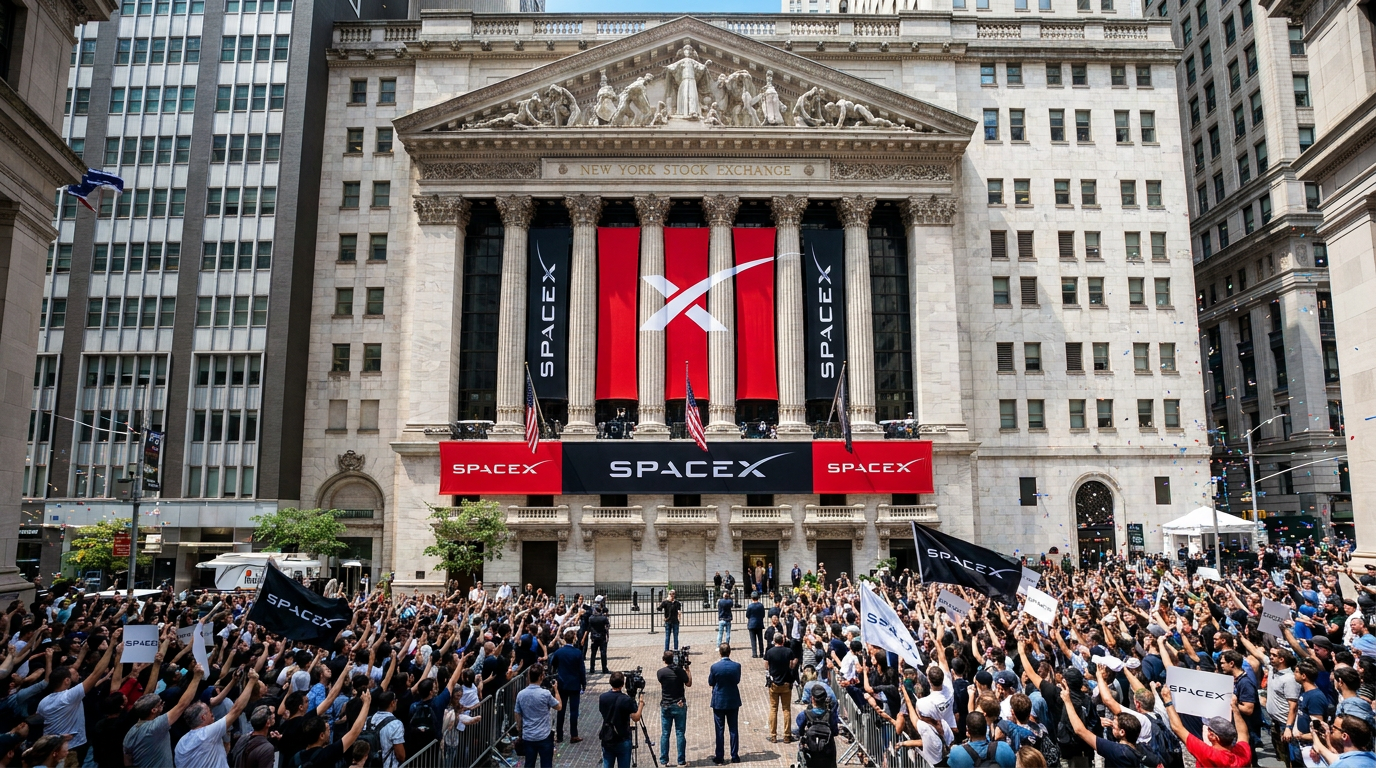
SpaceX executed the largest initial public offering in global financial history on June 12, raising an unprecedented $75 billion and fundamentally reshaping the landscape of mega-cap equities. The Hawthorne, California-based aerospace manufacturer and satellite internet provider ended its first day of public trading with a market capitalization of approximately $2.2 trillion. The sheer scale of the debut instantly catapults SpaceX into the exclusive club of the world's most valuable companies, standing shoulder-to-shoulder with tech giants like Apple, Microsoft, and Nvidia. Financial markets had anticipated the listing for years, but the sheer volume of capital absorbed during the offering exceeded even the most aggressive Wall Street projections.[1][7]
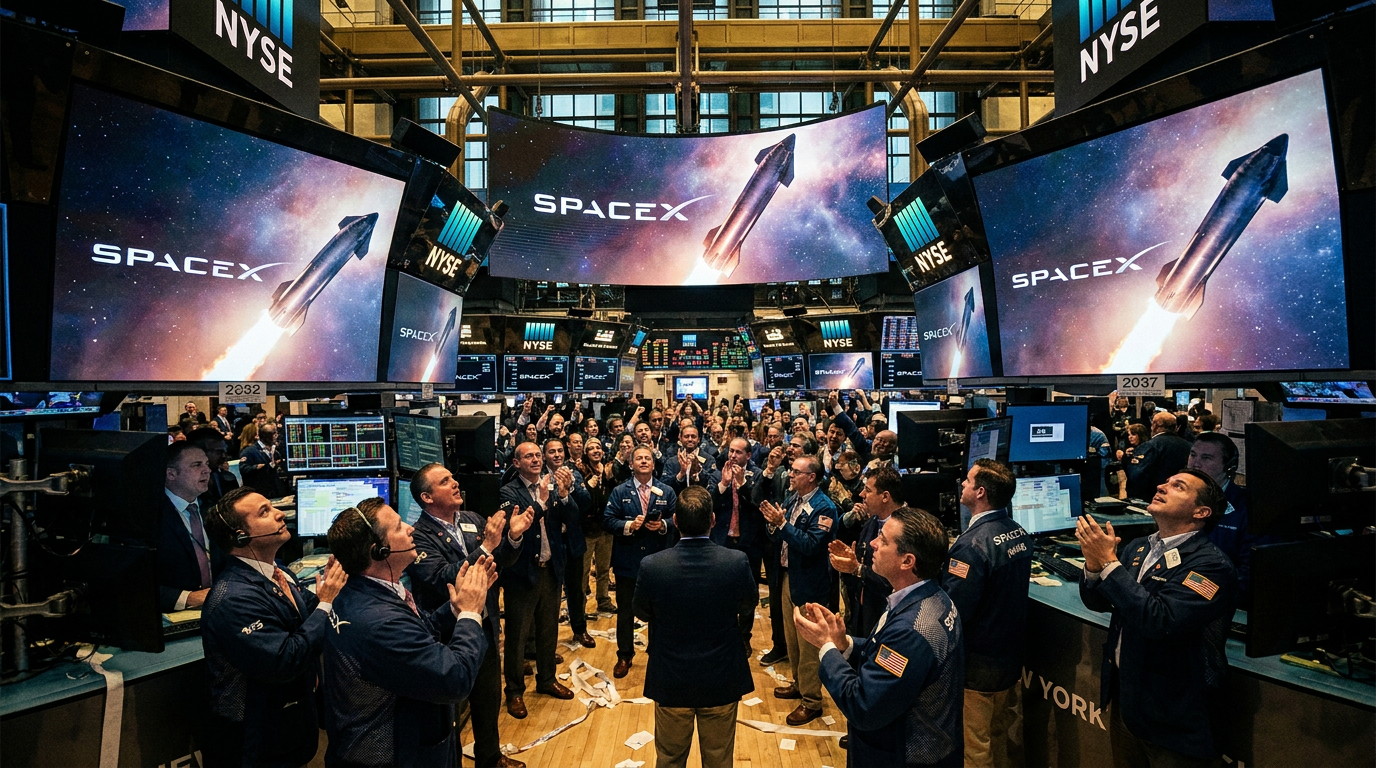
Shares of the space exploration company surged 19% by the closing bell, rewarding institutional and retail investors who managed to secure an allocation in the highly oversubscribed offering. The trading floor saw historic volume as index funds, sovereign wealth portfolios, and individual traders clamored for exposure to the commercial space economy. Analysts noted that the immediate price appreciation reflects a massive appetite for pure-play space investments, a sector that has historically been difficult for public market investors to access at scale. The successful float not only provided liquidity to early employees and venture backers but also established a robust public valuation for the company's ambitious future projects.[1][7]
Beyond the corporate balance sheet, the IPO triggered a historic milestone in individual wealth accumulation, pushing founder and CEO Elon Musk’s personal net worth past the $1 trillion mark. Musk, who retained a massive equity stake in the company he founded in 2002, is now officially the world's first trillionaire. The crossing of this ten-figure threshold has sparked intense discussions across financial and socioeconomic circles regarding the concentration of wealth in the modern tech era. While Musk's fortune is largely tied up in the equity of his various companies, the psychological and historical weight of the trillion-dollar valuation has dominated global headlines.[5][6]

Economic historians are drawing parallels between Musk's ascension and the Gilded Age, noting that John D. Rockefeller became America’s first recognized billionaire in 1916. Just as Rockefeller's wealth was built on the foundational energy source of the 20th century—oil—Musk's fortune is increasingly anchored in the foundational infrastructure of the 21st century: commercial spaceflight, satellite communications, and artificial intelligence. The milestone highlights how the scale of global capital has expanded over the last century, driven by technological monopolies and the rapid financialization of emerging industries.[5]
The timing of the IPO represents a significant pivot for Musk, who had long maintained that SpaceX would remain a private entity until it was regularly flying humans to Mars. The original rationale was that the extreme volatility and long-term development cycles of deep space exploration were incompatible with the short-term profit expectations of public market shareholders. However, the calculus shifted dramatically over the past eighteen months. Industry insiders suggest that the explosive growth of the artificial intelligence sector and the resulting competition for global capital forced SpaceX to accelerate its timeline to secure the massive funding required for its next phase of growth.[2][8]
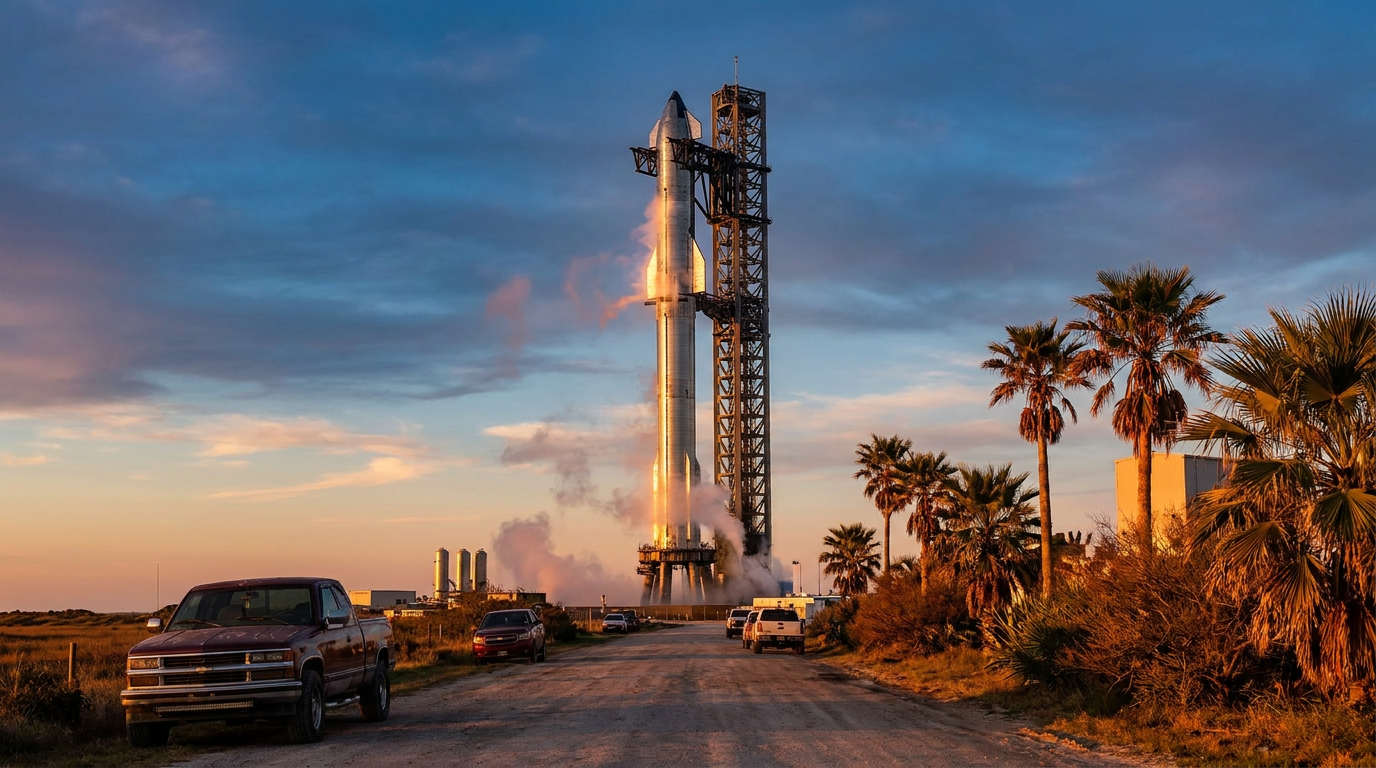
Developing the Starship rocket—the massive, fully reusable launch vehicle designed for lunar and Martian missions—requires an unprecedented burn rate of capital. Simultaneously, the company is aggressively expanding its Starlink satellite internet constellation, which requires continuous launches and infrastructure upgrades to maintain its competitive edge against emerging rivals. By tapping into the public markets, SpaceX has secured a $75 billion war chest that effectively insulates its research and development pipeline from short-term macroeconomic shocks, ensuring that its multi-decade ambitions remain fully funded regardless of private venture capital trends.[2][8]

The successful listing is being hailed as a watershed moment for the broader commercial space sector, signaling that the industry has matured past its experimental phase. Heather Pringle, CEO of the Space Foundation, noted that the IPO demonstrates viable, proven pathways to profitability in space. Rather than relying solely on speculative exploration, SpaceX has built a robust revenue engine through its dominance in commercial launch services, government defense contracts, and global broadband communications. This diversified business model provided Wall Street with the financial predictability necessary to support a multi-trillion-dollar valuation.[3]
The successful listing is being hailed as a watershed moment for the broader commercial space sector, signaling that the industry has matured past its experimental phase.
However, the transition from a closely guarded private fiefdom to a publicly traded mega-corporation introduces profound new challenges for SpaceX's management team. The company will now be subject to rigorous quarterly earnings reports, intense regulatory disclosures, and the constant scrutiny of activist investors. Financial analysts are closely watching how Musk, known for his unconventional management style and ambitious timelines, will navigate the strict governance requirements of the Securities and Exchange Commission. The tension between delivering quarterly shareholder value and funding high-risk, multi-billion-dollar missions to Mars will likely define the company's narrative for the next decade.[2][7]
For retail investors eager to participate in the space economy, financial advisors are urging caution and a recalibration of expectations. CNBC market commentator Jim Cramer advised that while it is not too late to buy into the company, investors must view the stock strictly as a long-term bet on space exploration. Unlike software companies that can scale with near-zero marginal costs, aerospace manufacturing is inherently capital-intensive and subject to catastrophic physical risks. A single launch failure or a delay in the Starship program could trigger massive volatility in the stock price.[4]
The ripple effects of the $75 billion liquidity event are already being felt across the aerospace supply chain and among competing space startups. Venture capitalists anticipate that the successful SpaceX exit will unfreeze funding for smaller aerospace companies, as institutional investors seek out the 'next SpaceX' in sub-sectors like orbital manufacturing, asteroid mining, and space debris removal. Conversely, legacy aerospace contractors face immense pressure to modernize their operations, as the public markets have now explicitly rewarded SpaceX's agile, vertically integrated approach over traditional cost-plus government contracting models.[3][8]

Geopolitically, the public listing of SpaceX adds a new layer of complexity to the United States' reliance on the company for national security and space exploration. SpaceX is the primary launch provider for NASA astronauts and a critical partner for the Department of Defense's classified payload deployments. With the company's equity now traded globally, policymakers in Washington are evaluating the implications of foreign investment and public market pressures on a corporation that effectively controls the United States' access to orbit. Ensuring that national security interests align with fiduciary duties to shareholders will require careful regulatory navigation.[1][8]
The sheer size of the IPO also raises questions about the mechanics of index inclusion and the future composition of major market benchmarks. Given its $2.2 trillion valuation, SpaceX is instantly eligible for inclusion in the S&P 500, a move that would force trillions of dollars in passive index funds to purchase the stock. This structural demand could provide a massive floor for the share price, further entrenching the company's financial dominance. Market strategists are already debating whether the traditional tech-heavy market leaders will need to be rebranded to accommodate the new aerospace behemoth.[7]
Despite the overwhelming optimism surrounding the debut, skeptics point to the immense technical hurdles that still stand between SpaceX and its ultimate goal of planetary colonization. The harsh realities of orbital mechanics, the physiological challenges of long-duration spaceflight, and the unproven economics of a Martian settlement remain monumental barriers. While the public markets have priced in a future where SpaceX monopolizes the cis-lunar economy, any significant technical setbacks could rapidly deflate the premium valuation currently assigned to the stock.[4][8]

Furthermore, the concentration of wealth and power resulting from the IPO has reignited debates over corporate monopolies and antitrust enforcement. As SpaceX leverages its massive new capital reserves to further undercut competitors in the launch and satellite internet markets, regulatory agencies in the US and Europe may face increasing pressure to intervene. The company's ability to maintain its rapid pace of innovation while navigating the bureaucratic friction of global antitrust scrutiny will be a critical test of its long-term viability as a public entity.[5][8]
Ultimately, the SpaceX IPO is more than just a record-breaking financial transaction; it is the formal integration of the space economy into the global financial system. By successfully floating a $2.2 trillion aerospace company, Wall Street has signaled its belief that the future of human economic activity extends beyond Earth's atmosphere. Whether the company can deliver on its promise of making humanity a multi-planetary species remains to be seen, but it now has the financial firepower to attempt the impossible on the public stage.[1][3]
How we got here
2002
Elon Musk founds Space Exploration Technologies Corp. (SpaceX) with the ultimate goal of reducing space transportation costs to enable the colonization of Mars.
2008
The Falcon 1 becomes the first privately developed liquid-fueled rocket to reach Earth orbit.
2020
SpaceX becomes the first private company to successfully send human astronauts to the International Space Station.
Early 2026
Rumors accelerate that the AI boom and the massive capital needs of the Starship program are pushing SpaceX toward a public listing.
June 12, 2026
SpaceX debuts on the public markets, raising $75 billion and reaching a $2.2 trillion valuation on its first day of trading.
Viewpoints in depth
Space Industry Optimists
Industry leaders who see the IPO as the ultimate validation of the commercial space economy.
Proponents of the commercial space sector argue that SpaceX's massive valuation is entirely justified by its near-monopoly on global launch services and the rapid expansion of the Starlink broadband network. They point out that unlike the speculative tech bubbles of the past, SpaceX has proven, diversified revenue streams and tangible infrastructure in orbit. For this camp, the $75 billion raised is not just a financial windfall; it is the necessary capital required to fund the next leap in human evolution—the colonization of Mars.
Market Pragmatists
Financial analysts who urge caution regarding the inherent risks of aerospace manufacturing.
While acknowledging the historic nature of the IPO, market pragmatists warn that pricing SpaceX like a high-margin software company ignores the physical realities of spaceflight. They emphasize that aerospace engineering is incredibly capital-intensive and fraught with catastrophic risks. A single launch failure, a delay in regulatory approvals, or a setback in the Starship development timeline could trigger massive sell-offs. This viewpoint stresses that retail investors must view the stock as a multi-decade hold rather than a short-term momentum play.
Economic Historians
Observers focused on the societal implications of the world's first trillionaire.
For economic historians and socioeconomic critics, the financial mechanics of the IPO are secondary to the milestone it created: the concentration of $1 trillion in the hands of a single individual. This camp draws direct parallels to the Gilded Age, arguing that the scale of modern wealth accumulation has outpaced regulatory frameworks and tax structures. They raise concerns about the outsized geopolitical influence wielded by a single corporate entity that controls both a massive global communications network and the primary means of orbital access.
What we don't know
- How public market pressure for quarterly profits will affect SpaceX's long-term, capital-intensive Mars ambitions.
- Whether regulatory agencies will increase antitrust scrutiny on the company now that it is a massive public entity.
- How the stock will perform once the initial retail and institutional frenzy subsides.
Key terms
- Initial Public Offering (IPO)
- The process of offering shares of a private corporation to the public in a new stock issuance, allowing the company to raise capital from public investors.
- Market Capitalization
- The total dollar market value of a company's outstanding shares of stock, calculated by multiplying the current stock price by the total number of outstanding shares.
- Commercial Space Sector
- The industry of providing space-related products and services, such as satellite launches and broadband internet, by private companies rather than government agencies.
Frequently asked
Can anyone buy SpaceX stock now?
Yes, following the initial public offering, SpaceX shares are available for purchase by the general public through standard brokerage accounts.
Why did SpaceX go public now?
While Elon Musk previously stated he would wait until regular Mars flights, the massive capital requirements for the Starship program and shifts in the tech investment landscape accelerated the timeline.
What does this mean for Elon Musk's wealth?
The massive $2.2 trillion valuation of SpaceX pushed Musk's personal net worth over the $1 trillion mark, making him the first individual in history to reach that milestone.
Sources
Source coverage
8 outlets
3 viewpoints surfaced






[1]BloombergSpace Economy Bulls
What to Know About SpaceX’s Record-Breaking IPO
Read on Bloomberg →Why Musk Raced to Take SpaceX Public in the World’s Biggest IPO
Read on Bloomberg →SpaceX IPO Sparks Surge in Space Industry Investment and Market Optimism
Read on Bloomberg →[4]CNBCSpace Economy Bulls
Jim Cramer says it's not too late to buy SpaceX — under one condition
Read on CNBC →[5]NYTSocioeconomic Critics
Musk Is the World’s First Trillionaire. Who Was the First Billionaire?
Read on NYT →[6]ForbesSocioeconomic Critics
How Elon Musk Just Became The World's First Trillionaire
Read on Forbes →[7]ReutersMarket Pragmatists
SpaceX shares surge 19% in historic market debut
Read on Reuters →[8]Wall Street JournalMarket Pragmatists
The AI Boom and the Race to Mars: Inside the SpaceX IPO
Read on Wall Street Journal →
More in business
See all 68 stories →SpaceX IPO
SpaceX Completes Record-Breaking IPO, Making Elon Musk the World's First Trillionaire
8 sources
Space Economy
SpaceX Completes Record $75 Billion IPO, Pushing Market Capitalization Past $2.2 Trillion
8 sources
Space Economy
SpaceX Completes Historic $75 Billion IPO, Igniting Space Economy Boom
8 sources
Skills-Based Hiring
The End of the Paper Ceiling: How Skills-Based Hiring is Rewiring the Labor Market
7 sources

Every angle. Every day.
Get business stories with full source coverage and perspective breakdowns delivered to your inbox.