
SpaceX Completes Largest IPO in History, Reaching $1.77 Trillion Valuation
Elon Musk's aerospace company has officially gone public in a record-breaking initial public offering, minting thousands of new millionaires and reshaping the commercial space sector.
By Factlen Editorial Team
- Retail and Tech Optimists
- View the valuation as justified by SpaceX's monopoly on heavy launch and its potential to unlock a multi-trillion-dollar space economy.
- Traditional Financial Analysts
- Express caution over the $1.77 trillion market cap, questioning if current revenue multiples support such an astronomical price.
- Aerospace Industry Competitors
- Concerned that SpaceX's public debut will absorb available capital, starving smaller space startups of necessary funding.
What's not represented
- · Regulatory bodies overseeing space traffic
- · Tax policy advocates monitoring the wealth creation event
Why this matters
The public debut of SpaceX not only marks the largest wealth-creation event in corporate history but also opens the door for everyday retail investors to directly fund and profit from the expanding space economy.
Key points
- SpaceX has completed the largest initial public offering in history, reaching a $1.77 trillion valuation.
- The IPO triggered a massive wealth-creation event for early employees and engineers.
- Rival aerospace stocks tumbled as investors rotated capital into SpaceX shares.
- Funds from the public offering will accelerate the Starship program and Mars colonization efforts.
- Some Wall Street analysts remain skeptical that current revenues justify the nearly $2 trillion price tag.
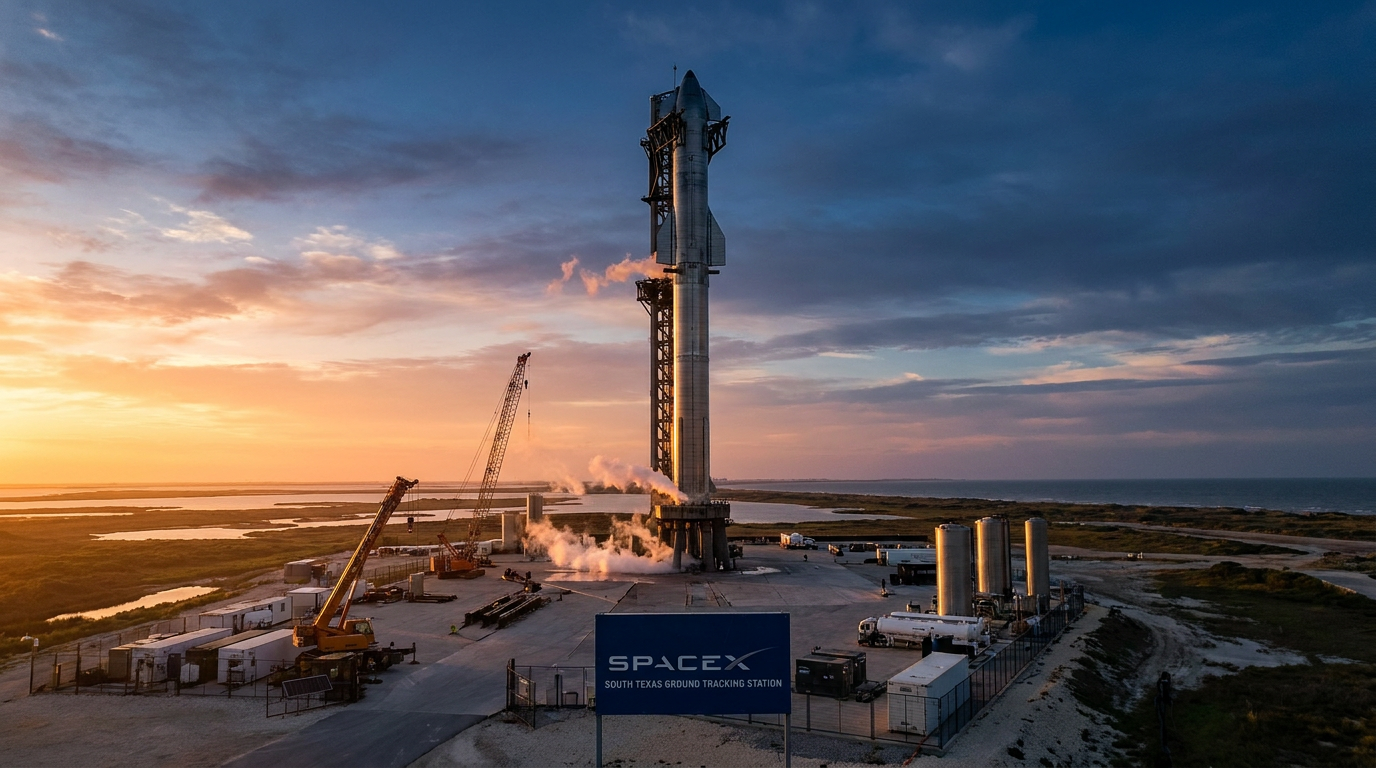
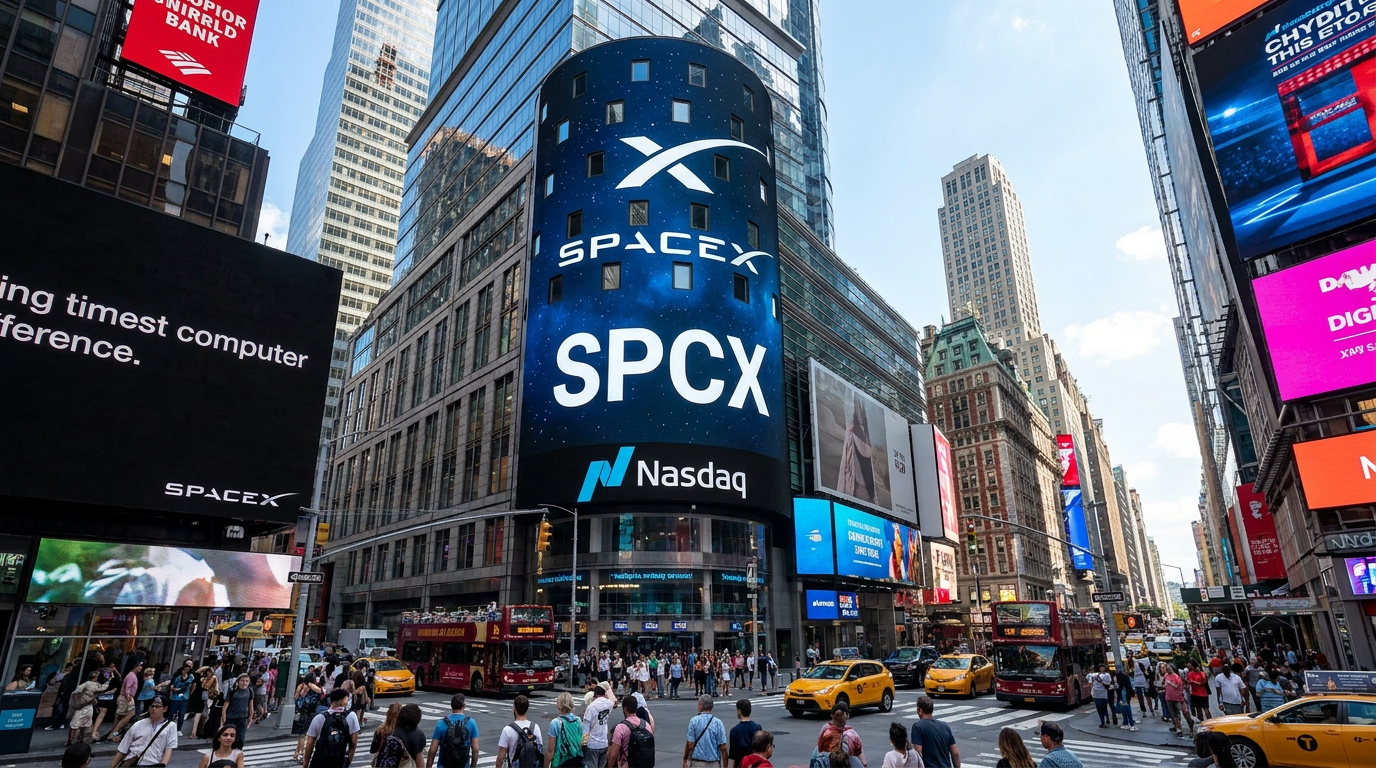
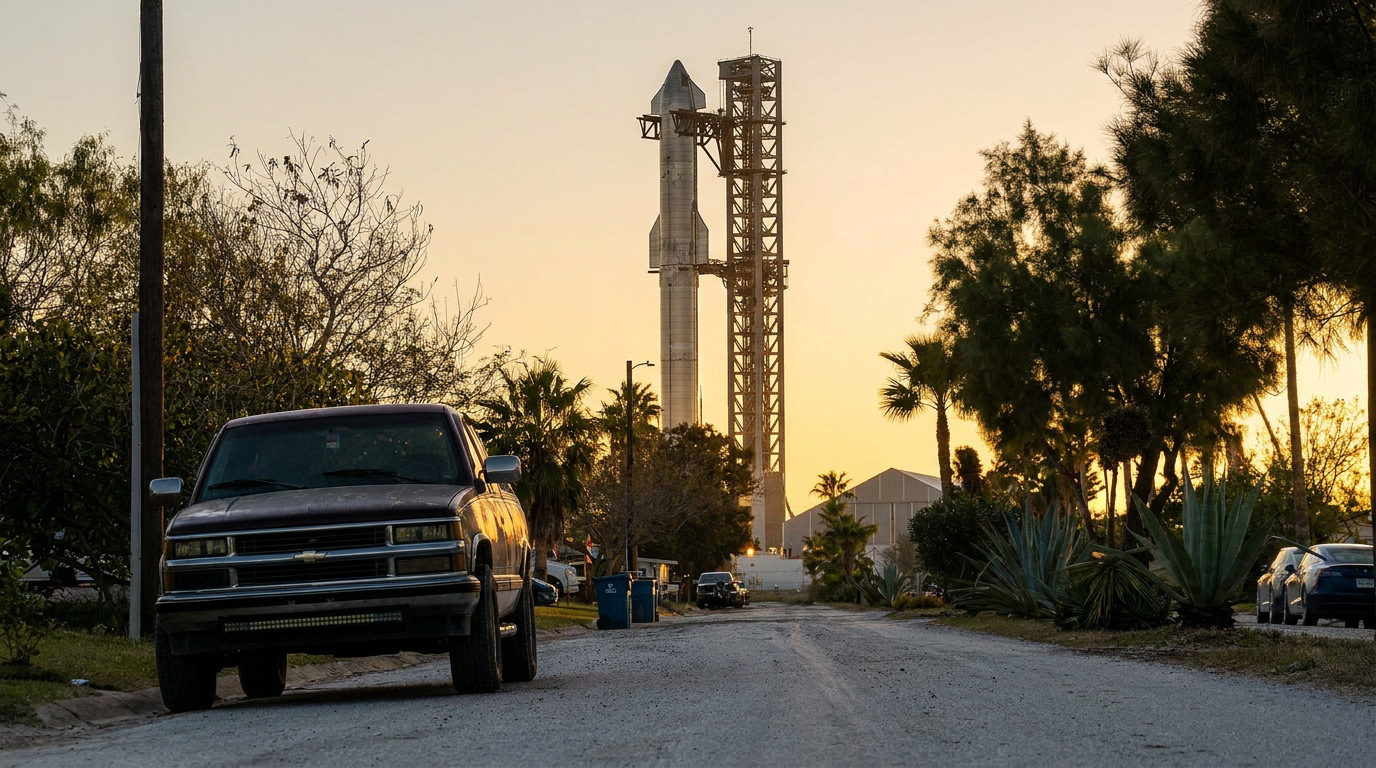
SpaceX officially entered the public markets on Friday, executing the largest initial public offering in corporate history and achieving a staggering valuation of $1.77 trillion. Ringing the Nasdaq opening bell remotely from the company's Starbase facility in Boca Chica, Texas, CEO Elon Musk marked a milestone that has been anticipated by Wall Street for over a decade. The sheer scale of the offering immediately reshaped the financial landscape, absorbing billions in institutional and retail capital within the first hours of trading and cementing the aerospace firm's position alongside the world's most valuable tech giants.[4][6][7]
The historic debut was accompanied by a moment of reflection from Musk, who addressed thousands of employees via livestream. He noted that when he founded the company in 2002, he gave it a less than 10 percent chance of succeeding. Today, the aerospace juggernaut not only dominates global launch cadence but has fundamentally altered the economics of reaching orbit. The transition from a high-risk startup to a nearly two-trillion-dollar public entity represents one of the most significant wealth-creation events of the modern era, validating a long-term vision that many early critics dismissed as impossible.[4][5]

That wealth creation is already sending ripples through the broader economy, particularly in the realm of financial services. Wealth advisors report that a new generation of "SpaceX millionaires"—early employees and engineers who held equity—are reinventing how large personal fortunes are managed. These newly minted high-net-worth individuals are reportedly applying their engineering mindsets to their portfolios, utilizing whiteboarding, algorithmic troubleshooting, and artificial intelligence to map out their financial futures rather than relying on traditional, conservative advisory models.[3]
However, the gravitational pull of the SpaceX IPO has created turbulence for other players in the commercial space sector. As investors raced to secure a piece of Musk’s flagship enterprise, rival rocket, satellite, and space-linked companies experienced a sharp selloff. Financial analysts note that the market is currently treating SpaceX as a category king, consolidating capital away from smaller competitors and pure-play space startups that now face a much steeper climb to attract investment dollars in a suddenly crowded public market.[1][8]

However, the gravitational pull of the SpaceX IPO has created turbulence for other players in the commercial space sector.
Despite the overwhelming market enthusiasm, some traditional financial analysts remain cautious about the astronomical $1.77 trillion valuation. Skeptics argue that while the company's achievements in reusable rocketry and its Starlink satellite internet constellation are undeniable, the current market capitalization prices in decades of flawless execution and near-monopoly margins. These investors question whether the fundamental revenues of the launch and telecommunications businesses can justify a valuation that rivals the world's most entrenched software and consumer hardware giants.[2][6]
Proponents of the valuation counter that SpaceX is not merely a launch provider, but a foundational infrastructure company for the next frontier of the global economy. By dramatically lowering the cost per kilogram to orbit, the company is enabling entirely new industries, from space-based manufacturing to global broadband coverage. Retail investors, in particular, have rallied behind the stock, viewing it as a rare opportunity to directly fund and profit from humanity's expansion into the cosmos, driving massive trading volume on opening day.[7][8]

The capital raised from this blockbuster public offering is expected to heavily accelerate the company's most ambitious projects. Chief among these is the Starship program, the fully reusable super-heavy lift vehicle designed to carry massive payloads and, eventually, human crews to the Moon and Mars. With a freshly fortified balance sheet, SpaceX is now positioned to aggressively scale its manufacturing capabilities and push forward with its interplanetary colonization goals without the constraints of private fundraising cycles.[4][8]
Ultimately, the SpaceX IPO serves as a watershed moment for both Wall Street and the aerospace industry. It validates the commercial space model that was once dismissed as science fiction and provides a clear financial benchmark for the burgeoning orbital economy. As the dust settles on the opening day of trading, the focus will shift from the sheer spectacle of the valuation to the company's ability to deliver on its promise of making humanity a multiplanetary species.[4][6][8]
How we got here
2002
Elon Musk founds Space Exploration Technologies Corp. with the goal of reducing space transportation costs.
2008
Falcon 1 becomes the first privately developed liquid-fueled launch vehicle to reach orbit, saving the company from bankruptcy.
2020
SpaceX successfully launches NASA astronauts to the ISS, returning human spaceflight capabilities to the United States.
2024
The Starship megarocket achieves its first successful orbital-class flights and controlled splashdowns.
June 2026
SpaceX goes public in a record-breaking IPO, achieving a $1.77 trillion market capitalization.
Viewpoints in depth
Retail and Tech Optimists
Investors who believe SpaceX's valuation is justified by its potential to unlock a multi-trillion-dollar space economy.
For bullish investors, SpaceX is not evaluated as a traditional aerospace contractor, but as a foundational infrastructure monopoly. They argue that by drastically reducing the cost of reaching low Earth orbit, SpaceX is enabling entirely new economic sectors—from space-based solar power to orbital manufacturing. In this view, the $1.77 trillion valuation reflects the total addressable market of the entire future space economy, which SpaceX is uniquely positioned to dominate through its Starlink and Starship programs.
Traditional Financial Analysts
Skeptics who question whether the company's current and projected revenues can support a nearly $2 trillion market cap.
Value-focused analysts point out that a $1.77 trillion valuation places SpaceX in the same league as mature, high-margin software giants. They caution that aerospace is inherently capital-intensive, hardware-heavy, and subject to catastrophic physical risks. Skeptics argue that even with a monopoly on commercial launch and a highly successful satellite internet business, the revenue multiples required to justify this price tag assume decades of flawless execution and zero regulatory setbacks.
Aerospace Industry Competitors
Rival firms and startups concerned about the consolidation of capital and talent into a single dominant player.
For the broader commercial space sector, the SpaceX IPO is a double-edged sword. While it validates the industry to mainstream Wall Street, it also acts as a massive capital sink. Competitors worry that institutional and retail investors will view SpaceX as the only 'safe' space play, starving smaller launch providers and pure-play satellite startups of the funding they need to survive. This dynamic was immediately visible on opening day, as shares of rival space firms plummeted while SpaceX surged.
What we don't know
- How the intense quarterly scrutiny of public markets will affect SpaceX's historically high-risk, iterative testing culture.
- Whether the Starlink division will eventually be spun off into its own publicly traded entity, as Musk previously suggested.
Key terms
- Initial Public Offering (IPO)
- The process of offering shares of a private corporation to the public in a new stock issuance, allowing the company to raise capital from public investors.
- Market Capitalization
- The total value of a publicly traded company's outstanding shares, calculated by multiplying the current share price by the total number of shares.
- Retail Investor
- Individual, non-professional investors who buy and sell securities for their personal accounts, rather than on behalf of an institution.
- Starship
- SpaceX's fully reusable, super-heavy lift launch vehicle designed to carry crew and cargo to Earth orbit, the Moon, and Mars.
Frequently asked
How much is SpaceX worth after the IPO?
SpaceX achieved a valuation of $1.77 trillion upon entering the public markets, making it the largest initial public offering in history.
Why did other space stocks drop?
Investors sold off shares in rival aerospace companies to free up capital to buy into the SpaceX IPO, treating the company as the dominant category leader.
What will SpaceX do with the raised capital?
The funds are expected to accelerate the development of the Starship program and expand the Starlink satellite internet constellation.
Did Elon Musk think SpaceX would succeed?
During the IPO livestream, Musk revealed that when he founded the company in 2002, he gave it a less than 10 percent chance of success.
Sources
Source coverage
8 outlets
3 viewpoints surfaced







[1]BloombergAerospace Industry Competitors
Rival Space Stocks Tumble as Investors Race Toward Musk’s IPO
Read on Bloomberg →[2]NYTTraditional Financial Analysts
Is SpaceX worth $1.77 trillion? It’s a pie in the sky, some investors say.
Read on NYT →[3]CNBCAerospace Industry Competitors
New SpaceX millionaires are reinventing the business of managing large wealth
Read on CNBC →[4]ForbesRetail and Tech Optimists
Everything Elon Musk Said As SpaceX Rang Opening Bell For Its Record-Breaking IPO
Read on Forbes →Elon Musk Gave SpaceX Less Than 10% Chance of Succeeding
Read on Bloomberg →[6]Wall Street JournalTraditional Financial Analysts
SpaceX Prices Largest IPO in History, Valuing Company at $1.77 Trillion
Read on Wall Street Journal →[7]Fox BusinessRetail and Tech Optimists
Elon Musk's SpaceX Makes History With Blockbuster Public Offering
Read on Fox Business →[8]TechCrunchRetail and Tech Optimists
What the SpaceX IPO means for the broader space economy
Read on TechCrunch →
More in business
See all 68 stories →SpaceX IPO
SpaceX Completes Record-Breaking IPO, Making Elon Musk the World's First Trillionaire
8 sources
Space Economy
SpaceX Completes Record $75 Billion IPO, Pushing Market Capitalization Past $2.2 Trillion
8 sources
Space Economy
SpaceX Completes Historic $75 Billion IPO, Igniting Space Economy Boom
8 sources
Skills-Based Hiring
The End of the Paper Ceiling: How Skills-Based Hiring is Rewiring the Labor Market
7 sources

Every angle. Every day.
Get business stories with full source coverage and perspective breakdowns delivered to your inbox.