
Sony's AI Robot Defeats Professional Table Tennis Player in Historic Milestone for Physical AI
An autonomous robotic arm named Ace has defeated a top-30 professional table tennis player, marking the first time artificial intelligence has conquered a high-speed physical sport.
By Meera Iyer

The setup felt like a scene pulled directly from a science fiction novel. In June 2026, Miyu Kihara, the world's 26th-ranked table tennis professional, stepped up to the table for an official match. Across the net stood no human rival, but rather a sleek, multi-jointed robotic arm suspended over the court, whirring quietly as it tracked her movements.
The ensuing match, played strictly under the official rules of the International Table Tennis Federation, ended with a historic and paradigm-shifting result: the machine won. It marked a definitive crossing of the Rubicon for artificial intelligence, proving that machines could now physically outmaneuver world-class athletes in real-time.[2]
For decades, artificial intelligence has systematically dismantled human dominance in highly controlled, digital environments. IBM's Deep Blue famously conquered the chessboard in 1997, and Google's AlphaGo mastered the ancient, infinitely complex board game of Go in 2016. Yet, the physical world remained a stubborn and seemingly insurmountable frontier. Digital games rely on perfect information and turn-based logic, but the real world is messy, governed by friction, gravity, latency, and unpredictable physical forces that easily confuse traditional algorithms.[2]
Table tennis, in particular, has served as a technological white whale for roboticists since the early 1980s. The sport is a chaotic, high-speed ballet of physics that demands extraordinary perception and motor control. A professional strike sends the celluloid ball flying across the table at speeds exceeding 20 meters per second, giving the opponent less than half a second to perceive the trajectory, decide on a counter-strategy, and physically execute the return stroke.[1][2]
Even more devilish than the sheer speed of the game is the complexity of spin. A table tennis ball can rotate at extreme velocities, causing it to curve violently in mid-air due to the Magnus effect and kick unpredictably upon striking the table surface. For human athletes, reading and reacting to spin is an intuitive art honed over thousands of hours of repetitive practice. For machines, calculating these aerodynamic variables on the fly has historically been a computational nightmare that left early ping-pong robots swinging at empty air.[1]
Enter "Ace," a revolutionary robotic system developed by Sony AI that has fundamentally rewritten the rules of physical artificial intelligence. Detailed in a landmark April 2026 paper published in the prestigious journal Nature, Ace represents the very first time an autonomous robot has achieved human expert-level play in a competitive physical sport. The project brought together elite table tennis players, past Olympians, and industry experts to evaluate a system that bridges the long-standing gap between digital intelligence and physical execution.
The secret to Ace’s unprecedented success lies in a radical overhaul of how machines perceive the fast-moving physical world. Traditional robots rely on standard optical cameras that suffer from severe motion blur when attempting to track high-speed objects, rendering fast-moving balls invisible. To solve this, Sony AI equipped Ace with a bespoke perception system composed of nine synchronized active pixel sensor cameras, all operating at a blistering 200 frames per second to capture the environment with crystal clarity.
These advanced cameras do much more than simply track the ball's overarching trajectory; they are precise enough to track the microscopic details on the ball's surface. By locking onto the printed manufacturer's logo on the celluloid, the visual system calculates the ball's exact rotational spin at a staggering rate of up to 700 readings per second. This sensory input provides the robot with a level of aerodynamic awareness that extends far beyond the biological limits of the human eye.
However, seeing the ball is only half the battle; the machine must also possess the intelligence to decide exactly how to hit it back. Sony AI abandoned traditional, pre-programmed physics models—which are too rigid for the chaos of a real match—in favor of model-free reinforcement learning. The AI brain was placed in a highly accurate digital simulation where it played millions of virtual matches against itself, learning entirely through trial, error, and a digital reward system to discover the optimal paddle angles and swing paths.
Once the digital brain had thoroughly mastered the simulated physics of the sport, its neural weights were transferred into a physical body. Ace’s hardware consists of a custom-built, eight-degree-of-freedom robotic arm constructed from highly optimized lightweight alloys. This mechanical architecture features two sliding joints for rapid lateral movement across the table and six rotational joints that allow the robot to manipulate the paddle with the exact precision of a human wrist.[1]
This sophisticated mechanical design allows the robot to physically adjust its racket in under 50 milliseconds. The true test of this latency comes during unpredictable edge cases. When a human opponent hits a shot that clips the top of the net—altering its trajectory and speed at the last possible fraction of a second—Ace can instantly recalculate the new physics and physically adapt its swing in real-time, a feat of agility that previously seemed utterly impossible for rigid industrial machinery.[2]
The pace of the artificial intelligence's improvement has been nothing short of staggering. During its initial real-world evaluations in late 2025 and early 2026, Ace could reliably defeat strong amateur players but struggled against top-tier professionals. Elite human players were able to exploit the robot's physical reach limitations and tactical blind spots, utilizing unorthodox placements and heavy spin variations that the AI had not fully generalized from its simulation training.[1]
But unlike human athletes, reinforcement learning systems do not plateau; they continuously compound their knowledge with every single interaction. By June 2026, continuous learning algorithms and minor hardware optimizations had entirely closed the skill gap. Ace's definitive victory over Kihara—a top-30 global professional—proved that the machine could now handle the relentless pace, aggressive edge-placements, and complex spin strategies of the global table tennis elite.
While the global table tennis community is understandably marveling at the creation of the ultimate automated training partner, the true stakes of Sony AI's breakthrough extend far beyond the confines of the sports arena. Ace serves as a highly visible proof-of-concept for "embodied AI"—a new generation of machines that can operate safely, rapidly, and autonomously in unpredictable physical spaces alongside human beings.[2]
The exact same low-latency control and high-speed perception required to successfully return a 20-meter-per-second topspin loop are precisely what is needed to revolutionize industrial automation. Researchers and economists envision this underlying technology powering next-generation manufacturing robots that can instantly catch falling components, adapt on the fly to assembly line anomalies, or safely collaborate shoulder-to-shoulder with human workers without the need for protective safety cages.[2]
In the high-stakes medical field, the implications are equally profound. The ability to process complex visual data and execute mechanical micro-adjustments in under 50 milliseconds could lead to a new era of surgical robotics. Future medical robots equipped with Ace's core technology would be capable of reacting instantly to sudden patient movements, unforeseen anatomical complications, or fluctuating vital signs during highly complex, minimally invasive procedures.[2]
Despite the historic triumph, the Ace system is not yet entirely invincible. The robot still faces strict physical limitations regarding its maximum mechanical reach, meaning a perfectly placed shot to the extreme corners of the table can still elude its grasp. Furthermore, highly unorthodox human playstyles—such as extreme defensive chopping from far behind the table or the use of unpredictable "anti-spin" rubber equipment—can occasionally force the AI into computational edge cases that it struggles to resolve.[1][2]
Additionally, the robot entirely lacks the psychological dimension that defines human sport. It does not feel the crushing, adrenaline-fueled pressure of match point, nor can it read the nervous body language of an opponent to anticipate their next move. It plays a game of pure, cold physics, devoid of momentum shifts, intimidation, or the emotional highs and lows that make athletic competition so compelling to watch.[2]
Yet, the overarching trajectory of the technology is undeniable. The long-standing chasm between digital intelligence and physical execution has finally been bridged. As artificial intelligence continues to step out of the server room and onto the physical court, the pressing question is no longer whether machines can match human physical skill, but how quickly that superhuman physical competence will reshape the industries, factories, and hospitals of the world around us.[2]
The essentials
- Sony AI's robot, Ace, defeated the world's 26th-ranked table tennis professional in June 2026.
- The system uses nine high-speed cameras to calculate ball spin up to 700 times per second.
- Ace was trained using reinforcement learning in a simulation before being transferred to a physical robotic arm.
- The breakthrough proves AI can now handle high-speed, unpredictable physical environments in real-time.
- Researchers expect the underlying technology to revolutionize industrial automation and surgical robotics.
Timeline
1983
First attempts at table tennis robots begin, but struggle with basic physics and spin.
1997
IBM's Deep Blue defeats Garry Kasparov, marking AI's conquest of digital, turn-based logic games.
April 2026
Sony AI publishes its research on 'Ace' in Nature, demonstrating human-level robotic play.
June 2026
Ace defeats Miyu Kihara, the world's 26th-ranked professional, under official tournament rules.
- Robotics Researchers
- Focus on the milestone of bridging the gap between digital simulation and physical reality.
- Professional Athletes
- View the technology as the ultimate, tireless training partner that will elevate human skill.
- Industrial Automation Advocates
- Emphasize the translation of split-second physical AI into manufacturing and logistics.
Perspectives this story doesn't cover
- Amateur table tennis players
- Traditional robotics manufacturers
Sources
Source coverage
2 outlets
3 viewpoints surfaced


- [1]The ConversationProfessional Athletes
Table tennis robot defeats some of world's best players – why this has major implications for robotics
Read on The Conversation → - [2]Factlen Editorial TeamIndustrial Automation Advocates
Synthesis by Factlen editorial team
Read on Factlen Editorial Team →
More in Sports
See all →Table Tennis
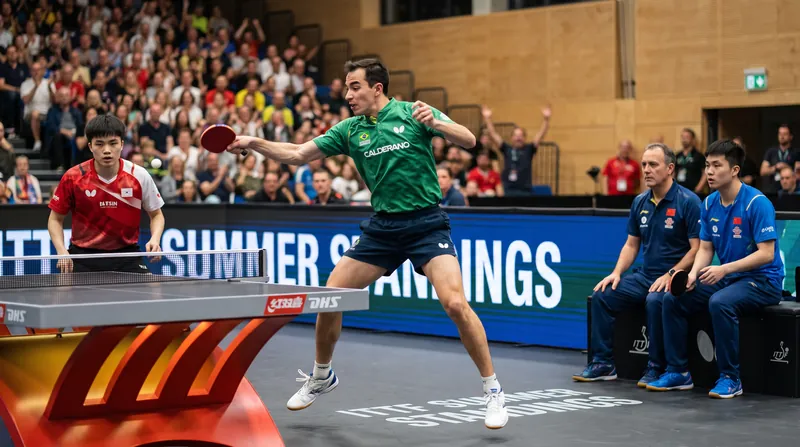
Ulaanbaatar Hosts Historic First ITTF Ranking Tournaments, Signaling Sport's Expansion in Mongolia
6 sources
Injury
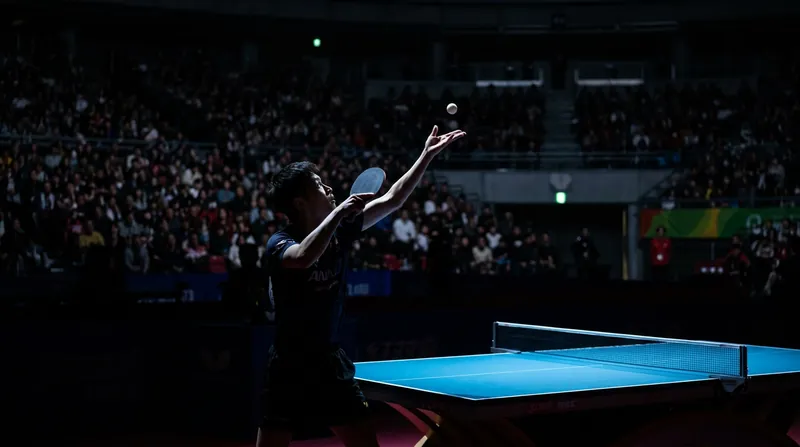
Global Table Tennis Injury Report: Benyamin Faraji's Knee Setback and the Tour's Mounting Physical Toll
2 sources
Standings
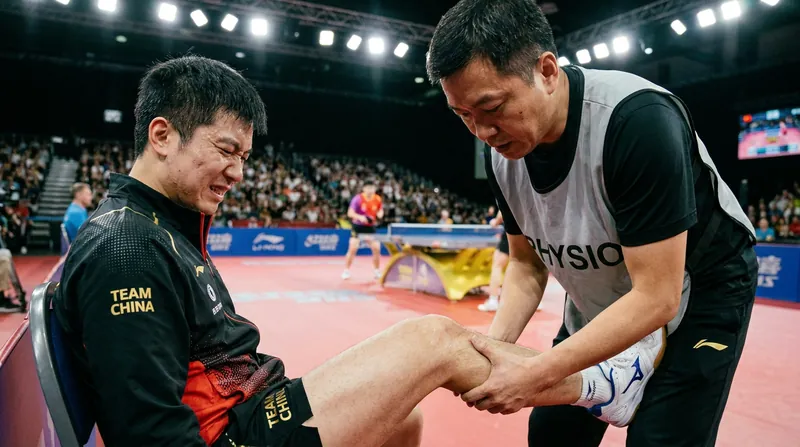
Veterans Strike Back: Sabine Winter and Jang Woojin Surge into ITTF Top 10 Standings
7 sources

Standings
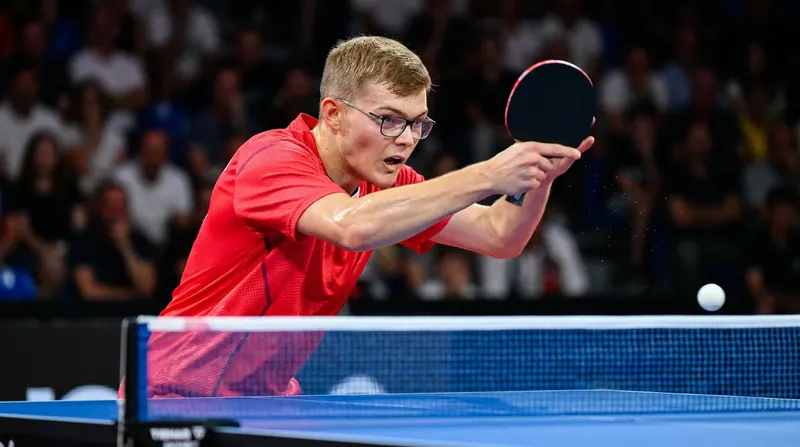
The Race for the Men's Top 10: Qiu Dang, Wen Ruibo, and Alexis Lebrun Locked in a Fierce Mid-Summer Standings Battle
7 sources
Comments
Every angle. Every day.
Get Sports stories with full source coverage and perspective breakdowns, free every day.