
Sodium-Ion Batteries Enter Mass Production, Promising Cheaper and Cold-Resistant EVs
Major battery manufacturers have officially overcome production bottlenecks to mass-produce sodium-ion batteries in 2026. The breakthrough promises to drastically lower electric vehicle costs and eliminate winter range anxiety.
By Factlen Editorial Team
- Battery Manufacturers
- Focused on scaling production, lowering raw material costs, and diversifying their product lines beyond lithium.
- Energy Analysts
- Viewing sodium as a vital complement to lithium that will dominate grid storage and budget EVs, rather than a total replacement.
- Consumer Advocates
- Excited about the prospect of truly affordable entry-level EVs and the elimination of winter range anxiety.
What's not represented
- · Lithium Mining Companies
- · Legacy Automakers
Why this matters
By swapping expensive, geopolitically constrained lithium for abundant sodium, this technology paves the way for truly affordable entry-level EVs. It also solves one of the biggest consumer pain points: severe battery range loss in freezing temperatures.
Key points
- Major battery manufacturers have resolved engineering bottlenecks to mass-produce sodium-ion EV batteries in 2026.
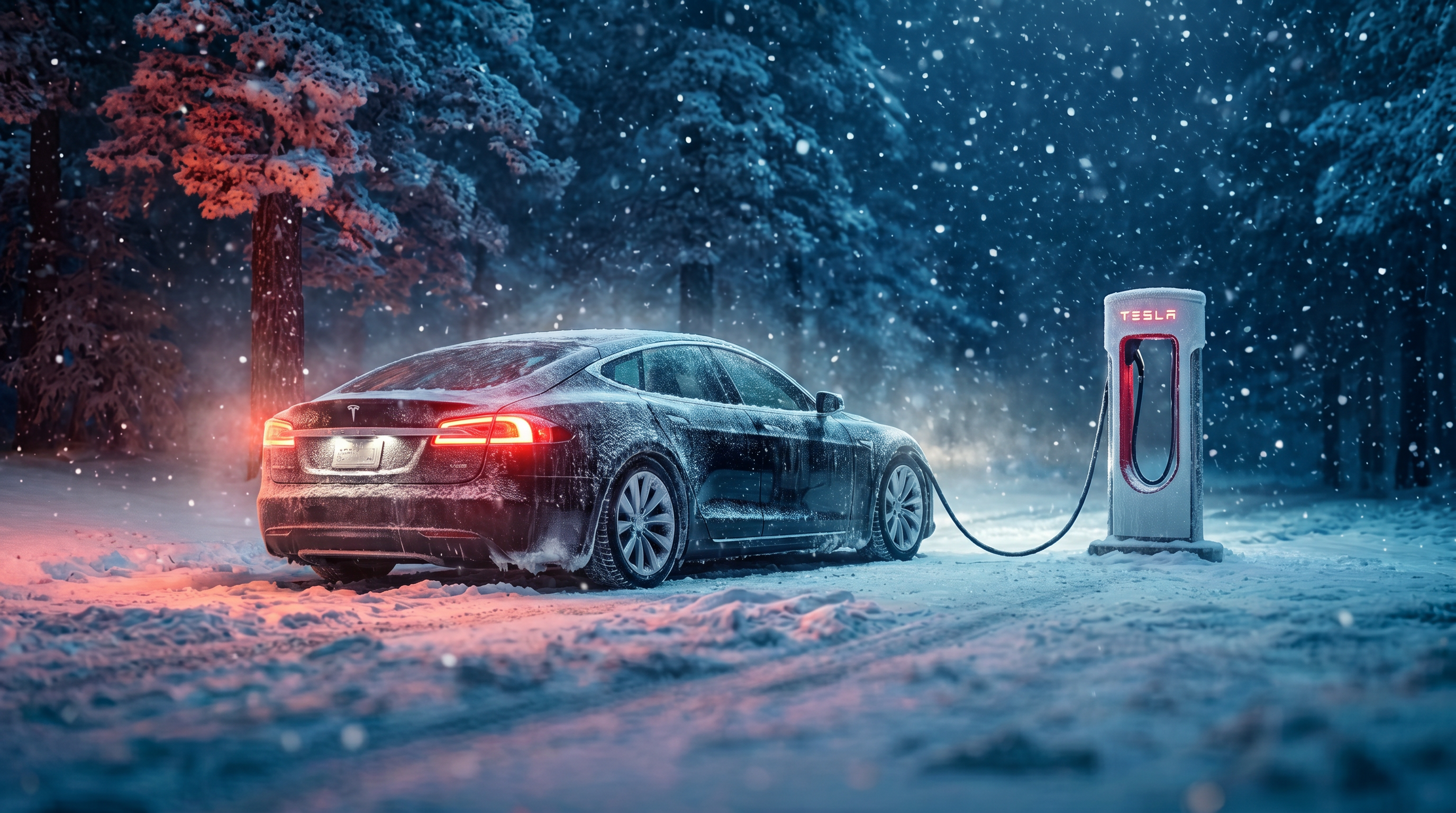
- Sodium-ion cells retain up to 90% of their capacity at -40°C, effectively eliminating winter range anxiety.
- The technology relies on abundant materials like sea salt, bypassing volatile lithium supply chains.
- Sodium batteries are estimated to be up to 60% cheaper to produce than standard lithium-ion packs.
- The first mass-produced sodium-ion passenger EV, offering 400 km of range, hits the market in mid-2026.
- Sodium is expected to complement lithium, dominating budget EVs and grid storage while lithium powers premium vehicles.
The electric vehicle industry has long been tethered to a single, volatile element: lithium. As global demand for electric vehicles and renewable grid storage has surged, so too have the geopolitical and financial bottlenecks surrounding lithium extraction and refinement.[8]
But in 2026, the industry is undergoing a seismic shift. Sodium-ion batteries, long considered a promising but distant laboratory experiment, have officially crossed the threshold into mass production, promising to rewrite the economics of electrification.[3][4]
At the 2026 Equipment Powerhouse Forum in late May, Wu Kai, Chief Scientist at battery giant CATL, confirmed that the core manufacturing bottlenecks holding sodium back for years have finally been resolved. The company's production lines are now scaling up to deliver gigawatt-hours of sodium-ion cells to the market this year.[2][3]
To understand why this matters, one must look at the chemistry. Both lithium-ion and sodium-ion batteries work on the exact same fundamental principle: they store and release energy by shuttling charged atoms—known as ions—back and forth between a cathode and an anode.[5]
The difference lies in the ion itself. Sodium is essentially the heavier, larger cousin of lithium. Because sodium ions are physically larger, they cannot easily slip into the standard graphite anodes that have been perfected for lithium-ion batteries over the last three decades.[5][6]
For years, this size difference caused irreversible mechanical stress, breaking down the battery quickly during charging cycles. To solve this, engineers had to redesign the battery's architecture from the ground up, replacing graphite with "hard carbon"—a material with wider molecular pores that can comfortably accommodate the bulky sodium ions.[6]

With that engineering hurdle cleared, the advantages of sodium are now being unlocked at scale. The most immediate and tangible benefit for everyday consumers is the chemistry's extreme temperature resilience.[1][5]
With that engineering hurdle cleared, the advantages of sodium are now being unlocked at scale.
Traditional lithium-ion batteries are notorious for losing significant range and charging speed in freezing temperatures. This winter range anxiety has remained a major hurdle for EV adoption in colder climates like Canada, Northern Europe, and the American Midwest.[1]
CATL's new sodium-ion cells, branded as "Naxtra," directly solve this problem. The cells can retain roughly 90 percent of their usable capacity even at minus 40 degrees Celsius. They can also charge reliably at minus 30 degrees Celsius, effectively eliminating the winter performance penalty.[1][2]
Beyond weather resilience, the sheer abundance of sodium changes the economic equation of battery manufacturing. Sodium is roughly 1,000 times more abundant in the Earth's crust than lithium and can be easily extracted from common compounds like ordinary sea salt.[4][5]
This bypasses the volatile lithium supply chain, which is concentrated in a few specific regions and subject to extreme price swings. Analysts forecast that at scale, sodium-ion cells could be 60 to 65 percent cheaper to produce than standard lithium iron phosphate (LFP) batteries.[3][4]
The commercial rollout is already underway, moving the technology from press releases to dealership floors. The first mass-produced passenger EV powered by these cells, the Changan Nevo A06, was unveiled in early 2026 and is hitting the market mid-year.[1][3]
This initial model features a 45-kilowatt-hour battery pack capable of delivering roughly 400 kilometers (248 miles) of range. While this energy density—currently sitting at 175 Watt-hours per kilogram—is lower than premium lithium-ion packs, it is highly competitive for entry-level city cars.[1][2]

CATL is not alone in this push. BYD, the world's second-largest battery manufacturer, is actively building a 30-gigawatt-hour sodium-ion plant, while global investment in sodium capacity has recently surpassed $20 billion across the industry.[3][4]
Crucially, industry experts do not expect sodium to replace lithium entirely. Instead, the two chemistries will bifurcate the market. Lithium will continue to do the heavy lifting for long-range, high-performance vehicles where weight and space are at an absolute premium.[5][7]
Sodium-ion, meanwhile, is poised to dominate the market for affordable urban EVs, commercial delivery fleets, e-bikes, and stationary grid storage—applications where cost, safety, and durability matter far more than shaving off a few pounds of battery weight.[5][7]

As production lines ramp up through the second half of 2026, the era of the single-chemistry battery market is officially over. By diversifying the elemental foundation of the energy transition, the EV industry is making sustainable mobility cheaper, tougher, and vastly more accessible to the global public.[3][8]
How we got here
Early 2010s
Sodium-ion technology is largely confined to laboratory research and pilot programs.
April 2025
CATL officially unveils its 'Naxtra' sodium-ion battery brand, signaling commercial intent.
February 2026
Changan Automobile and CATL unveil the Nevo A06, the first mass-produced passenger EV with a sodium battery.
May 2026
CATL confirms manufacturing bottlenecks are resolved, paving the way for full-scale mass production.
Mid-2026
The first sodium-ion powered passenger vehicles begin arriving at dealerships.
Viewpoints in depth
Battery Manufacturers
Focused on scaling production, lowering raw material costs, and diversifying their product lines beyond lithium.
For major manufacturers like CATL and BYD, sodium-ion represents a strategic hedge against the volatile lithium supply chain. By mastering the hard carbon anode architecture, these companies can now utilize widely abundant precursors to dramatically lower raw material entry thresholds. Their immediate goal is to scale production to gigawatt-hour levels, driving down costs to an estimated $19/kWh, which would make entry-level EVs vastly more profitable to produce.
Energy Analysts
Viewing sodium as a vital complement to lithium that will dominate grid storage and budget EVs, rather than a total replacement.
Market analysts emphasize that the "sodium vs. lithium" narrative is not a zero-sum game. Because sodium ions are inherently heavier, they will likely never match the energy density required for premium, 800-kilometer range luxury vehicles. Instead, analysts see a bifurcated future: lithium will remain the standard for high-performance mobility, while sodium will capture the massive, cost-sensitive markets of urban commuting, two-wheelers, and stationary grid storage.
Consumer Advocates
Excited about the prospect of truly affordable entry-level EVs and the elimination of winter range anxiety.
For everyday drivers, especially those in colder climates, sodium-ion technology solves two of the biggest barriers to EV adoption: high upfront purchase prices and winter performance degradation. Consumer groups highlight that a battery capable of retaining 90% of its charge at -40°C means drivers in places like Canada and the Midwest will no longer have to sacrifice reliability during the winter months, making EVs a practical choice for a much wider demographic.
What we don't know
- How quickly legacy automakers outside of China will adopt sodium-ion platforms for their entry-level vehicles.
- Whether future iterations of sodium-ion cells can successfully bridge the energy density gap to reach the targeted 600 km range.
- How the widespread adoption of sodium batteries will impact the long-term global pricing of lithium.
Key terms
- Sodium-ion battery
- A rechargeable battery that uses sodium ions as the charge carriers instead of lithium, offering lower costs and better cold-weather performance.
- Hard carbon
- A type of carbon material with wider molecular pores used as the anode in sodium-ion batteries to accommodate the larger size of sodium ions.
- Energy density
- The amount of energy a battery can store relative to its weight or volume, typically measured in Watt-hours per kilogram (Wh/kg).
- LFP (Lithium Iron Phosphate)
- A popular, durable, and cost-effective lithium-ion battery chemistry commonly used in standard-range EVs today.
Frequently asked
Will sodium-ion batteries replace lithium-ion?
No. They are expected to complement lithium-ion. Lithium will remain the standard for long-range, premium EVs, while sodium will dominate budget EVs and grid storage.
How much range can a sodium-ion EV get?
The first mass-produced models hitting the market in 2026 offer around 400 km (248 miles) of range, with future iterations targeting up to 600 km.
Why are sodium-ion batteries better in the winter?
Sodium-ion chemistry is highly resilient to extreme cold, retaining up to 90% of its usable capacity even at -40°C, a temperature where lithium batteries struggle to function efficiently.
Sources
Source coverage
8 outlets
3 viewpoints surfaced








[1]ElectrekBattery Manufacturers
CATL unveils world's first sodium-ion battery EV
Read on Electrek →[2]CarNewsChinaBattery Manufacturers
CATL to mass-produce sodium-ion batteries in 2026, targets 600 km range
Read on CarNewsChina →[3]Battery-TechEnergy Analysts
2025–2026 Marks the Transition to Production Reality
Read on Battery-Tech →[4]EVTech NewsConsumer Advocates
Sodium-Ion Batteries: The Affordable EV Revolution
Read on EVTech News →[5]EleportConsumer Advocates
Sodium-ion vs lithium-ion EV batteries explain
Read on Eleport →[6]EV Infrastructure NewsConsumer Advocates
Sodium-ion vs lithium-ion properties comparison
Read on EV Infrastructure News →[7]ProPow EnergyEnergy Analysts
Future Outlook and Market Growth for Sodium-Ion Batteries
Read on ProPow Energy →[8]DataM IntelligenceEnergy Analysts
2026 Could Be the Beginning of a New Battery Era
Read on DataM Intelligence →
Every angle. Every day.
Get transportation stories with full source coverage and perspective breakdowns delivered to your inbox.