
Sinner and Sabalenka Top Grass-Court Power Rankings as Tour Pivots to the Lawns
With the clay season concluded and Carlos Alcaraz withdrawing from early events, Jannik Sinner and Aryna Sabalenka emerge as the analytical favorites heading toward Wimbledon.
By Ryder James
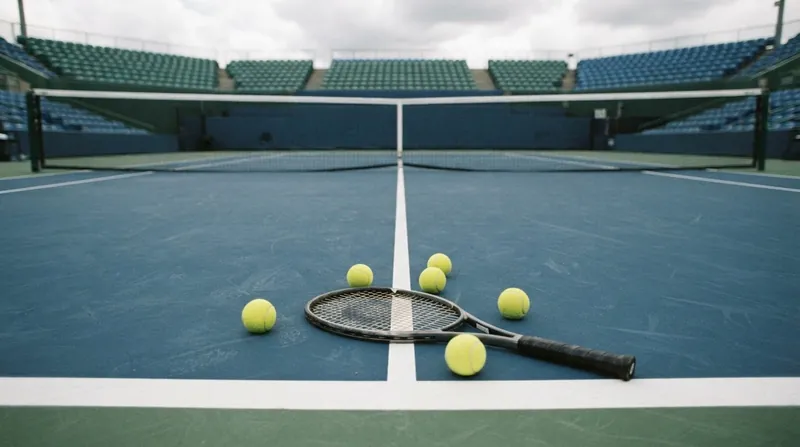
The transition from the grueling red clay of Paris to the pristine lawns of Europe is widely considered the most abrupt and challenging shift in professional sports. As the 2026 clay-court season officially concludes, the tennis world immediately pivots to the grass, a uniquely slick surface that demands first-strike aggression, precise footwork, and a lethal serve.
Players have only a matter of weeks to adjust their timing, lower their center of gravity, and adapt to the unpredictable bounces that define grass-court tennis. For fans and analysts alike, this rapid transition makes the June power rankings the most volatile and heavily scrutinized metrics of the entire calendar year.
This year, the grass-court power rankings carry an unprecedented level of volatility and intrigue. The biggest shockwave altering the men's landscape is the sudden withdrawal of Carlos Alcaraz from the upcoming grass-court entry lists.
This unexpected development has blown the Wimbledon draw completely wide open, removing one of the sport's most dynamic athletes from the immediate equation. Without the Spanish phenom in the mix for the early warm-up events, the mathematical models and analytical projections have undergone a massive recalibration, forcing oddsmakers to rapidly adjust their expectations for the weeks ahead.[4]
Without Alcaraz in the immediate picture, Jannik Sinner stands entirely alone at the summit of the ATP Power Rankings. The 24-year-old Italian sensation has firmly cemented his grip on the official World No. 1 ranking, amassing a staggering 14,750 points in the official ATP standings.
Sinner's ascent has been characterized by a relentless consistency across all surfaces, but his game is particularly devastating when the courts speed up. His ability to take the ball early and rob his opponents of recovery time makes him the undisputed analytical favorite as the tour heads toward London.[3]
Sinner's flat, penetrating groundstrokes and vastly improved first serve are tailor-made for the low-bouncing nature of grass courts. Analysts and betting markets alike view him as the man to beat, noting his dominant hard-court and fast-surface performances earlier in the season where he routinely dispatched top-tier rivals. The underlying surface-specific Elo ratings suggest that Sinner's offensive baseline game translates seamlessly to the lawns, allowing him to dictate points from the center of the court without having to rely on the defensive scrambling that clay often requires.[4]
Behind Sinner, the ATP hierarchy becomes a fascinating and highly competitive scramble. Alexander Zverev and the veteran Novak Djokovic remain formidable presences in the top five of the power rankings. Both men rely on their massive serves and extensive big-match pedigree to navigate the slick lawns, utilizing their experience to manage the inevitable bad bounces and rapid momentum shifts that grass-court tennis produces. Djokovic, in particular, possesses a historical mastery of the surface that ensures he remains a top-tier threat regardless of his current official points total.[2][3]
However, younger fast-surface specialists are aggressively surging up the power metrics, eager to disrupt the established order. Ben Shelton, armed with one of the most lethal and unpredictable serves on the professional tour, has rocketed into the top five of the grass-court projections. His explosive power is uniquely rewarded on this surface. Similarly, Alex de Minaur's incredibly flat hitting and exceptional, darting movement make him a perennial grass-court threat, capable of neutralizing bigger opponents by keeping the ball uncomfortably low over the net.[3]
On the WTA side, the power dynamics are equally compelling and perhaps even more fiercely contested. While Iga Swiatek remains the undisputed World No. 1 in the official overall standings, the grass-court power rankings tell a remarkably different story. The metrics for grass heavily reward players with heavier serves, flatter ball trajectories, and the willingness to move forward to the net. Consequently, the power rankings shift the spotlight away from the Queen of Clay and toward the tour's most aggressive first-strike ball strikers.
Aryna Sabalenka officially claims the top spot in the surface-specific WTA metrics. Boasting a phenomenal 42-8 match record in 2026, her overwhelming power game and highly aggressive returning make her the premier threat on the lawns. Sabalenka's ability to hit through the court and take the racket out of her opponent's hands is a massive advantage on grass, where defensive retrieval is incredibly difficult. Analysts point to her sheer velocity off both wings as the defining factor that separates her from the rest of the field in these specific rankings.[1]
Coco Gauff follows closely in the second position of the WTA power rankings. Now a multi-major champion with vast experience on the biggest stages, Gauff's elite athleticism and vastly improved service motion have analysts predicting a massive breakthrough on the lawns of the All-England Club. Her ability to transition quickly from defense to offense, coupled with her comfort at the net, makes her a natural fit for grass-court success. Experts believe that if her forehand holds up under pressure, she possesses all the necessary tools to capture the ultimate prize.[1]
Elena Rybakina, the 2022 Wimbledon champion, remains the ultimate grass-court wildcard and a terrifying prospect for any opponent. When fully healthy and dialed in, her textbook serve-plus-one game is virtually unplayable on this surface, making her a consensus top-four pick in every major power ranking model. Rybakina's flat, effortless power allows her to hit clean winners from neutral positions, a skill that is exponentially amplified by the speed of the grass. Her historical pedigree on the surface ensures she is never overlooked by the oddsmakers.[1]
We must also look at the dark horses who possess the specialized skills to disrupt the established order. Jasmine Paolini, who shocked the tennis world by reaching the Wimbledon final in 2024, is looking to rediscover that exact magic after a mixed start to her 2026 grass campaign. While she may lack the overwhelming power of Sabalenka or Rybakina, Paolini's exceptional footwork, tactical point construction, and ability to absorb pace make her a highly dangerous opponent who can dismantle bigger hitters by using their own speed against them.[1]
The underlying numbers—specifically the surface-specific Elo ratings—highlight exactly how much point construction changes when the tour moves to grass. The advanced metrics heavily penalize defensive baseliners who rely on heavy topspin, while disproportionately rewarding players who can shorten points and dominate behind their first serve. This statistical reality is why the power rankings often look so drastically different from the official 52-week ATP and WTA standings, providing a much more accurate snapshot of who is truly favored to win during this unique three-week window.
With critical warm-up events at Queen's Club, Halle, Berlin, and Bad Homburg serving as the ultimate proving grounds over the next fortnight, these power rankings will undoubtedly fluctuate as players find their footing. These tournaments are not merely exhibitions; they are vital opportunities for players to test their grass-court shoes, adjust their string tensions, and build the crucial match confidence required to survive the grueling two-week marathon that awaits them in London. Every match played over the next two weeks will feed new data into the predictive models.[1]
Ultimately, this 2026 grass season represents a thrilling changing of the guard and a showcase of the sport's deepest talents. With Alcaraz temporarily sidelined, Sinner ascending to unprecedented new heights, and a wide-open WTA field led by the immense power of Sabalenka and Gauff, the sprint to Wimbledon promises high-stakes drama. As the players trade their clay-stained socks for pristine all-white attire, the power rankings serve as the perfect guide to understanding who truly holds the advantage on the most prestigious and demanding surface in professional tennis.[1]
The essentials
- Jannik Sinner leads the ATP grass-court power rankings following Carlos Alcaraz's withdrawal from early events.
- Aryna Sabalenka tops the WTA surface-specific metrics, utilizing her massive power to dominate on the lawns.
- Younger fast-surface specialists like Ben Shelton and Alex de Minaur are surging up the ATP projections.
- Surface-specific Elo ratings heavily penalize defensive baseliners in favor of aggressive first-strike players.
Timeline
Early June 2026
The Roland Garros finals conclude, officially ending the European clay-court season.
June 8, 2026
The ATP and WTA update their official rankings as the grass-court swing begins.
Mid-June 2026
Queen's Club, Halle, Berlin, and Bad Homburg serve as the primary warm-up tournaments.
Late June 2026
The Wimbledon main draw commences at the All-England Club.
- Surface-Specific Analysts
- Argues that grass-court success is dictated by serve metrics, flat groundstrokes, and surface-specific Elo ratings rather than overall tour points.
- Pedigree Traditionalists
- Believes that past championship experience at Wimbledon and major tournament pedigree ultimately override short-term momentum.
- Oddsmakers & Markets
- Focuses on draw volatility, injury withdrawals, and real-time betting lines to determine true tournament favorites.
Perspectives this story doesn't cover
- Lower-ranked grass-court specialists who peak exclusively during this short three-week window.
- Tournament organizers dealing with the sudden withdrawal of marquee players like Carlos Alcaraz.
Sources
Source coverage
4 outlets
3 viewpoints surfaced




- [1]National Bank OpenOddsmakers & Markets
WTA Power Rankings: Will There Be Another Wimbledon Surprise?
Read on National Bank Open → - [2]TNT SportsPedigree Traditionalists
ATP World Ranking - Tennis
Read on TNT Sports → - [3]WikipediaOddsmakers & Markets
Current tennis rankings
Read on Wikipedia → - [4]KalshiOddsmakers & Markets
ATP #1 Ranked Player on Jun 30, 2026? Odds & Predictions
Read on Kalshi →
More in Sports
See all →Standings
Djokovic Reaches Beijing Final After Medvedev Default, Shaking Up ATP Race to Turin Standings
3 sources
Storyline
Alex de Minaur Survives First-Set Blitz to Stun Andrey Rublev and Reach China Open Semifinals
6 sources
Preview
Zverev vs. Djokovic Headlines China Open Quarterfinals as Unbeaten Beijing Record Goes on the Line
6 sources
Recap
Novak Djokovic Survives Three-Hour Epic Against Bu Yunchaokete to Keep 31-Match China Open Streak Alive
2 sources
Comments
Every angle. Every day.
Get Sports stories with full source coverage and perspective breakdowns, free every day.