
Serie A Records Staggering €427 Million Deficit as Net Debt Lingers at €3.2 Billion
Italian football's top flight continues to grapple with severe financial imbalances, posting a €427 million collective deficit and €3.2 billion in net debt even as commercial revenues and stadium attendances rebound.
By Jackson Reed

Serie A has officially posted a staggering €427 million collective deficit, exposing a financial crisis that refuses to abate even as stadiums fill back up. The latest financial disclosures reveal that Italy's top-flight clubs are carrying a combined net debt of €3.2 billion. The figures underscore a system that has deviated significantly from stable operations, leaving the league in a precarious position as it attempts to keep pace with its European rivals.
What everyone gets wrong about this crisis is assuming the league simply isn't making money. In reality, Serie A is generating billions, and commercial revenues have surged post-pandemic as fans flooded back into stadiums. The core problem is not a lack of income, but rather a profound inability to control outgoings. Against roughly €3 billion in core revenue, the 20 clubs racked up €3.85 billion in expenditures.[2]
The rot at the center of Italian football's finances is an unsustainable wage structure. Staff costs across the top flight have soared to nearly €2 billion annually. When combined with €800 million in player amortization costs, the league's spending vastly outstrips its earning capacity. This structural imbalance has left clubs heavily reliant on player trading just to survive.
Even with €587 million generated from player sales—a return to pre-pandemic trading levels—the league still bled over €400 million in a single season. Excluding the anomalous years marred by COVID-19, it has been two decades since Serie A faced such dire financial straits. The reliance on capital gains from transfers has proven insufficient to plug the gaping hole left by bloated payrolls.
However, the debt burden is not distributed equally across the peninsula. While clubs like AC Milan and Napoli have managed to post profits and stabilize their balance sheets through strict wage controls and smart scouting, traditional powerhouses account for the lion's share of the deficit. Juventus, Roma, and Inter Milan alone have been responsible for hundreds of millions in combined losses.[4]
Inter Milan's situation highlights the high-wire act of modern Italian football. Despite reaching a Champions League final and securing massive prize money, the club's underlying debt remained immense. The financial strain recently forced a dramatic change in ownership, as the Chinese Suning group ceded control of the club to US fund Oaktree Capital after defaulting on a massive loan.[5]
Juventus, historically the financial bedrock of the league, has also faced a severe reckoning. The Turin club has recorded consecutive massive deficits, prompting multiple capital increases from its parent company just to keep operations compliant with league regulations. The era of extravagant spending and vanity signings has left a long hangover that the club is still struggling to clear.[3]
League executives are acutely aware of the ticking clock. Serie A CEO Luigi De Siervo has aggressively pushed to revamp the league's commercial strategy, targeting a tripling of international broadcast rights revenue by 2030. The goal is to bridge the yawning financial gap with the English Premier League, which currently earns billions more from its overseas TV deals.[1]
Yet, catching the Premier League—which recently topped the global revenue charts by a massive margin—requires more than just better television contracts. It requires a fundamental shift in how Italian clubs operate, moving away from debt-fueled squad building toward sustainable, infrastructure-backed growth. The days of relying on wealthy benefactors to cover annual losses are rapidly coming to an end.[2][3]
Regulatory pressure is also mounting, leaving clubs with nowhere to hide. UEFA's new squad cost ratio rules will soon cap spending on wages, transfers, and agent fees at 70% of a club's revenue by the 2025/26 season. For a league currently spending closer to 90% of its revenue on its squads, the mandatory adjustment period will demand brutal austerity measures.
The influx of North American institutional investors—who now control a significant portion of Serie A clubs—signals a potential turning point. These funds are demanding stricter financial discipline, prioritizing stadium development and data-driven recruitment over the emotional, high-risk spending that characterized previous decades of Italian football ownership.[3][4]
The stakes for Serie A have never been higher. The league must either enforce strict financial sustainability and modernize its commercial operations, or risk becoming a permanent feeder league to the financial juggernauts of England and state-backed clubs across Europe. The €3.2 billion debt is a final warning that the old way of doing business is dead.[1]
Key points
- Serie A clubs posted a collective €427 million deficit for the most recent financial year.
- The league's total net debt remains stubbornly high at €3.2 billion.
- Staff costs have soared to nearly €2 billion, consuming a massive portion of the league's €3 billion core revenue.
- Clubs like AC Milan and Napoli have stabilized their finances, while giants like Inter Milan and Juventus carry massive debt loads.
- UEFA's incoming squad cost ratio rules will cap spending at 70% of revenue by the 2025/26 season, forcing severe austerity.
- League executives are targeting a tripling of international broadcast rights revenue by 2030 to bridge the gap with the Premier League.
- Financial Analysts
- Experts warning that the current wage-to-revenue ratio is structurally unsustainable.
- League Management
- Executives focused on closing the commercial gap through international expansion.
- Domestic Observers
- Local critics highlighting the disparity between well-run clubs and debt-laden traditional giants.
Perspectives this story doesn't cover
- Match-going Supporters
- Player Union Representatives
Sources
Source coverage
5 outlets
3 viewpoints surfaced





- [1]SportsProLeague Management
Serie A CEO Luigi De Siervo on domestic media rights, piracy and international streaming
Read on SportsPro → - [2]Front Office SportsFinancial Analysts
Europe's Big Five Soccer Leagues Top $20 Billion in Revenue for First Time
Read on Front Office Sports → - [3]GoalDomestic Observers
How Italian football descended into disarray
Read on Goal → - [4]CalciomercatoDomestic Observers
Debiti in percentuale sui ricavi: il Milan è la big che ne ha meno
Read on Calciomercato → - [5]Fanpage.itDomestic Observers
L'Inter può iscriversi al prossimo campionato con 800 milioni di debiti? Cosa dice il regolamento
Read on Fanpage.it →
More in Sports
See all →Serie A Title Race
Inter Milan Win 8-Goal Thriller Against Udinese to Maintain Perfect Start
4 sources

Serie A Upset
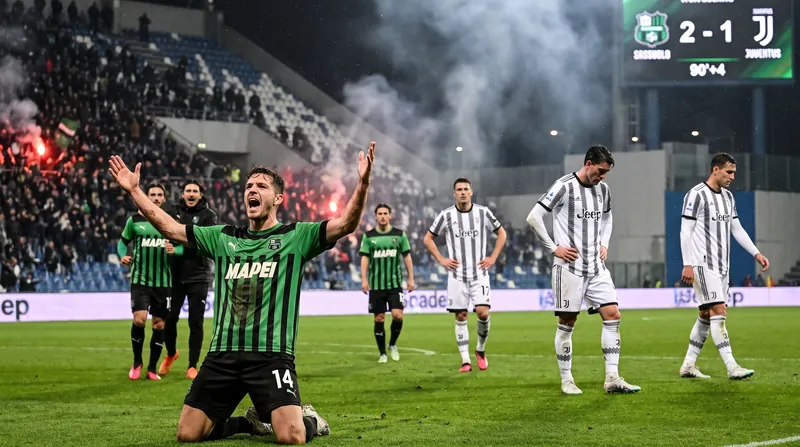
Sassuolo Stun Juventus 3-2 With Stoppage-Time Winner in Matchday 4 Upset
5 sources
AC Milan Watch
Diego Moreira's Two-Minute Brace Rescues 2-2 Draw for AC Milan Against Lazio
6 sources

Serie A
Cagliari Stuns Atalanta 2-1 to Climb to Joint-Second in Serie A Table
6 sources

Comments
Every angle. Every day.
Get Sports stories with full source coverage and perspective breakdowns, free every day.