
SailGP Enters New Era with Formal Transfer Market and Blockbuster 2026 Roster Moves
The introduction of SailGP's first formal Athlete Transfer framework has triggered a wave of high-profile trades and signings, reshaping the 13-team fleet ahead of the 2026 season.

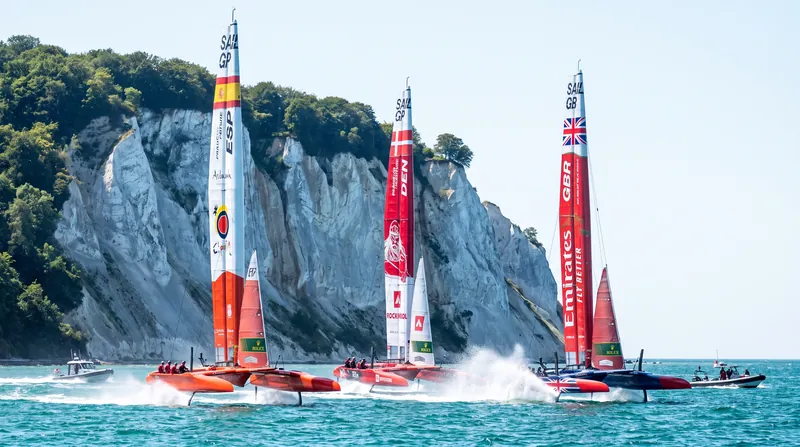
The 2026 SailGP season is set to be the most fiercely contested in the league's history, driven by an unprecedented wave of off-season roster moves. For the first time, the global foiling championship is operating under a formal Athlete Transfer framework, a system that has immediately transformed how the 13 international syndicates build their crews. The days of informal handshakes and gentlemen's agreements have been replaced by a structured market of registrations, disclosed transfer fees, and long-term contracts, mirroring the professional mechanics of major global sports leagues.[1]
Under the new framework, roster changes are strictly regulated. Permanent transfers now require the explicit agreement of both the releasing team, the acquiring team, and the athlete involved. The system also introduces formal loan protocols, capping the number of loaned athletes a team can carry at two, and establishes emergency provisions for medical or compassionate replacements. This structure is designed to bring transparency and long-term stability to a sport where the competition for elite talent has reached a fever pitch.[2][3]
SailGP Managing Director Andrew Thompson highlighted that the framework is a milestone in the sport's evolution. By offering long-term contracts, the league is providing athletes with unprecedented career security while giving team owners the confidence to invest heavily in their rosters. Thompson noted that the system creates commercial intrigue for fans, suggesting that multi-million dollar trades and buyouts are now a distinct possibility as the league continues to scale.[1][2]
The most significant splash of the transfer window came from the league's newest franchise, Sweden's Artemis SailGP Team. Backed by billionaire Torbjörn Törnqvist—who reportedly paid an expansion fee exceeding $60 million—Artemis wasted no time leveraging the new framework to build a contender from scratch. The Swedish syndicate secured one of the most coveted free agents in the sport, signing Olympic gold medalist and SailGP veteran Nathan Outteridge as their driver.
Artemis didn't stop at the driver's seat. Utilizing the transfer system, they acquired elite grinder Julius Hallström from ROCKWOOL Denmark, bringing the Swedish talent back to a home-flagged vessel. The ability of a new franchise to immediately negotiate and secure top-tier talent from rival teams underscores the effectiveness of the new transfer protocols in ensuring competitive parity across the expanding fleet.[1]
Beyond new franchises, established teams have used the framework to orchestrate highly strategic reunions. Emirates GBR executed a blockbuster transfer by acquiring wing trimmer Stuart Bithell from the Germany SailGP Team. The move is a masterstroke of team chemistry, reuniting Bithell with Emirates GBR driver Dylan Fletcher for the first time in five years.[4]
The Fletcher-Bithell partnership is legendary in sailing circles. The duo famously won gold together in the 49er class at the Tokyo 2020 Olympic Games, where they defeated the heavily favored New Zealand pairing of Peter Burling and Blair Tuke. By bringing that proven, gold-medal-winning communication dynamic into the cockpit of the British F50, Emirates GBR has positioned itself as a formidable threat for the 2026 championship.[4]
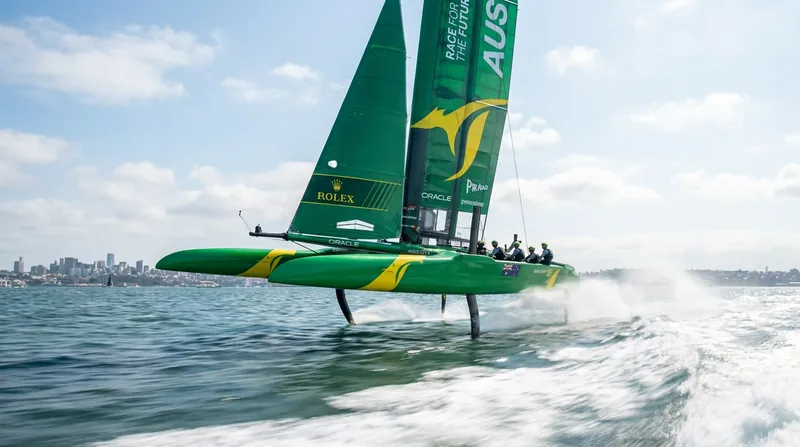
The British acquisition triggered a domino effect across the league. To make room for Bithell, Emirates GBR transferred veteran wing trimmer Iain "Goobs" Jensen to Australia's BONDS Flying Roos. Jensen's return to his home country bolsters an already dominant Australian roster, demonstrating how a single high-profile trade can shift the tactical balance of power across multiple national teams.[4]
Other syndicates have opted for aggressive restructuring to improve their fortunes. Red Bull Italy SailGP Team announced a major overhaul of its 2026 roster, signing the highly experienced Phil Robertson as their new driver. Robertson, known for his aggressive starting tactics, is joined by Italian Olympian Jana Germani, who steps into the crucial strategist role, signaling Italy's intent to push aggressively for the podium.[5]
Meanwhile, NorthStar, the Canadian franchise led by driver Giles Scott, utilized the framework to deepen its bench. The team secured Alex Sinclair from Red Bull Italy and Nicolas Rolaz from the Swiss SailGP Team. These cross-fleet acquisitions highlight the fluid nature of the new market, where specialized roles like grinders and flight controllers are in high demand and athletes can actively seek out the best competitive environments.[6]
Crucially, the transfer framework also serves as a protective measure for teams that invest heavily in youth development. By requiring disclosed fees and mutual agreement for permanent moves, the system prevents wealthier syndicates from simply poaching emerging talent without compensating the teams that developed them. This creates a sustainable ecosystem where cultivating the next generation of sailors is both a competitive and commercial asset.[2][3]
As the fleet prepares for the season opener at the Oracle Perth Sail Grand Prix in January 2026, the success of these blockbuster trades remains to be seen. What is certain, however, is that SailGP has successfully transitioned from a nascent racing series into a mature, professional sports league, where the strategic battles in the boardroom are now just as compelling as the high-speed clashes on the water.[1]
The essentials
- SailGP has introduced its first formal Athlete Transfer framework for the 2026 season.
- The system mandates disclosed fees, long-term contracts, and mutual agreement for all permanent transfers.
- New Swedish franchise Artemis Racing signed veteran driver Nathan Outteridge to lead their debut campaign.
- Emirates GBR acquired Stuart Bithell, reuniting him with his Olympic gold-medal-winning partner Dylan Fletcher.
- The framework aims to protect teams that invest in developing young talent from having them poached without compensation.
Timeline
2019
SailGP is founded with a centrally-owned business model.
June 2025
SailGP initiates a tender process for two new expansion teams.
September 2025
Artemis Racing is awarded the 13th franchise for the 2026 season.
November 2025
SailGP officially unveils its first formal Athlete Transfer framework.
January 2026
The 2026 season kicks off at the Oracle Perth Sail Grand Prix.
- Team Syndicates
- Prioritizes roster stability, protecting financial investments in talent, and acquiring the specific skill sets needed to win championships.
- League Administration
- Focuses on commercial growth, transparency, and elevating the sport to the professional standards of mainstream global leagues.
- The Athletes
- Values the security of long-term contracts, clear career pathways, and the opportunity to compete in optimal team environments.
Perspectives this story doesn't cover
- Youth sailors navigating the new pathway system
- Sponsors evaluating the commercial impact of trades
Sources
Source coverage
6 outlets
3 viewpoints surfaced




- [1]SailGP OfficialLeague Administration
SailGP unveils first Athlete Transfer framework ahead of 2026 Season
Read on SailGP Official → - [2]Sail-WorldThe Athletes
SailGP announces first Athlete Transfer framework
Read on Sail-World → - [3]Sailing ScuttlebuttThe Athletes
SailGP launches Athlete Transfer framework
Read on Sailing Scuttlebutt → - [4]Emirates GBR SailGPTeam Syndicates
Olympic gold medal-winning duo to reunite on board Emirates GBR SailGP Team F50 for 2026
Read on Emirates GBR SailGP → - [5]SailGP Official (Italy)Team Syndicates
Phil Robertson to drive Red Bull Italy SailGP Team as 2026 roster reshaped
Read on SailGP Official (Italy) → - [6]Sail-World (NorthStar)Team Syndicates
NorthStar unveils Season 6 team lineup for the 2026 Rolex SailGP Championship
Read on Sail-World (NorthStar) →
More in Sports
See all →Injury
SailGP Fleet Heals: France Reunites Full Crew as Black Foils Press Forward After Auckland Crash
6 sources
Standings
Spain's Los Gallos Claim Back-to-Back SailGP Victories, Narrowing Australia's Championship Lead
4 sources
Injury
SailGP Injury Report: Sinclair Begins Recovery as Fleet Confronts the Physical Toll of Foiling
3 sources
Injury
SailGP Injury Report: Jensen Returns to Australian Lineup as Ashby Suffers Setback
4 sources
Comments
Every angle. Every day.
Get Sports stories with full source coverage and perspective breakdowns, free every day.