
SAE Standardizes Tesla's NACS Connector (J3400); FHWA Moves to Mandate for Federal Charging Network
The Society of Automotive Engineers has officially standardized Tesla's charging plug as J3400, prompting the Federal Highway Administration to mandate the connector for the $5 billion national charging network.

- Automakers & Manufacturers
- Pivoting to a unified standard to eliminate range anxiety and simplify manufacturing.
- Federal Regulators
- Ensuring taxpayer-funded infrastructure serves all drivers with a unified, future-proof standard.
- Engineering Standards Bodies
- Transforming a proprietary corporate design into a rigorously tested, open-source public standard.
- Charging Network Operators
- Tasked with retrofitting existing stations and deploying new hardware that complies with federal mandates.
Why this matters
A unified charging standard eliminates the fragmented 'adapter chaos' that has plagued early EV adopters. By mandating J3400 for federally funded stations, the government ensures that the nationwide infrastructure build-out will seamlessly serve the next generation of electric vehicles.
Key points
- SAE International has officially standardized Tesla's NACS connector under the technical designation J3400.
- The Federal Highway Administration updated its guidance to allow NEVI funds to be used for J3400 infrastructure.
- The J3400 standard utilizes a shared-pin architecture to handle both AC and DC charging in a single compact plug.
- Major automakers are transitioning to native J3400 ports starting with the 2025 and 2026 model years, eliminating the need for bulky adapters.
The fragmented era of electric vehicle charging is officially coming to an end, marking a monumental shift for the automotive industry and consumers alike. For years, driving an electric vehicle meant navigating a confusing, fragmented web of incompatible plugs, bulky adapters, and proprietary charging networks that frequently left drivers stranded or frustrated. Early adopters were forced to use different apps, carry heavy adapter cables in their trunks, and meticulously plan road trips around the specific connector types their vehicles supported. This lack of cohesion was widely cited as one of the primary barriers to mass EV adoption, creating unnecessary friction in an already complex technological transition.[4][8]
That chaotic landscape is now unifying under a single, universally recognized banner. The Society of Automotive Engineers (SAE) has officially standardized Tesla's North American Charging Standard (NACS) under the technical engineering designation J3400. This milestone effectively transforms what was once a closely guarded corporate design into an open, industry-wide benchmark that any manufacturer can utilize. By codifying the physical dimensions, electrical specifications, and safety protocols of the plug, SAE has ensured that the entire automotive supply chain can confidently build and deploy this hardware without fear of intellectual property disputes or compatibility issues.[2][3]
Following this crucial engineering milestone, the Federal Highway Administration (FHWA) has decisively moved to mandate the J3400 connector for the federal charging network. This sweeping policy shift rewrites the operational rules for the $5 billion National Electric Vehicle Infrastructure (NEVI) program, aligning government funding with the market's overwhelming consensus. Previously, federal rules were rigidly tied to older standards, but the updated mandate ensures that the massive influx of taxpayer dollars will be spent on future-proof infrastructure that directly serves the next generation of electric vehicles rolling off assembly lines.[1][6]
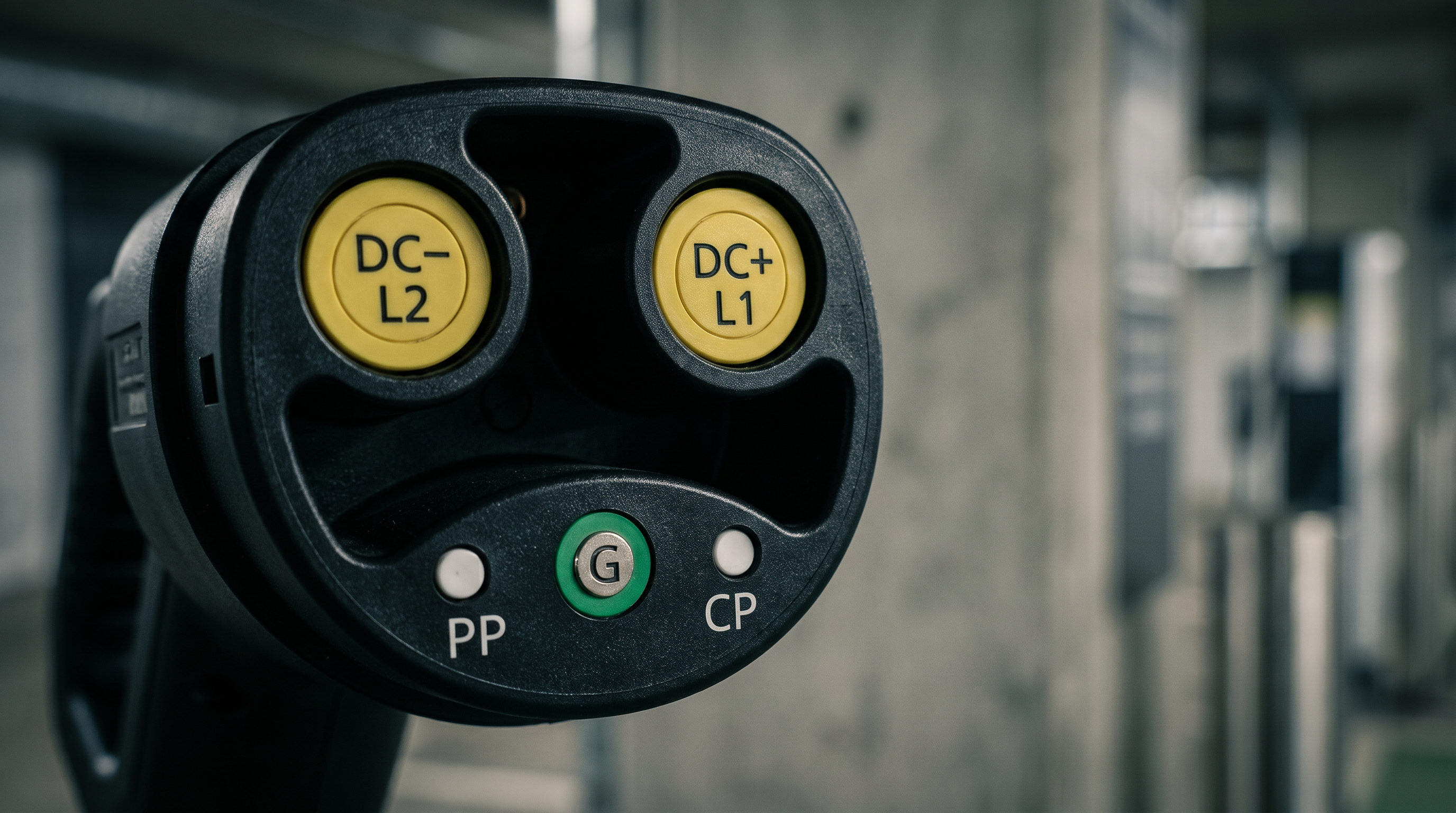
At the heart of this historic transition is the J3400 connector itself, a marvel of streamlined electrical engineering. Unlike the older Combined Charging System (CCS1), which requires a large, cumbersome plug with separate, dedicated pins for direct current (DC) fast charging, the J3400 design is remarkably sleek and compact. The CCS1 standard essentially bolted two massive DC pins onto an existing AC plug, resulting in a heavy, unwieldy cable that was often difficult for drivers to maneuver, especially in cold weather. In contrast, the J3400 connector is less than half the size and significantly lighter, offering a vastly superior ergonomic experience for the end user.[8]
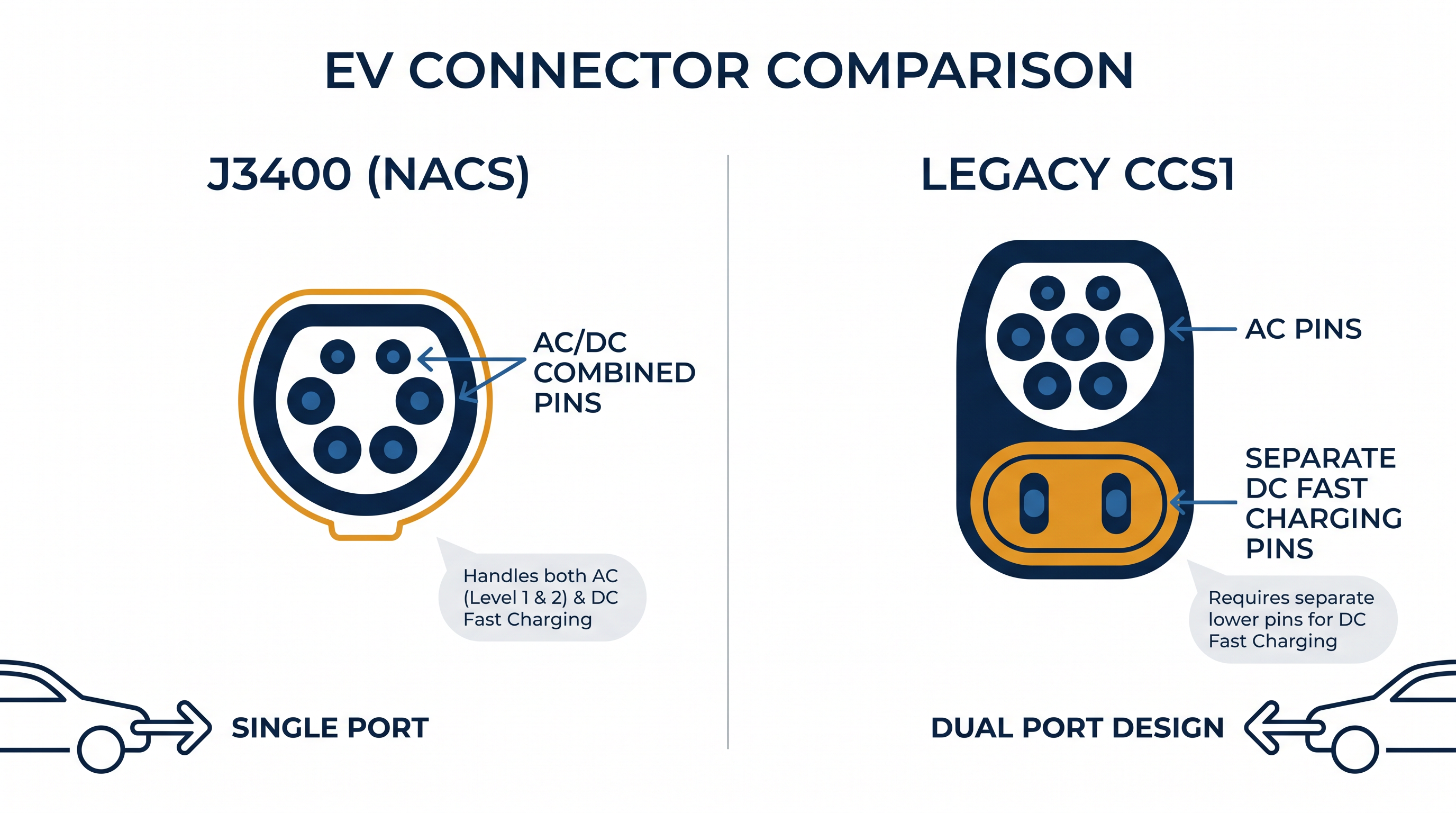
The engineering brilliance of the J3400 standard lies in its innovative pin-sharing architecture. The connector uses the exact same five pins to handle both alternating current (AC) for overnight home charging and high-voltage direct current (DC) for rapid highway top-ups. By eliminating the need for redundant pins, the design drastically reduces the weight, complexity, and manufacturing cost of both the vehicle inlet and the charging cable. This shared-pin approach theoretically accommodates incredibly high power levels, ensuring that the standard will remain viable even as battery technologies advance and charging speeds continue to increase in the coming decades.[2][8]
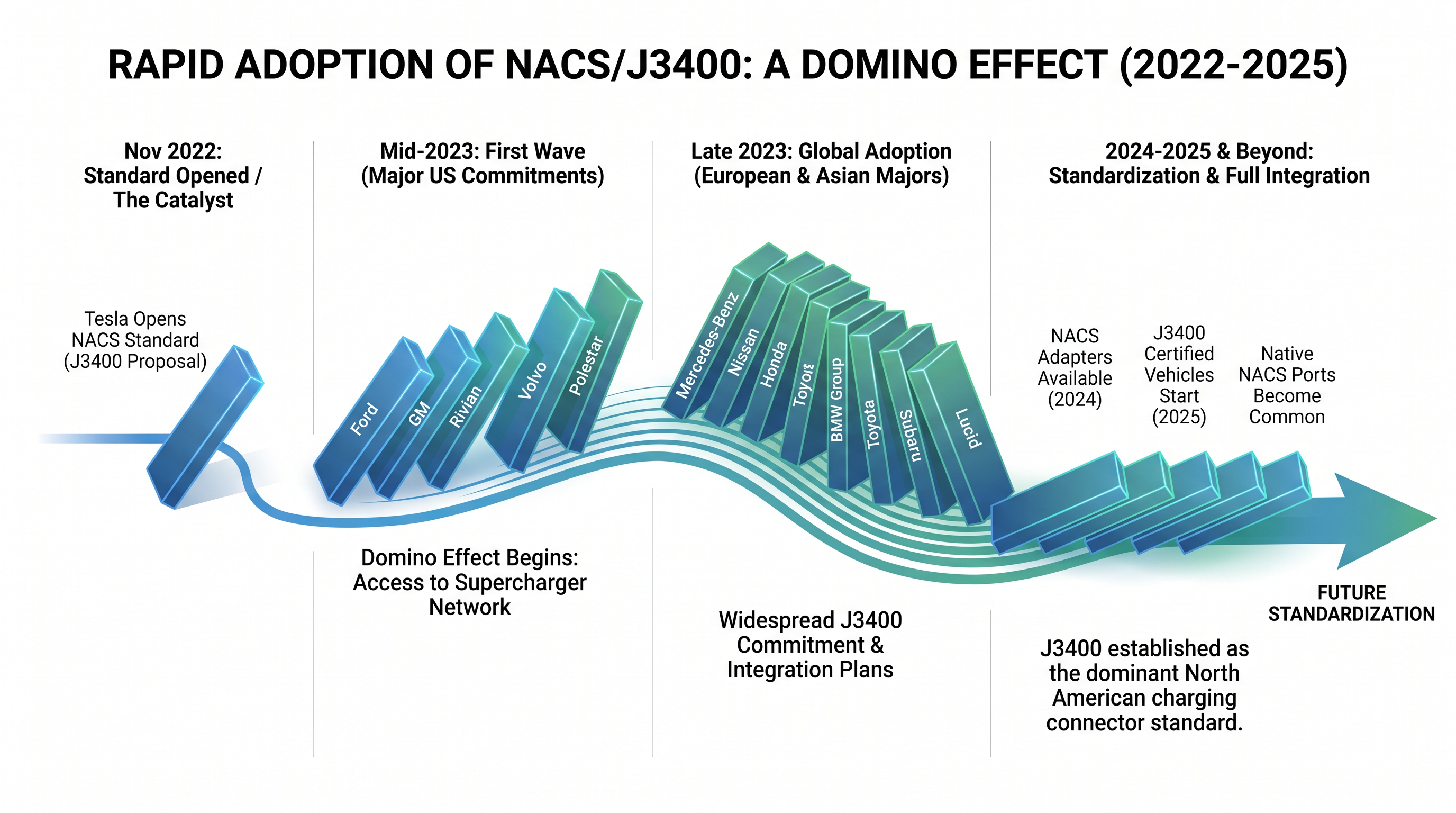
The journey to this unified standard began in November 2022, when Tesla made the unprecedented and highly strategic decision to open its patented connector design to the general public. Recognizing that a fragmented market was slowing overall EV adoption, Tesla invited its competitors to use its technology royalty-free, renaming its proprietary plug the North American Charging Standard. At the time, the move was viewed by some industry analysts as a bold gamble, but it ultimately set the stage for a massive industry realignment, leveraging Tesla's dominant Supercharger network as an irresistible incentive for other automakers.[8]
The dominoes officially began to fall in May 2023 when Ford Motor Company shocked the automotive world by announcing it would abandon the CCS1 standard in favor of the NACS port. Within a matter of months, General Motors, Rivian, Volvo, Polestar, and nearly every other major automaker operating in the North American market followed suit. These manufacturers recognized that granting their customers seamless access to Tesla's highly reliable and ubiquitous charging network was essential for selling electric vehicles. The rapid succession of these announcements created an undeniable market mandate that regulators and standards bodies could no longer ignore.[4][8]
To ensure the plug wasn't just a proprietary Tesla product governed by a single corporation, SAE International launched an expedited, rigorous engineering review. The SAE task force, comprising over 120 technical experts from the public and private sectors, worked at an unprecedented pace to evaluate the technology. They published the initial Technical Information Report in late 2023 and recently elevated J3400 to a formal Recommended Practice. This rigorous peer-review process validated the safety and efficacy of the design, providing the necessary legal and technical foundation for government agencies to officially adopt it into federal regulations.[2][3]
To ensure the plug wasn't just a proprietary Tesla product governed by a single corporation, SAE International launched an expedited, rigorous engineering review.
However, this rapid market shift created a significant and immediate policy bottleneck for the federal government. The Bipartisan Infrastructure Law's NEVI program, designed to build a nationwide network of 500,000 public chargers, was originally written to mandate CCS1 connectors. This rule was initially implemented to prevent any single company from monopolizing public infrastructure. But as the entire automotive industry pivoted to NACS, the FHWA faced the very real prospect of spending billions of dollars to install obsolete CCS1 chargers that the vast majority of future EV drivers would not be able to use without cumbersome adapters.[5][7]
Recognizing the absurdity of funding outdated technology, the FHWA swiftly updated its minimum standards to reflect the new reality. The revised federal guidance explicitly allows NEVI funds to be used for the installation of J3400 connectors and integrated adapters. This crucial policy pivot ensures that taxpayer dollars are actively supporting the hardware that consumers are actually buying, while still maintaining the program's core goal of creating an open, accessible, and reliable national charging network. The updated rules have been widely applauded by state departments of transportation, who are tasked with actually deploying these funds.[1][6]
For drivers of older, CCS-equipped vehicles, the transition period will be seamlessly bridged by the use of certified adapters. Automakers are actively distributing these devices to their existing customer bases, allowing legacy EVs to plug into the new J3400 infrastructure. Furthermore, the updated federal rules require that NEVI-funded stations provide integrated, tethered adapters to ensure strict backward compatibility. This means that no driver will be left stranded or locked out of the federally funded network, regardless of what year their electric vehicle was manufactured or what type of port it originally came with.[6]
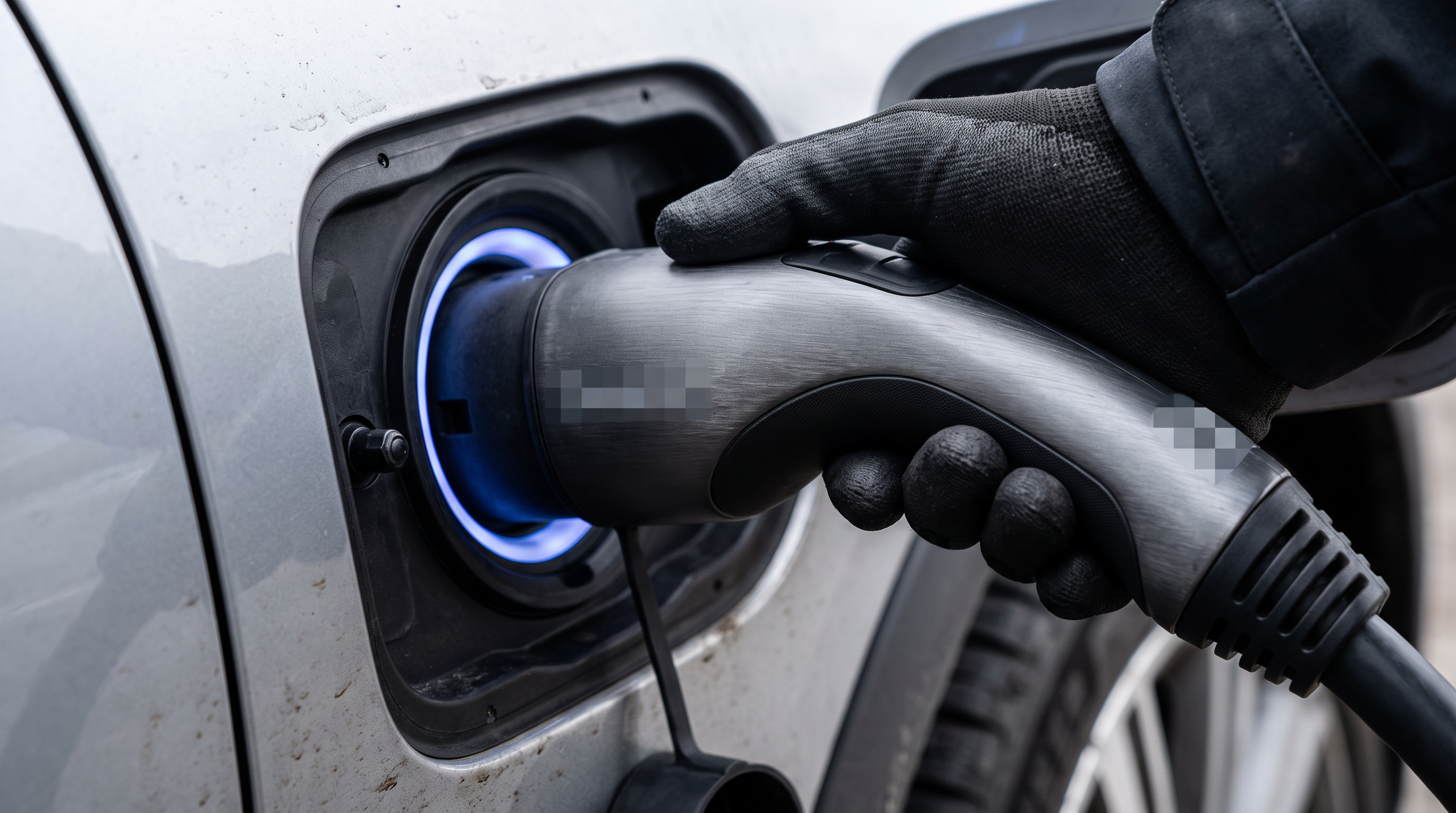
The SAE J3400 standard goes far beyond merely dictating the physical shape of the plug; it introduces rigorous new safety protocols that elevate the entire industry. The standard mandates advanced thermal sensing capabilities with exceptionally low lag and high accuracy. This ensures that both the vehicle's onboard computer and the charging station can instantly detect any localized overheating during high-power DC fast charging sessions. If temperatures rise beyond safe thresholds, the system can automatically throttle the power delivery or shut down the session entirely, preventing hardware damage and ensuring the absolute safety of the consumer.[2]
Furthermore, the J3400 standard includes strong recommendations for advanced arc detection technology. This critical safety feature prevents dangerous electrical arcing from occurring if a user accidentally disconnects the plug while it is still under a heavy electrical load. By instantly cutting the power before an arc can form, the technology not only protects the user from potential injury but also significantly prolongs the operational lifespan of the connector contacts. This level of durability is essential for public charging stations, which are subjected to heavy daily use and harsh environmental conditions.[2]
On the software and communications side, the J3400 standard fully embraces and supports ISO 15118, the international communication protocol that enables seamless 'Plug-and-Charge' functionality. This sophisticated digital handshake allows drivers to simply plug the connector into their vehicle and walk away. The car and the charger automatically authenticate the user's account, negotiate the optimal charging speed, and process the billing in the background without the need for credit card readers, RFID tags, or clunky smartphone apps. This frictionless experience is widely considered the holy grail of public EV charging.[8]
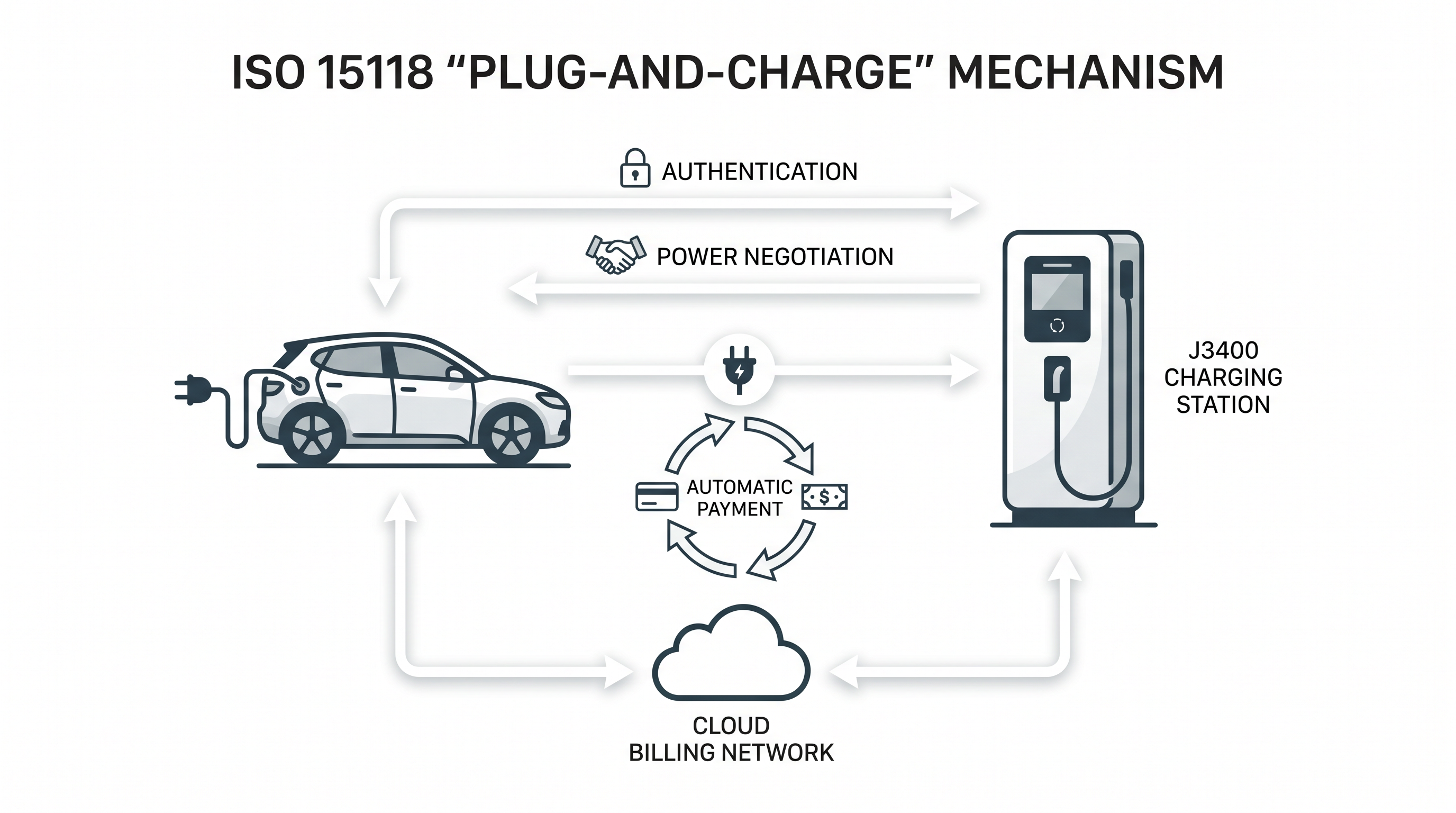
The integration of the ISO 15118 protocol also paves the way for advanced Vehicle-to-Grid (V2G) bidirectional power flow capabilities. As the national electrical grid modernizes to accommodate more renewable energy, EVs equipped with the J3400 standard will be able to discharge their massive battery packs back into the grid during peak demand hours. This turns millions of parked cars into a distributed network of mobile energy storage units, helping to stabilize the grid, prevent blackouts, and potentially allowing EV owners to earn money by selling electricity back to their local utility companies.[8]
From an economic perspective, standardizing the charging hardware is a massive operational win for charging network operators and maintenance crews. Maintaining a sprawling, nationwide network becomes significantly cheaper and vastly more efficient when technicians only need to stock replacement parts and service one primary connector type. Rather than juggling multiple incompatible standards, software versions, and hardware configurations, operators can streamline their supply chains and focus their resources on maximizing station uptime, which has historically been one of the most persistent complaints among electric vehicle drivers.[6]
Ultimately, the biggest victor in this monumental standardization effort is the everyday consumer. Range anxiety—which is often fueled not by a sheer lack of charging stations, but by the paralyzing fear of pulling up to an incompatible, broken, or overly complex charger—is heavily mitigated when every plug works seamlessly with every car. By removing the guesswork from the equation, the J3400 standard makes road-tripping in an electric vehicle as simple and predictable as filling up a traditional gas-powered car, fundamentally altering the public perception of electric mobility.[4]
As the 2025 and 2026 model year vehicles roll off assembly lines equipped with native J3400 ports, the physical landscape of American highways is visibly transforming. The fragmented, experimental early days of electric mobility are rapidly giving way to a mature, interoperable, and highly reliable future. The federal mandate ensures that the 500,000 chargers planned under the NEVI program will serve a unified electric fleet, maximizing the return on investment for taxpayers and providing a robust foundation for the next century of automotive travel.[4][5]
The standardization of J3400 and the subsequent FHWA mandate represent a rare and inspiring moment of rapid, industry-wide consensus. It conclusively proves that when public policy and private engineering innovation align toward a common goal, they can swiftly solve complex infrastructure challenges. By putting the needs of the consumer first and prioritizing seamless interoperability, the automotive industry and federal regulators have successfully cleared one of the final major hurdles on the road to a fully sustainable, electrified transportation ecosystem.[3]
How we got here
Nov 2022
Tesla opens its proprietary charging connector design to the public, renaming it the North American Charging Standard (NACS).
May 2023
Ford becomes the first major legacy automaker to announce it will adopt the NACS port for future vehicles.
Dec 2023
SAE International publishes the Technical Information Report for J3400, laying the engineering groundwork for standardization.
Feb 2024
The first official NACS adapters begin shipping to non-Tesla EV owners, allowing them to use the Supercharger network.
Nov 2024
The SAE EV Coupler Task Force officially votes to establish J3400 as an industry Recommended Practice.
Dec 2024
The FHWA updates NEVI guidance, allowing federal infrastructure funds to be used for J3400 connectors.
Viewpoints in depth
Federal Regulators' View
Ensuring taxpayer-funded infrastructure serves all drivers with a unified, future-proof standard.
Agencies like the FHWA and the Joint Office of Energy and Transportation view the J3400 mandate as a necessary evolution of the $5 billion NEVI program. Initially, federal rules required the older CCS1 connector to prevent a monopoly. However, once the industry overwhelmingly coalesced around Tesla's design, regulators recognized that clinging to CCS1 would result in funding obsolete infrastructure. By updating the minimum standards to mandate J3400, they aim to guarantee that the 500,000 planned national chargers will provide a seamless, plug-and-play experience for the next generation of electric vehicles.
Engineering Standards Bodies' View
Transforming a proprietary corporate design into a rigorously tested, open-source public standard.
For SAE International, standardizing the connector was about safety and interoperability, not just convenience. The J3400 Recommended Practice introduces strict conformance tests that go beyond Tesla's original specifications. This includes advanced thermal sensing with low lag to prevent overheating during high-power DC fast charging, and arc detection protocols to prolong connector life. Engineers emphasize that true standardization ensures any manufacturer can build the plug without intellectual property hurdles, while maintaining strict safety baselines across the entire electrical grid.
Automakers' View
Pivoting to a unified standard to eliminate range anxiety and simplify manufacturing.
For legacy automakers like Ford and General Motors, adopting NACS was a strategic concession that quickly became an industry-wide domino effect. Manufacturers recognized that fragmented charging networks and bulky CCS1 plugs were major friction points for EV adoption. By embracing J3400, they immediately granted their customers access to the most reliable charging network in North America. Furthermore, standardizing the inlet simplifies vehicle design, reduces component weight, and lowers manufacturing costs, allowing automakers to focus on battery efficiency rather than proprietary charging hardware.
What we don't know
- Exactly how quickly state departments of transportation will be able to retrofit existing NEVI-funded CCS1 stations with the new J3400 hardware.
- Whether the phase-out of the older CCS1 standard will negatively impact the resale value of legacy electric vehicles on the used market.
Key terms
- J3400
- The official engineering standard published by SAE International for the EV charging connector originally developed by Tesla.
- NACS (North American Charging Standard)
- The colloquial name for the Tesla-designed charging plug that handles both AC and DC power in a single compact unit.
- CCS1 (Combined Charging System)
- The older, bulkier EV charging standard that uses separate pins for DC fast charging, which is now being phased out in North America.
- NEVI (National Electric Vehicle Infrastructure)
- A $5 billion federal program designed to fund the construction of a nationwide network of 500,000 public EV chargers.
- ISO 15118
- An international communication protocol that enables 'Plug-and-Charge' authentication and bidirectional power flow between vehicles and chargers.
Frequently asked
Will my older EV with a CCS1 port still be able to charge?
Yes. Automakers are providing adapters that allow CCS1-equipped vehicles to plug into J3400 chargers, and federally funded stations will support both standards during the transition.
Does this mean Tesla owns the federal charging network?
No. While Tesla designed the original plug, SAE J3400 is an open, royalty-free standard that any manufacturer can build and deploy without paying licensing fees.
When will all new cars have the J3400 port?
Most major automakers have committed to building native J3400 ports into their North American electric vehicles starting with the 2025 and 2026 model years.
Sources
Source coverage
8 outlets
4 viewpoints surfaced








[1]Federal Highway AdministrationFederal Regulators
FHWA Announces Request for Information on Updating EV Charging Standards
Read on Federal Highway Administration →[2]SAE InternationalEngineering Standards Bodies
SAE J3400 Published as a Recommended Practice: What That Means for Industry
Read on SAE International →[3]Joint Office of Energy and TransportationFederal Regulators
SAE J3400 Connector Standard Reaches Major Milestone
Read on Joint Office of Energy and Transportation →[4]AutoblogAutomakers & Manufacturers
J3400 connector and port will become the federal standard
Read on Autoblog →[5]ElectrekCharging Network Operators
Federal court orders $5 billion in NEVI EV charging funds unfrozen
Read on Electrek →[6]ParenCharging Network Operators
FHWA Updates NEVI Formula Program Q&A and Certification Guidance
Read on Paren →[7]Federal RegisterFederal Regulators
National Electric Vehicle Infrastructure Standards and Requirements
Read on Federal Register →[8]WikipediaAutomakers & Manufacturers
North American Charging Standard
Read on Wikipedia →
Comments

More in automotive
See all 5 stories →Vehicle Safety
NHTSA Finalizes Rule Mandating Automatic Emergency Braking by 2029: What It Means for Motorcycle Safety
3 sources
Impaired Driving Tech
NHTSA Deadline Looms for Mandatory Impaired Driving Tech in All New Cars
5 sources

Supersonic Aviation
FAA Proposes Repealing 53-Year Ban on Supersonic Flight Over Land in Favor of Noise Standard
3 sources

Every angle. Every day.
Get automotive stories with full source coverage and perspective breakdowns delivered to your inbox.