
Revolutionary 'Immune Reset' Therapy Puts Severe Lupus Patients Into Remission
A groundbreaking UK trial using CAR-T cell therapy has successfully driven severe lupus into remission by effectively rebooting patients' immune systems. The single-dose treatment, originally developed for blood cancer, offers fresh hope for a cure and could eventually transform care for multiple autoimmune diseases.
By Factlen Editorial Team
- Medical Researchers
- Focuses on the cellular mechanism of the therapy and the potential for a functional cure.
- Lupus Patients and Advocates
- Prioritizes the dramatic improvement in quality of life and freedom from lifelong medication.
- Clinical Rheumatologists
- Balances the striking trial results with the need for long-term safety data and logistical scaling.
What's not represented
- · Health Insurance Providers
- · Healthcare Economists
Why this matters
For decades, severe autoimmune diseases like lupus have been managed with lifelong, heavy immunosuppressant drugs that only control symptoms. If these early trial results hold, a one-time cellular therapy could offer a functional cure, freeing millions of patients from chronic illness and daily medication.
Key points
- A UK clinical trial has successfully used CAR-T cell therapy to drive severe lupus into remission.
- The therapy genetically modifies a patient's own T cells to hunt down and destroy the rogue B cells causing the disease.
- Once the rogue cells are cleared, the body grows new, healthy B cells, effectively resetting the immune system.
- Five out of six patients on a lower dose achieved remission and stopped taking lifelong immunosuppressant drugs.
- Experts believe this 'immune reset' approach could eventually be used to treat other autoimmune conditions like multiple sclerosis.
For decades, a diagnosis of severe lupus has meant a lifetime of managing a malfunctioning body. Patients with systemic lupus erythematosus (SLE) endure a relentless cycle of joint pain, extreme fatigue, and organ damage as their immune system mistakenly attacks healthy tissue.[1][2]
Treatment has historically been confined to control, not cure. Patients rely on heavy regimens of steroids and immunosuppressants that blunt the immune system but leave them vulnerable to infections and severe side effects.[5][7]
Now, a groundbreaking clinical trial in the United Kingdom has demonstrated that a single-dose cellular therapy can effectively "reset" the immune system, driving severe lupus into deep remission and allowing patients to stop their medication entirely.[1][3]
The trial, led by University College London Hospitals (UCLH) and University College London (UCL), utilized a treatment known as CAR-T cell therapy. Originally developed to hunt down aggressive blood cancers, the technology is now being deployed against autoimmune diseases with striking success.[2][4]

In the Phase I CARLYSLE study, researchers treated patients whose lupus had resisted all standard therapies. Of the first six patients to receive a lower dose of the therapy, five achieved clinical remission within months.[2][5]
The results have been life-altering. Katie Tinkler, a 52-year-old participant who had lived with severe lupus for 30 years, saw her condition deteriorate to the point where walking short distances was agonizing due to joint pain and lung inflammation.[1][5]
Following the CAR-T infusion, Tinkler's symptoms vanished. She has since been able to ski for the first time in a decade, dance at her daughter's wedding, and live entirely free of lupus medication. "I have never felt this good in my life," she reported.[1][2]

To understand why this therapy is so effective, it is necessary to look at the cellular mechanics of lupus. The disease is largely driven by rogue B cells—white blood cells that, instead of producing antibodies to fight infections, produce autoantibodies that attack the patient's own organs.[1][6]
To understand why this therapy is so effective, it is necessary to look at the cellular mechanics of lupus.
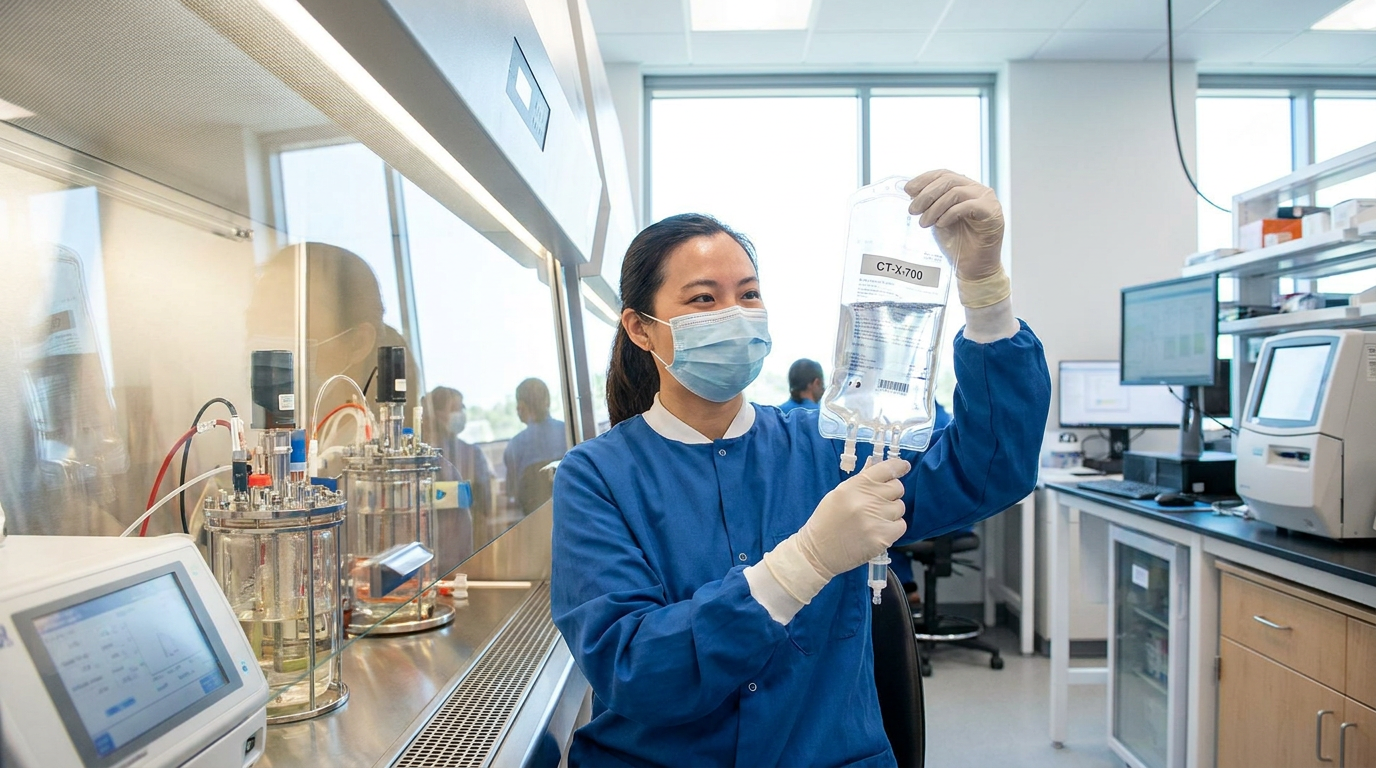
CAR-T (chimeric antigen receptor T-cell) therapy works by turning the patient's own body into a targeted weapon against these rogue cells. Doctors first extract a different type of immune cell, called T cells, from the patient's blood.[2][4]
In a laboratory, these T cells are genetically engineered to recognize a specific protein called CD19, which is found on the surface of B cells. The reprogrammed T cells are then multiplied and infused back into the patient's bloodstream.[4][5]
Once inside the body, the engineered T cells act as a guided missile system, systematically hunting down and destroying the CD19-positive B cells. This clears out the source of the autoimmune attack.[5][7]
The most remarkable phase of the treatment occurs months later. As the body naturally regenerates its B cell population, the newly formed cells appear to be healthy and naive. They do not produce the destructive autoantibodies that characterized the disease.[1][7]
Researchers refer to this phenomenon as an "immune reset." Rather than permanently suppressing the immune system—which is how current lupus drugs work—the therapy wipes the slate clean, allowing a healthy immune system to rebuild itself.[3][6]
Over an average follow-up period of 11 months, the patients in remission have shown rapid improvements in disease markers, including the stabilization of kidney function that had been previously damaged by lupus nephritis.[2][4]

Professor Karl Peggs, director of the UCLH biomedical research centre, noted that while larger studies are necessary, the findings offer fresh hope. "If these results are confirmed in larger studies, the prospect of a cure for lupus may no longer be out of reach," he stated.[2][3]
The scientific community is mobilizing to understand the exact parameters of this reset. Organizations like the Lupus Research Alliance are funding dedicated studies to determine why the remission is so profound and whether the rogue B cells could eventually return.[6]
Challenges remain before CAR-T therapy can become a standard treatment. The procedure is highly complex, requires specialized medical infrastructure, and is currently very expensive. Furthermore, the long-term durability of the remission beyond a few years is still unknown.[5][7]
A larger Phase II study, known as LUMINA, is already recruiting patients across multiple UK centers to gather more robust data on efficacy and safety.[5]
If the success of CAR-T in lupus is sustained, the implications extend far beyond a single disease. Medical experts believe this "immune reset" approach could eventually be applied to a wide range of severe autoimmune conditions, including multiple sclerosis, rheumatoid arthritis, and systemic sclerosis.[1][3]
How we got here
2021
The first case reports from Germany demonstrate that CAR-T cell therapy can induce remission in severe autoimmune disease.
Late 2025
Early data from the Phase I CARLYSLE trial shows that the first cohort of lupus patients are achieving deep remission.
May 2026
The Lupus Research Alliance announces major funding to study the cellular mechanics of the 'immune reset' to understand why the therapy works so well.
June 2026
UK researchers announce that five out of six patients on a lower dose of the therapy have achieved sustained, drug-free remission.
Viewpoints in depth
Medical Researchers
Focuses on the cellular mechanism of the therapy and the potential for a functional cure.
For immunologists and trial investigators, the CARLYSLE study represents a paradigm shift in how medicine approaches autoimmunity. Rather than relying on blunt immunosuppressants that tamp down the entire immune system, researchers are excited by the precision of CAR-T therapy. By specifically targeting CD19-positive B cells, the treatment clears the biological root of the disease. The subsequent return of healthy, naive B cells provides compelling evidence of a true 'immune reset'—a phenomenon that suggests a functional cure may be possible, rather than just symptom management.
Lupus Patients and Advocates
Prioritizes the dramatic improvement in quality of life and freedom from lifelong medication.
For those living with severe systemic lupus erythematosus, the daily reality involves chronic pain, profound fatigue, and the constant threat of organ failure. Patient advocacy groups emphasize that standard treatments—like high-dose steroids—often come with debilitating side effects of their own. The prospect of a one-time treatment that allows patients to return to normal physical activities, stop taking daily immunosuppressants, and live without the constant shadow of a flare-up is viewed as nothing short of miraculous. For this community, the focus is on accelerating access to the therapy.
Clinical Rheumatologists
Balances the striking trial results with the need for long-term safety data and logistical scaling.
While acknowledging the groundbreaking nature of the results, practicing rheumatologists maintain a stance of cautious optimism. They point out that CAR-T cell therapy is currently a highly complex, expensive procedure that requires specialized hospital infrastructure and carries risks of severe acute immune reactions. Clinicians stress that while short-term remission is spectacular, autoimmune diseases are notoriously persistent. They are closely watching the upcoming Phase II LUMINA trial to see if the remission holds over many years and to determine how this bespoke cellular therapy can be practically integrated into routine healthcare systems.
What we don't know
- How long the drug-free remission will last over the span of decades.
- Whether the rogue, autoantibody-producing B cells will eventually return in some patients.
- How healthcare systems will manage the high cost and complex logistics of offering CAR-T therapy to a broader autoimmune patient population.
Key terms
- CAR-T Cell Therapy
- A treatment that genetically alters a patient's own immune cells (T cells) in a laboratory so they can find and destroy specific target cells.
- Systemic Lupus Erythematosus (SLE)
- The most common and severe form of lupus, affecting multiple organ systems throughout the body.
- B Cells
- A type of white blood cell that normally produces antibodies to fight infections, but in lupus, produces autoantibodies that attack healthy tissue.
- T Cells
- A type of white blood cell that plays a central role in the immune response, which can be engineered to hunt specific targets.
- CD19
- A specific protein found on the surface of B cells that CAR-T therapies are programmed to target and attack.
- Remission
- A period during which the symptoms of a disease are significantly reduced or disappear entirely.
Frequently asked
What is lupus?
Lupus is a chronic autoimmune disease where the body's immune system mistakenly attacks healthy tissue, causing inflammation, joint pain, and damage to organs like the kidneys and heart.
How does CAR-T therapy treat autoimmune diseases?
Doctors extract a patient's T cells, genetically engineer them to hunt down the specific B cells causing the autoimmune attack, and infuse them back into the body to clear out the rogue cells.
What does an 'immune reset' mean?
After the engineered T cells destroy the malfunctioning B cells, the body eventually grows new B cells. In these trials, the newly formed cells are healthy and do not attack the body, effectively resetting the immune system.
Is this treatment a permanent cure for lupus?
It is too early to call it a permanent cure. While patients have achieved deep, drug-free remission for months to years, researchers need long-term data to ensure the disease does not eventually return.
Can anyone with lupus get this therapy right now?
No. CAR-T cell therapy for lupus is currently only available through strict clinical trials and is reserved for patients with severe disease who have not responded to standard treatments.
Sources
Source coverage
7 outlets
3 viewpoints surfaced







[1]BBCLupus Patients and Advocates
'I've never been this good' – revolutionary immune reset puts lupus in remission
Read on BBC →[2]The GuardianMedical Researchers
Five lupus patients in England are in remission after being treated with a revolutionary therapy
Read on The Guardian →[3]The IndependentClinical Rheumatologists
Patients with severe lupus achieve remission following groundbreaking 'immune reset' treatment
Read on The Independent →[4]Evening StandardLupus Patients and Advocates
Patients given an 'immune reset' treatment on the NHS have gone into remission
Read on Evening Standard →[5]University College London HospitalsMedical Researchers
CAR T‑cell therapy offers new hope for severe lupus as a UCLH trial helps patient achieve remission
Read on University College London Hospitals →[6]Lupus Research AllianceMedical Researchers
Collaborative research explores how breakthrough engineered therapy works
Read on Lupus Research Alliance →[7]RheumNowClinical Rheumatologists
Chimeric antigen receptor (CAR) T‑cell therapy emerging as a transformative approach in SLE
Read on RheumNow →

More in health
See all 6 stories →Metabolic Health
Muscle as an Organ of Longevity: The Science of Myokines and Metabolic Health
0 sources

Clinical Evidence
The Evidence for Exercise as a First-Line Mental Health Treatment
0 sources

Diabetes Research
FDA Approves First Disease-Modifying Therapy for Newly Diagnosed Stage 3 Type 1 Diabetes in Youth
0 sources
Longevity Science
The Science of 'Exercise Snacks': How 1-Minute Bursts of Movement Can Transform Longevity
0 sources

Every angle. Every day.
Get health stories with full source coverage and perspective breakdowns delivered to your inbox.