
Revolutionary 'Immune Reset' Therapy Puts Severe Lupus Patients into Remission
In a groundbreaking UK trial, a single dose of genetically modified CAR T-cells has effectively cured five patients of severe lupus, offering hope for a permanent end to lifelong autoimmune medication.
By Factlen Editorial Team
- Medical Researchers
- Focuses on the targeted mechanism of CD19 depletion and the need for long-term data to confirm durability.
- Patient Advocacy
- Highlights the life-changing quality-of-life improvements and the escape from toxic, lifelong immunosuppressants.
- Health Systems
- Views the breakthrough through the lens of treatment paradigms, noting the shift from chronic management to potential single-dose cures.
What's not represented
- · Health insurance providers evaluating the high cost of cellular therapies
- · Patients in developing nations without access to advanced genetic medicine
Why this matters
Lupus affects over 5 million people globally, mostly women, and is currently managed with lifelong, broad-spectrum immunosuppressants that leave patients vulnerable to infections. A single-dose therapy that permanently resets the immune system could transform autoimmune care from symptom management to an actual cure.
Key points
- Five NHS patients with severe lupus have entered remission after receiving experimental CAR T-cell therapy.
- The treatment genetically modifies a patient's own T cells to hunt and destroy the rogue B cells causing the disease.
- Unlike traditional immunosuppressants, the single-dose therapy acts as a targeted 'immune reset.'
- Patients reported life-altering improvements, including the reversal of severe kidney damage and joint pain.
- Researchers believe the breakthrough could eventually be applied to other autoimmune diseases like multiple sclerosis.
Five patients in England suffering from severe, treatment-resistant lupus have entered remission following a revolutionary "immune reset" therapy, marking a major milestone in the treatment of autoimmune diseases.[1][2]
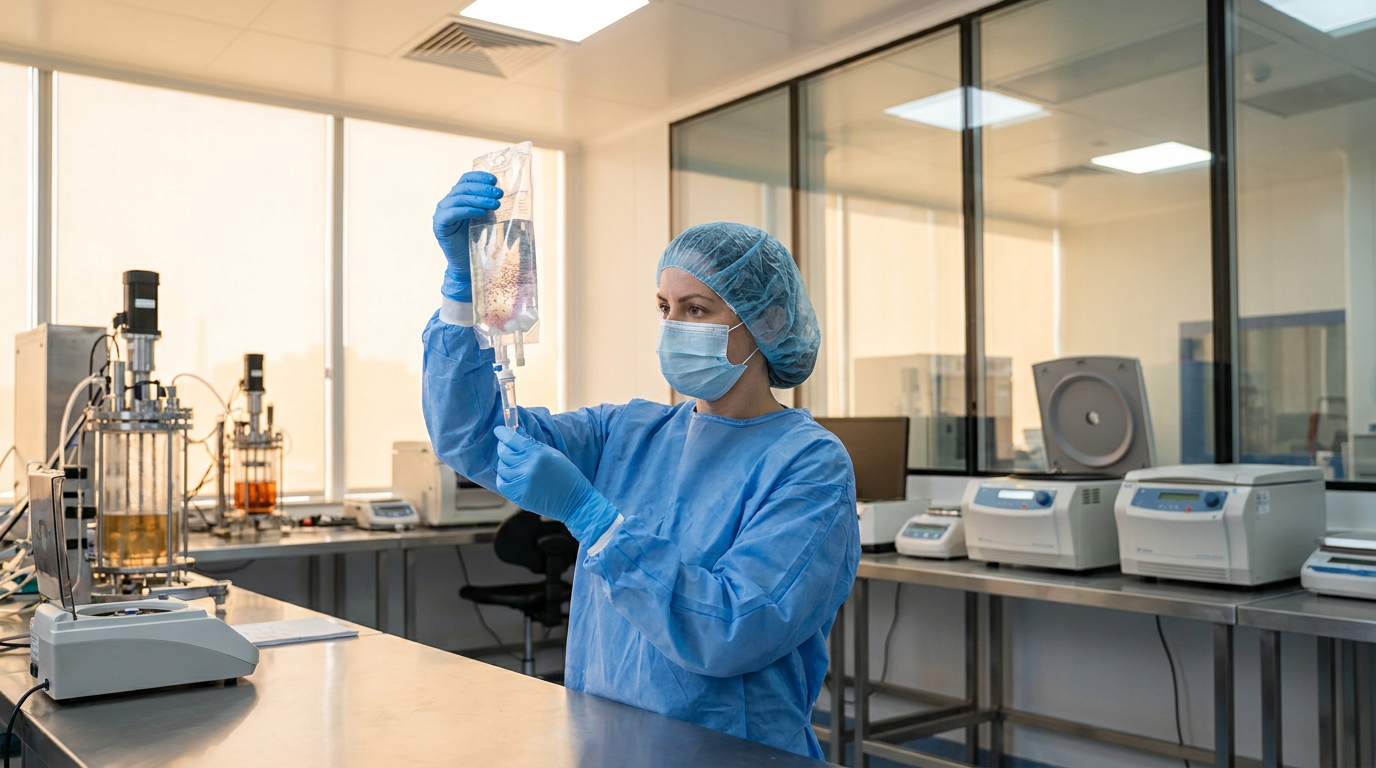
The treatment, known as CAR T-cell therapy, involves extracting a patient's own immune cells, genetically modifying them in a laboratory to hunt down disease-causing cells, and infusing them back into the body.[3][4]
Until now, CAR T-cell therapy has been used almost exclusively as a last-resort treatment for certain blood cancers, such as leukemia and lymphoma, where it has shown remarkable success. This trial represents a historic pivot, successfully applying the complex cellular engineering to a chronic autoimmune condition.[2][5]
The Phase I CARLYSLE study, led by University College London (UCL) and University College London Hospitals NHS Foundation Trust (UCLH), enrolled patients who had exhausted all standard treatment options and were suffering from severe organ damage.[4][5]

Systemic lupus erythematosus (SLE) is driven by malfunctioning B cells that produce autoantibodies. Instead of fighting off infections, these misguided antibodies attack the patient's own healthy tissues, causing widespread inflammation and damage to the kidneys, heart, lungs, and joints.[5][6]
To stop this self-destructive cycle, scientists extract the patient's T cells—the immune system's natural security guards—and engineer them to recognize a specific protein called CD19, which sits on the surface of the rogue B cells.[2][6]
When these modified T cells are infused back into the patient, they act as targeted assassins. They systematically wipe out the CD19-positive B cells, halting the production of autoantibodies and allowing the immune system to effectively reboot itself with healthy cells.[1][6]

When these modified T cells are infused back into the patient, they act as targeted assassins.
The early clinical results have been striking. Of the six patients who received a lower dose of the therapy, five went into complete remission within just a few months. Tests showed rapid improvements in disease markers, including the stabilization of kidney function that had been severely damaged by the disease.[2][4]
For the patients involved, the transformation has been life-altering. Katie Tinkler, a 50-year-old former fitness instructor, had suffered from severe lupus since she was 20. The disease caused debilitating joint pain, pushed her close to needing dialysis, and previously put her in a coma due to sepsis and multi-organ failure.[2][5]
After receiving the single-dose CAR-T treatment, Tinkler reported that her symptoms vanished entirely. Free from the daily burden of the disease, she recently skied for the first time in a decade and danced the night away at her daughter's wedding.[1][2]
Dr. Claire Roddie, a UCLH consultant haematologist and trial investigator, noted that options for patients with severe, refractory lupus have historically been bleak. She stated that the early evidence suggests cellular therapies can drive "meaningful clinical improvements after a single treatment."[4][5]

Professor Karl Peggs, director of the NIHR UCLH Biomedical Research Centre, described the findings as "truly groundbreaking." He emphasized that the therapy's ability to deliver a deep immune reset could potentially free patients from the relentless cycle of chronic disease and lifelong medication.[3][5]
Traditional lupus treatments rely heavily on broad immunosuppressants and steroids. While these drugs can manage symptoms, they dampen the entire immune system, leaving patients highly vulnerable to severe infections and causing significant long-term side effects.[1][6]
How we got here
1990s-2000s
Early research establishes the role of B-cell depletion in managing severe autoimmune diseases.
2010s
CAR T-cell therapy emerges as a revolutionary, FDA-approved treatment for certain treatment-resistant blood cancers.
2024
The CARLYSLE Phase I study begins recruiting severe lupus patients in the UK to test CAR-T outside of oncology.
June 2026
Early trial results are published, showing five out of six lower-dose patients achieving rapid remission.
Viewpoints in depth
Clinical Researchers
Focuses on the targeted mechanism of the therapy and the need for rigorous long-term data.
For medical researchers, the excitement lies in the precision of the mechanism. By specifically targeting the CD19 protein, the therapy eliminates the exact lineage of B cells responsible for the disease without permanently crippling the patient's entire immune defense. However, investigators stress that this is a Phase I trial. While the initial 'immune reset' is profound, long-term follow-up is essential to determine if the newly generated B cells will eventually 're-learn' the autoimmune behavior, or if the remission is truly a permanent cure.
Autoimmune Patients
Highlights the life-changing escape from chronic pain and toxic, lifelong medications.
From the patient perspective, the breakthrough represents an escape from a grueling status quo. Severe lupus often means a lifetime of broad-spectrum immunosuppressants and high-dose steroids, which carry severe side effects ranging from osteoporosis to life-threatening vulnerability to common infections. A single-dose therapy that not only halts organ damage but restores normal physical function—allowing patients to return to work, exercise, and daily life—shifts the paradigm from mere disease management to actual health restoration.
Immunology Experts
Views the breakthrough as a gateway to treating a wide spectrum of autoimmune conditions.
Immunologists view the success of the CARLYSLE trial as a proof-of-concept that extends far beyond lupus. If engineered T cells can successfully reboot the immune system by clearing out rogue autoantibody producers, the same underlying technology could theoretically be adapted for other B-cell driven diseases. Experts are already looking toward future applications in multiple sclerosis, rheumatoid arthritis, and scleroderma, potentially revolutionizing the entire field of rheumatology.
What we don't know
- Whether the remission will last permanently, or if rogue B cells will eventually return years after the treatment.
- How quickly health systems can scale the highly complex and expensive manufacturing process required for personalized CAR T-cell therapy.
- If the therapy will be equally effective and safe for patients with milder forms of lupus or other autoimmune conditions.
Key terms
- CAR T-cell therapy
- A treatment that involves altering the genes inside a patient's own immune cells (T cells) to help them attack specific disease-causing cells.
- B cells
- A type of white blood cell that normally produces antibodies to fight infections, but in lupus, malfunctions and produces autoantibodies that attack healthy tissue.
- T cells
- A type of white blood cell that acts as the immune system's security guards, hunting down and destroying infected or abnormal cells.
- CD19
- A specific protein found on the surface of B cells, which acts as the target for the engineered CAR T-cells in this therapy.
- Immunosuppressant
- Medications that reduce the strength of the body's immune system, commonly used to manage autoimmune diseases but leaving patients vulnerable to infections.
Frequently asked
What is systemic lupus erythematosus (SLE)?
Lupus is a chronic autoimmune disease where the immune system mistakenly attacks healthy tissue, causing inflammation and damage to organs like the kidneys, heart, and lungs.
How does CAR T-cell therapy treat lupus?
The therapy extracts a patient's T cells and genetically modifies them to target and destroy CD19-positive B cells. Removing these rogue B cells stops the production of harmful autoantibodies, allowing the immune system to reset.
Is this a permanent cure?
Early results are highly promising, with patients achieving complete remission after a single dose. However, researchers are conducting long-term follow-ups to ensure the disease-causing cells do not return over time.
Can this be used for other autoimmune diseases?
Yes, researchers believe the same 'immune reset' mechanism could eventually be applied to other B-cell driven autoimmune conditions, such as multiple sclerosis and rheumatoid arthritis.
Sources
Source coverage
6 outlets
3 viewpoints surfaced






[1]BBCPatient Advocacy
'I've never been this good' – revolutionary immune reset puts lupus in remission
Read on BBC →[2]The GuardianPatient Advocacy
Patients given 'immune reset' treatment on NHS go into remission
Read on The Guardian →[3]The IndependentHealth Systems
Patients with severe lupus have achieved remission following a groundbreaking 'immune reset' treatment
Read on The Independent →[4]Evening StandardHealth Systems
Patients given 'immune reset' treatment on NHS go into remission
Read on Evening Standard →[5]UCLHMedical Researchers
CAR T-cell therapy transforms life of patient with severe lupus
Read on UCLH →[6]UCLBMedical Researchers
Early promise reported in severe lupus for Autolus Therapeutics' CAR T therapy
Read on UCLB →

More in health
See all 6 stories →Metabolic Health
Muscle as an Organ of Longevity: The Science of Myokines and Metabolic Health
0 sources

Clinical Evidence
The Evidence for Exercise as a First-Line Mental Health Treatment
0 sources

Diabetes Research
FDA Approves First Disease-Modifying Therapy for Newly Diagnosed Stage 3 Type 1 Diabetes in Youth
0 sources
Longevity Science
The Science of 'Exercise Snacks': How 1-Minute Bursts of Movement Can Transform Longevity
0 sources

Every angle. Every day.
Get health stories with full source coverage and perspective breakdowns delivered to your inbox.