
Revolutionary 'Immune Reset' Therapy Puts Severe Lupus into Remission
An experimental CAR-T cell therapy originally developed for blood cancers has successfully driven severe lupus into drug-free remission in early UK trials. By genetically reprogramming patients' own immune cells to clear out rogue tissue-attacking cells, the treatment offers a potential functional cure for chronic autoimmune diseases.
By Factlen Editorial Team
- Clinical Researchers
- Focus on the biological mechanism, the unprecedented depth of remission, and the need for larger trials to confirm long-term safety and durability.
- Patient Advocacy Groups
- Emphasize the life-changing impact of achieving drug-free remission and escaping the severe side effects of lifelong immunosuppressants.
- Health Economics Analysts
- Highlight the tension between the therapy's high upfront manufacturing costs and the potential long-term savings of eliminating decades of chronic disease management.
What's not represented
- · Oncology manufacturing supply chain managers
- · Private health insurance providers
Why this matters
Lupus and other severe autoimmune conditions typically require lifelong management with heavy immunosuppressants that carry severe side effects. If this single-dose cellular therapy proves durable in larger trials, it could fundamentally transform the treatment landscape, offering a functional cure for millions suffering from lupus, multiple sclerosis, and rheumatoid arthritis.
Key points
- A UK clinical trial has successfully used CAR-T cell therapy to put severe lupus into drug-free remission.
- The treatment genetically modifies a patient's T-cells to hunt and destroy rogue, tissue-attacking B-cells.
- After the rogue cells are cleared, the body generates healthy new B-cells, effectively resetting the immune system.
- Five out of six patients in the initial UK dosing cohort achieved clinical remission within months.
- The therapy was originally developed to treat aggressive blood cancers like leukemia and lymphoma.
- Researchers are now exploring the therapy for other autoimmune conditions, including multiple sclerosis.
The word "cure" is rarely used in the context of autoimmune diseases, but a revolutionary cellular therapy is beginning to change the medical conversation. Early results from a groundbreaking UK clinical trial show that a single-dose treatment has put severe systemic lupus erythematosus (SLE) into deep, drug-free remission. By fundamentally rebooting the patient's immune system, the therapy is offering unprecedented hope to those who have exhausted all conventional medical options.[1][2]
The clinical trial, spearheaded by University College London Hospitals (UCLH) and University College London (UCL), administered the experimental treatment to a cohort of patients with severe lupus. These individuals had not responded to standard therapies and suffered from serious complications, including lupus nephritis, which damages the kidneys. In the initial readout, five out of six patients who received the primary dosing regimen achieved clinical remission within just a few months.[2][3][4]
The clinical data translates to profound lifestyle transformations for the participants. Patients who previously endured debilitating joint pain, chronic fatigue, and organ damage are now living without symptoms and without the need for daily immunosuppressive medication. One trial participant, Katie Tinkler, reported feeling the best she has in 30 years, noting that she has been able to return to skiing and recently danced at her daughter's wedding.[1][2][3]
The mechanism behind this breakthrough is known as chimeric antigen receptor (CAR) T-cell therapy. To understand how it works, it is necessary to understand the biological root of lupus. The disease is driven by malfunctioning B-cells—a type of white blood cell that normally produces antibodies to fight off infections. In lupus patients, these B-cells produce autoantibodies, which are rogue proteins that mistakenly attack the body's own healthy tissues.[4][7]

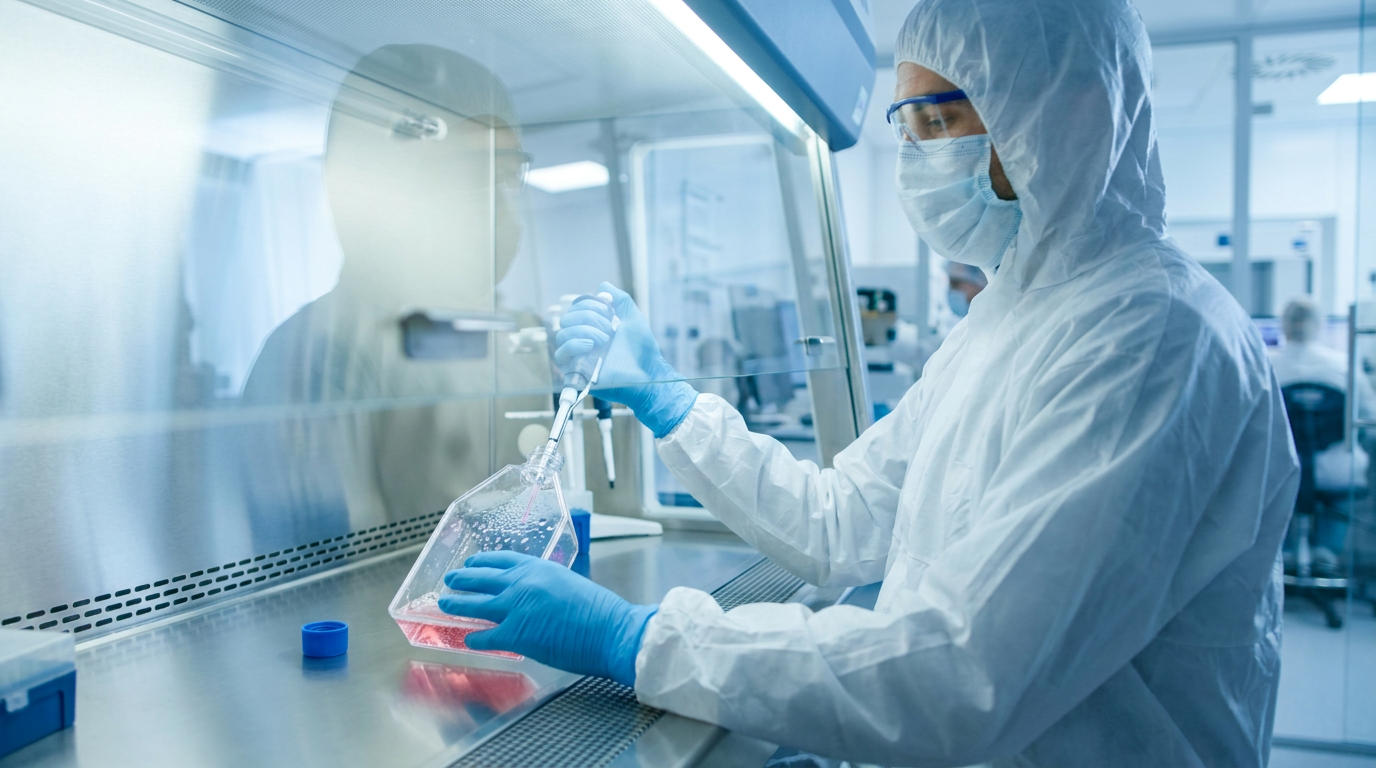
To stop this self-destructive cycle, medical researchers extract a different type of immune cell—T-cells—from the patient's blood. These cells are sent to a highly specialized laboratory where they are genetically engineered. Scientists insert a specific receptor into the T-cells designed to hunt down a protein called CD19, which is prominently displayed on the surface of the malfunctioning B-cells.[5][6]
Millions of these newly reprogrammed, CD19-hunting T-cells are then infused back into the patient's bloodstream. Acting as targeted cellular assassins, the CAR-T cells systematically track down and destroy the entire population of B-cells in the patient's body. By eliminating the source of the autoantibodies, the therapy effectively halts the autoimmune attack in its tracks.[1][5]
The critical "reset" phase occurs in the months following the infusion. Once the CAR-T cells have cleared out the existing B-cells, the patient's bone marrow naturally begins to produce a fresh, healthy population of new B-cells. Crucially, clinical observations show that these newly generated cells do not produce the destructive autoantibodies, allowing the immune system to function normally once again.[1][2]
The critical "reset" phase occurs in the months following the infusion.
While novel in the realm of autoimmune diseases, CAR-T therapy is a well-established technology in oncology. It has been used successfully for years within the NHS and globally to treat aggressive blood cancers, such as B-cell leukemias and lymphomas. In those cases, the therapy's objective is to eradicate cancerous B-cells rather than autoimmune ones.[2][3]
The current UK trial builds upon foundational evidence established by researchers in Germany. In 2021 and 2022, a team at University Hospital Erlangen published groundbreaking case studies in the journal Nature Medicine. Their pilot study demonstrated that CD19 CAR-T cell therapy successfully induced drug-free remission in five refractory SLE patients, providing the first proof-of-concept for the treatment in humans.[5][6]

The German cohort has also provided the medical community with the first evidence of the treatment's lasting power. Follow-up data extending past 12 months showed that even after healthy B-cells repopulated the patients' immune systems, they remained in remission without the need for any lupus medication. This sustained response strongly suggests a true functional reset rather than a temporary suppression of the disease.[5][6]
A major concern with CAR-T therapy in oncology is its safety profile, specifically the risk of cytokine release syndrome (CRS)—a potentially dangerous systemic inflammatory response. However, evidence from both the German pilot study and the UK trial indicates that the therapy is surprisingly well-tolerated in autoimmune patients, with only mild cases of CRS reported thus far.[5][6]
The success in treating lupus has ignited intense interest across the broader medical research community. Because rogue B-cells play a central role in several other severe autoimmune conditions, researchers are actively exploring the application of CAR-T therapy for multiple sclerosis (MS), rheumatoid arthritis, and systemic sclerosis, potentially opening a new frontier in immunology.[1][3][6]

Despite the clinical triumphs, significant hurdles remain before CAR-T can become a standard, widely accessible treatment. The therapy is highly personalized, requiring complex laboratory infrastructure and weeks of manufacturing time for each individual patient. In the oncology sector, a single course of CAR-T therapy can cost hundreds of thousands of dollars, raising questions about future health system scalability.[7]
Medical experts emphasize that while the early findings are undeniably groundbreaking, larger, multi-center clinical trials are essential. Professor Karl Peggs, director of UCLH's biomedical research centre, noted that researchers must still determine the optimal dosing regimens, confirm long-term safety profiles, and observe whether the remission will last for decades or eventually require retreatment.[2][3]
For now, the therapy remains strictly experimental and is accessible only through tightly controlled clinical trials. Yet, the evidence gathered so far represents a paradigm shift in medical science. For the first time, researchers have a biologically proven pathway to not just manage the symptoms of severe autoimmune diseases, but to potentially cure them entirely.[1][7]
How we got here
2021
German researchers publish the first case study of CAR-T therapy successfully treating a patient with severe systemic lupus erythematosus.
Late 2022
A pilot study published in Nature Medicine confirms that five German patients achieved drug-free remission following the cellular therapy.
2024-2025
Clinical trials expand globally, including the launch of a major NHS trial led by University College London Hospitals.
June 2026
The UK trial reports that five out of six patients on the initial dosing regimen have achieved rapid, drug-free remission.
Viewpoints in depth
Clinical Researchers
Scientists emphasize the biological proof-of-concept while urging caution regarding long-term outcomes.
For immunologists and trial investigators, the primary victory is biological: the therapy proves that targeted B-cell depletion can fundamentally halt the autoimmune cascade. However, researchers are quick to temper expectations regarding the word 'cure.' They stress that while the short-term depth of remission is unprecedented, the immune system is highly complex. Larger, multi-year studies are required to ensure that the rogue B-cells do not eventually return, and to confirm that the therapy does not leave patients vulnerable to novel long-term side effects.
Patient Advocacy Groups
Advocates highlight the profound quality-of-life improvements of escaping chronic immunosuppression.
For organizations representing lupus patients, the breakthrough represents an escape from a grueling medical status quo. Standard lupus management relies heavily on broad-spectrum immunosuppressants and steroids, which carry severe side effects including weight gain, osteoporosis, and a permanently heightened risk of infection. Advocates argue that even if the CAR-T remission only lasts for a decade before requiring retreatment, offering patients ten years free from both the disease and the toxic side effects of daily medication is a life-altering triumph.
Health Economics Analysts
Analysts focus on the tension between the therapy's massive upfront cost and its long-term value.
Health economists view the breakthrough through the lens of systemic scalability. CAR-T therapy is notoriously expensive, often costing hundreds of thousands of dollars per patient due to the bespoke, labor-intensive manufacturing process required to engineer individual cells. However, analysts point out that severe lupus is also incredibly expensive to manage over a patient's lifetime, factoring in decades of specialty drugs, hospitalizations, and organ transplants. The economic debate will center on whether the massive upfront cost of a cellular 'cure' ultimately saves healthcare systems money over a 30-year horizon.
What we don't know
- Whether the remission is permanent, or if the rogue B-cells will eventually return years down the line.
- How the therapy will perform in a larger, more diverse patient population beyond the initial small trial cohorts.
- Whether healthcare systems can scale the complex manufacturing process to treat the tens of thousands of patients who could benefit.
Key terms
- CAR-T Cell Therapy
- A treatment that genetically engineers a patient's T-cells to produce chimeric antigen receptors (CARs) that target and destroy specific cells.
- B-cells
- A type of white blood cell that normally produces antibodies to fight infections, but in autoimmune diseases, produces autoantibodies that attack the body.
- Autoantibodies
- Proteins produced by a malfunctioning immune system that mistakenly target and damage the body's own healthy tissues.
- Cytokine Release Syndrome (CRS)
- A potentially severe systemic inflammatory response that can occur as a side effect of certain immunotherapies when the immune system becomes overactive.
- Remission
- A period during which the symptoms of a disease are significantly reduced or completely absent.
Frequently asked
What is systemic lupus erythematosus (SLE)?
SLE is a severe, chronic autoimmune disease where the immune system mistakenly attacks healthy tissues, causing widespread inflammation and damage to organs like the kidneys, skin, and joints.
How does CAR-T therapy treat lupus?
The therapy genetically modifies a patient's own T-cells to hunt down and destroy malfunctioning B-cells. Once the rogue B-cells are cleared, the body generates new, healthy B-cells, effectively resetting the immune system.
Is this treatment a permanent cure?
It is too early to definitively call it a permanent cure. However, early trial patients have achieved long-term, drug-free remission lasting over a year, which is unprecedented for severe lupus.
Can anyone with lupus get this treatment now?
No. The therapy is currently highly experimental and is only available to patients with severe, treatment-resistant lupus who are enrolled in strict clinical trials.
Sources
Source coverage
7 outlets
3 viewpoints surfaced







[1]BBCPatient Advocacy Groups
'I've never been this good' – revolutionary immune reset puts lupus in remission
Read on BBC →[2]The GuardianClinical Researchers
Five lupus patients in England are in remission after being treated with a revolutionary therapy
Read on The Guardian →[3]The IndependentPatient Advocacy Groups
Patients with severe lupus have achieved remission following a groundbreaking 'immune reset' treatment
Read on The Independent →[4]UCLHClinical Researchers
CAR T-cell therapy transforms life of patient with severe lupus
Read on UCLH →[5]Nature MedicineClinical Researchers
Anti-CD19 CAR T cell therapy for refractory systemic lupus erythematosus
Read on Nature Medicine →[6]Lupus Research AlliancePatient Advocacy Groups
Pilot Study Shows Success of CAR-T Therapy for Lupus
Read on Lupus Research Alliance →[7]Factlen Editorial TeamHealth Economics Analysts
Synthesis by Factlen editorial team
Read on Factlen Editorial Team →

More in health
See all 122 stories →CAR-T Therapy
CAR-T Cell Therapy Puts Severe Lupus Into Remission in UK Trial
7 sources
Autoimmune Research
CAR-T Cell Therapy Induces Drug-Free Remission in Severe Lupus Patients
6 sources
Medical Breakthrough
Pioneering 'Immune Reset' Therapy Puts Severe Lupus Patients Into Remission
8 sources
Longevity Science
The Emerging Science of VO2 Max and Grip Strength as Primary Predictors of Men's Longevity
7 sources

Every angle. Every day.
Get health stories with full source coverage and perspective breakdowns delivered to your inbox.