
Revolutionary Immune Reset Therapy Puts Severe Lupus Into Long-Term Remission
A pioneering cellular therapy originally designed for cancer is successfully resetting the immune systems of patients with severe lupus, allowing many to achieve drug-free remission for the first time.
By Factlen Editorial Team

- Clinical Researchers
- View this as a historic paradigm shift from managing autoimmune symptoms to potentially curing the underlying disease.
- Rheumatologists
- Express strong optimism but urge caution regarding long-term safety and the need for larger, randomized trials.
- Health Economists
- Focus on the immense cost and manufacturing bottlenecks that currently prevent widespread access to cellular therapies.
What's not represented
- · Patients in developing nations without access to advanced cellular manufacturing facilities
- · Insurance providers evaluating coverage models for high-cost, one-time curative therapies
Why this matters
Systemic lupus erythematosus affects millions globally, often requiring lifelong immunosuppression that damages organs and leaves patients vulnerable to infections. If this cellular reset proves durable in larger trials, it could transform autoimmune disease treatment from chronic management to a potential one-time cure.
Key points
- A cellular therapy called CAR-T is being successfully repurposed to treat severe systemic lupus erythematosus.
- The therapy involves extracting a patient's T-cells, engineering them to hunt defective B cells, and reinfusing them.
- Once the rogue B cells are destroyed, the immune system generates healthy replacements that do not attack the body.
- Early trial patients have achieved 100% clinical remission and remain completely off daily immunosuppressive drugs.
- While highly effective, the treatment is currently bespoke, expensive, and limited to clinical trials.
Patients with severe, treatment-resistant lupus are experiencing unprecedented, drug-free remission following a revolutionary cellular therapy that effectively reboots their immune systems.[1][6]
The human impact of this breakthrough is profound. Individuals who previously faced imminent organ failure and debilitating daily symptoms are now returning to normal life, entirely free of the heavy medications they once relied upon to survive.[1]
To understand the significance of this shift, it is necessary to look at the underlying mechanics of systemic lupus erythematosus (SLE). Lupus is a chronic autoimmune condition where rogue B cells produce autoantibodies that mistakenly attack the patient's own healthy tissue, leading to severe joint pain, chronic fatigue, and progressive kidney damage.[4][6]
Historically, rheumatologists have been forced to rely on broad immunosuppressants and corticosteroids to dampen this hyperactive immune response. While these drugs can manage symptoms, they do not cure the disease, and their long-term use leaves patients highly vulnerable to severe infections and cumulative organ toxicity.[4]
The paradigm began to shift when researchers hypothesized that a technique highly successful in oncology—Chimeric Antigen Receptor T-cell (CAR-T) therapy—could be repurposed to perform a complete "immune reset" in autoimmune patients.[2][6]

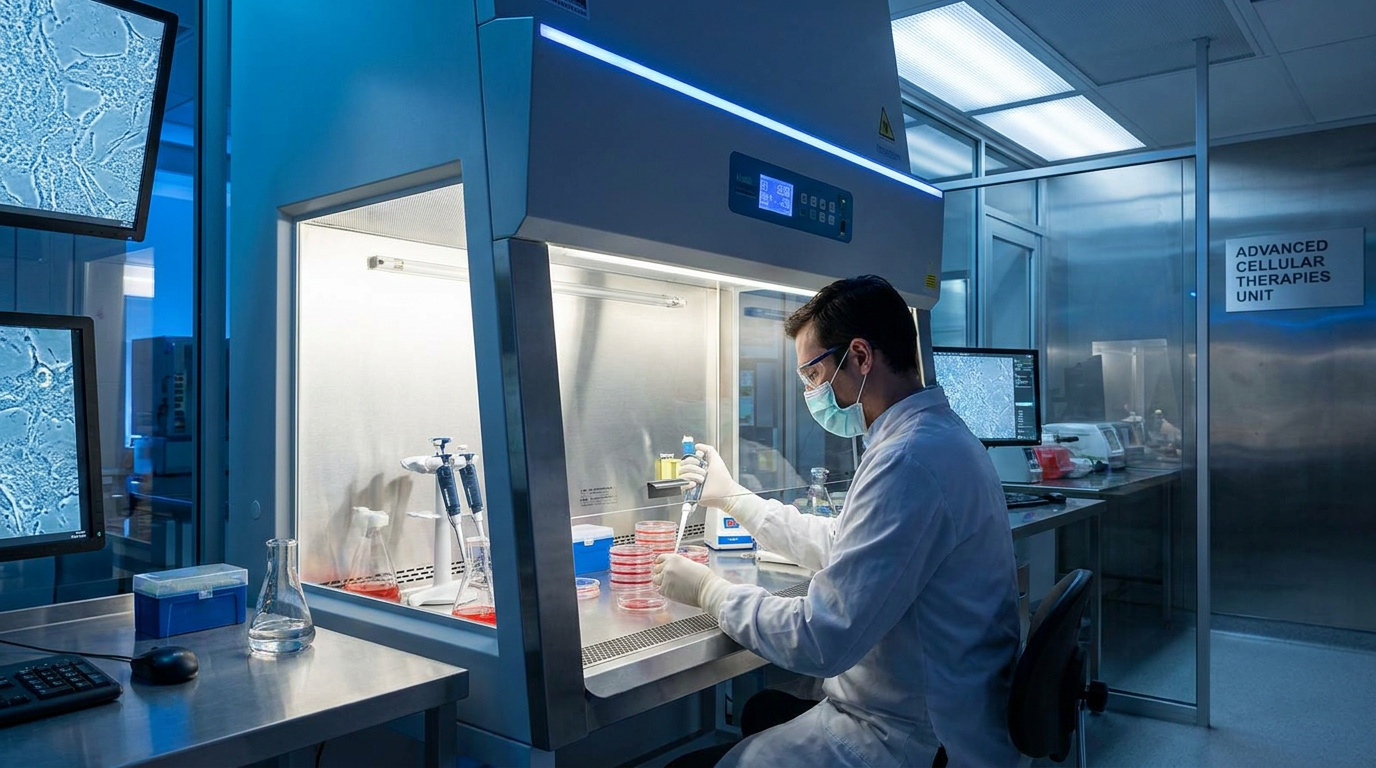
The mechanism is complex but elegant. First, T-cells—the natural "soldiers" of the human immune system—are extracted from the patient's blood through a specialized filtration process.[3]
These extracted cells are then transported to a laboratory, where they are genetically engineered to recognize CD19, a specific protein marker found almost exclusively on the surface of the rogue B cells responsible for driving lupus.[3][6]
Once the engineering is complete, the modified CAR-T cells are infused back into the patient's bloodstream. There, they act as targeted assassins, hunting down and completely eradicating the defective, autoantibody-producing B-cell population.[3][5]
Once the engineering is complete, the modified CAR-T cells are infused back into the patient's bloodstream.
The true breakthrough occurs in the "reset" phase following this depletion. After the rogue cells are wiped out, the patient's bone marrow eventually generates a completely new, healthy population of B cells—crucially, these new cells do not produce the destructive autoantibodies that caused the lupus.[5][6]
The clinical evidence supporting this mechanism has been striking. Early data published in leading medical journals demonstrated that small cohorts of patients with refractory, life-threatening lupus achieved 100% clinical remission shortly after receiving the engineered cells.[3]

More importantly, the durability of this response is holding steady. Follow-up studies confirm that these remissions are persisting months and even years post-infusion, with patients remaining entirely off their previous immunosuppressive drug regimens.[5]
The safety profile has also been a source of cautious optimism. While CAR-T therapy in blood cancer patients often triggers severe, life-threatening cytokine release syndrome (CRS) and neurotoxicity, the side effects observed in lupus patients have been surprisingly mild, typically presenting as temporary, manageable fevers.[2][3]
Despite the profound efficacy, significant hurdles remain before this becomes a standard treatment. CAR-T therapy is highly complex and notoriously expensive, often costing hundreds of thousands of dollars per patient due to the bespoke, individualized manufacturing process required for each infusion.[2][6]

How we got here
1990s-2010s
CAR-T cell therapy is developed and refined primarily as a treatment for refractory blood cancers.
2021
Researchers in Germany administer the first compassionate use of CAR-T therapy to a young woman with severe, treatment-resistant lupus.
2022-2024
Small cohort studies published in major medical journals report 100% drug-free remission rates in treated lupus patients.
2025-2026
Larger multi-center clinical trials launch globally to test the therapy's safety and efficacy across diverse patient populations.
Viewpoints in depth
Clinical Researchers
View this as a historic paradigm shift from managing autoimmune symptoms to potentially curing the underlying disease.
For decades, the standard approach to autoimmune disease has been blunt immunosuppression—using drugs to turn down the volume on the entire immune system. Clinical researchers view CAR-T therapy as a surgical strike that eliminates the root cause of the disease. By proving that the immune system can be safely 'rebooted' to forget its autoimmune programming, researchers argue this opens the door to functionally curing conditions that were previously considered lifelong burdens.
Rheumatologists
Express strong optimism but urge caution regarding long-term safety and the need for larger, randomized trials.
Practicing rheumatologists are thrilled by the early data but maintain a cautious stance. They emphasize that while short-term remissions are spectacular, autoimmune diseases are notorious for late relapses. Furthermore, they are closely monitoring the long-term safety profile, particularly the theoretical risk of secondary malignancies or prolonged immunodeficiency, before recommending this as a frontline treatment over established, albeit imperfect, medications.
Health Economists
Focus on the immense cost and manufacturing bottlenecks that currently prevent widespread access to cellular therapies.
From a systemic perspective, health economists warn that the current CAR-T manufacturing model is financially unsustainable for widespread autoimmune application. Because the therapy requires extracting, transporting, genetically modifying, and re-infusing a patient's own cells, the process can cost upwards of $400,000 per treatment. Economists argue that until 'off-the-shelf' allogeneic cell therapies are perfected, this breakthrough will remain inaccessible to the vast majority of the global lupus population.
What we don't know
- Whether the drug-free remissions will last for decades or if the disease will eventually relapse.
- The long-term safety risks of completely depleting and regenerating a patient's B-cell population.
- How the healthcare system will scale and fund bespoke cellular therapies for large autoimmune populations.
Key terms
- CAR-T Therapy
- A treatment where a patient's T-cells are altered in a lab to bind to and destroy specific target cells.
- B Cells
- A type of white blood cell that produces antibodies; in lupus, defective B cells produce autoantibodies that attack the body.
- Autoantibodies
- Proteins produced by the immune system that mistakenly target and damage a person's own healthy tissues.
- Systemic Lupus Erythematosus (SLE)
- The most common and severe form of lupus, affecting multiple organs including the kidneys, skin, and joints.
- Cytokine Release Syndrome
- A systemic inflammatory response that can occur after cellular therapy, causing fever and, in severe cases, organ dysfunction.
Frequently asked
Is this therapy a definitive cure for lupus?
It is too early to call it a permanent cure. However, patients in early trials have achieved long-term, drug-free remission, which is unprecedented in severe lupus.
Who is currently eligible for this treatment?
Outside of clinical trials, it is not yet widely available. Current trials are generally limited to patients with severe, life-threatening lupus that has not responded to traditional medications.
What are the main side effects?
The most common side effect observed so far is mild cytokine release syndrome, which typically presents as a temporary fever. It has been notably milder than the side effects seen when CAR-T is used for cancer.
Sources
Source coverage
6 outlets
3 viewpoints surfaced






[1]BBCHealth Economists
'I've never been this good' – revolutionary immune reset puts lupus in remission
Read on BBC →[2]ReutersHealth Economists
Cellular therapies expand from cancer to autoimmune disease trials
Read on Reuters →[3]Nature MedicineClinical Researchers
Anti-CD19 CAR T cell therapy for refractory systemic lupus erythematosus
Read on Nature Medicine →[4]National Institutes of HealthRheumatologists
Systemic Lupus Erythematosus (SLE) Overview
Read on National Institutes of Health →[5]The Lancet RheumatologyClinical Researchers
Long-term outcomes of CD19-targeted CAR T-cell therapy in severe autoimmune diseases
Read on The Lancet Rheumatology →[6]Factlen Editorial TeamRheumatologists
Synthesis by Factlen editorial team
Read on Factlen Editorial Team →

More in health
See all 122 stories →CAR-T Therapy
CAR-T Cell Therapy Puts Severe Lupus Into Remission in UK Trial
7 sources
Autoimmune Research
CAR-T Cell Therapy Induces Drug-Free Remission in Severe Lupus Patients
6 sources

Medical Breakthrough
Pioneering 'Immune Reset' Therapy Puts Severe Lupus Patients Into Remission
8 sources
Longevity Science
The Emerging Science of VO2 Max and Grip Strength as Primary Predictors of Men's Longevity
7 sources

Every angle. Every day.
Get health stories with full source coverage and perspective breakdowns delivered to your inbox.