
PSG Defeats Arsenal on Penalties to Retain Champions League Title
Paris Saint-Germain won back-to-back UEFA Champions League titles by defeating Arsenal 4-3 on penalties following a 1-1 draw in Budapest.
By Ryder James

Paris Saint-Germain has cemented its status at the summit of European football, defeating Arsenal 4-3 in a tense penalty shootout to claim back-to-back UEFA Champions League titles. The final, held at the Puskás Aréna in Budapest, concluded in a 1-1 draw after 120 minutes of grueling, tactically rigid football that tested the physical and mental limits of both squads.
By successfully defending the trophy they captured a year prior, the Parisian club joins a highly exclusive echelon of modern European dynasties, validating over a decade of unprecedented financial investment and strategic recalibration. The victory in Hungary represents not just a singular athletic triumph, but the realization of a long-stated organizational mandate to dominate the continent unequivocally.[1][2][3]
The match itself was a study in contrasting philosophies and immense pressure, with neither side willing to concede the midfield battle. Arsenal, appearing in their first Champions League final in two decades, demonstrated remarkable defensive resilience and tactical discipline, absorbing waves of Parisian pressure while launching calculated counter-attacks.
The 1-1 scoreline at the end of extra time was a fair reflection of a contest where moments of individual brilliance were frequently neutralized by organized, collective defensive structures. Both goals in regulation time came from rapid transitions, highlighting the razor-thin margins that define football at this elite level.[1][2][3]
As the referee’s whistle signaled the end of extra time, the atmosphere in Budapest shifted from frantic anticipation to nerve-wracking silence, setting the stage for the penalty shootout. The shootout, a cruel but definitive tiebreaker, saw both teams convert their early spot-kicks with clinical precision, masking the immense psychological burden resting on the players' shoulders.
However, the momentum shifted decisively when PSG's goalkeeper anticipated correctly, making a crucial save that tilted the mathematical advantage toward the French champions. The final 4-3 shootout scoreline was sealed when PSG’s designated final taker calmly slotted the ball into the net, sparking wild celebrations among the traveling supporters and despair for the London club.[1][2][3]
For Paris Saint-Germain, this second consecutive European crown represents the ultimate return on investment for the club's ownership group. After years of domestic dominance coupled with frustrating, premature exits on the European stage, the club has finally engineered a squad capable of navigating the grueling knockout phases with consistency.
Financial analysts note that back-to-back Champions League victories will further elevate PSG's global brand valuation, driving lucrative new sponsorship agreements and expanding their commercial footprint in emerging markets. The victory effectively silences lingering critics who previously argued the club lacked the institutional pedigree required to sustain success at the absolute highest level of the sport.
Conversely, the defeat in Budapest is a bitter pill for an Arsenal side that has undergone a massive, multi-year rebuild to return to the pinnacle of European competition. Despite the heartbreak of losing on penalties, the London club's journey to the final signifies a successful restoration of their status among Europe's elite.
The squad, characterized by a blend of youthful exuberance and tactical maturity, proved they could compete toe-to-toe with the continent's most heavily resourced teams. While the immediate aftermath is defined by disappointment, the structural foundations laid during this campaign suggest Arsenal is positioned for sustained competitiveness in both domestic and European arenas.[2][3]
The tactical narrative of the final was heavily influenced by the managers' respective game plans, which prioritized risk mitigation over expansive, open play. PSG's approach involved controlling possession and utilizing the width of the pitch to stretch Arsenal's compact defensive block, while Arsenal relied on high-intensity pressing in specific zones to disrupt the Parisian buildup.
This tactical stalemate resulted in a match with relatively few clear-cut scoring opportunities, elevating the importance of set-pieces and transitional moments. The 1-1 draw in regulation was a testament to the meticulous preparation of both coaching staffs, who effectively neutralized each other's primary attacking threats for the majority of the contest.[1][2][3]
Beyond the pitch, the final in Budapest highlighted the evolving economic landscape of modern football, where state-backed clubs and traditionally structured institutions vie for supremacy. PSG's triumph underscores the undeniable advantage of vast financial resources in assembling deep, versatile squads capable of enduring the physical toll of a 60-game season.
However, Arsenal's presence in the final serves as a counterpoint, demonstrating that astute recruitment, long-term strategic planning, and cohesive team culture can still bridge the financial gap, even if it fell agonizingly short in the shootout. This dynamic continues to fuel debates among stakeholders regarding financial fair play regulations and the competitive balance within European football.
Looking ahead, PSG's back-to-back titles establish them as the definitive team to beat in the upcoming UEFA Champions League cycle, placing a target on their backs as they aim for an unprecedented modern three-peat. For Arsenal, the challenge will be managing the psychological hangover of this defeat and channeling it into motivation for the next campaign, ensuring this final appearance was not an anomaly but the new standard.
Key points
- Paris Saint-Germain defeated Arsenal 4-3 on penalties to win the UEFA Champions League.
- The match ended in a 1-1 draw after 120 minutes of play in Budapest.
- PSG successfully defended their title, securing back-to-back European championships.
- The victory marks a historic milestone for PSG's long-term sporting project.
- Arsenal reached the final following a massive, multi-year squad rebuild.
How we got here
May 2025
Paris Saint-Germain wins their first UEFA Champions League title, breaking their European drought.
September 2025
The 2025-2026 Champions League group stages begin, with both PSG and Arsenal entering as strong contenders.
April 2026
Arsenal and PSG successfully navigate the semi-finals to book their places in the Budapest final.
June 2026
PSG defeats Arsenal on penalties in Budapest to secure back-to-back European titles.
- PSG Dynasty
- The victory cements Paris Saint-Germain as the dominant force in modern European football.
- Arsenal Resurgence
- Despite the loss, Arsenal has successfully re-established itself among the continent's elite clubs.
- Financial Dominance
- The result underscores the overwhelming advantage of state-backed financial resources in the sport.
Perspectives this story doesn't cover
- Fans of rival French clubs who may view PSG's dominance as detrimental to domestic competition.
- Local Budapest businesses and officials regarding the economic impact of hosting the final.
- Players who missed crucial penalties and their psychological recovery process.
Sources
Source coverage
3 outlets
3 viewpoints surfaced


- [1]Al Jazeera English
PSG beat Arsenal to win back-to-back Champions League titles on penalties
Read on Al Jazeera English → - [2]Olympics.com
Paris Saint-Germain retain 2026 UEFA men's Champions League by beating Arsenal on penalties
Read on Olympics.com → - [3]ABS-CBN News
PSG edge Arsenal on penalties to retain Champions League title
Read on ABS-CBN News →
More in Sports
See all →UEFA Nations League
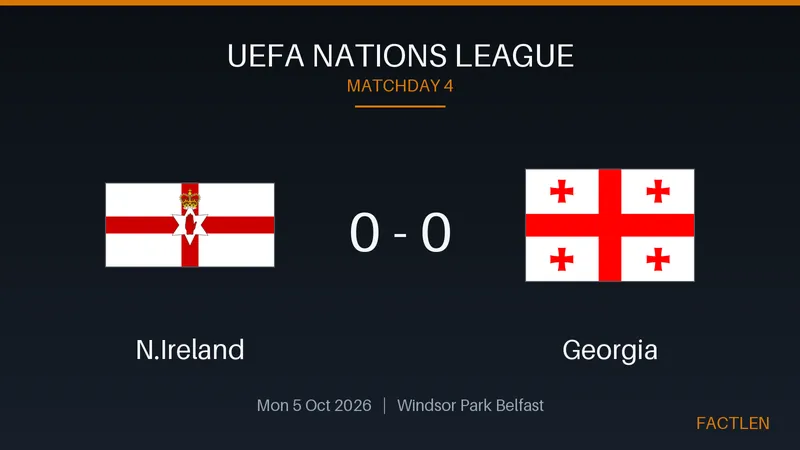
Northern Ireland Held to 0-0 Draw by Georgia as Mamardashvili Saves Late Penalty
2 sources
Standings
MLS Playoff Bubble Boils Over: Three-Way Tie in the East as Decision Day Looms
3 sources
UEFA Nations League
Northern Ireland Chases Nations League Promotion Against Struggling Georgia
6 sources
UEFA Nations League
Ukraine and Hungary Face Defining Nations League Clash in Trnava
6 sources
Comments
Every angle. Every day.
Get Sports stories with full source coverage and perspective breakdowns, free every day.