
President Trump Removes All Remaining EAC Commissioners, Leaving Election Agency Without Leadership Ahead of Midterms
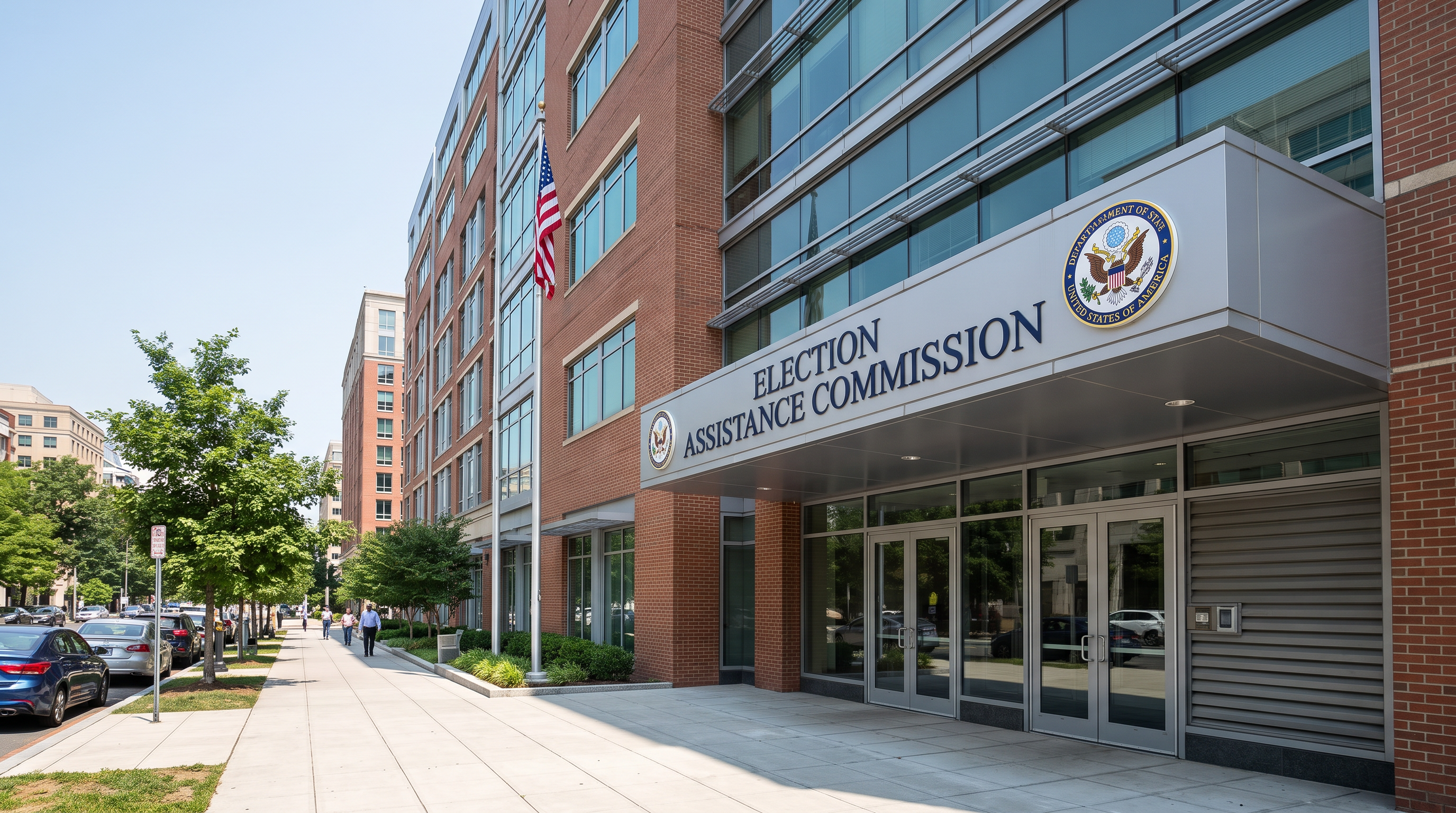
President Trump has dismissed the remaining members of the U.S. Election Assistance Commission, citing a recent Supreme Court ruling to assert control over the independent agency. The move leaves the federal body responsible for voting system guidelines without a quorum just months before the 2026 midterm elections.
By Factlen Editorial Team
- Election Integrity Advocates
- View the removals as a dangerous disruption to election administration and an attempt to exert partisan control over an independent agency.
- The Trump Administration
- Argues the president has the authority to remove officials who do not align with his election security agenda, citing recent Supreme Court precedent.
- Legal Scholars
- Focus on the unresolved constitutional questions regarding the president's removal power over bipartisan commissions.
What's not represented
- · State and local election officials who rely on EAC guidance
- · Voting machine manufacturers awaiting certification updates
Why this matters
The EAC is the only federal agency exclusively dedicated to election administration, responsible for certifying voting machines and distributing security grants. Stripping its leadership paralyzes its ability to issue new guidance or approve official actions just as states finalize their preparations for the 2026 midterms.
Key points
- Trump fired the two Democratic commissioners and accepted the resignation of the remaining Republican.
- The four-member Election Assistance Commission now has zero sitting commissioners.
- The White House cited the recent Supreme Court decision in Trump v. Slaughter to justify the dismissals.
- Without a quorum, the EAC cannot approve new policies or update voting system guidelines.
- Routine grant administration and equipment testing will continue under the agency's executive director.
President Donald Trump has removed the three remaining members of the Election Assistance Commission (EAC), leaving the federal agency responsible for election administration guidance entirely without leadership just four months before the 2026 midterms.[1][2]
The unprecedented sweep occurred on July 9, when the White House notified the commission's two Democratic members, Thomas Hicks and Benjamin Hovland, via email that their positions were terminated "effective immediately." The remaining Republican commissioner, Christy McCormick, was allowed to resign. The fourth seat on the bipartisan panel had already been vacant since April, when Republican Donald Palmer departed to join the Heritage Foundation.[2]
The administration framed the dismissals as a necessary step for national election security. In a statement confirming the moves, a White House official asserted that the president "reserves the right to remove individuals that may not be totally aligned with the important task of securing America's elections and ensuring every legal vote is counted."[1][3]

To justify the firings, the White House invoked the Supreme Court's recent ruling in Trump v. Slaughter. Handed down in late June, the landmark decision expanded presidential authority to dismiss the leaders of independent executive agencies at will, overturning decades of legal precedent that had insulated such boards from direct Oval Office control.[1][2][4]
Created by the Help America Vote Act of 2002 following the contested Bush-Gore election, the EAC is the only federal agency exclusively dedicated to election administration. It is responsible for establishing Voluntary Voting System Guidelines (VVSG), certifying the voting machines used across the country, distributing federal election security grants, and maintaining the national voter registration form.[1][4][6]
By law, the EAC requires a quorum of at least three commissioners to conduct official business, approve new policies, or update voting system standards. With zero sitting commissioners, the agency's policy-making apparatus is entirely frozen, rendering it unable to issue new guidance as states finalize their preparations for November.[2][6]
By law, the EAC requires a quorum of at least three commissioners to conduct official business, approve new policies, or update voting system standards.
Despite the leadership vacuum, the EAC will not shut down completely. Routine operations, including the distribution of previously allocated grants and the ongoing technical testing of election equipment, will continue under the authority of the agency's executive director and career staff. Furthermore, state and local officials—who bear the actual constitutional responsibility for running elections—will proceed with their midterm preparations uninterrupted.[3][5]

The dismissals triggered immediate outrage from congressional Democrats and voting rights organizations. Senate Minority Leader Chuck Schumer condemned the move as a "brazen attempt to seize control of our elections," while Senator Mark Warner called it an "extraordinary step" that raises profound concerns about political interference in democratic institutions.[1]
The firings arrive amid a broader administration push to reshape federal voting rules. Earlier in the year, Trump issued an executive order directing the EAC to add proof-of-citizenship requirements to the federal voter registration form—a move that faced resistance from the commission and was subsequently challenged in court. The Justice Department has also recently pressured states to aggressively purge suspected noncitizens from their voter rolls.[5]

Election law experts note that the application of the Slaughter decision to the EAC remains legally untested. While the Supreme Court allowed the president to fire the head of the Federal Trade Commission, it is an open question whether that power extends to commissions explicitly designed by Congress to maintain a strict bipartisan balance.[2][4]
It remains unclear whether Hicks or Hovland will file lawsuits to challenge their terminations and force a judicial test of the president's removal powers. Furthermore, the administration has not indicated whether it intends to nominate new commissioners—a process that requires Senate confirmation—or if it will leave the agency vacant through the November elections.[2]
How we got here
April 2026
Republican Commissioner Donald Palmer resigns to join the Heritage Foundation.
June 2026
The Supreme Court issues the Slaughter decision, expanding presidential removal powers over independent agencies.
July 9, 2026
President Trump dismisses the remaining three EAC commissioners, leaving the agency vacant.
Viewpoints in depth
The White House's view
The administration argues the president has the constitutional authority to remove officials who obstruct his election security agenda.
Relying heavily on the Supreme Court's recent Slaughter decision, the White House contends that the president cannot be forced to retain executive branch officials who do not align with his policy goals. Administration officials frame the dismissals not as political interference, but as a necessary housecleaning to ensure that federal election agencies are actively working to secure the midterms and implement enhanced citizenship verification measures.
Election Administrators & Experts
Voting officials and legal scholars view the removals as a dangerous destabilization of the election system.
For those who run elections, the EAC is a vital partner that provides technical guidance, security funding, and equipment certification. Experts warn that stripping the agency of its bipartisan leadership just months before a national election creates unnecessary chaos. Furthermore, legal scholars point out that the Slaughter decision's applicability to a commission explicitly designed to be bipartisan remains an unresolved constitutional question that could trigger messy litigation.
Congressional Democrats
Democratic lawmakers characterize the firings as an authoritarian power grab designed to undermine election integrity.
Democratic leaders argue that the EAC was intentionally structured by Congress to be independent from the Oval Office to prevent exactly this kind of partisan manipulation. They view the abrupt termination of the Democratic commissioners as retaliation for the agency's refusal to unilaterally alter the federal voter registration form, warning that the move is part of a broader campaign to sow doubt about the legitimacy of the upcoming midterms.
What we don't know
- Whether the dismissed commissioners will file a lawsuit to test the limits of the Slaughter decision.
- If the administration plans to nominate replacements before the November midterms.
- How the lack of leadership will practically impact states relying on EAC guidance in the final months before the election.
Key terms
- Election Assistance Commission (EAC)
- An independent, bipartisan federal agency created in 2002 to help states administer elections and certify voting equipment.
- Help America Vote Act (HAVA)
- A 2002 federal law that created the EAC and provided funding to states to upgrade their election systems.
- Voluntary Voting System Guidelines (VVSG)
- A set of specifications and requirements against which voting systems are tested to determine if they meet basic functionality, accessibility, and security standards.
- Quorum
- The minimum number of members (three, for the EAC) who must be present to make the proceedings of a meeting valid and take official action.
Frequently asked
Will this stop the 2026 midterm elections?
No. State and local officials run elections. The EAC provides guidance, funding, and equipment certification, but does not directly administer voting.
Can the EAC still function at all?
Yes, but in a limited capacity. The agency's executive director and staff can continue routine operations like distributing grants and testing equipment, but cannot enact new policies.
Is it legal for the president to fire independent commissioners?
The White House argues it is, citing the recent Supreme Court ruling in Trump v. Slaughter. However, election law experts note this specific application to a bipartisan commission remains legally untested.
Sources
Source coverage
6 outlets
3 viewpoints surfaced






[1]TIMEThe Trump Administration
Trump Forces Out Remaining Election Assistance Commission Members Ahead of Midterms
Read on TIME →[2]VotebeatLegal Scholars
Trump fires all remaining members of the U.S. Election Assistance Commission
Read on Votebeat →[3]NextgovThe Trump Administration
Trump removes remaining members of federal election security commission
Read on Nextgov →[4]BallotpediaLegal Scholars
Election Assistance Commission
Read on Ballotpedia →[5]National Task Force on Election CrisesElection Integrity Advocates
Statement on the Removal of EAC Commissioners
Read on National Task Force on Election Crises →[6]Just SecurityElection Integrity Advocates
All Election Assistance Commissioners Fired or Resigned
Read on Just Security →


Every angle. Every day.
Get news politics stories with full source coverage and perspective breakdowns delivered to your inbox.