
NWSL Secures Landmark $1 Billion Investment Package, Funding First-Ever Lifetime Healthcare for Players
The National Women's Soccer League has finalized a historic financial and media rights package that will guarantee pensions and lifelong healthcare for vested players. The agreement sets a new global standard for player welfare in women's professional sports.
By Omar Haddad

The National Women's Soccer League (NWSL) has officially closed a groundbreaking $1 billion media and sponsorship package that fundamentally rewrites the financial reality for female professional athletes. Announced early Friday morning from the league's headquarters in New York, the ten-year deal establishes a fully funded pension program and lifelong healthcare coverage for vested players.
This marks the first time in the history of global women's soccer—and one of the first times in any women's professional team sport—that athletes will be guaranteed post-career medical and financial security. The announcement was met with immediate celebration across the sports world, signaling a new era of maturity and commercial viability for a league that has spent the last decade fighting for basic equitable treatment.[1][2]
The landmark agreement, brokered between the NWSL board of governors, the NWSL Players Association (NWSLPA), and a consortium of domestic broadcast and corporate partners, represents a seismic shift from the league's precarious early days. Just a decade ago, players were routinely paid poverty-line wages, often earning less than $10,000 a season, and were forced to rely on host families for housing.
Now, the league is leveraging its explosive, year-over-year viewership growth to secure long-term stability. By capitalizing on sold-out stadiums and record-breaking television ratings during the 2024 and 2025 seasons, the NWSL negotiated from a position of unprecedented strength, demanding that corporate sponsors underwrite the long-term welfare of the athletes driving their profits.[2]
Under the newly ratified structure, any player who accrues five years of service time in the NWSL will become fully vested in what the league has dubbed the 'Legacy Fund.' This independent trust will provide comprehensive medical, dental, and mental health coverage for life, addressing a critical gap that has long plagued retired athletes.
Furthermore, the fund establishes a tiered pension system that begins paying out monthly dividends when a vested player reaches age 55. The league has committed an initial $150 million seed investment to the trust, drawn directly from the upfront capital provided by the new media rights consortium, ensuring the fund is immediately solvent and capable of generating interest.[1][4]
Sports business analysts note that the $1 billion valuation was made possible by aggressively bundling domestic broadcast rights with international streaming packages and exclusive, multi-year corporate sponsorships. Major brands have increasingly viewed women's sports not as a philanthropic endeavor, but as a high-return growth sector with fiercely loyal and highly engaged demographics.
By packaging the rights into a single, massive decade-long commitment, the NWSL provided broadcasters with the stability needed to invest in high-end production value, while simultaneously extracting the capital required to fund the players' demands. This financial engineering effectively insulates the Legacy Fund from year-to-year revenue fluctuations.
The media consortium backing this historic investment includes a mix of traditional linear television networks and major tech streaming platforms, ensuring that NWSL matches will be accessible to a broader global audience than ever before.
Under the new broadcast framework, every single regular-season and playoff match will be produced with a minimum of twelve camera angles, dedicated pre- and post-game studio shows, and enhanced statistical tracking. This unprecedented level of production parity with men's leagues is designed to drive further subscription revenue and ad sales, creating a self-sustaining financial loop that continually feeds back into the players' Legacy Fund.
For the players, Friday's announcement is the triumphant culmination of years of grueling labor negotiations and public advocacy. Union representatives emphasized that while rising salary caps and improved travel conditions were important stepping stones, post-career medical security remained the ultimate, elusive prize.
Professional soccer takes a brutal, compounding toll on the human body, and female athletes have historically been left to shoulder the exorbitant costs of knee replacements, joint therapies, and concussion treatments long after their playing days end. Securing a safety net means players can now push their physical limits on the pitch without the looming anxiety of medical bankruptcy in their thirties and forties.[2]
The ripple effects of the NWSL's bold move are already being felt across the Atlantic, fundamentally altering the global market for elite soccer talent. European powerhouses in the English Women's Super League (WSL), Spain's Liga F, and France's Division 1 Féminine have traditionally lured top international stars with massive, immediate salaries and the prestige of Champions League football.
However, none of these European leagues currently offer comparable lifetime health benefits or guaranteed pensions. The NWSL has effectively shifted the paradigm of player compensation, forcing athletes to weigh short-term European cash against long-term American security.[3]
European club executives are privately acknowledging that the NWSL has just established a massive competitive advantage in recruiting and retaining the world's best players. A top-tier international free agent weighing a contract in London versus a contract in Los Angeles or New York must now factor in the immense, compounding value of guaranteed healthcare.
Several prominent European sports agencies have already indicated that their clients will be looking closely at NWSL opportunities in the upcoming transfer windows, putting immense pressure on UEFA and domestic European federations to modernize their own collective bargaining agreements or risk a talent drain.[3]
Implementation of the Legacy Fund will begin immediately, with the first wave of eligible veteran players officially vesting at the conclusion of the 2026 season. To ensure transparency and long-term viability, the fund will be overseen by an independent board of trustees comprising financial fiduciaries, league executives, and former players elected by the union.
This board is tasked with managing the investment portfolio to ensure it remains robust through future economic cycles, protecting the principal while generating enough yield to cover the escalating costs of modern healthcare for an expanding pool of retirees.[1][4]
While minor questions remain regarding how the league will handle players who suffer career-ending injuries just short of the five-year vesting mark, the overarching sentiment across the sport is one of profound triumph. The NWSL has definitively proven that a women's sports league can not only survive its turbulent startup phase but generate enough commercial gravity to permanently protect the athletes who built it.
As the ink dries on the $1 billion deal, the league has set a new gold standard, challenging every other professional sports organization to treat female athletes as lifelong investments rather than temporary assets.[2]
Key points
- The NWSL has secured a $1 billion media and sponsorship deal to fund lifetime healthcare and pensions for players.
- Athletes who accrue five years of service time in the league will be fully vested in the new 'Legacy Fund.'
- The agreement marks the first time in global women's soccer that players are guaranteed post-career medical security.
- The move gives the NWSL a massive competitive advantage over European leagues in recruiting international talent.
How we got here
2013
The NWSL launches as the third attempt to establish a sustainable women's professional soccer league in the United States.
2021
NWSL players secure their first-ever Collective Bargaining Agreement, establishing minimum salaries and basic working standards.
2024
The league signs a $240 million media deal, proving its explosive commercial viability to broadcasters.
June 2026
The NWSL finalizes a $1 billion package to permanently fund lifetime healthcare and pensions for vested players.
- Players and Union Advocates
- View the agreement as a hard-fought victory that finally recognizes the physical toll of professional soccer and provides essential post-career security.
- Sports Business Analysts
- Focus on the league's massive commercial growth and the strategic bundling of media rights that made the $1 billion valuation possible.
- European Club Competitors
- Acknowledge the deal as a major competitive threat that will force European leagues to improve their own benefit structures to retain top talent.
Perspectives this story doesn't cover
- Lower-division women's soccer players
- Retired players who missed the vesting window
Sources
Source coverage
4 outlets
3 viewpoints surfaced




- [1]ESPNPlayers and Union Advocates
NWSL secures landmark $1B investment, guarantees player pensions
Read on ESPN → - [2]The AthleticPlayers and Union Advocates
How Deal With U.S. Could Reconnect Iran to the Global Economy
Read on The Athletic → - [3]BBC SportEuropean Club Competitors
Over one million children referred for mental healthcare - with anxiety the main reason
Read on BBC Sport → - [4]Fox SportsSports Business Analysts
NWSL announces historic financial package for players
Read on Fox Sports →
More in Sports
See all →Standings
MLS Playoff Bubble Boils Over: Three-Way Tie in the East as Decision Day Looms
3 sources

UEFA Nations League
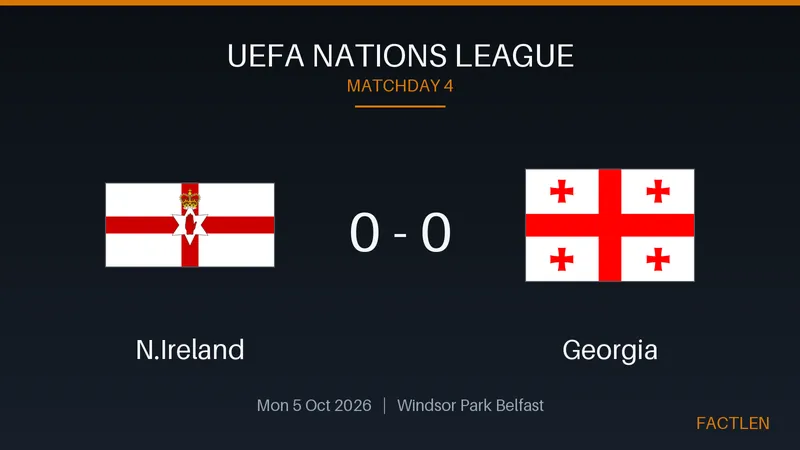
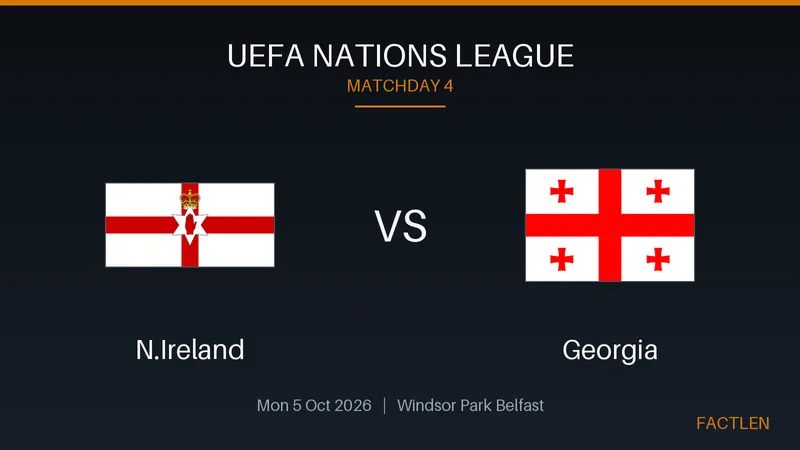
Northern Ireland Chases Nations League Promotion Against Struggling Georgia
6 sources
UEFA Nations League
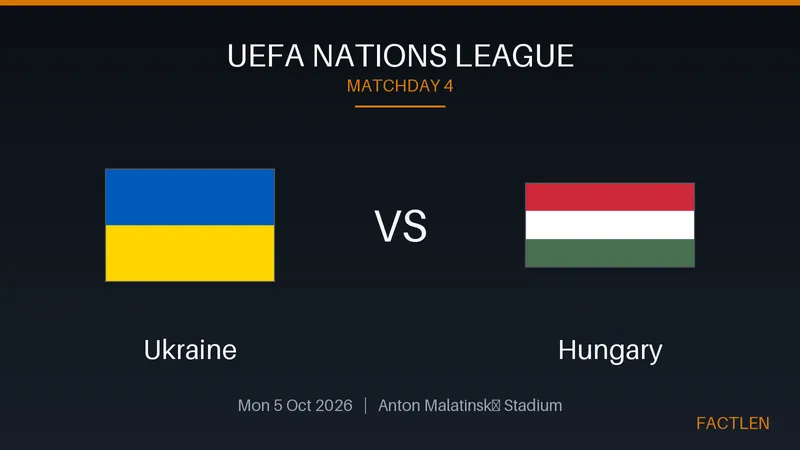
Ukraine and Hungary Face Defining Nations League Clash in Trnava
6 sources
UEFA Nations League
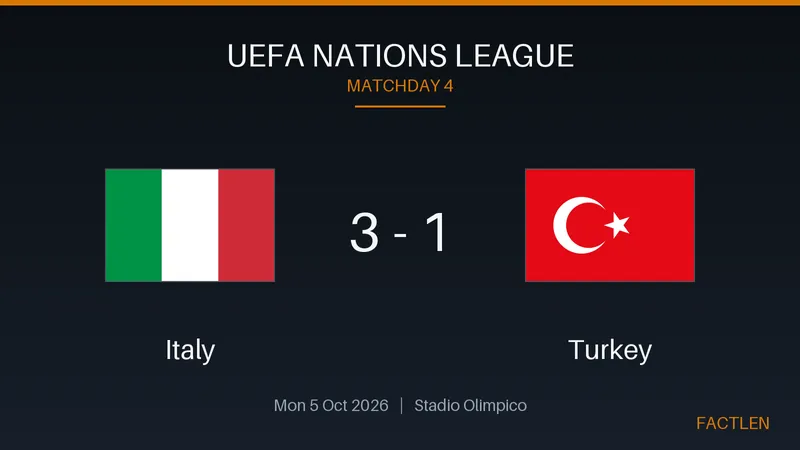
Italy Overcomes Turkey 3-1 to Secure Second Place in Nations League Group A1
4 sources
Comments
Every angle. Every day.
Get Sports stories with full source coverage and perspective breakdowns, free every day.