
Novak Djokovic Declares Knee 'Pain-Free' in Triumphant Wimbledon Return Following Surgery
Less than a month after undergoing meniscus surgery, Novak Djokovic has returned to the grass courts of Wimbledon, advancing through the early rounds pain-free in a recovery described by peers as 'superhuman.'
- Elite Athletes
- Prioritizes competing at the highest level and leveraging aggressive rehab to defy standard medical timelines.
- Medical Professionals
- Advocates for cautious, timeline-based rehabilitation to prevent long-term joint damage.
- Tennis Analysts
- Focuses on how the injury impacts tournament dynamics, movement on grass, and the psychological edge.
Perspectives this story doesn't cover
- Orthopedic Surgeons
- Tournament Physiotherapists
The sight of a gray compression sleeve on Centre Court has become the defining image of the tournament's opening week. Less than a month after undergoing knee surgery in Paris, a 24-time Grand Slam champion is not only walking but advancing through the Wimbledon draw. The rapid return has stunned the tennis world, transforming what was expected to be a somber injury withdrawal into a triumphant display of athletic resilience. The crisis began on the slippery clay of the French Open, where a gruelling fourth-round match resulted in a sudden slip and a torn medial meniscus in the right knee. Despite finishing and winning the five-set marathon on painkillers, subsequent MRI scans confirmed the structural damage, leaving the tennis community assuming his grass-court season was effectively over.[1][2]
A swift decision was made to undergo surgery on June 5, a timeline that seemingly erased any mathematical possibility of competing on the London grass. Standard medical guidelines for a meniscus repair dictate a recovery window of three to six weeks. For an elite athlete requiring explosive lateral movement, the closer to six weeks, the better, to ensure the joint can handle the immense rotational forces of professional tennis. Initial expectations were that the focus would shift entirely to rehabilitating in time for the upcoming Olympic Games, a tournament played on the more forgiving surface of clay where the physical demands on the knee might be slightly less jarring than the slick grass of Wimbledon.[1][2][3]
However, the desire to compete at the All England Club proved too strong to ignore. Acknowledging that the decision was driven more by passion than pure medical logic, the focus shifted from resting to active, aggressive rehabilitation. The turning point in this accelerated timeline came through a network of elite athletes who had navigated the exact same physiological crisis and emerged successfully on the other side. Consultations were held with fellow tennis professionals Taylor Fritz and Stan Wawrinka, as well as Olympic champion skier Lindsey Vonn, to gather real-world data on how quickly a world-class body could bounce back from the procedure.[1][4]
Taylor Fritz’s experience served as the ultimate blueprint for the ambitious recovery plan. In 2021, the American suffered a meniscus tear at Roland Garros, underwent surgery, and miraculously played his first-round Wimbledon match just 21 days later. Armed with this precedent, the decision was made to push the boundaries of modern sports medicine. Arrival at the practice courts in late June was met with intense scrutiny from media and competitors alike. Wearing the now-signature gray sleeve, rigorous practice sets were scheduled against top-tier opponents, including Jannik Sinner and Daniil Medvedev, to ensure the knee could withstand the highest levels of professional stress.[1]
Taylor Fritz’s experience served as the ultimate blueprint for the ambitious recovery plan.
The objective of these high-intensity practice sessions was to stress-test the joint under match-like conditions, simulating the unpredictable bounces and sudden stops required on grass. When the knee responded without a single setback, the green light was given to enter the official draw. The locker room reaction has been a mixture of awe and disbelief. Carlos Alcaraz publicly described the rapid recovery as "superhuman," a label that was quickly deflected back to Fritz's 21-day benchmark. The psychological impact on the field is palpable; seeing a legendary competitor return from the operating table without missing a major tournament reinforces an aura of invincibility that can subtly alter the dynamics of the draw.[1]
On the court, the approach has been completely uncompromising. There is no cautious footwork or calculated hesitation from the returning champion. "I don't see myself holding back," he told reporters, emphasizing that his entire career has been built on going "all in." The aggressive mindset is a necessary risk on grass, a surface that demands precise, confident movement to avoid catastrophic slips that could easily trigger a secondary injury. Playing tentatively is often more dangerous than playing freely, and the commitment to full-speed movement has been evident in the opening rounds.
The second-round victory over Jacob Fearnley provided the most comprehensive data point yet regarding the physical state of the recovery. While the match required four sets and immense physical exertion against a motivated opponent, the post-match medical report was overwhelmingly positive: the surgically repaired knee was entirely pain-free. The structural integrity of the joint had held up against the unique demands of competitive grass-court tennis. However, the athlete remains transparent about the lingering limitations. While the pain is gone, the elite change-of-direction speed—the foundational element of world-class baseline defense—is not yet at 100 percent.
The body is still re-learning how to trust the joint during extreme lateral lunges, a neurological and physical process that can only be accelerated by accumulating live match hours under tournament pressure. The triumphant return stands in stark contrast to the unforgiving nature of the grass courts, which continue to claim other victims throughout the opening week. The inherent slickness of the surface was highlighted when Hubert Hurkacz was forced to retire from the tournament after injuring his right knee while diving for a volley, a stark reminder of the physical perils of the sport. Ultimately, this accelerated timeline represents a fascinating intersection of elite genetics, cutting-edge physiotherapy, and sheer willpower.[4]
Key takeaways
- Novak Djokovic is competing at Wimbledon less than a month after undergoing surgery for a torn medial meniscus.
- The 24-time Grand Slam champion consulted with Taylor Fritz and Lindsey Vonn before committing to the accelerated recovery timeline.
- Following his second-round victory, Djokovic reported that his surgically repaired knee is completely pain-free.
- While the joint is stable, Djokovic admits his change-of-direction speed is still returning to its peak level.
Unsettled ground
- How the surgically repaired knee will respond to the physical toll of a potential five-set match in the second week of the tournament.
- Whether the accelerated return to grass will impact his physical preparation for the upcoming Olympic Games on clay.
Background
Early June
Suffers a torn medial meniscus during a five-set match at the French Open.
June 5
Undergoes knee surgery in Paris, casting severe doubt on his Wimbledon participation.
Late June
Arrives at the All England Club to test his knee in practice sets against top-ranked players.
July
Advances through the opening rounds of Wimbledon, declaring the joint pain-free.
Sources
Source coverage
4 outlets
3 viewpoints surfaced




- [1]The Washington PostElite Athletes
Novak Djokovic is playing Wimbledon anyway, thanks to Taylor Fritz
Read on The Washington Post → - [2]The GuardianMedical Professionals
Conor McGregor’s long-awaited UFC return ends after 69 seconds with knee injury
Read on The Guardian → - [3]Sports IllustratedElite Athletes
Novak Djokovic Provides Positive Update After Knee Surgery
Read on Sports Illustrated → - [4]Daily ExpressTennis Analysts
Novak Djokovic explains why he rushed back for Wimbledon after knee surgery
Read on Daily Express →
Comments
More in Sports
See all →Managerial Shift
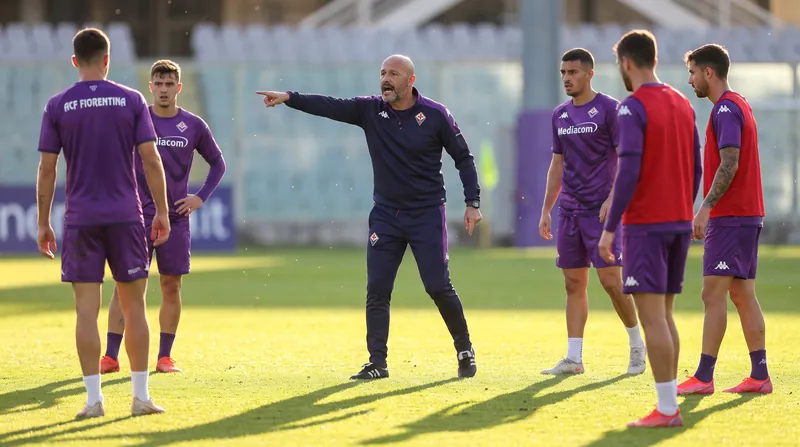
Fiorentina Re-Hire Paolo Vanoli as Head Coach After Sacking Fabio Grosso Three Matches Into Season
6 sources
Revenue Distribution
The €853 Million 'Value Pillar': How UEFA's New Champions League Revenue Engine Actually Works
7 sources

Mount Mizhirgi
Avalanche Kills 11 Climbers and Leaves Six Missing on Russia's Mount Mizhirgi
6 sources

WSL Rules
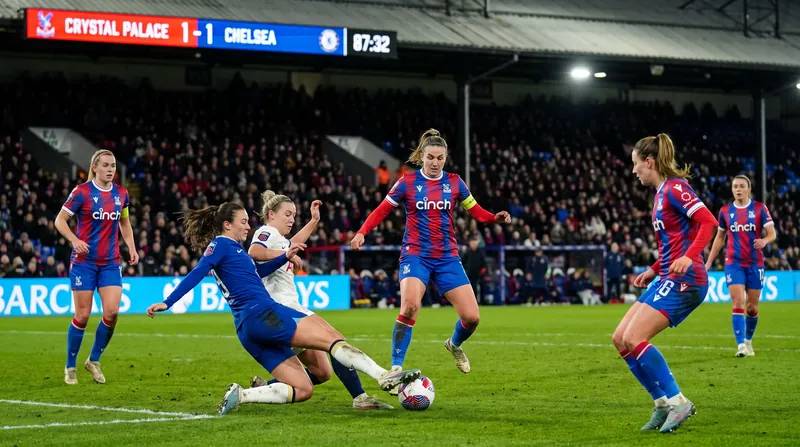
Crystal Palace Faces Points Deduction After Using Four Substitution Windows in WSL Opener Win
6 sources
Every angle. Every day.
Get Sports stories with full source coverage and perspective breakdowns delivered to your inbox.