
New York Imposes One-Year Moratorium on Hyperscale AI Data Centers Over Grid and Water Concerns
Governor Kathy Hochul has signed an executive order halting environmental permits for new large-scale AI data centers, making New York the first state to pause infrastructure build-outs to protect local utility rates and resources.
By Harper Lane

Share this story
New York has become the first U.S. state to hit the brakes on the physical expansion of artificial intelligence, enacting a one-year moratorium on new "hyperscale" data centers.[1]
Governor Kathy Hochul signed an executive order on Tuesday halting environmental permits for any new computing facility requiring 50 megawatts or more of electricity. The pause is designed to give state regulators time to draft new rules protecting the local power grid, water supplies, and residential utility ratepayers.[1][3]
"These hyperscale AI data centers consume enormous amounts of power, truly threatening to outpace our grid's capacity, and they drive up costs for local ratepayers," Hochul said, adding that the state will not allow tech companies to build the future by asking residents to sacrifice theirs.[2]
The moratorium highlights a growing national tension: the software driving the AI revolution is weightless, but the hardware required to train and run it is intensely physical.
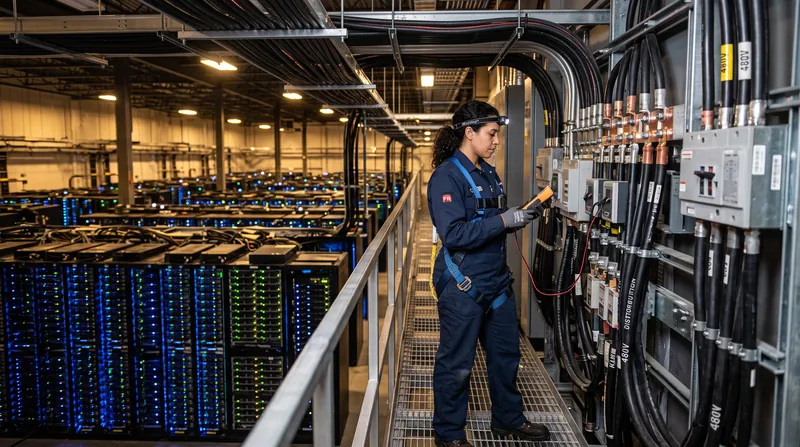
To understand the scale of the issue, one must look at the power grid. Traditional data centers that host websites and cloud storage are already energy-intensive, but AI models require specialized graphics processing units (GPUs) that draw significantly more power.
A single modern AI data center can consume as much electricity as 50,000 to 100,000 homes. In New York alone, developers have submitted requests to the New York Independent System Operator (NYISO) for up to 12 gigawatts of new data center load—roughly a third of the state's entire annual power consumption.[1][4]
When massive new buyers enter a constrained electricity market, wholesale prices rise. New York residents have already seen residential utility rates climb 44% between 2020 and 2025, significantly outpacing the national average.[5]
Consumer advocates argue that without intervention, everyday ratepayers will end up subsidizing the multi-billion-dollar grid upgrades required to support Big Tech's infrastructure. Under the new executive order, New York will explore requiring hyperscale facilities to either generate their own electricity or pay a premium to access the public grid.[2][3]
But electricity is only half of the resource equation; the other half is water. As servers process trillions of calculations per second, they generate immense heat that must be dissipated to prevent the silicon from melting.[7]
The most common method for managing this heat is evaporative cooling. Facilities pump water through cooling towers, where it absorbs heat and evaporates into the atmosphere. Up to 85% of the water withdrawn by traditional data centers is consumed through evaporation and never returns to the local watershed.[6][7]
A mid-sized facility can consume hundreds of thousands of gallons daily, and the U.S. data center industry as a whole uses an estimated 17 billion gallons of direct water annually. In regions facing drought, this has sparked fierce pushback from local farmers and municipalities.[5][7]
The tech industry counters that these resource concerns rely on outdated models. Next-generation facilities are shifting from Power Usage Effectiveness (PUE) metrics to Water Usage Effectiveness (WUE), deploying closed-loop liquid cooling systems that recycle water rather than evaporating it.[6]
Emerging membrane technologies and direct-to-chip liquid cooling can cut a facility's water footprint by up to 90%. Furthermore, industry advocates argue that New York's cooler climate and relatively low-carbon upstate grid make it an ideal, sustainable location for AI infrastructure compared to the arid American Southwest.[6][8]
The political fallout from the moratorium has been swift and bipartisan. Tech proponents warn that stalling domestic infrastructure will cede the AI race to foreign adversaries. Senator John Fetterman (D-PA) reacted to the ban by stating simply, "China wins," while shares of major data center operators dipped on the news.[2]
Conversely, Senator Bernie Sanders (I-VT) praised the move, noting that a national majority of voters support pausing unchecked data center growth until environmental safeguards are established.[2]
The executive order serves as a compromise. Last month, the New York State Legislature passed a stricter bill that would have paused facilities using just 20 megawatts. By setting the threshold at 50 megawatts, Hochul targeted only the largest "hyperscale" projects while allowing smaller enterprise facilities to proceed.[2][3]
Over the next 12 months, New York regulators will draft a comprehensive framework covering energy efficiency standards, water use, and community investment requirements. The tech world will be watching closely, as the resulting rules are likely to serve as a blueprint for other states grappling with the physical footprint of the AI boom.[1][8]
Key points
- New York is the first U.S. state to enact a statewide moratorium on new hyperscale AI data centers.
- The one-year pause applies to facilities requiring 50 megawatts or more of electricity.
- Regulators will use the time to draft rules protecting the power grid, water supplies, and residential utility ratepayers.
- The tech industry warns the pause could push critical AI infrastructure investment to other states or overseas.
What we don’t know
- Whether other states facing similar grid constraints will follow New York's lead and enact their own moratoriums.
- How exactly the state will structure the proposed premium fees for data centers accessing the public grid.
- If the one-year pause will be extended if regulators fail to finalize the new environmental framework by July 2027.
How we got here
2020–2025
New York residential electricity rates climb 44%, significantly outpacing the national average.
June 2026
The New York State Legislature passes the Responsible Data Center Development Act, targeting facilities over 20 megawatts.
July 14, 2026
Governor Kathy Hochul signs an executive order imposing a one-year moratorium on data centers requiring 50 megawatts or more.
July 2027
The moratorium is scheduled to lift once state regulators finalize new environmental and grid-access standards.
- Environmental & Ratepayer Advocates
- Advocates argue that unchecked data center growth socializes infrastructure costs while privatizing profits.
- Tech Industry & Developers
- Industry leaders warn that halting infrastructure build-outs cedes the global AI race to foreign adversaries.
- Grid & Utility Planners
- Utility managers are primarily concerned with the sheer physics of keeping the lights on amid unprecedented load growth.
Perspectives this story doesn't cover
- Local municipalities relying on data center tax revenue
- Renewable energy developers seeking data center contracts
Sources
Source coverage
8 outlets
3 viewpoints surfaced








- [1]CBS NewsGrid & Utility Planners
New York is the first state in the nation to enact a moratorium on data centers
- [2]Business InsiderTech Industry & Developers
New York is pumping the brakes on new AI data centers
- [3]The GuardianGrid & Utility Planners
New York becomes first US state to pause new AI datacenters
- [4]ESG DiveGrid & Utility Planners
NY Gov. Hochul pauses hyperscale data center development
- [5]Food & Water WatchEnvironmental & Ratepayer Advocates
New York's Data Center Crisis
- [6]Digital EdgeTech Industry & Developers
2026 Data Center Trend Forecast: Water Usage Effectiveness
- [7]MOST Policy InitiativeEnvironmental & Ratepayer Advocates
Data Centers and Water Usage
- [8]Cornell ChronicleGrid & Utility Planners
New York's AI data center moratorium: A pause for planning
More in Artificial Intelligence
See all →AI Regulation
Senator Proposes 'Secure AI Act' Mandating NSA Access to Frontier Models 21 Days Before Release
6 sources
AI Infrastructure
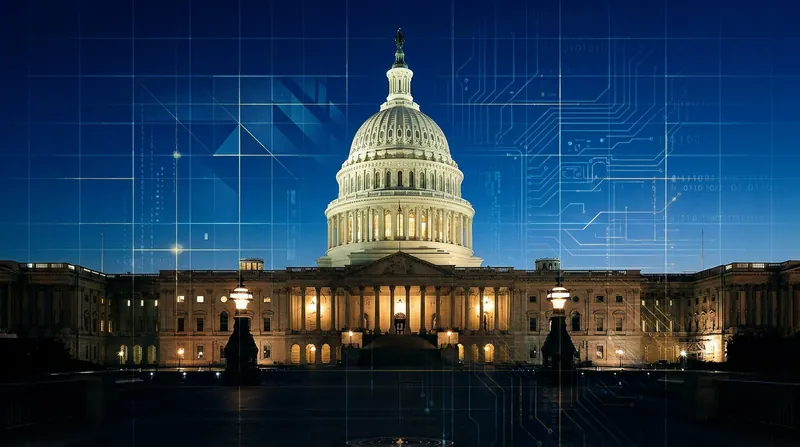
Alphabet's $205 Billion AI Infrastructure Buildout Causes First Negative Cash Flow Since IPO
9 sources
AI Regulation
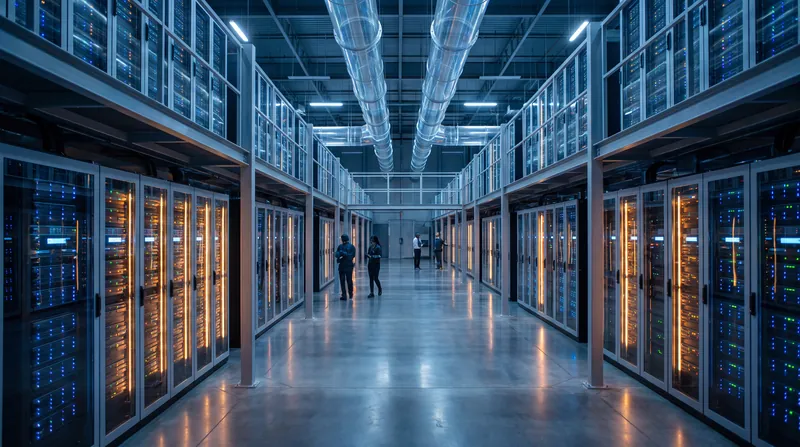
Colorado Repeals Landmark AI Act, Scrapping Mandatory Risk Assessments and Pre-Use Impact Reports
6 sources

AI Infrastructure
How NVLink Fusion Connects d-Matrix Inference Chips to Nvidia Server Racks
6 sources

Comments
Every angle. Every day.
Get Artificial Intelligence stories with full source coverage and perspective breakdowns, free every day.