
New Fed Chair Kevin Warsh Ends Forward Guidance, Signaling Major Shift in US Monetary Policy Communication
Federal Reserve Chair Kevin Warsh has officially ended the central bank's practice of providing forward guidance to markets, opting instead to preserve the element of surprise. The abrupt policy shift introduces fresh volatility to corporate finance as the Fed charts a new course on inflation and interest rates.

Share this story
The era of central bank hand-holding is officially over. Federal Reserve Chair Kevin Warsh has confirmed a sweeping overhaul of U.S. monetary policy communication, permanently scrapping the practice of "forward guidance."[1][2]
Speaking at the European Central Bank's annual Forum on Central Banking in Sintra, Portugal, Warsh declared that the Fed is "charting a new course." He explicitly rejected requests to signal whether the central bank will raise or lower interest rates at its upcoming July meeting.[2][3]
The shift marks a profound departure from the playbook utilized by Warsh's predecessors over the past fifteen years. Forward guidance—the practice of telegraphing future interest rate moves to shape market expectations—had become a cornerstone of modern central banking.[1][5]
By explicitly telling markets what to expect months in advance, previous Fed chairs aimed to reduce volatility and keep long-term borrowing costs stable. Warsh, however, views the tool as a liability that boxes policymakers into predetermined paths regardless of shifting economic realities.[4]
The first signs of this sea-change emerged during the June Federal Open Market Committee (FOMC) meeting, Warsh's first at the helm. The Fed held its benchmark federal funds rate steady at a target range of 3.5% to 3.75%, but the accompanying statement was radically truncated.[1][2]
Warsh stripped out the familiar language that historically hinted at the Fed's next moves. "That statement just gives you the facts as best as we can judge it," Warsh explained, noting that the committee agreed forward guidance was no longer suited to the current economic conjuncture.[1]
The immediate consequence of this policy shift is the reintroduction of the "element of surprise" into corporate finance. Without a telegraphed path, Wall Street traders and corporate treasurers must now react to economic data in real-time, rather than relying on the Fed to pre-digest it for them.[1]
Financial analysts warn that this opacity will inherently increase market volatility. Derek Tang, CEO of macroeconomic research firm MPA Macro, noted that investors will likely demand higher compensation—known as a risk premium—to account for the increased uncertainty surrounding borrowing costs.[1]
Yet, Warsh is not alone in his skepticism of forward guidance. At the Sintra forum, European Central Bank President Christine Lagarde expressed similar regrets about the practice, admitting she had previously felt compelled to act in accordance with prior guidance rather than judging the economy independently.[3][4]
"President Lagarde's answer on forward guidance—I couldn't have said it better myself," Warsh remarked, highlighting a growing transatlantic consensus among central bankers that flexibility must supersede predictability in a shock-prone global economy.[3][4]
The backdrop to this communication overhaul is a complex inflationary environment. U.S. headline consumer prices rose 4.2% in May, driven largely by an energy shock stemming from the conflict with Iran earlier in the year.[3]
While oil prices have begun to normalize following a June interim peace agreement, the secondary effects of that energy spike remain a fierce point of debate. Half of the 18 Fed officials projected at least one rate increase in 2026, though Warsh conspicuously declined to provide his own forecast for the "dot plot."[1][2]
Beyond communication, Warsh is initiating a broader structural review of the Federal Reserve. He has launched five distinct task forces designed to re-examine the central bank's balance sheet, its reliance on existing data sources, and its overarching inflation framework.[1][2]
Notably, one of these task forces is dedicated entirely to studying the impact of artificial intelligence on productivity and jobs. Warsh noted that the exponential rate of AI model improvement and massive capital expenditures could significantly boost economic supply, which would have "huge" implications for monetary policy.[1][5]
Warsh's aggressive reforms come amid intense political scrutiny. Nominated by President Donald Trump earlier in the year, Warsh has faced loud public demands from the White House to aggressively lower interest rates to stimulate economic growth.[3][4]
Despite this pressure, Warsh used his international debut to fiercely defend the central bank's autonomy. "We've been an independent central bank for a very long time. We're gonna be an independent central bank at this moment," he stated, vowing to call "balls and strikes" based solely on economic data.[3][5]
Key points
- Federal Reserve Chair Kevin Warsh has officially ended the central bank's use of forward guidance.
- The shift is designed to preserve the Fed's flexibility and allow policymakers to react to economic data in real-time.
- European Central Bank President Christine Lagarde voiced support for the move, signaling a broader global shift away from telegraphing rate paths.
- Warsh also launched five task forces to review Fed operations, including a dedicated group studying the economic impact of artificial intelligence.
What we don’t know
- It remains unclear whether the Federal Reserve will raise interest rates at its upcoming July 28-29 meeting.
- Markets do not yet know how severely the removal of forward guidance will permanently impact bond yields and corporate borrowing costs.
- The specific findings and policy recommendations of the Fed's five new task forces have not yet been established.
How we got here
Early 2026
Kevin Warsh is nominated by President Donald Trump to succeed Jerome Powell as Federal Reserve Chair.
May 2026
Warsh officially assumes leadership of the U.S. central bank.
June 18, 2026
In his first FOMC meeting, Warsh holds rates steady but abruptly strips forward guidance language from the official statement.
July 1, 2026
Speaking in Portugal, Warsh confirms the permanent end of forward guidance and announces five new task forces to overhaul Fed operations.
July 28-29, 2026
The next scheduled FOMC meeting, where Warsh expects a rigorous internal debate over the path of interest rates.
- Monetary Policy Reformers
- Argue that forward guidance boxes central banks into bad decisions and that flexibility is required to navigate economic shocks.
- Market Analysts
- Warn that removing long-term rate clarity will increase market volatility and force investors to demand higher risk premiums.
- Political Observers
- Focus on the tension between the Fed's newly asserted independence and the White House's demands for immediate rate cuts.
Perspectives this story doesn't cover
- Retail Investors
- Labor Unions
Sources
Source coverage
6 outlets
3 viewpoints surfaced






- [1]Global FinanceMarket Analysts
Fed Scraps Forward Guidance Under Chair Kevin Warsh
Read on Global Finance → - [2]Anadolu AgencyMonetary Policy Reformers
Fed chair says US central bank charting 'new course,' repeats no forward guidance
Read on Anadolu Agency → - [3]Investing.comMonetary Policy Reformers
Federal Reserve Chair Kevin Warsh declined to provide forward guidance on interest rates
Read on Investing.com → - [4]MorningstarPolitical Observers
Federal Reserve chief repeats his dislike of 'forward guidance'
Read on Morningstar → - [5]Seeking AlphaMarket Analysts
Fed Chair Warsh demurs on forward guidance as part of charting new course
Read on Seeking Alpha → - [6]The Straits TimesPolitical Observers
US Fed chair Kevin Warsh says inflation risks have decreased recently but vows to maintain price stability
Read on The Straits Times →

More in Business
See all →Energy Policy
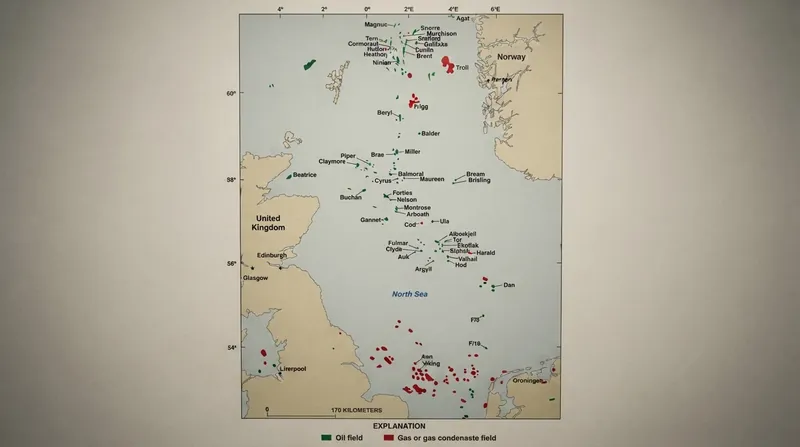
UK Approves Jackdaw North Sea Gas Field to Bolster Domestic Energy Security
7 sources
Bilateral Trade
Trump Signals Imminent US-India Trade Accord Following Bilateral Negotiations
3 sources
Trade Policy
Food Importer Sues to Block Trump's 50% Tariffs on Canadian Goods Under 1930 Trade Law
5 sources

Market Microstructure
How Dollar Funding Squeezes Break Covered Interest Parity in Cross-Currency Swaps
9 sources

Comments
Every angle. Every day.
Get Business stories with full source coverage and perspective breakdowns, free every day.