
Mid-Drive vs. Hub Motor: Choosing the Right E-Bike Engine for Your Ride
The electric bike market is booming, but buyers face a critical choice between two distinct motor technologies. Understanding how mid-drive and hub motors deliver power is the key to matching an e-bike to your terrain, budget, and riding style.
By Factlen Editorial Team
- Trail & Mountain Riders
- Advocate for mid-drives due to their superior climbing torque, natural feel, and balanced weight distribution.
- Urban Commuters
- Prefer hub motors for their affordability, low drivetrain maintenance, and throttle capabilities on flat terrain.
- E-Bike Mechanics
- Evaluate motors based on long-term serviceability, noting mid-drives wear out chains while hub motors complicate flat repairs.
What's not represented
- · Cargo bike couriers who require massive torque but also demand the low maintenance of a hub motor.
- · DIY e-bike builders who often prefer hub motors for their ease of retrofitting onto standard bicycle frames.
Why this matters
An e-bike is a significant investment, often ranging from $1,000 to over $4,000. Selecting the wrong motor type can lead to a frustrating ride on steep hills or unnecessary maintenance costs on flat commutes, making this the single most important hardware decision for new buyers.
Key points
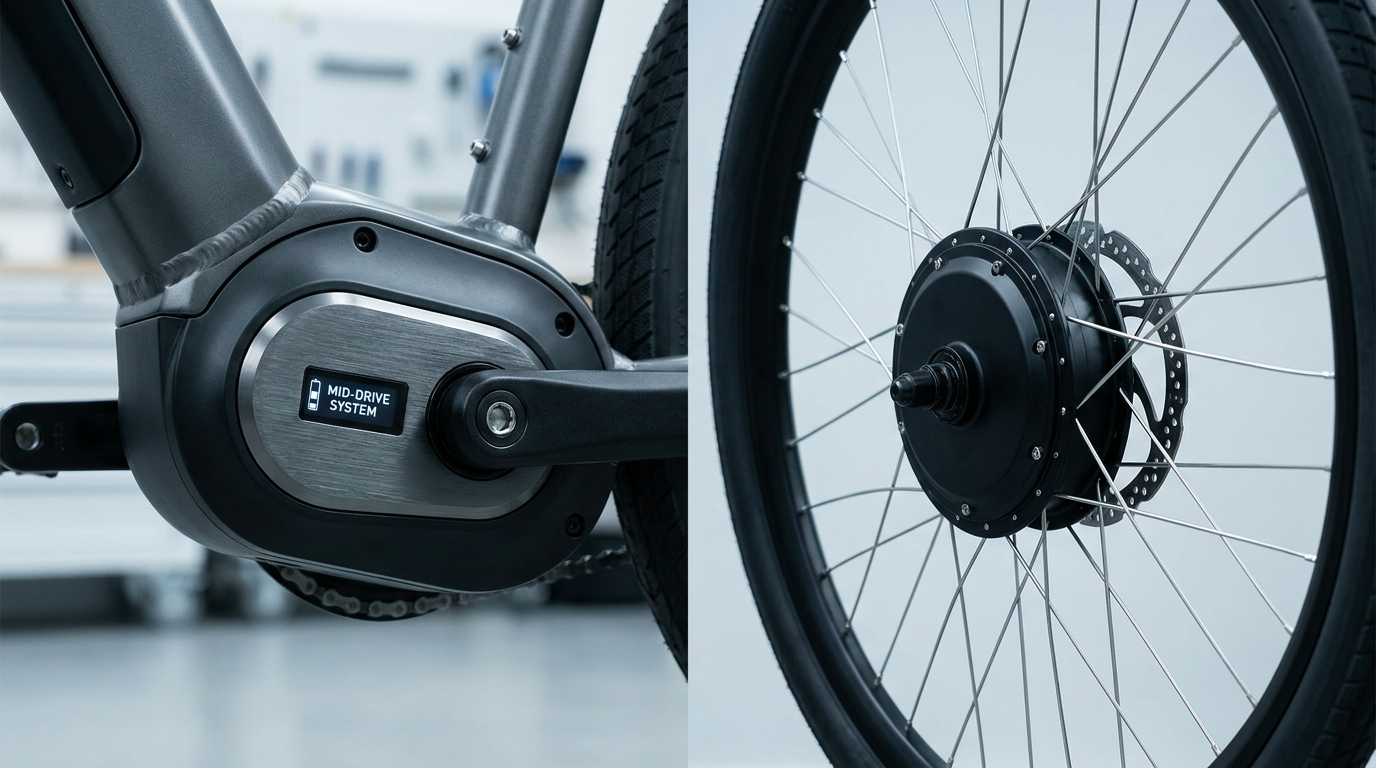
- Mid-drive motors sit at the pedals and use the bike's gears, offering superior torque for steep hills.
- Hub motors sit in the wheel and operate independently of the chain, offering a simpler, lower-maintenance ride.
- Mid-drives provide a more natural, balanced cycling feel but accelerate wear on the chain and cassette.
- Hub motors are significantly more affordable, dominating the sub-$1,500 e-bike market.
- The choice depends entirely on terrain: mid-drives for mountains and steep climbs, hub motors for flat urban commuting.
The electric bicycle revolution has transformed how millions of people commute, exercise, and explore the outdoors. But as the market matures in 2026, first-time buyers are consistently met with a technical crossroads that dictates the entire feel of their new vehicle: should they choose a mid-drive motor or a hub motor? While both systems successfully flatten hills and shrink commutes, they achieve these feats through fundamentally different mechanical philosophies.[6]
To understand the difference, it helps to look at where the power originates. A hub motor is built directly into the center of the bicycle's wheel—usually the rear. When engaged, it spins the wheel directly, operating completely independently of the bicycle's chain and gears. This design has been the backbone of the e-bike industry for years, prized for its straightforward mechanics and ease of manufacturing.[2][3]
In contrast, a mid-drive motor is mounted at the bike's bottom bracket, right between the pedals. Instead of spinning the wheel directly, it drives the front chainring. This means the motor's power flows through the bicycle's existing chain and rear cassette. Just as a rider shifts gears to make pedaling easier on a climb, a mid-drive motor leverages those same gears to multiply its own torque.[1][3]

This mechanical distinction creates the most significant performance gap between the two systems: hill-climbing efficiency. Because a hub motor cannot use the bike's gears, it must rely entirely on raw electrical wattage to push up a steep incline. On long, demanding climbs, this can cause the motor to bog down, generate excess heat, and drain the battery rapidly.[3][4]
Mid-drive motors, however, excel when the road tilts upward. By shifting the bicycle into a low gear, the rider allows the mid-drive motor to spin at a high, efficient RPM while the rear wheel turns slowly but with massive rotational force. This gear-leveraged torque makes mid-drives the undisputed champions of steep, technical terrain and mountain biking.[1][4]

Mid-drive motors, however, excel when the road tilts upward.
But the mid-drive's reliance on the bicycle's drivetrain is also its Achilles' heel. Because the motor is pouring hundreds of watts of power directly through a standard bicycle chain and cassette, the wear and tear on those components is significantly accelerated. Riders with mid-drive systems must clean, lubricate, and replace their chains far more frequently than those riding traditional bicycles.[2][4]
This is where the hub motor reclaims its territory. Because a hub motor bypasses the chain entirely, it places zero additional stress on the bicycle's drivetrain. If a chain snaps on a mid-drive e-bike, the rider is stranded; if a chain snaps on a hub-motor e-bike equipped with a throttle, the rider can simply motor home without pedaling. For daily commuters and cargo haulers who prioritize rock-solid reliability and low maintenance, the hub motor remains an incredibly compelling choice.[1][5]
The riding experience also differs dramatically in terms of "feel." Mid-drive systems are almost universally paired with torque sensors, which measure exactly how hard the rider is pushing on the pedals and deliver proportional electrical assistance. The result is a seamless, natural sensation—often described as giving the rider "bionic legs." The motor feels like a direct extension of the rider's own effort.[2][6]

Hub motors, particularly on entry-level models, frequently rely on cadence sensors, which simply detect whether the pedals are turning. This can result in a slight delay before the power kicks in, followed by a sudden surge that feels more like being pulled along by a scooter than riding a bicycle. While some riders enjoy this effortless cruising sensation, cycling purists generally prefer the nuanced control of a mid-drive.[2][5]
Weight distribution is another crucial factor for handling. A mid-drive motor places the heaviest component of the e-bike low and perfectly centered between the wheels. This low center of gravity makes the bike feel nimble, balanced, and remarkably similar to a traditional bicycle when cornering or navigating obstacles. Rear hub motors, conversely, place a heavy mass at the very back of the bike, which can make the rear end feel sluggish and complicate tasks like lifting the bike onto a car rack.[1][2]
Finally, the decision often comes down to budget. Hub motors are significantly cheaper to manufacture and do not require specialized, custom-built bicycle frames. As a result, the vast majority of e-bikes priced under $1,500 utilize hub motors. Mid-drive systems require complex internal gearing and bespoke frame integration, pushing their starting price well above the $2,000 mark.[2][5]

Ultimately, there is no single "best" motor—only the right motor for a specific set of conditions. For riders tackling steep hills, exploring off-road trails, or seeking the most natural cycling experience, the premium price of a mid-drive system is easily justified. But for urban commuters navigating flat city streets who want an affordable, low-maintenance workhorse, the classic hub motor remains an unbeatable value.[1][3][5]
Viewpoints in depth
Trail & Mountain Riders
Prioritize torque, balance, and a natural pedaling feel for technical off-road terrain.
For off-road enthusiasts, the mid-drive motor is considered non-negotiable. Mountain biking requires constant speed adjustments, sudden bursts of power to clear obstacles, and the ability to grind up incredibly steep, loose inclines. Because a mid-drive motor leverages the bike's cassette, riders can drop into a 'granny gear' and let the motor spin efficiently while crawling up a 20-degree grade. Furthermore, placing the motor's weight low and centered at the pedals ensures the bike remains nimble when jumping or carving through tight switchbacks—a feat nearly impossible with a heavy hub motor dragging the rear wheel down.
Urban Commuters
Value reliability, low maintenance, and cost-effectiveness for daily transportation.
City commuters often view their e-bikes as utilitarian car replacements rather than sporting equipment. For this camp, the hub motor's independence from the bicycle's drivetrain is its greatest asset. Commuters don't want to replace a stretched chain every 500 miles or worry about snapping a derailleur under heavy motor torque. A direct-drive hub motor has virtually no moving internal parts to wear out. Combined with the availability of a throttle—which allows riders to accelerate from a red light without sweating in their work clothes—hub motors provide a dependable, low-stress ride for flat and moderately hilly cities.
E-Bike Mechanics
Focus on the long-term serviceability, wear rates, and repair costs of the systems.
From a service perspective, mechanics see distinct failure paradigms for both systems. Mid-drives are notorious for chewing through drivetrains; mechanics frequently see riders who have worn their cassette teeth down to nubs because they shift gears under full motor load. However, when a mid-drive bike gets a flat rear tire, fixing it is as simple as a standard bicycle. Hub motors, conversely, preserve the chain but make rear-wheel maintenance a headache. Removing a rear wheel with a heavy hub motor requires disconnecting power cables and wrestling with heavy axle bolts, making a simple roadside flat repair a daunting task for the average rider.
What we don't know
- Whether emerging lightweight, geared hub motors will eventually close the torque gap with mid-drives.
- How the widespread adoption of automatic electronic shifting will impact the longevity of mid-drive drivetrains.
- If manufacturing costs for mid-drive frames will drop enough to make them standard on entry-level commuter bikes.
Key terms
- Torque
- The rotational force produced by the motor, measured in Newton-meters (Nm), which determines how well the bike accelerates and climbs hills.
- Torque Sensor
- A device that measures how hard the rider is pedaling and adjusts the motor's power output to match, creating a smooth, natural feel.
- Cadence Sensor
- A simpler sensor that only detects whether the pedals are turning, often resulting in a more abrupt, on/off power delivery.
- Drivetrain
- The mechanical system that transfers power from the pedals to the wheel, including the chain, chainrings, cassette, and derailleur.
- Direct-Drive Hub
- A type of hub motor with no internal gears, making it exceptionally quiet and reliable, though heavier and less efficient at low speeds.
Frequently asked
Which motor is better for steep hills?
A mid-drive motor is significantly better for steep hills because it can use the bicycle's gears to multiply its torque, allowing it to climb efficiently without overheating.
Do hub motors require more maintenance?
No, hub motors generally require less maintenance because they operate independently of the bicycle's chain and gears, reducing wear and tear on the drivetrain.
Why are mid-drive e-bikes more expensive?
Mid-drive motors require complex internal gearing and must be integrated into custom-designed bicycle frames, which drives up manufacturing costs compared to bolt-on hub motors.
Can I have a throttle with a mid-drive motor?
While possible, throttles are much less common on mid-drive e-bikes because applying sudden motor power while in the wrong gear can snap the bicycle's chain.
Sources
Source coverage
6 outlets
3 viewpoints surfaced




[1]HPC BikesTrail & Mountain Riders
Mid-Drive vs. Hub Motor: Which is Better in 2026?
Read on HPC Bikes →[2]TenwaysTrail & Mountain Riders
Mid Drive vs Hub Motor: E-Bike Motors Explained
Read on Tenways →[3]Riding TimesUrban Commuters
Mid-Drive vs Hub Motor E-Bikes
Read on Riding Times →[4]EM3EVE-Bike Mechanics
Electric Bike Motor Guide: Hub vs Mid-Drive
Read on EM3EV →[5]HeybikeUrban Commuters
Mid-Drive vs. Hub Motor: Which Type is Right for You?
Read on Heybike →[6]Factlen Editorial TeamE-Bike Mechanics
Synthesis by Factlen editorial team
Read on Factlen Editorial Team →
More in shopping
See all 116 stories →AI Shopping
AI Shopping Agents Take Over the Summer 2026 Deal Season, Automating Consumer Savings
7 sources

TV Tech
OLED vs. Mini-LED: The 2026 TV Buying Guide
6 sources

Portable Power
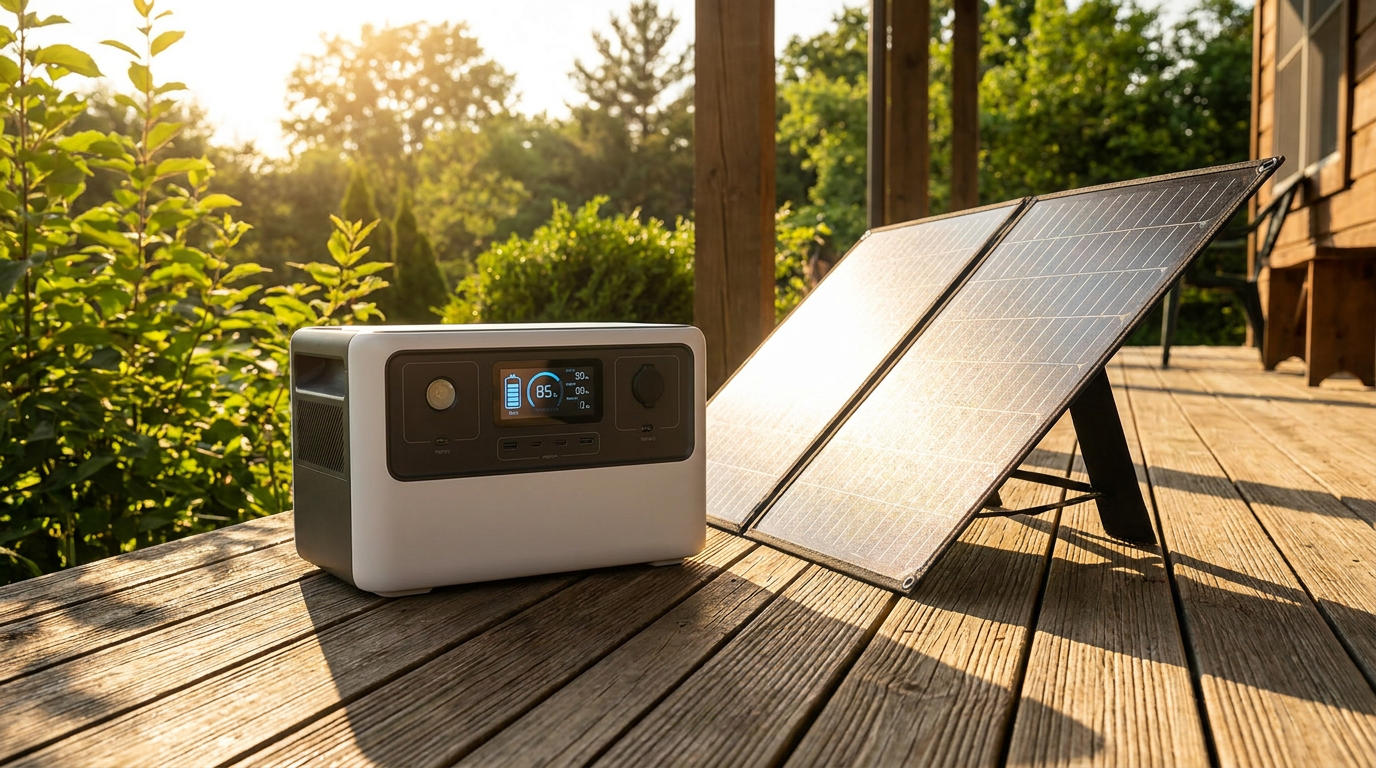
The 2026 Guide to Portable Power Stations: Why Battery Chemistry is Your Biggest Decision
7 sources
Material Science
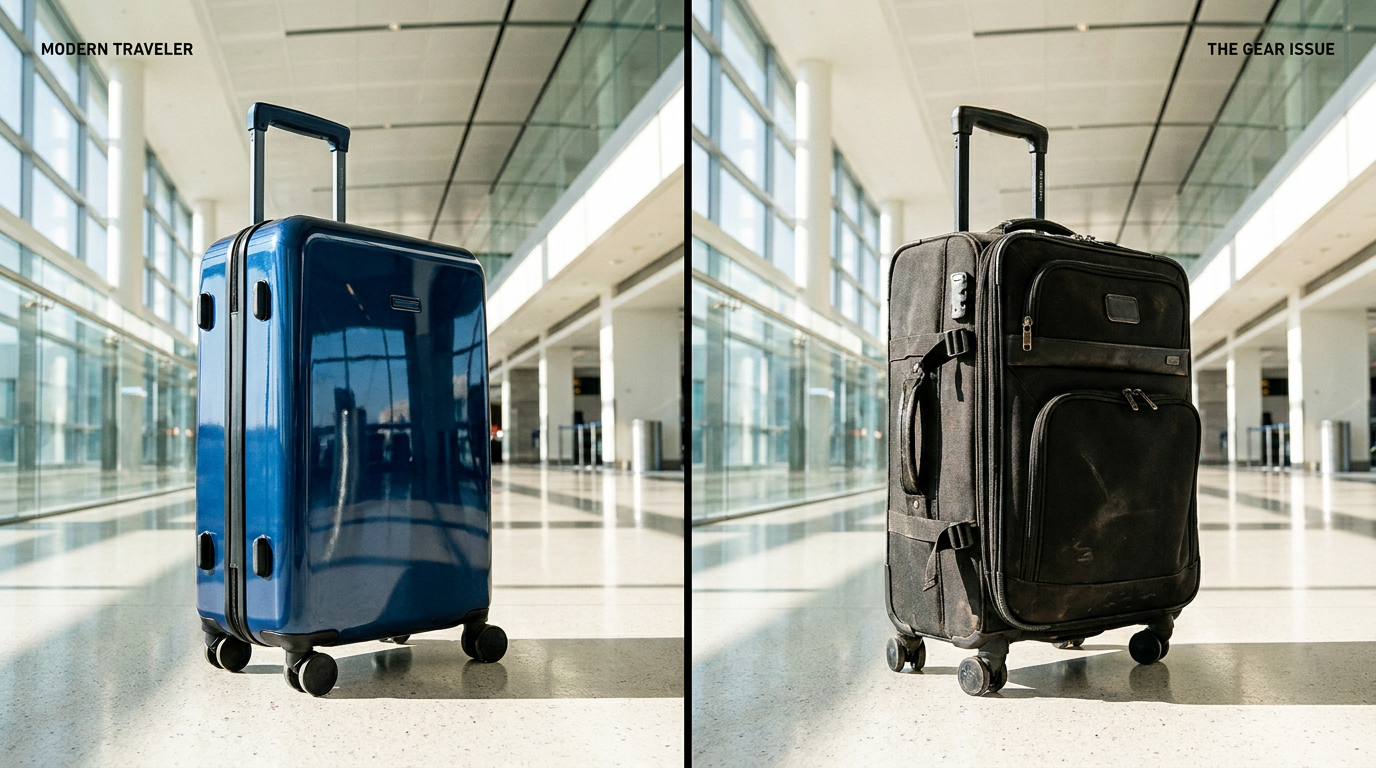
Plant-Based vs. Traditional Leather: The 2026 Sustainability and Durability Showdown
9 sources
Every angle. Every day.
Get shopping stories with full source coverage and perspective breakdowns delivered to your inbox.