
Michael J. Fox Foundation Crosses $2.5 Billion Funding Milestone as Breakthrough Parkinson's Drug Enters Clinical Trials
The foundation is being honored at the 2026 Social Impact Summit for its venture philanthropy model, which has accelerated disease-modifying therapies and driven landmark environmental legislation.
By Factlen Editorial Team
- Venture Philanthropists
- Advocates for applying venture capital principles to charitable giving to accelerate medical breakthroughs.
- Public Health Advocates
- Focuses on preventative measures and the elimination of environmental neurotoxins.
- Entertainment Industry Observers
- Analyzes the shifting expectations and structural impact of celebrity-driven charitable organizations.
What's not represented
- · Agricultural industry representatives regarding the Paraquat ban
- · Pharmaceutical executives on the economics of neurodegenerative drug development
Why this matters
By proving that a targeted, venture-capital approach to philanthropy can successfully push disease-modifying drugs into clinical trials, this milestone offers a reproducible blueprint for accelerating cures across all fields of medical research.
Key points
- The Michael J. Fox Foundation has officially crossed $2.5 billion in funded Parkinson's research, cementing its status as the world's largest nonprofit funder of the disease.
- The foundation is being honored at the July 2026 Social Impact Summit for its pioneering 'venture philanthropy' model that accelerates drug development.
- In 2026, MJFF funding is directly supporting Phase I clinical trials for ACT-02, a novel drug candidate designed to halt the disease's progression.
- The organization recently celebrated a major policy victory as Vermont became the first U.S. state to ban Paraquat, a pesticide linked to Parkinson's.
- The foundation's success highlights a broader shift in celebrity philanthropy toward structural, science-driven interventions rather than passive awareness campaigns.
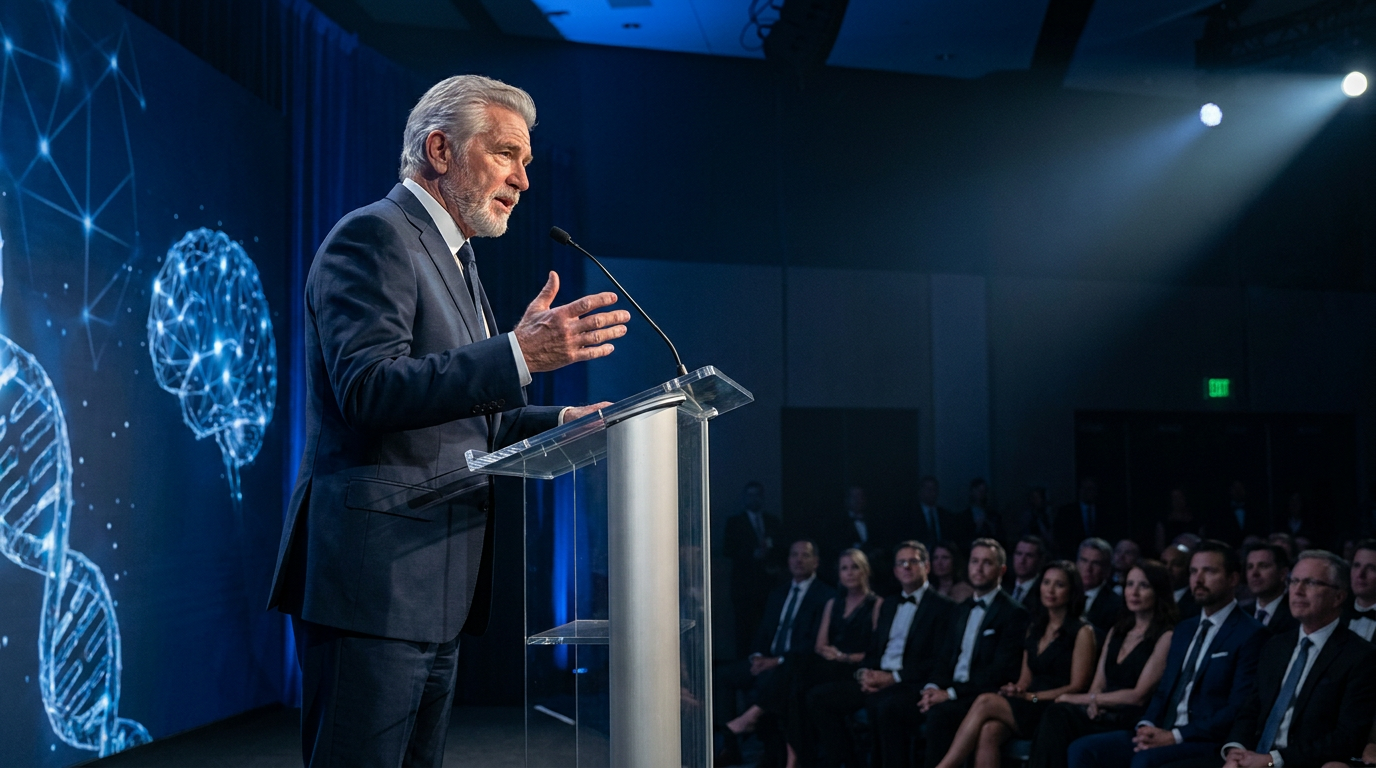
In July 2026, the intersection of Hollywood influence and hard science will take center stage at the third annual Social Impact Summit, where the Michael J. Fox Foundation for Parkinson’s Research (MJFF) is set to be honored for its transformative role in medical philanthropy. The recognition coincides with a staggering financial milestone: the foundation has officially crossed $2.5 billion in funded research since its inception. This figure cements its status not just as a successful celebrity charity, but as the largest nonprofit funder of Parkinson’s disease research in the world. The summit, which convenes change-makers and industry leaders, highlights a broader shift in how public figures leverage their platforms—moving away from passive awareness campaigns and toward aggressive, structural interventions in global health.[1][3][5]
The foundation’s $2.5 billion footprint has fundamentally altered the trajectory of neurodegenerative research by adopting a "venture philanthropy" model. Traditional medical charities often fund safe, incremental academic studies. In contrast, MJFF operates more like a Silicon Valley biotech incubator, deliberately targeting high-risk, high-reward science that traditional pharmaceutical companies might deem too early or unproven to touch. By injecting capital into the riskiest phases of drug development, the foundation "de-risks" the science, generating enough preliminary data to convince massive pharmaceutical corporations to step in and fund the expensive later-stage clinical trials.[1][6]
The tangible results of this aggressive funding strategy are materializing in 2026. Accure Therapeutics, a translational neuroscience company, is preparing to launch Phase I clinical trials for a novel drug candidate known as ACT-02. Backed by a $1.12 million grant directly from MJFF, the drug represents a potential paradigm shift in Parkinson's care. While current treatments primarily manage the debilitating motor symptoms of the disease, ACT-02 is designed to be disease-modifying—meaning it aims to actually slow or halt the progression of the underlying neurodegeneration.[2]

ACT-02 targets an enzyme called Prolyl Endopeptidase (PREP), a promising but previously overlooked mechanism in Parkinson’s pathology. The drug has already demonstrated comprehensive positive efficacy in preclinical models, and the 2026 clinical trials will mark its first critical test in human subjects. For the more than 10 million people living with Parkinson's globally, the advancement of disease-modifying therapies is the ultimate holy grail. If successful, ACT-02 wouldn't just improve quality of life; it would fundamentally change the prognosis of the disease.[2][6]
The foundation's ability to accelerate drugs like ACT-02 into clinical trials is built on the back of its previous scientific victories. In 2023, MJFF-funded researchers announced the discovery of a Parkinson’s biomarker—a biological signature that allows doctors to detect the disease objectively in living patients. Before this breakthrough, Parkinson's could only be definitively diagnosed post-mortem, and clinical trials were routinely bogged down by the inability to accurately measure whether a drug was actually slowing the disease. The biomarker discovery provided the essential measuring stick that makes trials for drugs like ACT-02 possible.[4][6]
The foundation's ability to accelerate drugs like ACT-02 into clinical trials is built on the back of its previous scientific victories.
Beyond the laboratory, the foundation is increasingly flexing its political muscle to address the environmental root causes of the disease. In early 2026, Vermont made history by becoming the first U.S. state to officially ban Paraquat, a highly toxic commercial herbicide that extensive scientific research has strongly linked to an increased risk of developing Parkinson’s disease. The foundation applauded the landmark legislation, viewing it as a critical first step in a broader public health campaign to eliminate environmental neurotoxins.[4]

The Vermont ban was not an accidental victory; it was the result of sustained lobbying and grassroots advocacy coordinated by health organizations and the MJFF network. For years, the agricultural industry has defended Paraquat's use in weed management, citing its effectiveness and the lack of viable alternatives. However, the mounting epidemiological evidence linking the chemical to neurodegeneration finally tipped the legislative scales. Advocates are now using the Vermont precedent as a blueprint to push for a nationwide phase-out, arguing that funding a cure is futile if environmental policies continue to expose the public to known neurotoxins.[4][6]
To bridge the gap between high-level research and daily patient care, the foundation launched its 2026 "Parkinson's IQ + You" national event series. Now in its eighth year, the touring initiative travels across the United States to educate patients and their families about the latest therapeutic developments. These events serve a dual purpose: they empower patients with actionable knowledge about managing their condition, and they actively recruit participants for ongoing clinical trials.[1]
Patient recruitment remains one of the most significant bottlenecks in medical research; trials frequently fail or face years of delays simply because they cannot find enough qualified participants. Through initiatives like the IQ + You series and the online Fox Trial Finder tool, the foundation has built a massive, engaged registry of patients willing to participate in research. This ready-made cohort is a massive incentive for biotech companies, as it drastically reduces the time and cost required to test new therapies.[1][6]
The evolution of the Michael J. Fox Foundation reflects a broader maturation in celebrity philanthropy in 2026. The era of the superficial celebrity gala is increasingly being replaced by highly focused, structurally sound non-profits that aim for institutional scale. Dolly Parton’s Imagination Library, for instance, recently crossed the historic milestone of distributing 300 million free books to children, demonstrating how a tightly focused literacy initiative can achieve global logistical scale.[7]

Similarly, the Elba Hope Foundation, established by actor Idris Elba—who was knighted in 2026 for his charitable contributions—focuses on targeted youth empowerment and education across the U.S., U.K., and Africa. These initiatives share a common thread with MJFF: they treat philanthropy as a rigorous enterprise requiring clear metrics, sustained investment, and a willingness to tackle systemic issues rather than just treating symptoms.[7]
Yet, the Michael J. Fox Foundation remains the undisputed gold standard for how public figures can drive hard science. By refusing to accept the slow pace of traditional medical research, the organization has forced the entire field of neuroscience to move faster. As Fox and the foundation's leadership prepare to accept their honors at the Social Impact Summit, the true measure of their success is not the $2.5 billion raised, but the very real possibility that the infrastructure they built will one day render the foundation itself obsolete.[3][5][6]
How we got here
1991
Michael J. Fox is diagnosed with Parkinson's disease at age 29, keeping the diagnosis private for seven years.
2000
The Michael J. Fox Foundation for Parkinson's Research is officially established to fund a cure.
2023
Researchers funded by the foundation announce the breakthrough discovery of a biological marker for Parkinson's.
Early 2026
Vermont becomes the first U.S. state to ban the Parkinson's-linked pesticide Paraquat, following heavy advocacy.
July 2026
The foundation is honored at the Social Impact Summit as its total research funding officially crosses $2.5 billion.
Viewpoints in depth
Venture Philanthropists
Advocates for applying venture capital principles to charitable giving to accelerate medical breakthroughs.
This camp argues that traditional academic funding models are too risk-averse to cure complex diseases quickly. By acting as a 'first-in' investor, venture philanthropies absorb the initial financial risk of unproven science. Once a drug candidate like ACT-02 shows promise in early trials, it becomes a safer investment for large pharmaceutical companies, effectively bridging the 'valley of death' in drug development where many promising treatments stall due to lack of funding.
Public Health Advocates
Focuses on preventative measures and the elimination of environmental neurotoxins.
While celebrating advancements in drug therapies, public health advocates emphasize that treating the disease is only half the battle. They point to the mounting epidemiological evidence linking industrial chemicals, such as the herbicide Paraquat, to neurodegeneration. This camp argues that aggressive legislative action—like Vermont's 2026 ban—is essential to stop the rising incidence of Parkinson's at its source, warning that medical science cannot outpace unregulated environmental toxins.
Entertainment Industry Observers
Analyzes the shifting expectations and structural impact of celebrity-driven charitable organizations.
Industry analysts note a distinct evolution in how public figures leverage their fame. The standard model of hosting annual galas to raise awareness is increasingly viewed as insufficient. Observers point to the Michael J. Fox Foundation and Dolly Parton's Imagination Library as the new blueprints for celebrity impact—organizations that operate with corporate efficiency, focus on measurable structural change, and employ dedicated experts to execute long-term strategic goals rather than short-term PR wins.
What we don't know
- Whether the Phase I clinical trials for ACT-02 will demonstrate sufficient safety and efficacy in human subjects to progress to later stages.
- If other U.S. states will follow Vermont's precedent and implement their own bans on the herbicide Paraquat.
- How the agricultural industry will adapt its weed management strategies if nationwide restrictions on neurotoxic pesticides gain legislative traction.
Key terms
- Biomarker
- A measurable biological indicator of the severity or presence of a disease, crucial for diagnosing conditions and testing the effectiveness of new drugs.
- Venture Philanthropy
- A model of charitable giving that applies venture capital principles—like funding high-risk, high-reward startups—to achieve philanthropic goals.
- Phase I Clinical Trial
- The first stage of testing a new drug in human subjects, primarily focused on evaluating safety, side effects, and proper dosage.
- Paraquat
- A highly toxic, widely used commercial agricultural herbicide that has been scientifically linked to an increased risk of Parkinson's disease.
Frequently asked
What is the ACT-02 drug candidate?
ACT-02 is a novel, disease-modifying drug developed by Accure Therapeutics that aims to inhibit an enzyme linked to Parkinson's progression. Backed by foundation funding, it enters Phase I clinical trials in 2026.
Why was the pesticide Paraquat banned in Vermont?
Extensive scientific research has strongly linked Paraquat exposure to an increased risk of developing Parkinson's disease. Vermont became the first state to ban it in 2026 to protect public health.
How does venture philanthropy differ from traditional charity?
Venture philanthropy applies investment principles to charitable giving. Instead of just funding safe academic studies, it aggressively funds high-risk, early-stage science to 'de-risk' it enough for large pharmaceutical companies to take over.
Sources
Source coverage
7 outlets
3 viewpoints surfaced







[1]PR NewswireVenture Philanthropists
The Michael J. Fox Foundation Launches 2026 'Parkinson's IQ + You' Event Series
Read on PR Newswire →[2]Accure TherapeuticsVenture Philanthropists
Accure to complete required preclinical studies to file IND application for ACT-02 program in 2026
Read on Accure Therapeutics →[3]The Hollywood ReporterEntertainment Industry Observers
John Mayer, Stephen & Ayesha Curry, Michael J. Fox to Be Honored at Social Impact Summit
Read on The Hollywood Reporter →[4]The Michael J. Fox FoundationPublic Health Advocates
Fox Foundation Applauds Vermont, First State to Pass Ban on Parkinson's-Linked Pesticide Paraquat
Read on The Michael J. Fox Foundation →[5]Social Impact FundEntertainment Industry Observers
2026 Social Impact Summit Honorees Announced
Read on Social Impact Fund →[6]Factlen Editorial TeamVenture Philanthropists
Synthesis by Factlen editorial team
Read on Factlen Editorial Team →[7]WBLIEntertainment Industry Observers
What Is the Lasting Impact of Celebrity Charity?
Read on WBLI →

More in entertainment
See all 5 stories →Sports Piracy
U.S. Justice Department Seizes 400 Domains in Global Crackdown on Illegal World Cup Streaming
6 sources

Streaming Economics
Netflix Authorizes $25 Billion Stock Buyback, Eclipsing Content Spend in Major Industry Pivot
6 sources
Hollywood Marketing
Christopher Nolan's 'The Odyssey' Skips Influencer Screenings in Bold Break From Hollywood Trend
7 sources

Every angle. Every day.
Get entertainment stories with full source coverage and perspective breakdowns delivered to your inbox.