
The Mechanics of Mainstream Integration: How the FHFA Directive Forces Fannie and Freddie to Count Crypto in Mortgage Risk
A historic federal directive now allows homebuyers to use cryptocurrency as collateral and reserves for conventional mortgages. The policy shift eliminates the need to liquidate digital assets, sparing borrowers from massive capital gains taxes while modernizing the housing market.

The traditional wall between digital wealth and physical real estate is officially coming down. For years, Americans who built substantial net worth in cryptocurrency faced a frustrating paradox when trying to buy a home: traditional lenders refused to acknowledge their digital assets.[1]
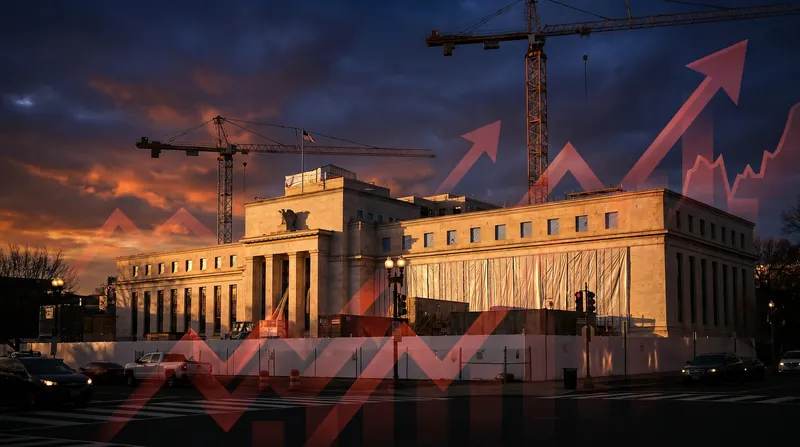
That era is ending. Following a landmark directive from the Federal Housing Finance Agency (FHFA), government-sponsored enterprises Fannie Mae and Freddie Mac are now integrating cryptocurrency into their core underwriting frameworks.[2][3]
The policy shift, initiated by FHFA Director William J. Pulte, orders the mortgage giants to count verified cryptocurrency holdings as valid reserve assets for single-family loans. This represents a seismic modernization of the U.S. housing market, aligning federal lending standards with the realities of modern household balance sheets.
The most immediate benefit for homebuyers is the elimination of a punitive tax trap. Previously, Fannie and Freddie guidelines mandated that any cryptocurrency be liquidated into U.S. dollars before it could be considered in a risk assessment.
Selling those assets often triggered massive capital gains taxes, forcing buyers to shrink their overall wealth simply to prove they had enough reserves to qualify for a loan. The new guidance allows borrowers to retain their qualifying digital assets, avoid the tax bill, and still meet strict mortgage underwriting criteria.[1][4]
The mechanics of this integration are already moving from theory to practice. In a major industry milestone, Fannie Mae has begun accepting its first crypto-backed mortgage products through a partnership with Better Home & Finance and Coinbase.
Under this new structure, prospective homeowners can pledge approved digital assets—specifically Bitcoin or the stablecoin USDC—to fund a down payment. The borrower effectively takes out a collateralized loan against their crypto for the down payment, while simultaneously receiving a standard Fannie Mae-backed mortgage for the property itself.
However, the FHFA has implemented strict guardrails to protect the stability of the housing market. Not just any digital token will qualify. Eligible assets must be held on U.S.-regulated, centralized exchanges like Coinbase or Kraken, ensuring they can be easily verified through account statements or API aggregation.[4]
Furthermore, lenders will apply risk-based adjustments, commonly known as "haircuts," to account for the notorious volatility of digital markets. For example, a borrower holding $100,000 in Bitcoin might only see $60,000 to $80,000 of that value counted toward their liquid reserves, similar to how underwriters treat margin accounts or restricted stock.[4]
The demographic implications of this policy are staggering. An estimated 70 million people in the U.S.—roughly 30 percent of American adults—now own cryptocurrency. Crucially, about one in three of these holders are between the ages of 30 and 44, placing them squarely in their prime homebuying years.[2]
Because Fannie Mae and Freddie Mac back more than half of all U.S. mortgages, their underwriting standards effectively dictate the rules for the entire housing industry. When the GSEs update their credit criteria, private lenders nationwide quickly follow suit.[1][4]
By formally recognizing digital assets, the FHFA is not just helping a niche group of tech founders; it is standardizing a broader shift in how the global financial system assigns risk and value. For millions of prospective buyers, the dream of homeownership no longer requires abandoning the digital economy.[2]
Viewpoints in depth
Crypto-Holding Homebuyers
Digital asset investors view the policy as a long-overdue recognition of modern wealth.
For individuals who have built substantial net worth in digital assets, the FHFA directive is a massive financial victory. Previously, these buyers were trapped in a frustrating cycle: to prove their financial stability to a bank, they had to sell their best-performing assets and surrender a large portion of their wealth to capital gains taxes. By allowing crypto to serve as collateral and reserves, the new policy empowers buyers to maintain their investment positions while unlocking the liquidity needed for real estate.
Mortgage Innovators
Forward-thinking lenders see the directive as a necessary evolution to capture a growing market.
Mortgage providers and fintech companies argue that traditional underwriting guidelines were dangerously outdated, ignoring the reality of how younger generations build wealth. By standardizing the treatment of digital assets, Fannie Mae and Freddie Mac are providing the regulatory clarity lenders need to safely offer new products. Innovators view the required guardrails—such as using U.S.-regulated exchanges and applying volatility haircuts—as sensible compromises that protect the housing market while expanding access to credit.
Risk & Compliance Analysts
Financial risk experts emphasize the need for strict volatility controls and fraud prevention.
While acknowledging the growing presence of digital assets, risk analysts caution that cryptocurrency introduces unprecedented volatility into the traditionally stable mortgage-backed securities market. They strongly support the FHFA's mandate for 'haircuts' on asset valuation, noting that a borrower's reserves could plummet overnight during a crypto market correction. Furthermore, compliance experts stress that limiting eligible assets to U.S.-regulated centralized exchanges is critical to preventing money laundering and ensuring the verifiable provenance of funds.
Key points
- The FHFA has directed Fannie Mae and Freddie Mac to count cryptocurrency as a reserve asset for mortgages.
- Borrowers no longer need to liquidate their crypto holdings, avoiding massive capital gains taxes.
- Only digital assets held on U.S.-regulated centralized exchanges qualify under the new rules.
- Lenders will apply 'haircuts' to the value of the crypto to account for market volatility.
What we don’t know
- Exactly which cryptocurrencies beyond Bitcoin and USDC will eventually be approved for reserve calculations.
- The precise percentage of the 'volatility haircut' that different lenders will apply to various digital assets.
- How quickly private lenders that do not sell loans to Fannie Mae or Freddie Mac will adopt these new standards.
How we got here
June 2025
FHFA Director William J. Pulte issues a directive ordering Fannie Mae and Freddie Mac to prepare proposals for counting crypto as mortgage reserves.
Late 2025
Mortgage lenders begin developing internal frameworks to apply volatility haircuts and verify assets on U.S.-regulated exchanges.
March 2026
Fannie Mae accepts its first crypto-backed mortgage product in partnership with Better Home & Finance and Coinbase.
- Crypto-Holding Homebuyers
- View the policy as a long-overdue recognition of modern wealth that avoids punitive taxes.
- Mortgage Innovators
- See the directive as a necessary evolution to capture a growing market of younger buyers.
- Risk & Compliance Analysts
- Emphasize the need for strict volatility controls, haircuts, and fraud prevention.
Perspectives this story doesn't cover
- Traditional Real Estate Agents
- First-Time Homebuyers Without Crypto
Sources
Source coverage
4 outlets
3 viewpoints surfaced




- [1]ForbesRisk & Compliance Analysts
Bitcoin Hits 21-Month Low As Expiring Crypto Bets Threaten More Selling
Read on Forbes → - [2]NewsweekCrypto-Holding Homebuyers
Fannie Mae Accepts Crypto-Backed Mortgage Products
Read on Newsweek → - [3]National Mortgage ProfessionalMortgage Innovators
FHFA chief orders Fannie and Freddie to prepare for crypto asset use in mortgages
Read on National Mortgage Professional → - [4]Sheppard MullinRisk & Compliance Analysts
FHFA Orders Fannie Mae and Freddie Mac to Consider Cryptocurrency Reserves in Mortgage Risk Assessments
Read on Sheppard Mullin →
More in Finance
See all →Crypto Regulation
The Mechanics of Regulatory Strategy: How the SEC's Triple-Proposal on Crypto Offerings, Custody, and Trading Venues Preempts the CLARITY Act
8 sources

Stablecoin Regulation
The Mechanics of Regulatory Integration: How the OCC's Approval of Circle's National Trust Bank Reshapes Stablecoin Reserve Management
2 sources

Crypto Regulation
The Mechanics of Asset Liquidation: How South Korea's New Rules Govern Crypto Seizure for Civil Debt Enforcement
5 sources

Crypto Regulation
The Mechanics of Regulatory Clarity: How the CLARITY Act Will Redefine SEC and CFTC Jurisdiction Over Digital Assets
3 sources
Comments
Every angle. Every day.
Get Finance stories with full source coverage and perspective breakdowns, free every day.