
Merck KGaA to Acquire Bio-Techne for $11.3 Billion to Bolster Life Science Tools Portfolio
The German science and technology conglomerate is expanding its footprint in spatial biology and cell therapy manufacturing with its largest acquisition in a decade.
By Bo Feng

- Strategic Consolidators
- Corporate leadership focused on integrated workflows and global scale.
- Biotech Researchers
- Scientists relying on these tools for daily research and development.
- Market Analysts
- Financial observers evaluating the premium and strategic fit.
Perspectives this story doesn't cover
- Smaller biotech tool startups facing increased competition from consolidated giants.
- Patient advocacy groups monitoring how manufacturing efficiencies might impact the final cost of cell therapies.
Why it matters now
By consolidating the tools used to discover, test, and manufacture next-generation drugs, this acquisition promises to streamline the development of personalized medicines and cell therapies, potentially bringing advanced treatments to patients faster.
In a massive bet on the infrastructure of modern medicine, German science and technology conglomerate Merck KGaA has agreed to acquire Minneapolis-based life sciences supplier Bio-Techne for $11.3 billion. The all-cash transaction represents the largest acquisition for the Darmstadt-based company in more than a decade, signaling a strategic doubling-down on the tools and technologies that power global drug development.[1]
Under the terms of the definitive agreement, Merck KGaA will pay $73 per share for Bio-Techne, representing a 36 percent premium over the target company's one-month volume-weighted average trading price. The deal, which has been approved by the boards of both companies, is expected to close by late 2026 or early 2027, pending regulatory clearances and approval from Bio-Techne shareholders.[3]
To understand the significance of the acquisition, it is helpful to view the biopharmaceutical industry through the lens of a gold rush. While drug developers take on the massive financial risks of discovering and commercializing new therapies, companies like Bio-Techne and Merck KGaA's life sciences division provide the "picks and shovels"—the essential reagents, analytical instruments, and manufacturing equipment required to do the work.[2][4]
Merck KGaA—which operates entirely separately from the US-based pharmaceutical giant Merck & Co.—already runs a massive life sciences division, known in North America as MilliporeSigma. By absorbing Bio-Techne, the German conglomerate is aggressively expanding its footprint in several high-growth, next-generation research markets, aiming to provide an end-to-end workflow for scientists.[1][3]
Bio-Techne brings a formidable catalog to the table. Over its 50-year history, the company has amassed a portfolio of over 500,000 products, including a globally recognized suite of recombinant proteins, cytokines, growth factors, and antibodies. These consumable materials are the fundamental building blocks used by researchers in academic laboratories and pharmaceutical companies worldwide to conduct basic biological research and test new drug candidates.[5]
Because consumables account for roughly 81 percent of Bio-Techne's sales, the acquisition provides Merck KGaA with a highly durable and recurring revenue stream. Once a specific reagent or antibody is validated in a laboratory's experimental protocol or a company's manufacturing process, it is rarely swapped out, creating intense customer stickiness.
Beyond basic reagents, the deal secures Merck KGaA's access to several cutting-edge analytical platforms. Chief among these is Bio-Techne's ProteinSimple line of automated protein detection and analysis instruments. These machines replace slow, labor-intensive manual laboratory techniques with automated systems, allowing researchers to quantify proteins faster and with greater reproducibility.[1]
Beyond basic reagents, the deal secures Merck KGaA's access to several cutting-edge analytical platforms.
The acquisition also catapults Merck KGaA to the forefront of "spatial biology," one of the hottest fields in life sciences. Bio-Techne's RNAscope and related in situ hybridization technologies allow scientists to map exactly where specific RNA molecules are located within an intact tissue sample.[4]
Spatial biology is revolutionizing precision medicine. Instead of grinding up a tumor to see what genes are active—which destroys the context of how the cells were organized—spatial technologies allow researchers to see the exact architecture of the disease. This is critical for understanding how cancer cells interact with the immune system and for developing highly targeted immunotherapies.[4]
Another major driver of the $11.3 billion price tag is Bio-Techne's strategic positioning in cell therapy manufacturing. Cell therapies, which involve engineering a patient's own immune cells to fight diseases like cancer, represent the frontier of modern medicine, but they are notoriously difficult and expensive to manufacture at scale.[1]
Through Bio-Techne, Merck KGaA is gaining a crucial foothold in this manufacturing bottleneck. In 2023, Bio-Techne acquired a 19.9 percent stake in Wilson Wolf, the manufacturer of the G-Rex cell culture platform, which is widely used to grow immune cells for therapeutic use. Bio-Techne holds an option to acquire the remainder of Wilson Wolf by the end of 2027, an option Merck KGaA has explicitly stated it intends to exercise.
"We are especially excited about the opportunity to secure access to the next-gen, highly scalable manufacturing technology for immune cell therapy," noted Jean-Charles Wirth, CEO of Merck's life sciences business, during an investor presentation. The integration of Wilson Wolf's hardware with Bio-Techne's specialized cell-culture media and Merck KGaA's global bioprocessing scale could significantly lower the cost of producing advanced therapeutics.[3]
The transaction marks the first major strategic move under Kai Beckmann, who took over as CEO of Merck KGaA's broader conglomerate in late 2025. Beckmann has been vocal about the need to bolster the company's product offerings through mergers and acquisitions, pivoting away from a reliance on the company's proprietary drug pipeline and leaning heavily into its role as an industry supplier.[1][2]
Industry analysts draw immediate parallels to Merck KGaA's $17 billion acquisition of Sigma-Aldrich in 2015. That deal transformed the company into a life sciences powerhouse, and the Bio-Techne purchase is designed to replicate that success in the era of multi-omics and advanced biological therapies.[1][2]
The financial logic of the merger relies heavily on operational scale. Merck KGaA expects to realize approximately €140 million ($159 million) in annual cost synergies within three years of closing. These savings will likely come from combining global distribution networks, optimizing supply chains, and leveraging Merck KGaA's omnichannel customer reach to push Bio-Techne's products into new international markets, particularly in Europe and the Asia-Pacific region.
Ultimately, the acquisition reflects a broader trend of consolidation in the life sciences tools sector. As biological research becomes increasingly complex—requiring integrated data from genomics, proteomics, and spatial biology—pharmaceutical developers are increasingly favoring massive, one-stop-shop suppliers that can provide validated, end-to-end workflows from the earliest stages of discovery straight through to commercial manufacturing.[4]
Sources
Source coverage
5 outlets
3 viewpoints surfaced





- [1]Fierce PharmaMarket Analysts
Merck KGaA throws down $11.3B for Bio-Techne in its biggest deal since 2015 Sigma-Aldrich buy
Read on Fierce Pharma → - [2]Pharmaceutical TechnologyStrategic Consolidators
Merck KGaA to acquire Bio-Techne for $11.3bn
Read on Pharmaceutical Technology → - [3]QuartzMarket Analysts
Germany's Merck KGaA is buying lab-tools supplier Bio-Techne for $11.3 billion
Read on Quartz → - [4]Bioanalysis ZoneBiotech Researchers
Merck's $11.3bn deal to acquire Bio-Techne
Read on Bioanalysis Zone → - [5]CBS News
Bio-Techne, a Minneapolis life sciences firm with 500,000 products, to be sold to German company for $11.3 billion
Read on CBS News →
Comments

More in Business
See all →African Markets
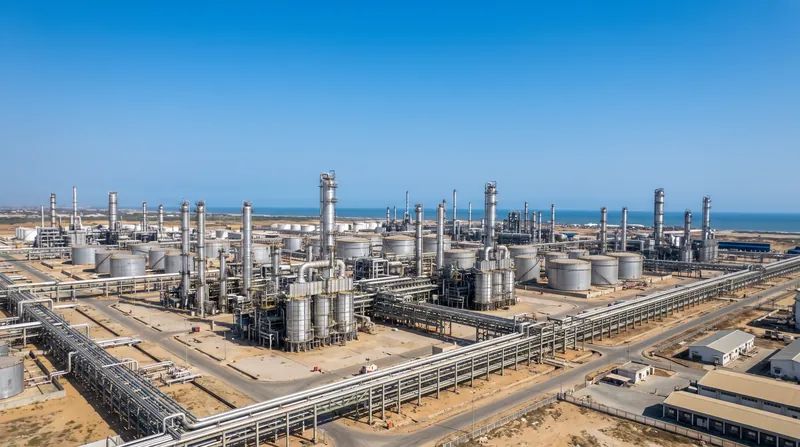
Dangote Refinery IPO Aims to Raise $1.5 Billion in Landmark African Market Listing
4 sources
Resource-Based View
How Valuable, Rare, Inimitable, and Organized Resources Determine Sustained Competitive Advantage
7 sources

Corporate Accounting
Cash Basis vs. Accrual Basis: How Timing Revenue Recognition Shifts Tax Liability and Financial Reporting
7 sources

Hiring Science
The 0.51 Validity Coefficient: How General Mental Ability Tests Predict Job Performance
9 sources

Every angle. Every day.
Get Business stories with full source coverage and perspective breakdowns delivered to your inbox.