
Mediterranean Drought Triggers Historic Olive Oil Price Spike: How to Substitute in Your Kitchen
As extreme heat in Spain and Italy drives olive oil prices to record highs, culinary science offers practical, cost-effective alternatives for roasting, baking, and dressings.
By Factlen Editorial Team
- Culinary Pragmatists
- Focus on matching the oil's smoke point and flavor profile to the specific cooking method.
- Agricultural Economists
- View the price spike as a permanent market correction driven by climate change.
- Nutritional Advocates
- Emphasize maintaining cardiovascular health when swapping out traditional Mediterranean fats.
Why this matters
With olive oil prices doubling in many supermarkets, understanding how to swap cooking fats not only protects your grocery budget but actually improves the flavor and texture of your high-heat cooking and baking.
The sticker shock is undeniable. Shoppers scanning the baking aisle are finding that a standard bottle of extra virgin olive oil now commands a premium price, often double what it cost just three years ago. This isn't localized inflation; it is the downstream effect of a profound climate shift thousands of miles away.[2][6]
The Mediterranean basin, which produces the vast majority of the world's olive oil, has endured consecutive years of punishing drought and extreme heat. Spain's Andalusia region, the undisputed heavyweight of global production, saw its harvests plummet by more than 40% during the worst of the dry spells.[4][6]
As a result, wholesale prices for liquid gold breached the historic $10,000 per metric ton mark, forcing both commercial kitchens and home cooks to rethink their reliance on the Mediterranean staple. But rather than a culinary crisis, this price spike presents an opportunity to understand the science of cooking fats and diversify the home pantry.[1][2]
To substitute olive oil effectively, cooks must first deconstruct what role the oil is playing in a specific dish. In the kitchen, oil serves two primary functions: it acts as a heat transfer medium to cook food evenly, and it contributes flavor and mouthfeel.[3]

When oil is used primarily for heat transfer—such as in sautéing, frying, or high-temperature roasting—extra virgin olive oil (EVOO) is rarely the best tool for the job anyway. EVOO contains unrefined particles that give it its signature peppery taste, but these same particles burn at relatively low temperatures.[3][5]
This brings us to the concept of the "smoke point"—the exact temperature at which an oil stops shimmering and starts burning, releasing acrid smoke and breaking down its nutritional compounds. EVOO typically smokes between 350°F and 410°F, making it poorly suited for a hard sear on a steak or a 425°F oven roast.[3]
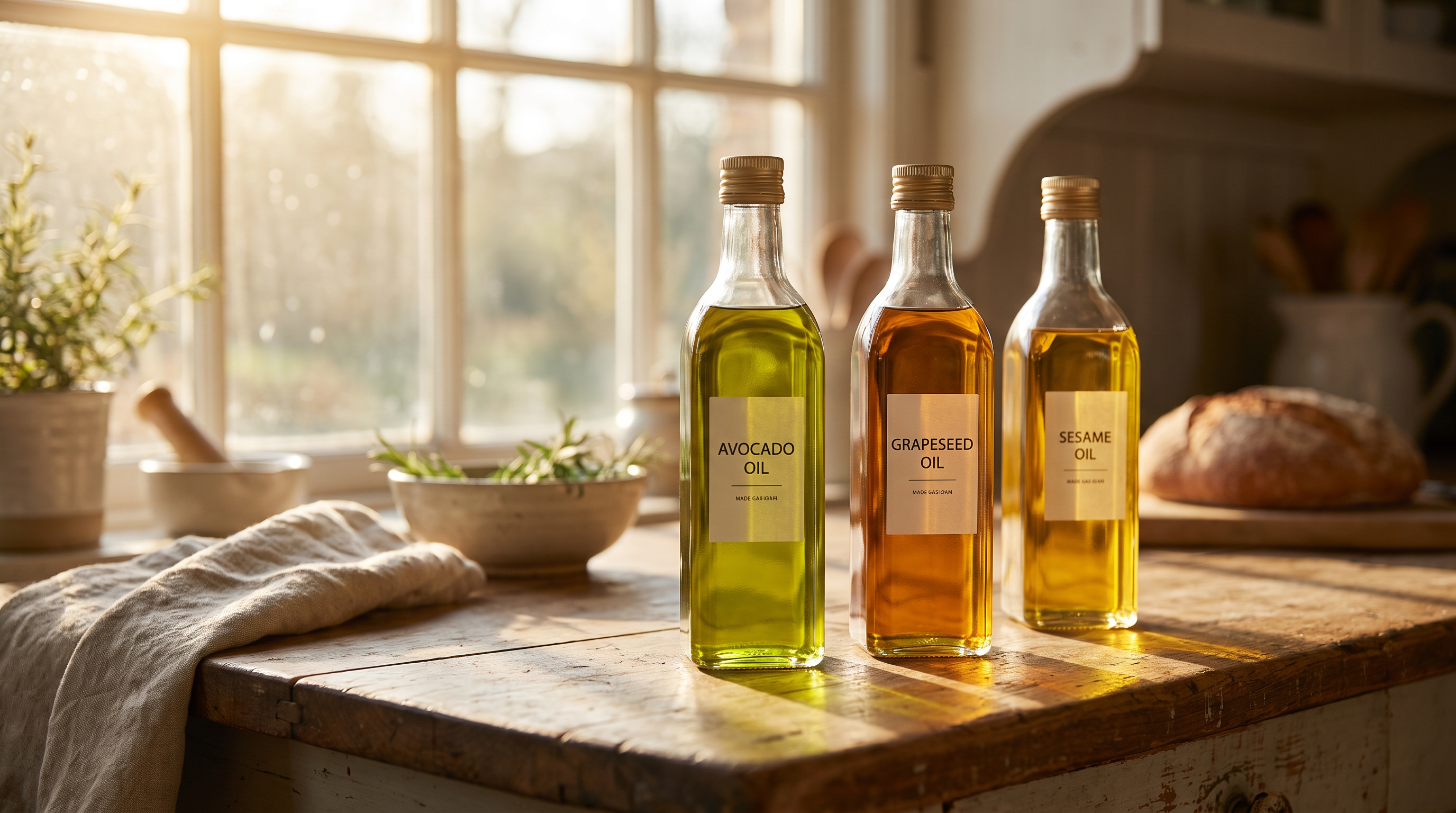
For high-heat applications, avocado oil emerges as the premier substitute. Boasting a staggering smoke point of 520°F, it can withstand intense heat without degrading. Furthermore, avocado oil has a neutral flavor profile that won't overpower the natural taste of roasted vegetables or seared proteins.[1][5]
For high-heat applications, avocado oil emerges as the premier substitute.
Grapeseed oil and standard canola oil are also excellent, budget-friendly alternatives for the skillet. Both offer smoke points around 400°F to 420°F and provide the necessary lipid barrier to prevent food from sticking to the pan, all at a fraction of the cost of premium olive oil.[3][5]

Baking presents a different chemical challenge. In cakes, muffins, and quick breads, oil is used to coat flour proteins, inhibiting gluten formation to keep the crumb tender and moist. While olive oil cakes are a beloved Mediterranean specialty, substituting EVOO in a standard recipe can introduce unwanted savory, grassy notes.[3]
For baking, neutral oils like sunflower, safflower, or canola are vastly superior substitutes. They provide the exact same textural benefits—yielding a moist, tender crumb—without altering the intended flavor profile of a sweet baked good. Melted unsalted butter can also be used in a 1:1 ratio for added richness.[5]
The most difficult application to substitute is raw finishing. When making a vinaigrette, drizzling over hummus, or finishing a soup, the oil is the star of the show. The complex, fruity, and pungent notes of a high-quality EVOO are nearly impossible to replicate with a single alternative.[1][5]
However, culinary experts recommend a blending strategy to stretch your expensive olive oil further. By mixing one part premium EVOO with two parts neutral oil (like grapeseed or light safflower), cooks can maintain the signature olive flavor in a salad dressing while cutting the cost by two-thirds.[5]

Alternatively, exploring other flavor-forward oils can yield exciting new profiles. Toasted sesame oil, used sparingly, adds massive depth to Asian-inspired dressings. Walnut or pistachio oils offer beautiful, earthy notes for finishing roasted root vegetables or hearty winter greens.[1][3]
From a nutritional standpoint, many consumers hesitate to swap out olive oil due to its well-documented cardiovascular benefits. Olive oil is celebrated primarily for its high concentration of monounsaturated fats, particularly oleic acid.[7]

Fortunately, avocado oil is a near-perfect nutritional twin, boasting an almost identical lipid profile rich in heart-healthy monounsaturated fats. High-oleic sunflower and safflower oils have also been specifically bred to mimic this healthy fat ratio, ensuring that a pivot away from olive oil doesn't mean compromising on dietary health.[1][7]
Ultimately, while the Mediterranean climate crisis has forced a shift in global grocery budgets, it has also highlighted a fundamental culinary truth: no single oil is perfect for every task. By matching the right lipid to the right cooking method, home chefs can navigate the price spike while actually improving the quality of their meals.[1][2]
Viewpoints in depth
Culinary Pragmatists
Focus on matching the oil's smoke point and flavor profile to the specific cooking method.
This camp argues that the olive oil shortage is a blessing in disguise for home cooks who have historically misused the ingredient. By relying on extra virgin olive oil for everything from searing steaks to baking cakes, cooks have been burning expensive fats and muddying flavors. They advocate for a diversified pantry where avocado oil handles the heat, neutral oils handle the baking, and premium olive oil is reserved strictly for raw finishing.
Agricultural Economists
View the price spike as a permanent market correction driven by climate change.
Market analysts point out that the Mediterranean basin is warming faster than the global average. They argue that the recent harvest failures in Spain and Italy are not anomalies, but the new baseline. Consequently, they believe that olive oil will permanently transition from a cheap, everyday commodity to a luxury ingredient, forcing a long-term structural shift in global food supply chains and consumer habits.
Nutritional Advocates
Emphasize maintaining cardiovascular health when swapping out traditional Mediterranean fats.
Public health experts caution against replacing olive oil with highly refined, inflammatory fats or saturated fats like butter simply to save money. They stress that the Mediterranean diet's health benefits are heavily tied to oleic acid and polyphenols. This camp strongly advocates for avocado oil or high-oleic sunflower oil as the only acceptable 1:1 nutritional substitutes for daily cooking.
What we don't know
- Whether the upcoming Mediterranean winter will bring enough sustained rainfall to reverse the multi-year drought.
- How long it will take for drought-stressed olive trees to return to their historical peak yield capacities.
- If consumer demand for olive oil will permanently decrease as shoppers become accustomed to cheaper alternatives.
Sources
Source coverage
7 outlets
3 viewpoints surfaced







[1]Factlen Editorial TeamCulinary Pragmatists
Synthesis by Factlen editorial team
Read on Factlen Editorial Team →[2]BloombergAgricultural Economists
Olive Oil Prices Hit Record Highs on Mediterranean Drought
Read on Bloomberg →[3]Serious EatsCulinary Pragmatists
Cooking Fats 101: What's a Smoke Point and Why Does it Matter?
Read on Serious Eats →[4]USDA Foreign Agricultural ServiceAgricultural Economists
Oilseeds: World Markets and Trade - Olive Oil Production Drops
Read on USDA Foreign Agricultural Service →[5]America's Test KitchenCulinary Pragmatists
The Ultimate Guide to Cooking Oils and Substitutions
Read on America's Test Kitchen →[6]The GuardianAgricultural Economists
Spain's olive oil producers devastated by worst drought in decades
Read on The Guardian →[7]Harvard T.H. Chan School of Public HealthNutritional Advocates
Types of Fat: The Good, the Bad, and the In-Between
Read on Harvard T.H. Chan School of Public Health →


Every angle. Every day.
Get food drink stories with full source coverage and perspective breakdowns delivered to your inbox.