
LVMH Wins Landmark £213K Counterfeiting Suit Against Influencer Selling Fake Designer Goods
A UK High Court ordered a social media influencer to pay £213,000 for selling counterfeit luxury goods, establishing a new legal precedent for how damages are calculated for high-quality "superfakes."

Share this story
In a landmark ruling that redefines how the legal system calculates the cost of counterfeit fashion, a UK High Court has ordered a social media influencer to pay £213,000 (approximately $285,000) in damages to luxury conglomerate LVMH. The decision, handed down in July 2026, targets Georgia Aldridge, a content creator who built an online following of over 32,000 by teaching aspiring entrepreneurs how to "turn posts into profits." Behind her legitimate marketing agency, however, the court found that Aldridge was operating a lucrative side-hustle selling counterfeit designer goods.[1][2][4]
The lawsuit was brought collectively by LVMH Moët Hennessy Louis Vuitton SE and several of its marquee houses, including Fendi, Loewe, Christian Dior, and Celine. The brands accused Aldridge and her company, Rolo Fashion Ltd, of trademark infringement through a sophisticated online sales operation. Because a default judgment had already established liability in January 2025, the July hearing focused entirely on a complex and increasingly relevant legal question: how exactly should a luxury brand's financial damages be measured in the era of high-quality digital dupes?[1][2][3]
To answer that question, the court had to dissect the modern counterfeit supply chain. Aldridge utilized a "dropshipping" model, a retail fulfillment method where the seller accepts customer orders but does not keep goods in stock. Instead, she sourced the counterfeit items from the Chinese e-commerce marketplace AliExpress. When a customer placed an order through her dedicated Instagram pages or a private WhatsApp group, the third-party supplier shipped the fake luxury goods directly to the buyer.[1][2][3][4]
During the damages hearing, LVMH's legal team argued for a massive six-figure payout based on three distinct categories of harm: lost profits from displaced sales, lost licensing income, and severe damage to the reputation of their world-renowned brands. To support this, Nicolas Lambert, LVMH's head of online brand protection, provided detailed testimony on the evolving nature of the counterfeit market.[1]
Lambert explained that the black market is no longer defined solely by cheap, easily identifiable knockoffs sold on street corners. Instead, it has bifurcated. At the top end are what online communities refer to as "superfakes," "1-to-1s," or "mirror quality" replicas. These high-tier counterfeits utilize premium materials, precise stitching, and accurate hardware to closely mimic authentic luxury items.[1]
The distinction between a cheap knockoff and a superfake became the fulcrum of the court's financial calculus. LVMH argued that because superfakes are priced higher and boast greater attention to detail, they are far more likely to deceive the public and directly cannibalize the sale of a genuine product. Judge Richard Hacon agreed with this premise, but he refused to apply a blanket assumption that every single counterfeit transaction represented a stolen sale from LVMH.[3]
Instead, Judge Hacon took a strictly mathematical approach, dividing Aldridge's sales history into two distinct buckets based on the quality of the items sold. The first bucket contained an estimated 713 transactions involving high-quality superfakes. The court ruled that these specific transactions were sophisticated enough that they likely displaced the purchase of an authentic luxury good.[2]
For these 713 displaced sales, the court calculated that the luxury brands lost an approximate profit of £280 per item. Multiplying this out, Judge Hacon awarded £199,640 in lost profits, which he rounded up to an even £200,000. This portion of the ruling represents a significant victory for luxury houses, establishing a clear legal precedent that high-quality digital dupes carry a heavy, quantifiable financial penalty.[2]
However, the second bucket of sales told a very different story. The court identified an additional 4,039 transactions that involved lower-quality counterfeit products. Because these items were clearly identifiable as fakes, Judge Hacon ruled that the buyers were participating in a distinct, parallel market. In the eyes of the court, a consumer buying a cheap knockoff was never going to spend thousands of dollars on an authentic Fendi or Dior bag, meaning LVMH did not actually lose a sale.[2]
For those 4,039 non-displacing transactions, the court refused to award lost profits. Instead, it granted the brands a mere £13,000, calculated as a hypothetical licensing fee that Aldridge should have paid to use the trademarks. The stark contrast in the math is revealing: 713 superfake sales yielded £200,000 in damages, while more than five times as many low-quality sales yielded just £13,000.[2]
The most consequential aspect of the ruling, however, may be what the judge explicitly rejected. LVMH had pushed aggressively for additional compensation regarding reputational damage, arguing that inferior fake products circulating in the wild erode the prestige and goodwill of their historic houses.[3]
Judge Hacon dismissed the reputational damage claim entirely, citing a lack of evidential basis. He noted that the nature of Aldridge's operation—selling through private WhatsApp groups at prices far below retail—meant that consumers were fully aware they were purchasing illicit goods. Because the buyers were complicit, the court reasoned they would never attribute the inferior quality of a fake bag to the actual luxury brand.[2][3]
This rejection sets a high evidentiary bar for future counterfeiting lawsuits. The ruling clarifies that trademark infringement does not automatically equal reputational harm. Moving forward, luxury conglomerates will have to provide concrete evidence that challenged sales actually altered consumer perceptions or damaged brand equity, rather than relying on theoretical brand dilution.
Beyond the legal mechanics, the case shines a spotlight on the booming "dupe culture" that has taken over social media. Influencers frequently review, promote, and link to counterfeit goods, framing them as savvy financial "hacks" rather than illegal intellectual property theft. Aldridge's operation capitalized on this exact sentiment, leveraging her marketing expertise to build a quiet, highly profitable distribution network.[1][4]
The use of dropshipping further complicates enforcement. Because influencers like Aldridge never actually touch the inventory—acting merely as digital middlemen between Chinese factories and Western consumers—traditional customs seizures and warehouse raids are ineffective. Brands are increasingly forced to police digital spaces, infiltrating private messaging groups and tracking digital payment trails to identify the orchestrators.[1][2]
While LVMH did not win every argument in the London courtroom, the £213,000 judgment serves as a severe warning shot to the influencer economy. It proves that luxury brands are willing to invest the resources required to unmask anonymous Instagram accounts, trace dropshipping networks, and pursue devastating financial judgments against the individuals profiting from the superfake boom.[2][3]
Key points
- A UK High Court ordered an influencer to pay £213,000 for selling counterfeit LVMH goods.
- The court distinguished between high-quality 'superfakes' and lower-quality knockoffs.
- Damages were heavily weighted toward 713 superfake sales that displaced genuine purchases.
- The judge rejected LVMH's claim for reputational damage, noting buyers knew the items were fake.
What we don’t know
- Whether LVMH will successfully collect the £213,000 judgment from the influencer's company.
- How social media platforms like Instagram will adjust their moderation policies to detect private dropshipping networks.
- If other luxury brands will adopt this mathematical 'superfake' framework in future lawsuits.
How we got here
January 2025
A UK High Court issues a default judgment establishing that Georgia Aldridge infringed on LVMH's trademarks.
January 2025
Aldridge's counterfeit dropshipping operation is officially shut down following the initial court ruling.
July 2026
The High Court issues its final damages ruling, ordering Aldridge to pay £213,000 based on the quality of the fakes sold.
- Luxury Conglomerates
- Argue that high-quality 'superfakes' directly cannibalize genuine sales and that all counterfeiting inherently damages brand reputation and exclusivity.
- Legal & IP Analysts
- View the ruling as a pragmatic, evidence-based approach that forces brands to mathematically prove lost sales rather than relying on blanket assumptions of reputational harm.
- Consumer Rights & Retail Observers
- Note that the booming 'dupe' culture is driven by willing buyers who are priced out of the luxury market, meaning these transactions often serve a parallel economy rather than displacing real sales.
Perspectives this story doesn't cover
- The third-party manufacturers on AliExpress producing the counterfeit goods.
- The consumers who knowingly purchased the counterfeit items.
Sources
Source coverage
4 outlets
3 viewpoints surfaced




- [1]The IndependentConsumer Rights & Retail Observers
Influencer who promised to 'turn posts into profits' ordered to pay £213,000 over fake designer goods
Read on The Independent → - [2]TheIndustry.fashionLegal & IP Analysts
Influencer ordered to pay £213,000 over side-hustle selling counterfeit luxury fashion
Read on TheIndustry.fashion → - [3]Fashion UnitedLuxury Conglomerates
UK High Court orders influencer to pay LVMH £213k for selling fake goods
Read on Fashion United → - [4]Globe MagazineConsumer Rights & Retail Observers
Influencer Who Taught Fans How to 'Turn Posts Into Profits' Ordered to Pay $285K for Selling Luxury Fakes
Read on Globe Magazine →
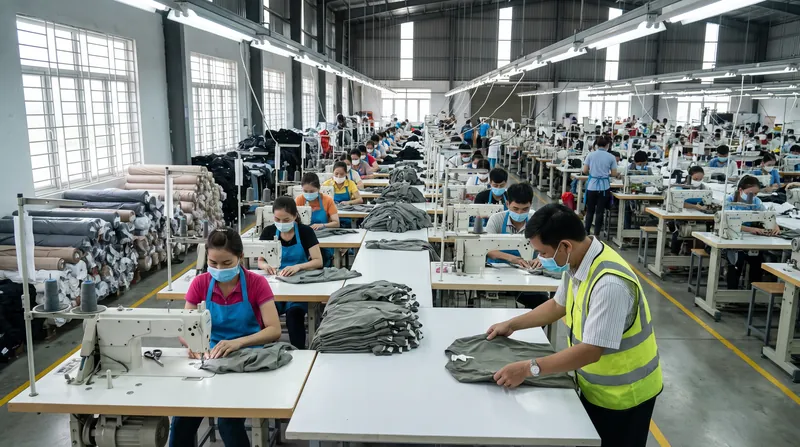
More in Lifestyle
See all →Supply Chain Tech
Mandatory Digital Product Passports: How New EU Rules Are Rewiring the Global Fashion Supply Chain
7 sources

Circular Fashion
Luxury Resale Outpaces Primary Sales 3-to-1, Prompting Brands to Launch In-House 'Pre-Loved' Platforms
8 sources
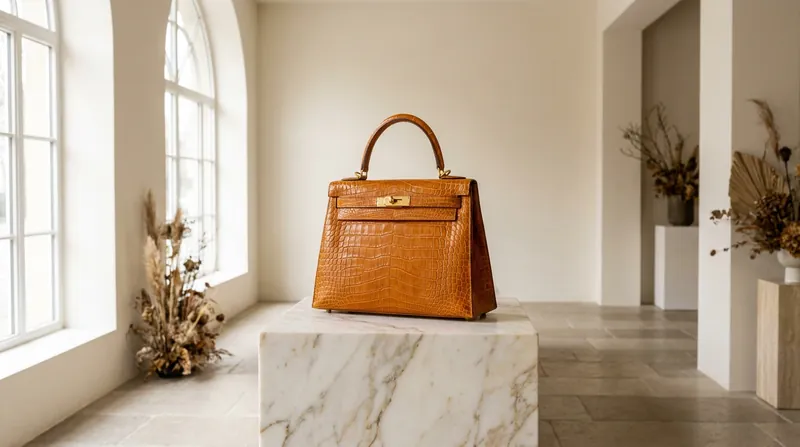
Luxury Retail
Luxury Market Normalizes as Kering Profits Drop 50% Amid Shift to 'Quiet Luxury'
8 sources
Apparel Chemistry
California's 'Forever Chemicals' Ban Forces Global Textile Industry to Reformulate All Weatherproof Apparel
4 sources

Comments
Every angle. Every day.
Get Lifestyle stories with full source coverage and perspective breakdowns, free every day.