
LIV Golf Transitions to Debt Financing as Saudi PIF Shifts Funding Strategy
LIV Golf is now relying on secured loans from Saudi Arabia's Public Investment Fund to complete its 2026 season, marking a pivotal shift as the league seeks private equity to replace sovereign backing.
By Ryder James
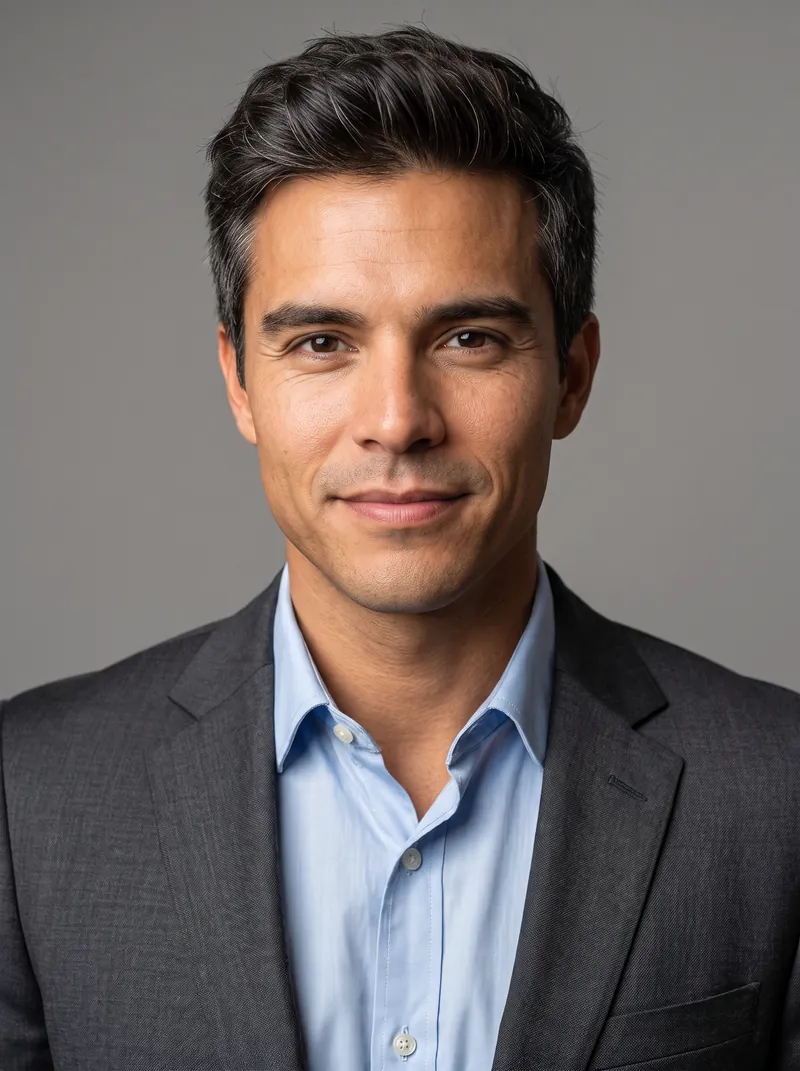
The landscape of professional golf is undergoing a profound financial restructuring. After four years of unprecedented capital injections, LIV Golf is now relying on secured loans from Saudi Arabia's Public Investment Fund (PIF) to complete its 2026 season. The shift marks the end of the league's foundational launch phase and the beginning of a complex transition toward traditional private equity and commercial sustainability.
The catalyst for this transition arrived in April 2026, when the PIF formally notified LIV executives, players, and staff that it would cease bankrolling the circuit at the end of the current season. The sovereign wealth fund cited a strategic pivot, noting that the substantial, long-term investment required to maintain the golf league no longer aligned with its broader macroeconomic priorities.[1][3]
To bridge the gap between the April announcement and the season's conclusion in August, the PIF and LIV Golf altered their financial arrangement. Rather than providing direct capital infusions, the PIF implemented a lending facility. In early June, filings with Companies House in the United Kingdom revealed a debenture agreement between LIV Golf's UK arm and the PIF.
A debenture is a standard corporate finance tool—a legal document that secures a loan against a company's assets. By shifting to this model, the PIF is no longer simply absorbing losses; it is charging interest and securing its debt against the league's underlying value. This protects the sovereign wealth fund's downside while providing LIV with the liquidity needed to operate its final four tournaments of the year.[1]
The operational costs of maintaining the breakaway circuit remain substantial. Financial analysts estimate that LIV Golf currently spends roughly $100 million per month to cover tournament operations, logistics, and player payouts. According to the Financial Times, the PIF has provided approximately $200 million of the estimated $600 million required to finish the season, with the remainder expected to be disbursed in tranches.[1]
This debt financing caps a historic period of sports investment. Since its inception in 2021, the PIF has poured an estimated $5.5 billion to $6 billion into LIV Golf. That capital was used to disrupt the traditional golf ecosystem, funding massive sign-on bonuses to lure top-tier talent like Jon Rahm and Bryson DeChambeau away from the PGA Tour, alongside staggering $30 million tournament purses.[1][2][3]
Now, the mandate for LIV Golf CEO Scott O'Neil is to replace that sovereign backing with private capital. O'Neil and the league's newly appointed independent board have retained the US-based investment bank Ducera Partners to lead the search for new investors. Their immediate goal is to raise between $250 million and $350 million in private equity to stabilize the league's balance sheet for 2027 and beyond.[2][3]
The pitch to potential investors relies on the league's structural assets. LIV is offering equity stakes in the overarching product as well as in its 13 individual franchises, which are currently 75 percent owned by the league. Executives are pointing to recent multi-year brand partnerships and increased year-over-year sponsorship revenues as proof that the disruptive model can eventually achieve commercial viability.[2]
However, attracting traditional private equity requires a path to profitability—a steep challenge for an entity that O'Neil previously conceded could be loss-making for its first five to ten years. To make the financial math work for new backers, LIV Golf is reportedly preparing to introduce a leaner operational model, internally dubbed "LIV Lite," for the 2027 season.[2][3]
This proposed restructuring would shrink the league's global footprint from 14 events down to 10. More significantly, it would reduce the $30 million prize purses that have defined the circuit's appeal to professional golfers. By cutting overhead and prize money, the league aims to present a more sustainable burn rate to prospective private equity partners.[2][3]
To retain its roster of star players amid shrinking purses, LIV is exploring a compensation shift. The league plans to offer players direct equity stakes in the business. This strategy mirrors the equity models used in tech startups, aligning the financial incentives of the athletes with the long-term survival and growth of the tour itself.[2]
The evolution of LIV Golf from a sovereign-funded disruptor to a debt-financed entity seeking private equity is a watershed moment in sports business. It highlights the limits of unlimited capital and underscores the reality that even the most heavily backed sports ventures must eventually answer to the traditional metrics of revenue, equity, and sustainable growth.
Key points
- LIV Golf is using secured loans from the Saudi PIF to fund the remainder of its 2026 season.
- The PIF announced in April that it will cease bankrolling the golf league at the end of the year.
- LIV executives are actively seeking $250 million to $350 million in new private equity investment.
- The league currently spends an estimated $100 million per month on operations and payouts.
- A proposed 'LIV Lite' model for 2027 would reduce the schedule to 10 events and lower prize purses.
- To compensate for lower purses, LIV plans to offer star players direct equity stakes in the league.
How we got here
2021–2022
The Saudi PIF launches LIV Golf with massive capital injections to lure top players away from the PGA Tour.
April 2026
The PIF formally announces it will cease funding LIV Golf at the end of the 2026 season due to shifting investment priorities.
May 2026
LIV Golf retains investment bank Ducera Partners to seek $250 million to $350 million in private equity.
June 2026
Filings in the UK reveal LIV is now operating on secured loans (debentures) from the PIF to finish the current season.
- LIV Golf Executives
- Argue that the initial capital was a necessary startup cost to disrupt a monopoly, and the league is now ready for traditional private equity.
- Sports Finance Analysts
- Emphasize the difficulty of replacing sovereign wealth with private equity for a product that currently burns $100 million a month.
- Traditional Golf Establishment
- View the funding shift as validation that the massive purses of the past four years were an unsustainable 'false economy.'
Perspectives this story doesn't cover
- PGA Tour Executives
- Rank-and-file LIV Golfers
Sources
Source coverage
3 outlets
3 viewpoints surfaced



- [1]Financial TimesSports Finance Analysts
Saudi Arabia's sovereign wealth fund has injected only about a third of the $600mn that LIV Golf needs
Read on Financial Times → - [2]ReutersLIV Golf Executives
LIV Golf seeks up to $350 million in new investment
Read on Reuters → - [3]The GuardianTraditional Golf Establishment
World Cup 2026: Socceroos open campaign with win against Turkey – in pictures
Read on The Guardian →
More in Sports
See all →Preview
2026 Baycurrent Classic Preview: Schauffele Defends as the PGA Tour Returns to Japan
5 sources

Recap
Adrian Meronk Claims Fifth DP World Tour Title With Gritty Dunhill Links Victory
3 sources

Power ranking
Bank of Utah Championship Power Rankings: Koivun Leads the PGA Tour Fall
6 sources

Preview
2026 Alfred Dunhill Links Championship Preview: MacIntyre Defends as LIV Stars Return to St Andrews
6 sources

Comments
Every angle. Every day.
Get Sports stories with full source coverage and perspective breakdowns, free every day.