
From Lottery to Science: The History and Evolution of the World Cup Penalty Shootout
Introduced to the World Cup in 1982, the penalty shootout has transformed from a controversial tiebreaker into a highly scrutinized battle of data, psychology, and technique. As the tournament expands, mastering the 12-yard duel has become a prerequisite for lifting the trophy.
By Ryder James
Share this story
The walk from the center circle to the penalty spot is widely considered the longest, loneliest walk in global sports. For 120 minutes, football is a fluid, complex system of interconnected players, tactical formations, and spatial manipulation. Then, the referee's whistle blows, and the sport is abruptly reduced to its starkest, most isolated variables: one kicker, one goalkeeper, and twelve yards of grass.[1][3]
Before the invention of the modern shootout, deadlocked matches in major tournaments were settled by deeply unsatisfying methods. Teams were subjected to drawing lots, tossing coins, or scheduling exhausting replays days later. The turning point arrived after the 1968 Olympics, when Israel was eliminated in the quarterfinals by a coin toss, prompting Israeli football official Yosef Dagan to champion a new, definitive tiebreaker.[2]
The International Football Association Board (IFAB) officially adopted the penalty shootout in 1970, forever altering the emotional landscape of knockout football. It made its FIFA World Cup debut on a sweltering night in Seville in 1982, when West Germany defeated France in a dramatic, exhausting semifinal that set the template for decades of tournament drama.[2][4]
For the first few decades of its existence, players, managers, and pundits almost universally dismissed the shootout as a "lottery." It was viewed as a cruel game of pure chance that unfairly decided the fate of nations, disconnected from the actual skills required to play football. This fatalistic mindset provided a psychological shield for teams that failed, allowing them to blame luck rather than execution.[1][4]
This fatalism was famously embodied by England, a nation that suffered agonizing shootout defeats in 1990, 1998, and 2006. The narrative of the "inevitable English miss" became a self-fulfilling prophecy, weighing heavily on generations of players who approached the spot burdened by national trauma rather than technical focus.[4]
Conversely, nations like Germany and Argentina embraced the format not as a lottery, but as an extension of competitive will and technical precision. Germany boasts a flawless 4-0 record in World Cup shootouts, cultivating an aura of inevitability that often defeats opponents before the first kick is even taken.
Argentina has been even more prolific, holding the outright record for the most shootout victories in World Cup history. They have won six of their seven encounters, a run of dominance culminating in their victory over France in the 2022 Final in Qatar, proving that sustained success from the spot is a measurable skill.[2]
The shootout was permanently etched into global cultural consciousness during the 1994 Final at the Rose Bowl in Pasadena. Roberto Baggio, the tournament's brightest star and Italy's talisman, sent his decisive kick over the crossbar, handing Brazil the trophy and demonstrating that the pressure of the penalty spot spares no one, regardless of their genius.[2][4]
Today, the "lottery" myth has been entirely debunked by sports science and data analytics. The shootout is now understood as a highly controllable, measurable event where preparation dramatically shifts the odds. Elite teams no longer leave the outcome to chance, employing dedicated analysts to map every variable of the 12-yard duel.[1]
Data analysts meticulously map every potential kicker's historical tendencies. Players are categorized into distinct profiles: "goalkeeper-dependent" kickers who wait for the keeper to commit before rolling the ball the other way, and "goalkeeper-independent" kickers who pick a target beforehand and strike with overwhelming power.
Goalkeepers are armed with extensive cheat sheets based on this data. The dawn of this era was famously marked in 2006, when Germany's Jens Lehmann consulted a crumpled piece of paper hidden in his sock before saving Esteban Cambiasso's kick, a moment that proved preparation could outmatch intuition.[4]
Beyond the data, the psychological warfare of the shootout has evolved into a dark art. Goalkeepers use visual disruption, delay tactics, and aggressive body language to shrink the goal in the kicker's mind and disrupt their practiced rhythm.[3][5]
Argentina's Emiliano Martínez masterfully weaponized these tactics during the 2022 tournament, using conversation, ball-throwing, and celebrations to dominate the psychological space. His effectiveness was so profound that IFAB subsequently introduced new rules restricting goalkeeper behavior on the line to protect the kicker's concentration.[5]
Biomechanical studies reveal the sheer physical reality of the penalty: a perfectly struck ball, placed in the top corner at over 60 miles per hour, is mathematically unsavable regardless of the goalkeeper's anticipation. The challenge is not the physics of the kick, but executing those physics under extreme duress.[3]
The pressure of a World Cup shootout alters human biomechanics. Heart rates spike to 170 beats per minute, peripheral vision narrows, and fine motor skills degrade. Players often rush their approach to escape the agonizing tension, leading to predictable, poorly struck shots.[3]
To combat this physiological collapse, modern teams practice "quiet eye" techniques. Sports psychologists train kickers to maintain steady, sustained visual focus on the ball or a specific target area, blocking out the goalkeeper's distracting movements and lowering their internal heart rate.[3]
Teams also script the entire process, removing decision-making fatigue. Players are told exactly where to stand in the center circle, how many breaths to take before beginning their run-up, and exactly which zone of the net they will target, turning a high-stress moment into a rote mechanical action.[1]
With the 2026 World Cup expanding to a 48-team format, the knockout stage now features a massive 32-team bracket. This structural change introduces an additional round of elimination matches, mathematically increasing the probability that teams will face a penalty shootout on their path to the final.[1]
As teams prepare for the North American tournament, penalty practice is no longer an afterthought tacked onto the end of a training session. It is a core curriculum, complete with simulated crowd noise, fatigue conditioning, and psychological profiling to identify the five players most capable of regulating their nervous systems.[1][3]
The penalty shootout remains football's ultimate crucible. It is the moment where the beautiful, flowing team game stops, and the sport becomes a raw, unforgiving test of individual human frailty against the cold certainty of data. Mastering it is no longer a luxury; it is the price of immortality.[1]
The essentials
- The penalty shootout was officially adopted by IFAB in 1970 and first used in a World Cup in 1982.
- Data analytics have transformed the shootout from a perceived 'lottery' into a highly measurable, controllable skill.
- Argentina holds the record for the most World Cup shootout wins (6), while Germany holds a flawless 4-0 record.
- Sports psychologists now train players in 'quiet eye' techniques to manage the extreme physiological stress of the moment.
- The expanded 48-team format in 2026 increases the mathematical likelihood of matches being decided by shootouts.
Timeline
1970
The International Football Association Board (IFAB) officially adopts the penalty shootout as a tiebreaker.
1982
West Germany defeats France in the first-ever World Cup penalty shootout during the semifinals.
1994
Brazil defeats Italy in Pasadena, marking the first time a World Cup Final is decided by a shootout.
2006
Germany's Jens Lehmann uses a data 'cheat sheet' against Argentina, ushering in the modern analytical era of penalties.
2022
Argentina wins their record sixth World Cup shootout, defeating France in the Final in Qatar.
- Data Analysts
- View the shootout as a solvable probability matrix based on historical tendencies and biomechanics.
- Sports Psychologists
- Focus on the immense mental load, heart rate regulation, and coping mechanisms required to execute under pressure.
- Goalkeeping Coaches
- See the shootout as the ultimate opportunity for the keeper to dictate terms, apply pressure, and become the aggressor.
- Traditionalists
- Still view the shootout as a cruel, somewhat artificial way to end a beautiful, fluid team game.
Perspectives this story doesn't cover
- Referees tasked with managing player behavior during shootouts
- Players who have missed crucial tournament penalties
Sources
Source coverage
5 outlets
4 viewpoints surfaced





- [1]Factlen Editorial TeamSports Psychologists
Synthesis by Factlen editorial team
Read on Factlen Editorial Team → - [2]FIFA Official ArchivesTraditionalists
The origins and history of the FIFA World Cup penalty shootout
Read on FIFA Official Archives → - [3]Journal of Sports SciencesSports Psychologists
Choking under pressure: The psychology of the penalty shootout
Read on Journal of Sports Sciences → - [4]BBC SportTraditionalists
How to take a World Cup shootout penalty
Read on BBC Sport → - [5]ESPNGoalkeeping Coaches
The mind games of the modern World Cup goalkeeper
Read on ESPN →
More in Sports
See all →History
The Giant-Killers: The Anatomy and Evolution of the World Cup Upset
5 sources
Generational Clash
Messi vs. Yamal: The Generational Showdown Defining the 2026 World Cup Final
7 sources
History
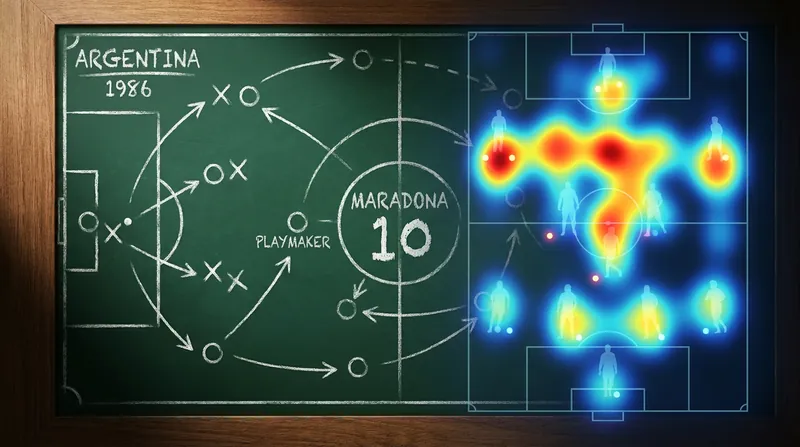
The Tactical Metamorphosis: How the World Cup Forged Football's Greatest Formations
7 sources
History
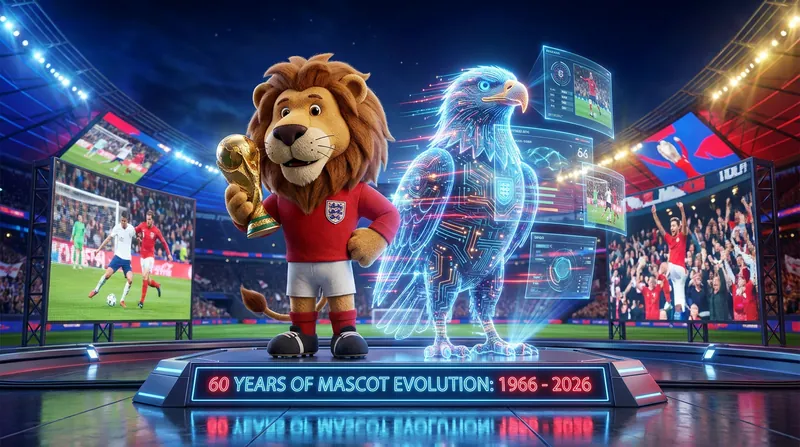
The Canvas of Commerce: How the World Cup Mascot Evolved from a Five-Minute Sketch to a Billion-Dollar Empire
5 sources
Comments
Every angle. Every day.
Get Sports stories with full source coverage and perspective breakdowns, free every day.