
Landmark Research: Single Injection Reverses Cartilage Loss in Joints, Offering Potential Alternative to Knee Replacement
A convergence of breakthroughs in regenerative medicine has demonstrated that targeted injections can reverse osteoarthritis and regrow native cartilage. By utilizing enzyme inhibitors and bioelectric scaffolds, researchers are moving closer to replacing invasive joint surgeries with simple, off-the-shelf biological therapies.
By Factlen Editorial Team
- Regenerative Medicine Researchers
- Focus on targeting the underlying cellular mechanisms of aging and tissue degradation to achieve biological cures.
- Clinical Evaluators
- Emphasize the need for rigorous, long-term human trials before declaring an end to traditional joint replacement.
- Healthcare Economists & Analysts
- Focus on the systemic impact of replacing resource-heavy surgeries with scalable, off-the-shelf injectable therapies.
What's not represented
- · Patients with severe bone-on-bone arthritis
- · Physical Therapists
Why this matters
Osteoarthritis is the most common joint disorder in the world, historically viewed as an irreversible one-way street toward invasive joint replacement surgery. If these injectable therapies successfully clear human trials, they will fundamentally transform orthopedics from a discipline of mechanical replacement into one of biological regeneration, sparing millions from chronic pain and major surgery.
Key points
- Multiple independent research teams have developed single-injection therapies that successfully reverse cartilage loss in animal models and human tissue.
- Stanford researchers achieved regeneration by blocking 15-PGDH, an aging-related enzyme that drives tissue degradation.
- The University of Colorado secured $33.5 million in ARPA-H funding to advance a biomaterial repair kit that recruits the body's own cells.
- Unlike previous surgical techniques that produce inferior scar tissue, the new therapies stimulate the growth of true, durable hyaline cartilage.
- The treatments offer a scalable, off-the-shelf alternative to highly invasive and expensive total knee replacement surgeries.
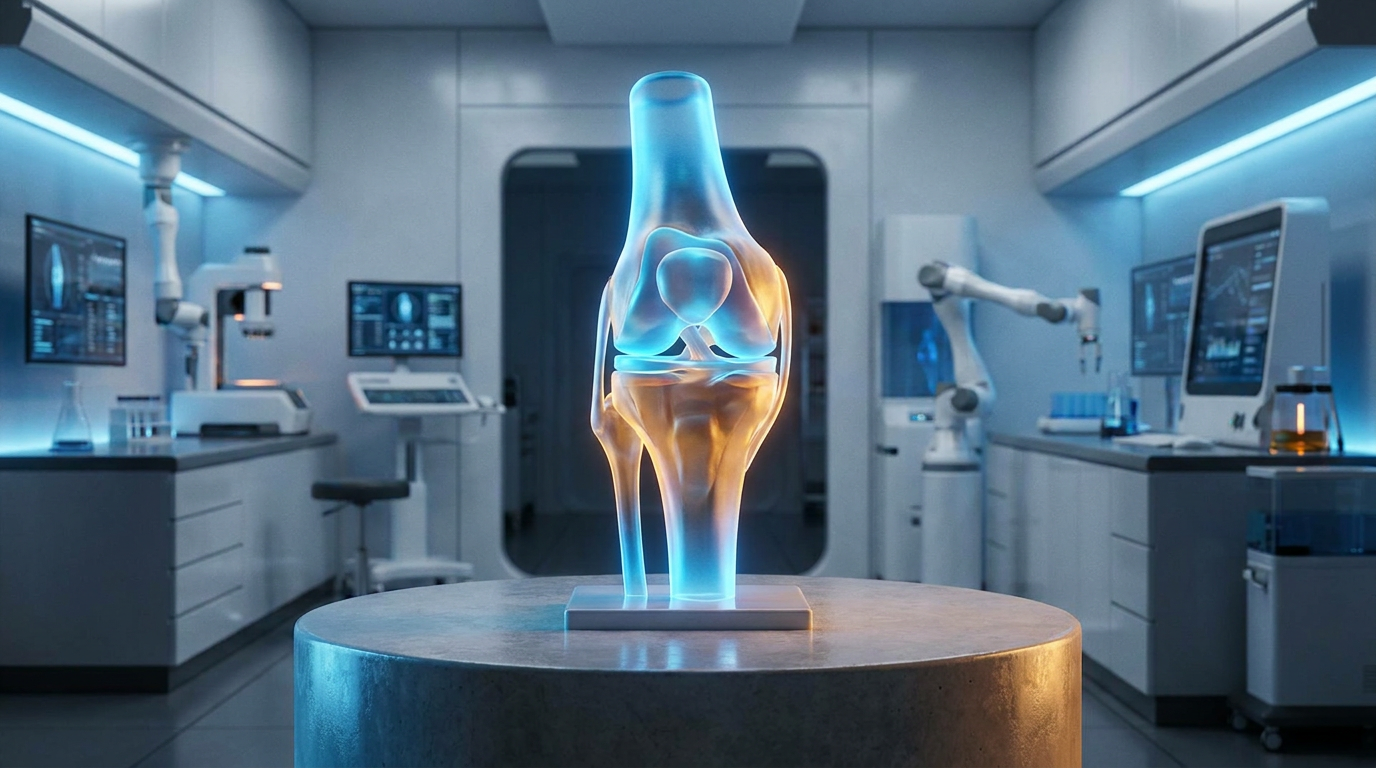
For decades, the medical consensus surrounding osteoarthritis has been grimly straightforward: cartilage does not heal. Once the smooth, frictionless tissue that cushions the ends of bones begins to wear away, patients are placed on a one-way conveyor belt of symptom management. The journey typically begins with over-the-counter anti-inflammatories, progresses to cortisone injections, and inevitably culminates in highly invasive joint replacement surgery. In the United States alone, this degenerative cascade affects more than 32 million adults, generating an estimated $65 billion in direct healthcare costs annually. The sheer scale of the problem has made the search for a true biological cure one of the holy grails of modern medicine.[1][3]
That paradigm is now undergoing a seismic shift. A convergence of recent breakthroughs from top research institutions has demonstrated that the irreversible nature of cartilage loss is a biological myth. Multiple independent teams have successfully developed single-injection therapies that do not merely mask pain or lubricate the joint, but actively reverse tissue degradation. By targeting the underlying cellular mechanisms of aging and utilizing advanced biomaterials, these treatments are prompting the body to regrow native cartilage, offering a tantalizing glimpse into a future where knee and hip replacements become the exception rather than the rule.[3]
One of the most promising avenues of this regenerative revolution emerged from Stanford Medicine, where researchers identified a specific protein that acts as a master switch for joint degradation. The protein, known as 15-PGDH, is classified as a 'gerozyme'—an enzyme that accumulates as the body ages and actively drives the loss of tissue function. The Stanford team hypothesized that if they could turn off this specific enzymatic pathway, they might be able to halt the progression of osteoarthritis. What they discovered, however, exceeded their expectations: blocking 15-PGDH did not just stop the damage; it reversed it.[1]

The evidence from the Stanford trials is striking. When researchers injected a small-molecule 15-PGDH inhibitor into the knee joints of older mice, the animals experienced a dramatic restoration of lost cartilage. Furthermore, the treatment successfully prevented the onset of arthritis in mice that had suffered severe ligament tears. But the true breakthrough occurred when the team applied the inhibitor to human cartilage tissue harvested from patients undergoing total knee replacement surgeries. Even in this severely degraded, end-stage tissue, the treatment suppressed cartilage-destroying genes and triggered the existing cells to begin generating new, functional articular cartilage.[1]
While Stanford tackles the biochemical roots of aging, a massive federal initiative is accelerating a parallel approach focused on advanced biomaterials. The Advanced Research Projects Agency for Health (ARPA-H) recently awarded a multidisciplinary team at the University of Colorado up to $33.5 million to finalize a suite of minimally invasive therapeutics designed to fully regenerate damaged joints. The project, part of the Novel Innovations for Tissue Regeneration in Osteoarthritis (NITRO) program, has developed a regenerative injection and a biomaterial repair kit that recruits the body's own cells to patch structural defects.
The Colorado team's approach centers on a patented particle delivery system that can be injected directly into the joint. For significant lesions where the cartilage has worn down to the bone, the team utilizes a cocktail of engineered proteins that cure into place, forming a scaffold. This scaffold acts as a biological beacon, drawing in the body's natural progenitor cells and instructing them to rebuild the missing tissue. In rigorous animal studies, joints treated with this injection returned to a healthy, functional state within just four to eight weeks, demonstrating full regeneration of both cartilage and underlying bone defects.

A third, entirely distinct mechanism is being pioneered at the University of Connecticut, where researchers are harnessing the body's own kinetic energy to regrow tissue. The UConn team has developed an injectable, cell-free piezoelectric scaffold made from biodegradable nanofibers and magnesium oxide nanoparticles. Piezoelectric materials have the unique property of generating an electrical charge when subjected to mechanical stress. Once injected into a damaged knee, the simple act of the patient walking compresses the scaffold, producing tiny bioelectric signals that mimic the body's natural developmental cues.
A third, entirely distinct mechanism is being pioneered at the University of Connecticut, where researchers are harnessing the body's own kinetic energy to regrow tissue.
These electrical micro-currents stimulate cellular activity and encourage the rapid regeneration of strong, durable cartilage without the need for external drugs or lab-grown stem cells. Backed by a $2.3 million grant from the National Institutes of Health, the UConn researchers have already demonstrated that a single injection of this gel into damaged rabbit knees resulted in the formation of fully functional cartilage within two months. The team is now advancing to large animal models, hoping to prove that this bioelectric approach can restore joint function even in severe cases of osteoarthritis.
Similarly, researchers at Northwestern University have achieved remarkable results using a complex network of molecular components that mimic cartilage's natural environment. Colloquially described as a 'rubbery goo,' the injectable material combines hyaluronic acid with a bioactive peptide that binds to a crucial growth protein known as TGFb-1. When injected into the stifle joints of sheep—a joint structurally similar to the human knee—the material created a supportive scaffold that degraded safely as new, high-quality cartilage grew to replace it within six months.
A critical distinction in all of these breakthroughs is the type of tissue being regenerated. Historically, surgical interventions like microfracture—where tiny holes are drilled into the bone to stimulate bleeding and healing—have only succeeded in producing fibrocartilage. Fibrocartilage is essentially dense scar tissue; it lacks the smooth, frictionless properties and mechanical resilience of native hyaline cartilage, meaning it eventually breaks down under the heavy loads of the knee. The new wave of targeted injections and biomaterials are successfully prompting the body to produce true hyaline cartilage, ensuring a durable, long-lasting repair.[3]

The clinical landscape for osteoarthritis treatments has long been cluttered with therapies that overpromise and underdeliver. For years, intra-articular injections of mesenchymal stem cells (MSCs) and platelet-rich plasma (PRP) have been offered at specialized clinics. While meta-analyses show these treatments can significantly reduce pain and modulate inflammation, their ability to consistently regrow substantial cartilage in humans has remained highly variable. The new generation of therapies sidesteps the complexities and high costs of harvesting a patient's own cells, offering scalable, off-the-shelf solutions that directly trigger the regenerative pathways.[2][3]
The economic and human stakes of transitioning from mechanical replacement to biological regeneration cannot be overstated. Total knee arthroplasty is a major surgical procedure carrying risks of infection, blood clots, and prolonged rehabilitation. Furthermore, artificial joints have a finite lifespan of 15 to 20 years, meaning younger patients often face the daunting prospect of complex revision surgeries later in life. A single-injection therapy that restores the native joint would not only save healthcare systems billions of dollars in surgical and post-operative costs but would dramatically improve the quality of life for millions of aging adults.[3]
Despite the unprecedented promise of these discoveries, researchers urge cautious optimism regarding the timeline for widespread human availability. The transition from large animal models to FDA-approved human therapeutics is notoriously rigorous. While an oral version of the 15-PGDH inhibitor is already navigating human clinical trials for age-related muscle weakness, the specific intra-articular injections for cartilage repair must still clear extensive safety and efficacy hurdles. Experts estimate that it may be several years before these treatments become a routine part of orthopedic care.[1][3]

Another remaining unknown is the threshold of disease severity that these injections can effectively treat. While the therapies have shown astonishing results in repairing localized defects and reversing moderate degradation, it remains to be seen whether they can fully reconstruct a joint that has reached the end-stage, 'bone-on-bone' phase of osteoarthritis. It is highly likely that the first generation of these treatments will be deployed as early interventions, administered at the first signs of cartilage loss to preserve the joint and halt the disease in its tracks.[3]
Ultimately, the convergence of gerozyme inhibitors, piezoelectric scaffolds, and bioactive biomaterials signals the beginning of the end for the mechanical era of orthopedics. For the first time in medical history, the narrative surrounding osteoarthritis is shifting from inevitable decline to active restoration. As these landmark therapies progress through the clinical pipeline, they carry the profound potential to rewrite the aging process, ensuring that the joints that carry us through life can heal, regenerate, and endure.[3]
How we got here
2019
Early clinical trials demonstrate the safety of adipose-derived mesenchymal stem cells for knee osteoarthritis, though regenerative results vary.
January 2022
Researchers identify the IL-6 family of proteins and other early genetic markers linked to cartilage regeneration in growth plates.
August 2024
Northwestern University researchers successfully use a 'rubbery goo' bioactive peptide scaffold to regenerate high-quality cartilage in sheep models.
June 2025
UConn researchers receive NIH funding to advance their injectable cell-free piezoelectric scaffold into large animal trials.
November 2025
Stanford Medicine publishes landmark data showing that inhibiting the 15-PGDH gerozyme reverses cartilage loss in mice and human tissue.
April 2026
The ARPA-H NITRO program awards $33.5 million to a University of Colorado team to finalize a regenerative injection and biomaterial repair kit for human use.
Viewpoints in depth
Regenerative Medicine Researchers
Focus on targeting the underlying cellular mechanisms of aging and tissue degradation to achieve biological cures.
This camp argues that the future of orthopedics lies in biology, not carpentry. By utilizing gerozyme inhibitors, piezoelectric scaffolds, and bioactive peptides, researchers believe they can fundamentally reverse the disease process. They point to unprecedented animal data and early human tissue responses as proof that cartilage, long thought to be incapable of healing, can be coaxed into full regeneration if given the correct biochemical or electrical signals.
Clinical Evaluators
Emphasize the need for rigorous, long-term human trials before declaring an end to traditional joint replacement.
While acknowledging the groundbreaking nature of the preclinical data, clinical evaluators and orthopedic surgeons maintain a stance of cautious optimism. They highlight that the leap from large animal models to human efficacy is fraught with challenges, particularly concerning the durability of the regenerated tissue under the complex biomechanical loads of a human knee. Until multi-year human trials demonstrate sustained pain relief and structural integrity, they argue that joint replacement remains the gold standard for end-stage arthritis.
Healthcare Economists & Analysts
Focus on the systemic impact of replacing resource-heavy surgeries with scalable, off-the-shelf injectable therapies.
From a macroeconomic perspective, this camp views regenerative injections as a critical solution to an unsustainable healthcare burden. With osteoarthritis costing the US healthcare system tens of billions annually, primarily driven by surgical interventions and post-operative rehabilitation, analysts argue that an affordable, single-dose therapy could dramatically reduce systemic costs. They advocate for accelerated funding and regulatory pathways, noting that even a therapy that merely delays the need for surgery by a decade would yield massive economic dividends.
What we don't know
- Whether the regenerated cartilage will possess the exact mechanical durability of original tissue over decades of heavy human use.
- The precise timeline for FDA approval and commercial availability of these specific injectable therapies.
- If the treatments will be effective as a standalone therapy for end-stage, 'bone-on-bone' osteoarthritis where no native cartilage remains.
Key terms
- Osteoarthritis
- A degenerative joint disease characterized by the breakdown of cartilage, leading to pain, stiffness, and inflammation.
- Hyaline Cartilage
- The smooth, durable tissue that covers the ends of bones in a healthy joint, providing a frictionless surface for movement.
- Fibrocartilage
- A tough, dense scar-like tissue that the body often produces after injury; it is less flexible and less durable than native hyaline cartilage.
- 15-PGDH
- An enzyme associated with aging (a 'gerozyme') that drives tissue degradation and prevents cartilage regeneration.
- Piezoelectric Scaffold
- A biomaterial that generates a small electrical charge when subjected to mechanical stress, used to stimulate cell growth.
- Progenitor Cells
- Biological cells that, like stem cells, can differentiate into a specific type of cell, such as cartilage-producing chondrocytes.
Frequently asked
Is this treatment available for patients right now?
Not yet. While oral versions of some compounds are in early human trials for other conditions, the specific joint injections are currently completing large animal studies and preparing for FDA clinical trials.
How does this differ from cortisone or hyaluronic acid injections?
Cortisone reduces inflammation and hyaluronic acid lubricates the joint, but neither regrows lost tissue. The new treatments actively stimulate the body to regenerate native hyaline cartilage.
Will this work for severe, bone-on-bone arthritis?
Researchers are optimistic, but it is likely that early-to-moderate osteoarthritis will respond best, as the treatments often rely on recruiting existing cells to rebuild the matrix.
Does this treatment require stem cells?
No. Unlike previous regenerative attempts that required harvesting and growing the patient's own stem cells, these new breakthroughs use cell-free biomaterials or enzyme inhibitors to trigger the body's natural healing response.
Sources
Source coverage
3 outlets
3 viewpoints surfaced



[1]Stanford MedicineRegenerative Medicine Researchers
Inhibiting a master regulator of aging regenerates joint cartilage in mice
Read on Stanford Medicine →[2]National Institutes of HealthClinical Evaluators
Mesenchymal stromal cell-based therapy for cartilage regeneration in knee osteoarthritis
Read on National Institutes of Health →[3]Factlen Editorial TeamClinical Evaluators
Synthesis by Factlen editorial team
Read on Factlen Editorial Team →
Every angle. Every day.
Get health stories with full source coverage and perspective breakdowns delivered to your inbox.