
Spain Defeats Argentina 1-0 in Extra Time to Claim 2026 World Cup Title
Substitute Ferran Torres scored in the 106th minute to secure Spain's second men's World Cup championship, overcoming a 10-man Argentina side in a tense final at MetLife Stadium.

Share this story
Spain has reclaimed the summit of international football, defeating defending champion Argentina 1-0 in extra time to win the 2026 FIFA World Cup. In a tense, disjointed final played before a packed crowd at the New York New Jersey Stadium, La Roja relied on their signature possession-based identity to wear down a resolute Argentine side and secure their second star.
The victory cements Spain's status as the premier force in global soccer, capping off a dominant tournament run where they systematically dismantled opponents with precision passing and suffocating high pressure. For a Spanish side that arrived in North America with soaring expectations following their 2024 European Championship triumph, the result represents the ultimate validation of manager Luis de la Fuente's tactical vision and the seamless integration of a brilliant new generation of talent.[1][3]
The decisive breakthrough arrived in the 106th minute, finally shattering a grueling tactical stalemate that had defined the first period of extra time. Following a sustained spell of Spanish possession around the perimeter of the Argentine penalty area, defender Pedro Porro delivered a deep, sweeping cross toward the back post. Substitute winger Nico Williams rose above his marker to deliver a precise header back across the face of the goal.
Ferran Torres, another second-half replacement who had injected much-needed directness into the Spanish attack, seized the moment perfectly. Torres lashed a high, unstoppable strike past the outstretched arms of Argentine goalkeeper Emiliano Martínez, sending the Spanish supporters into delirium and breaking the resistance of a South American side that had fought desperately to force a penalty shootout.[1][2]
Spain’s victory was fundamentally a triumph of patience, structural discipline, and an unwavering belief in their footballing philosophy. Throughout the 90 minutes of regulation, De la Fuente’s men monopolized the ball, dictating the tempo through cohesive movements and suffocating control in the middle of the pitch. Rather than forcing low-percentage passes into a crowded penalty area, Spain continuously recycled possession, probing for structural weaknesses in the Argentine block.
Their miserly defense, which had been the cornerstone of their tournament run and conceded only a single goal prior to the final, completely neutralized Argentina's attacking threats. By starving the opposition of the ball, Spain ensured that Lionel Messi and his attacking cohorts were denied any sustained rhythm or opportunity to transition into dangerous areas.[1]
Argentina, conversely, adopted a deeply cynical and defensive posture from the opening whistle. The defending champions sat in a compact low block, seemingly content to absorb immense pressure and look for isolated counter-attacks against the run of play. Observers and tactical analysts noted a distinct lack of ambition from the South American side, who barely mustered a single shot on target during regulation time and struggled to bypass Spain's relentless counter-pressing system.
Manager Lionel Scaloni appeared to prioritize defensive solidity over attacking fluidity, a pragmatic approach that nearly succeeded in dragging the heavily favored Spanish side into the lottery of a penalty shootout, but ultimately left Argentina devoid of any offensive output when they fell behind.[1][4]
The complexion of the match shifted dramatically just before the end of normal time when Argentine midfielder Enzo Fernández was shown a second yellow card. Fernández, who had been tasked with disrupting Spain's passing networks, committed a late tactical foul that left the referee with no choice but to issue his marching orders.
Reduced to ten men, Argentina faced a monumental uphill battle in extra time. The numerical disadvantage forced the remaining Argentine players to expend immense physical energy simply to keep Spain at bay, shifting the tactical dynamic entirely in La Roja's favor and setting the stage for the relentless pressure that eventually produced the winning goal.[1]
At the heart of Spain's dominance was holding midfielder Rodri, who delivered a masterclass in orchestration and tempo management. The 2024 Ballon d'Or winner served as the metronome for the Spanish attack, completing an astonishing 648 passes throughout the tournament in North America.
This remarkable tally broke his own World Cup record of 638 passes, which he set during the 2022 tournament in Qatar, and comfortably surpassed the previous benchmark of 599 set by Spanish legend Xavi in 2010. Rodri's unparalleled ability to recycle possession, switch the point of attack, and extinguish opposition counter-attacks before they materialized proved vital in breaking down Argentina's entrenched defensive lines over the course of 120 grueling minutes.[2][3]
The final represented a historic clash of continental titans, marking the first time these two nations met in a competitive fixture since a 1966 World Cup group stage match. More significantly, it was the first time in World Cup history that the reigning UEFA European Championship and CONMEBOL Copa América titleholders met in the tournament's ultimate match.
By lifting the trophy in New Jersey, Spain became the first nation since their own legendary 2010 squad to hold both the European and World Cup titles simultaneously, cementing this current iteration of La Roja as one of the most formidable international sides of the modern era.[3][5][6]
For Argentina, the narrow defeat marks a bitter and exhausting conclusion to an unprecedented era of success that included the 2022 World Cup and back-to-back Copa América crowns in 2021 and 2024. There was no fairy-tale ending for Lionel Messi, who cut a frustrated figure as his team failed to generate meaningful offensive output and spent the majority of the match chasing shadows.
Following Torres's goal, the ten-man Argentine side attempted a desperate late surge to salvage their title defense. A late stoppage-time effort from substitute Giuliano Simeone sailed high over the crossbar, extinguishing their final hope of an equalizer and signaling the end of their four-year reign atop the footballing world.[1][3]
The immense frustration within the Argentine camp boiled over immediately after the final whistle sounded. A chaotic mass confrontation erupted on the pitch, sparked by Argentine midfielder Leandro Paredes aggressively pushing Spanish youngsters Gavi and Eric García to the ground.
The unsavory altercation resulted in Paredes receiving a straight red card from the referee during the post-match handshakes, serving as a chaotic end to a match that was frequently characterized by physical attrition, tactical fouls, and cynical defensive tactics rather than the free-flowing, expansive football that many neutrals had hoped to witness between the world's top two ranked nations.[1]
As the dust settled on the pitch and the altercations were separated, the focus rightfully returned to the victors. Spanish captain Rodri hoisted the iconic gold trophy amidst a spectacular post-match ceremony, officially crowning Spain as the kings of the expanded 48-team tournament.
The victory validates a brilliant new generation of Spanish talent—led by dynamic wingers Lamine Yamal and Nico Williams, alongside midfield dynamo Gavi—who have seamlessly taken the baton from the architects of the 2010 triumph. With a young, cohesive core and a clearly defined tactical identity, Spain looks poised to dominate the international landscape for years to come.[1][6]
Key points
- Spain defeated Argentina 1-0 in extra time to win the 2026 FIFA World Cup.
- Substitute Ferran Torres scored the decisive goal in the 106th minute.
- Argentina played extra time with ten men after Enzo Fernández received a second yellow card.
- Spanish midfielder Rodri set a new World Cup record by completing 648 passes in the tournament.
How we got here
July 2010
Spain wins their first FIFA World Cup in South Africa.
Dec 2022
Argentina wins the World Cup in Qatar, beginning a dominant run.
July 2024
Spain wins UEFA Euro 2024 and Argentina wins Copa América.
July 19, 2026
Spain defeats Argentina 1-0 in the World Cup Final in New Jersey.
- Spain's Tactical View
- Emphasizes the triumph of possession, patience, and structural discipline over a cynical opponent.
- Argentina's Perspective
- Focuses on the team's defensive resilience, the harshness of the red cards, and the end of a historic four-year cycle of dominance.
- Neutral Analysts
- Views the match as a disjointed, highly tactical stalemate that lacked attacking flair but ultimately crowned the deserving team.
Perspectives this story doesn't cover
- Host nation organizers
- Club managers managing player fatigue
Sources
Source coverage
6 outlets
3 viewpoints surfaced






- [1]The GuardianSpain's Tactical View
Spain v Argentina: World Cup 2026 final – live
- [2]FIFASpain's Tactical View
Spain 1-0 Argentina: Spain become world champions for the second time
- [3]MLSsoccer.comNeutral Analysts
Spain are 2026 FIFA World Cup champions, dethroning Argentina
- [4]SBS NewsNeutral Analysts
Spain v Argentina World Cup final LIVE: Score, updates and reaction
- [5]FOX SportsArgentina's Perspective
Spain vs. Argentina History: All Head to Head Matches Between the World Cup Finalists
- [6]Olympics.comNeutral Analysts
FIFA World Cup 2026: Spain and Argentina meet 60 years later
Read on Olympics.com →
More in Sports
See all →Executive Compensation
US Filings Reveal Undisclosed $1.76 Million World Cup Payment to FIFA President
4 sources

Pitch Geometry
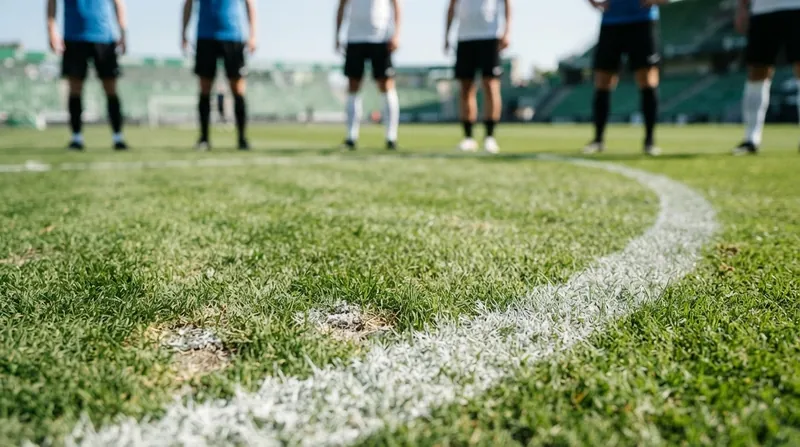
Enforcing Law 14's 9.15-Metre Buffer: Why Soccer's Penalty Arc Extends Four Yards Beyond the Box
4 sources
Nations League
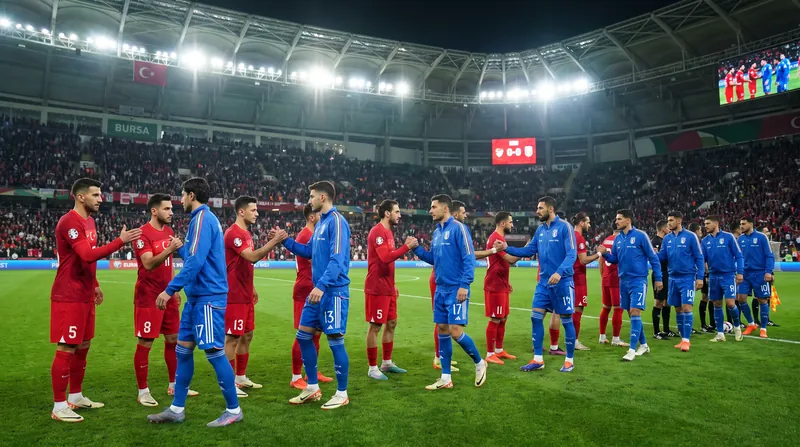
Can Turkey Finally Break Their Winless Curse Against Italy in Nations League Clash?
6 sources
Nations League
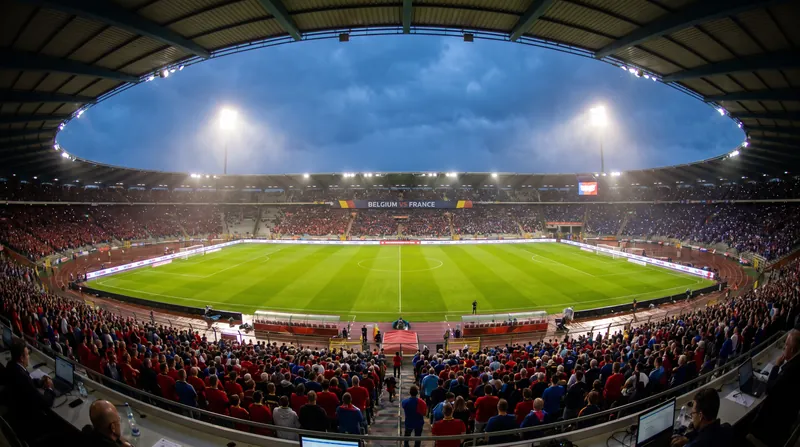
France and Belgium Face Early Nations League Test Without Mbappé and Courtois
5 sources
Comments
Every angle. Every day.
Get Sports stories with full source coverage and perspective breakdowns, free every day.