
Key U.S. Surveillance Tool Lapses as Congress Deadlocks Over Intelligence Leadership
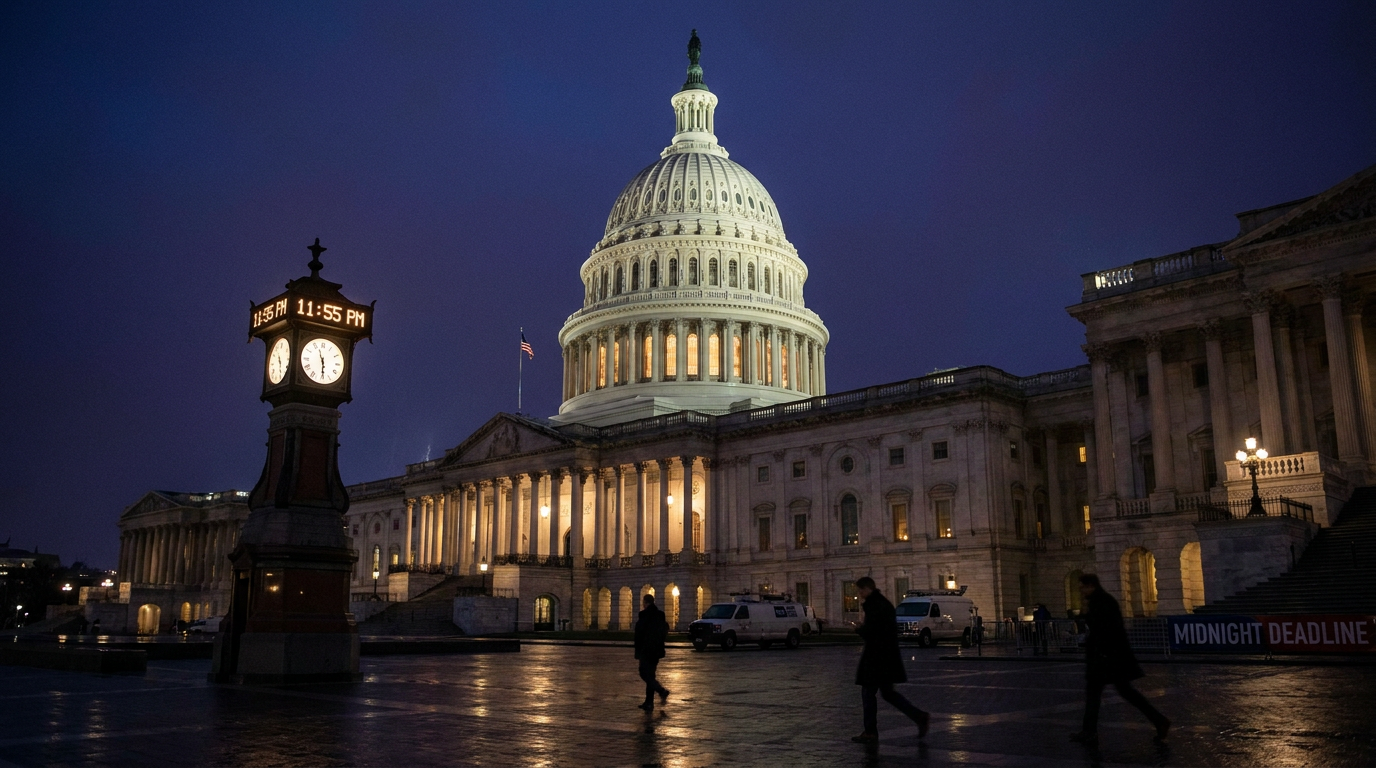
Section 702 of the Foreign Intelligence Surveillance Act expired at midnight after the House rejected a short-term extension amid a partisan fight over the leadership of the nation's spy agencies.
By Factlen Editorial Team
- National Security Hawks
- Argue that allowing the spy tool to lapse recklessly endangers American lives and intelligence gathering.
- Democratic Opposition
- Refuse to authorize sweeping surveillance powers under unqualified political leadership.
- Civil Liberties Advocates
- View the lapse as a necessary step to force constitutional reforms and protect American privacy.
What's not represented
- · Telecommunications Companies
- · Foreign Intelligence Allies
Why this matters
Section 702 is the legal foundation for America's most expansive digital surveillance network, feeding the majority of the President's daily intelligence briefings. Its expiration creates unprecedented legal friction between the government and the tech companies that route global communications, while offering privacy advocates their best chance in a decade to force new protections for Americans' data.
Key points
- The House rejected a short-term extension of FISA Section 702 in a 198-218 vote.
- The deadlock was triggered by the appointment of Bill Pulte as acting Director of National Intelligence.
- Democrats refused to grant sweeping spy powers to an unqualified political appointee.
- Existing surveillance operations will continue through March 2027 due to a recent court certification.
- The government can no longer issue new surveillance directives to tech companies.
- Privacy advocates hope the lapse will force Congress to implement a strict warrant requirement.
For the first time since its inception, a cornerstone of the United States' foreign intelligence apparatus is set to expire at midnight on Friday. The House of Representatives failed to pass a short-term extension of Section 702 of the Foreign Intelligence Surveillance Act (FISA), with a 198-218 vote cementing the lapse.[3][6]
The deadlock marks a historic interruption for a post-9/11 spy tool that both Republican and Democratic administrations have long described as critical to national security. Section 702 allows U.S. intelligence agencies, including the National Security Agency and the FBI, to collect the electronic communications of foreign targets located overseas without obtaining a warrant.[5][10]
Because these foreign targets frequently communicate with individuals inside the United States, the program routinely sweeps up the emails, texts, and phone calls of American citizens. This dynamic has made the law a perennial target for civil liberties advocates, who argue the government exploits the program as a backdoor to surveil Americans without constitutional oversight.[2][4][10]

While privacy concerns have always complicated FISA renewals, the immediate catalyst for Friday's lapse was a fierce partisan standoff over the leadership of the intelligence community. The crisis escalated when President Donald Trump appointed Bill Pulte—a federal housing finance regulator and political loyalist with no national security background—to serve as the acting Director of National Intelligence (DNI).[3][4][6]
Congressional Democrats, joined by a faction of Republicans, revolted against the appointment. Democratic leadership stated they could not in good conscience reauthorize sweeping, warrantless surveillance powers while an unqualified appointee oversaw the nation's spy agencies. They demanded that the administration withdraw Pulte's appointment and nominate a permanent, Senate-confirmed director before any FISA extension could proceed.[3][6]
In a last-minute attempt to salvage the surveillance authority, President Trump announced he would nominate Jay Clayton, the former chairman of the Securities and Exchange Commission, as his permanent DNI pick. However, the pivot came too late to break the legislative impasse before lawmakers departed Washington for a recess scheduled to last until June 23.[3][6]
However, the pivot came too late to break the legislative impasse before lawmakers departed Washington for a recess scheduled to last until June 23.
The impending lapse triggered stark warnings from Republican leadership and national security officials. House Speaker Mike Johnson called the failure to extend the program "shameful" and "very, very dangerous," accusing Democrats of holding national security hostage over a personnel dispute. Representative Steve Womack echoed the sentiment, stating it was "unconscionable" to let a critical intelligence tool lapse while the U.S. prepares to host major international events.[4][6][8]

Administration officials have specifically pointed to the upcoming 2026 FIFA World Cup—hosted across the U.S., Canada, and Mexico—and the nation's 250th anniversary celebrations as periods of heightened vulnerability. The intelligence community relies heavily on Section 702, with government estimates indicating that more than 60 percent of the President's daily intelligence briefing is derived from data collected under the authority.[1][2][5][7]
Despite the dire rhetoric from Capitol Hill, legal experts and privacy advocates emphasize that the intelligence community will not immediately "go dark" at midnight. The surveillance program operates under annual programmatic certifications approved by the secretive Foreign Intelligence Surveillance Court (FISC). Because the FISC renewed the program's procedures in March, existing surveillance directives are grandfathered and will remain legally operational through March 2027.[2][4][9]
"This surveillance does not go dark if the law expires, as some of the members who oppose reform are saying," noted Elizabeth Goitein of the Brennan Center for Justice, explaining that the grandfathered certifications lock in current operations regardless of the statutory sunset. The Cato Institute similarly characterized the administration's warnings of imminent intelligence blindness as a "deliberately crafted scaremongering narrative."[2][9]
However, the lapse does create immediate operational constraints for the intelligence community. Once Title VII of FISA sunsets, the government loses the statutory authority to issue new directives to U.S. electronic communication service providers. If a genuinely new foreign terror suspect emerges whose communications transit a U.S. provider, agencies will not be able to compel the company's cooperation under Section 702.[9]

Furthermore, the expiration removes the statutory liability immunity that protects telecommunications companies when they assist the government. Intelligence officials worry that without the active law shielding them from lawsuits, internet service providers and tech companies may refuse to comply with even the grandfathered surveillance requests, potentially triggering protracted court battles.[1]
For civil liberties groups, the legislative breakdown represents a rare opportunity to force structural changes to the surveillance apparatus. Organizations like the Electronic Privacy Information Center (EPIC) have spent years lobbying for a strict warrant requirement before federal agents can query the Section 702 database for Americans' communications. They view the current lapse as essential leverage to ensure that any future reauthorization includes robust Fourth Amendment guardrails.[10]
With Congress out of session and the statutory authority officially expired, the intelligence community enters uncharted legal territory. While the Five Eyes partnership, human intelligence, and traditional warranted surveillance remain untouched, the legal friction surrounding America's most prolific digital dragnet will persist until lawmakers return to the negotiating table.[6][9]
How we got here
2008
Congress passes the FISA Amendments Act, officially codifying Section 702 into law.
March 2026
The Foreign Intelligence Surveillance Court recertifies the Section 702 program for another year.
June 2026
President Trump appoints housing regulator Bill Pulte as acting Director of National Intelligence.
June 11, 2026
The House rejects a short-term extension of Section 702 in a 198-218 vote.
June 12, 2026
Section 702 statutory authority officially expires at midnight.
Viewpoints in depth
National Security Hawks
Argue that allowing the spy tool to lapse recklessly endangers American lives.
Officials in this camp, including Republican leadership and intelligence veterans, view Section 702 as the crown jewel of counterterrorism. They argue that even a temporary lapse creates unacceptable blind spots, particularly as the U.S. prepares to host high-profile targets like the World Cup. They warn that without the statutory liability shield, telecommunications companies may refuse to cooperate with intelligence requests, crippling the government's ability to track emerging threats in real-time.
Democratic Opposition
Refuse to authorize sweeping surveillance powers under unqualified leadership.
Democratic lawmakers argue that the intelligence apparatus is too powerful to be overseen by a political loyalist with no national security experience. They view the appointment of Bill Pulte as a dangerous politicization of the Office of the Director of National Intelligence. For this camp, blocking the FISA extension is a necessary emergency brake to force the administration to nominate a vetted, Senate-confirmed professional to safeguard the nation's most sensitive spy tools.
Civil Liberties Advocates
View the lapse as a necessary step to force constitutional reforms and protect American privacy.
Privacy groups spanning the political spectrum argue that Section 702 has been routinely abused to conduct warrantless "backdoor searches" on American citizens. They dismiss the administration's "going dark" warnings as scaremongering, pointing out that existing surveillance is legally protected through 2027. For these advocates, the statutory expiration provides the ultimate legislative leverage to force Congress to implement a strict warrant requirement before federal agents can access Americans' private data.
What we don't know
- Whether telecommunications companies will continue to comply with grandfathered surveillance requests without a statutory liability shield.
- How long Congress will allow the lapse to continue when they return to session on June 23.
- If the nomination of Jay Clayton as permanent DNI will be enough to break the legislative deadlock.
Key terms
- Section 702
- A provision of the Foreign Intelligence Surveillance Act that permits warrantless surveillance of foreign nationals located outside the United States.
- Director of National Intelligence (DNI)
- The cabinet-level official who serves as the head of the U.S. Intelligence Community and oversees agencies like the CIA and NSA.
- Foreign Intelligence Surveillance Court (FISC)
- A secretive federal court established to oversee requests for surveillance warrants against foreign spies inside the United States.
- Backdoor Search
- The controversial practice where federal agencies query the Section 702 database for the communications of American citizens without obtaining a warrant.
Frequently asked
What is FISA Section 702?
It is a surveillance law that allows U.S. intelligence agencies to collect the electronic communications of foreign targets overseas without a warrant.
Will the U.S. immediately stop collecting intelligence?
No. Because a secret federal court recertified the program in March, existing surveillance operations are legally grandfathered through March 2027.
Why did Congress let the law expire?
The renewal stalled after President Trump appointed a political loyalist with no intelligence background to lead the nation's spy agencies, prompting Democrats to block the extension.
How does this affect American citizens?
While the law targets foreigners, it routinely sweeps up the communications of Americans who interact with those targets, a loophole privacy advocates are fighting to close.
Sources
Source coverage
10 outlets
3 viewpoints surfaced










[1]The New York TimesDemocratic Opposition
A Key Spying Power Is Expiring. Will Foreign Surveillance Go Dark?
Read on The New York Times →[2]NPRCivil Liberties Advocates
A key U.S. spy tool is set to lapse on Friday — now what?
Read on NPR →[3]The Washington PostDemocratic Opposition
Lawmakers vote down Section 702 of the Foreign Intelligence Surveillance Act
Read on The Washington Post →[4]The GuardianCivil Liberties Advocates
Congress has failed to reauthorize section 702 of Foreign Intelligence Surveillance Act
Read on The Guardian →[5]AP NewsNational Security Hawks
FISA Section 702 is set to expire. Why it matters for US surveillance.
Read on AP News →[6]CBS NewsDemocratic Opposition
House rejects last-ditch FISA extension ahead of Friday deadline
Read on CBS News →[7]BreitbartNational Security Hawks
Trump Asks for Short-Term Extension of Key Spy Power Authority
Read on Breitbart →[8]Rep. Steve WomackNational Security Hawks
Womack Slams Democrats for Blocking FISA Extension
Read on Rep. Steve Womack →[9]Cato InstituteCivil Liberties Advocates
What actually happens if Section 702 lapses
Read on Cato Institute →[10]EPICCivil Liberties Advocates
FISA Section 702 Almost Certain to Expire After House Votes Against Extension
Read on EPIC →


Every angle. Every day.
Get news politics stories with full source coverage and perspective breakdowns delivered to your inbox.