
Justice Department Accuses Duke Law School of Using Essay Proxies for Race-Based Admissions
A federal civil rights investigation found that Duke University's law school unlawfully bypassed the Supreme Court's affirmative action ban by using essay tags and socioeconomic markers to favor Black and Hispanic applicants.
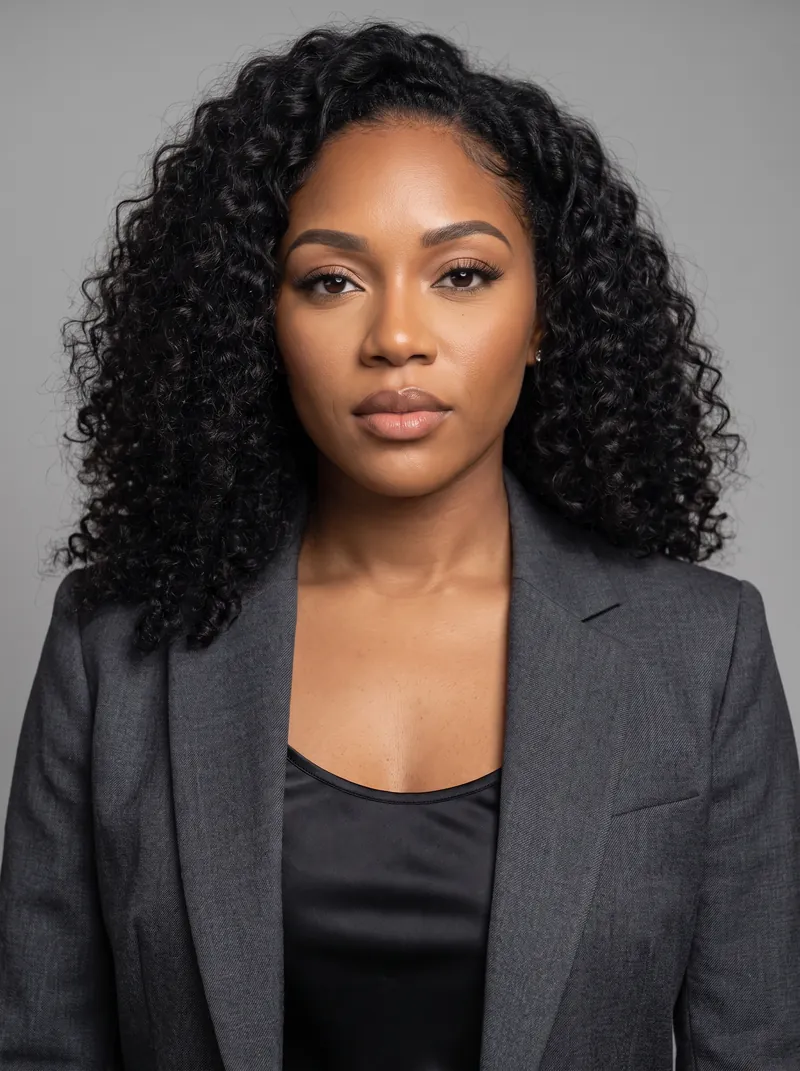
In a formal findings letter issued Thursday, the Department of Justice accused Duke University School of Law of intentionally discriminating against white and Asian applicants across three recent admissions cycles, alleging the institution utilized essay questions and socioeconomic tags as illegal proxies for race. The compliance review, conducted by the DOJ’s Civil Rights Division, concluded that the prestigious North Carolina law school violated Title VI of the Civil Rights Act of 1964.
The findings represent a significant escalation in the federal government's ongoing effort to police how elite universities select their incoming classes in the wake of the Supreme Court's landmark 2023 decision banning race-based affirmative action. By targeting the specific administrative mechanics of holistic review—such as how admissions officers code and weigh personal statements—the Justice Department is signaling that it will not tolerate workarounds designed to engineer specific demographic outcomes.[2]
The federal investigation focused heavily on the internal rubrics Duke Law implemented following the Supreme Court's ruling in Students for Fair Admissions v. Harvard. According to the Justice Department, the law school revised its official mission statement to explicitly emphasize a commitment to "diversity of perspective and experience." To measure this, the application incorporated new short-answer essay questions prompting candidates to explain how their backgrounds would further the school's stated values.
Crucially, the DOJ found that admissions reviewers were formally instructed to "tag" specific responses using a "Diversity/Services" label. Investigators concluded that this tagging system effectively functioned as a backdoor mechanism to identify and preference applicants from specific racial backgrounds, bypassing the Supreme Court's prohibition on using race as a direct factor in admissions decisions.[2][3]
Beyond the essay tags, the Justice Department alleged that Duke Law admissions staff were directed to highlight other applicant characteristics that are commonly correlated with race, most notably whether a candidate was a recipient of a federal Pell Grant.
While Duke Law’s published policies maintained that admissions reviewers were shielded from viewing explicit racial demographic data during the evaluation process, the DOJ argued that these socioeconomic proxies were deliberately weaponized to advance the school's racial diversity goals. The federal findings assert that this deliberate effort to preserve race-based outcomes fundamentally compromised the integrity of the admissions process, transforming ostensibly race-neutral criteria into a covert system of racial balancing that disadvantaged specific applicant pools.[1][2]
The statistical outcomes of these practices formed a core component of the Justice Department's allegations. Federal investigators reported a "significant disparity in objective academic metrics" between admitted Black and Hispanic applicants compared to their white and Asian counterparts. Specifically, the DOJ found that a Black or Hispanic applicant had a substantially higher likelihood of admission to Duke Law than a white or Asian applicant possessing identical academic credentials.
Furthermore, the findings letter highlighted that in both the 2024 and 2025 incoming classes, the median Law School Admissions Test (LSAT) scores of rejected white and Asian applicants actually exceeded the median scores of the Black applicants who were offered admission, a data point the DOJ cited as clear evidence of discriminatory intent.[2]
Assistant Attorney General Harmeet K. Dhillon, who leads the DOJ's Civil Rights Division, issued a forceful condemnation of the law school's practices, framing the enforcement action as a necessary defense of meritocracy and equal protection. "Duke Law School doesn't get a free pass to discriminate against white and Asian students simply because it thinks it has good intentions," Dhillon stated in a press release accompanying the findings.
She emphasized that utilizing diversity essay questions to identify and elevate preferred races constitutes illegal discrimination, regardless of the institutional phrasing used to justify it. Dhillon reiterated the department's aggressive posture, declaring a commitment to eliminating such practices "everywhere we find it, including in our nation's law schools."[1][2]
In response to the federal allegations, Duke University issued a brief, measured statement confirming that it had received the findings letter and was in the process of reviewing the government's conclusions. A university spokesperson refrained from addressing the specific statistical claims or the characterization of the essay tagging system, instead emphasizing the institution's broader operational principles.
"We are reviewing the letter and its conclusions carefully," the spokesperson said. "Duke is committed to complying with the law and will continue to do so in a manner that is consistent with our academic mission." The response highlights the difficult position elite universities find themselves in as they attempt to balance legal compliance with long-standing institutional commitments to fostering diverse student bodies.
The action against Duke Law is not an isolated incident but rather a central component of a broader, systematic crackdown by the Trump administration on higher education institutions suspected of circumventing the 2023 Supreme Court mandate. The Justice Department has aggressively expanded its scrutiny of graduate and professional programs, recently issuing similar findings of illegal discrimination against the medical schools at Yale University and the University of California, Los Angeles.
Furthermore, the DOJ announced in June that it had launched active investigations into 15 other medical programs across the country, including East Carolina University's Brody School of Medicine, indicating a sweeping federal effort to audit admissions practices across the highest echelons of American academia.[3]
Looking ahead, the Justice Department has indicated it is currently seeking a "voluntary resolution agreement" with Duke Law to bring its admissions practices into compliance with Title VI of the Civil Rights Act. Such an agreement would likely require the university to overhaul its essay evaluation rubrics, abandon the use of socioeconomic proxies for racial balancing, and submit to ongoing federal monitoring.
However, federal officials have made it explicitly clear that they are prepared to file a formal lawsuit against the university if a settlement cannot be reached. The outcome of this standoff will likely serve as a bellwether for other universities, establishing new legal boundaries for how institutions can structure their applications and evaluate candidate backgrounds in a post-affirmative action landscape.[2][3]
Key points
- The DOJ found Duke Law School illegally discriminated against white and Asian applicants in its 2023, 2024, and 2025 admissions cycles.
- Investigators allege the school used essay tags and socioeconomic markers, like Pell Grant status, as proxies to maintain racial diversity.
- The DOJ reported that median LSAT scores of rejected white and Asian applicants exceeded those of admitted Black applicants in recent years.
- Duke University stated it is reviewing the findings and remains committed to complying with the law.
How we got here
June 2023
The Supreme Court bans race-based affirmative action in college admissions in Students for Fair Admissions v. Harvard.
June 2026
The DOJ announces investigations into 15 medical schools over alleged race-based admissions practices.
August 6, 2026
The DOJ issues a formal findings letter accusing Duke Law School of violating Title VI of the Civil Rights Act.
- Federal Enforcers
- Argue that universities are using essays and socioeconomic tags as illegal proxies to bypass the Supreme Court's ban on affirmative action, penalizing highly qualified white and Asian applicants.
- University Administrators
- Maintain that holistic admissions practices, including evaluating a candidate's background and commitment to public service, are legally sound and essential to their academic missions.
- Legal Analysts
- View the DOJ's actions as a strict enforcement of the 2023 Supreme Court ruling, noting the high legal stakes for universities attempting to navigate the new boundaries of holistic review.
Perspectives this story doesn't cover
- Current Duke Law students
- Civil rights organizations defending holistic admissions
Sources
Source coverage
3 outlets
3 viewpoints surfaced



- [1]Washington PostUniversity Administrators
Justice Department says Duke Law School illegally considered race in admissions
Read on Washington Post → - [2]Department of JusticeFederal Enforcers
Justice Department Finds Duke Law School Discriminates Based on Race in Admissions
Read on Department of Justice → - [3]iHeartLegal Analysts
DOJ Finds Duke Law School Discriminated Against White, Asian Applicants
Read on iHeart →

More in News & Politics
See all →Civil Forfeiture
The Mechanics of Civil Asset Forfeiture: Jurisdiction, Burden of Proof, and the Equitable Sharing Loophole
4 sources

Presidential Immunity
Federal Judge Again Rejects Trump's Bid to Dismiss Hush Money Conviction on Immunity Grounds
5 sources
National Security
U.S. Alien Terrorist Removal Court Hears First Case, Weighing Classified Evidence for Deportation
3 sources
Drone Supply Chain
Trump Imposes 100% Tariff on Foreign Drones and Components, Citing National Security Threat
8 sources

Comments
Every angle. Every day.
Get News & Politics stories with full source coverage and perspective breakdowns, free every day.