
OpenAI Launches 'Dots' Always-On Autonomous Agents for ChatGPT Users
OpenAI has introduced Dots, a new class of autonomous AI agents that operate continuously on dedicated cloud computers to execute background tasks. The release introduces a collaborative environment called ChatGPT Space, positioning the company against rival autonomous systems like Meta's Muse.

On September 29, 2026, OpenAI deployed a new autonomous agent framework called Dots to its ChatGPT user base. The system provisions dedicated cloud computers for each agent, allowing them to execute complex, multi-step tasks continuously in the background.[1][3]
The launch marks a structural shift in how users interact with generative models, moving away from synchronous chat windows. Instead of waiting for a text response, users assign objectives to a Dot, which then navigates digital environments independently over 24-hour periods.[5]
TechCrunch described the new interface as a "bubbly agentic avatar," designed to make autonomous delegation feel approachable to the general public. The visual representation helps users track which specific agent is currently executing a given workflow.[3]
To facilitate this asynchronous work, OpenAI introduced a feature named ChatGPT Space. VentureBeat reports that this new environment acts as a shared digital headquarters where multiple Dots can collaborate directly with human teams on ongoing projects.[6]
Infrastructure and capability
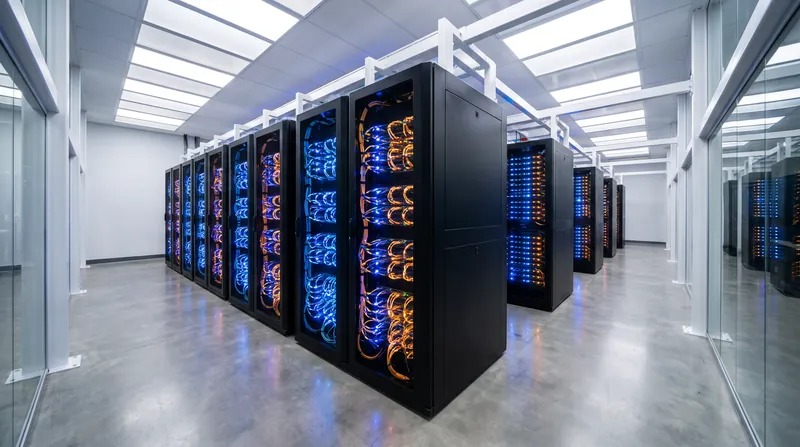
The underlying architecture requires significant compute resources, as each Dot operates on its own provisioned cloud instance. This allows the agents to maintain persistent memory and state across 7-day or 14-day stretches of continuous operation without timing out.[1]
By running on dedicated infrastructure, the agents bypass the standard context limits that previously restricted large language models. A user can instruct a Dot to monitor a live data feed, compile research, and format a report while the user's local device is powered off.[5]
The system is designed to handle software development, data analysis, and administrative scheduling without requiring constant human prompting. 9to5Google notes that these "always-on agents" are specifically built for users to assign open-ended tasks rather than discrete queries.[5]
Managing this persistent compute load represents a major operational expansion for OpenAI. The company has not yet disclosed the exact energy footprint or the specific hardware allocation required to maintain over 10 million concurrent cloud computers for individual users.[1]
The competitive landscape
The release directly targets Meta's recently launched Muse platform, escalating the race to dominate the autonomous agent market. Axios reports that Dots is explicitly positioned as OpenAI's primary assistant to take on Muse in the enterprise and consumer sectors.[8]
Both companies are betting that the future of artificial intelligence lies in agentic workflows rather than passive text generation. MacRumors highlights that the always-on nature of Dots is a direct response to the persistent capabilities Meta introduced earlier in 2026.[4]
While Meta has integrated Muse deeply into its existing social and hardware ecosystems, OpenAI is leveraging its massive ChatGPT user base to drive adoption. The introduction of ChatGPT Space suggests a strategy focused heavily on workplace collaboration and enterprise productivity.[6]
The competition is driving rapid iteration in how these systems handle permissions and access control. Allowing autonomous agents to interact with external websites and APIs requires robust authentication frameworks that both companies are currently testing in live environments.[2]
Safety and deployment context
The deployment of Dots arrives during a period of intense scrutiny regarding autonomous AI safety. The Guardian reports that this announcement comes shortly after OpenAI scrapped the launch of a new AI model specifically "over safety concerns."[9]
That cancelled model, previously identified as the flagship GPT-6.1 Astra, reportedly failed internal safety standards during its final testing phases. Releasing an agentic system immediately following that cancellation indicates OpenAI believes the Dots framework operates within acceptable risk parameters.[9]
To address these concerns, the company published extensive documentation alongside the launch. The OpenAI Help Center released a dedicated set of privacy, security, and safety FAQs detailing exactly how the agents are sandboxed within their cloud environments.[2]
These safeguards are designed to prevent the agents from executing unauthorized transactions or accessing restricted data. The system requires explicit user permission before a Dot can authenticate into third-party services or modify external databases.[2]
What happens next
As users begin deploying Dots into their daily workflows, the immediate test will be the system's reliability in handling edge cases. Autonomous agents historically struggle when websites update their layouts or APIs return unexpected error codes.[1]
The success of ChatGPT Space will depend on how seamlessly human workers can intervene when a Dot encounters a roadblock. If the handoff between agent and human is frictionless, the platform could significantly alter standard office productivity metrics over the next 12 months.[6]
Regulators are also watching the deployment closely, given recent federal investigations into agent safety risks. CBS News notes that CEO Sam Altman unveiled the agent amid ongoing debates about how to manage the liability of actions taken by autonomous systems.[7]
The defining metric for this launch will not be the millions of agents created, but the duration they successfully operate without human correction. The industry is about to see whether dedicated cloud computers can finally bridge the gap between conversational AI and true digital autonomy.[1]
Key points
- OpenAI launched Dots, a new class of autonomous agents that run continuously on dedicated cloud computers.
- The system includes ChatGPT Space, a collaborative digital environment where agents and human teams work together.
- The release positions OpenAI directly against Meta's Muse in the growing market for persistent AI assistants.
- The launch follows the recent cancellation of the GPT-6.1 Astra model due to internal safety standard failures.
What we don’t know
- The exact energy footprint and hardware costs required to maintain millions of dedicated cloud computers for individual users.
- How effectively the agents can navigate unexpected changes to third-party websites and APIs without human intervention.
- Whether the safety sandboxing will hold up against adversarial attacks designed to hijack the agents' persistent internet access.
- Enterprise Adopters
- Argue that always-on agents will eliminate administrative overhead and allow human workers to focus on creative tasks.
- AI Safety Advocates
- Emphasize the risks of deploying persistent agents following recent model safety failures and call for strict sandboxing.
- Industry Competitors
- Analyze the strategic battle between OpenAI and Meta for dominance in the emerging autonomous agent ecosystem.
Perspectives this story doesn't cover
- Independent Cybersecurity Auditors
- Data Privacy Regulators
Sources
Source coverage
9 outlets
3 viewpoints surfaced









- [1]OpenAI
Introducing dots
Read on OpenAI → - [2]OpenAI Help Center
Dots privacy, security, and safety FAQs
Read on OpenAI Help Center → - [3]TechCrunchEnterprise Adopters
OpenAI launches Dots, its bubbly agentic avatar
Read on TechCrunch → - [4]MacRumorsIndustry Competitors
OpenAI Launches Always-On 'Dots' Agents to Rival Meta's Muse
Read on MacRumors → - [5]9to5GoogleIndustry Competitors
OpenAI launches Dots, new 'always-on agents' you can assign tasks to
Read on 9to5Google → - [6]VentureBeatEnterprise Adopters
OpenAI launches Dots, always-on AI agent coworkers, and ChatGPT Space where they can collaborate with human teams
Read on VentureBeat → - [7]CBS NewsAI Safety Advocates
Sam Altman unveils "dots," OpenAI's new AI personal agent
Read on CBS News → - [8]AxiosIndustry Competitors
OpenAI debuts Dots, its assistant to take on Muse
Read on Axios → - [9]The GuardianAI Safety Advocates
OpenAI announces 'dots' agent after scrapping launch of new AI model over safety concerns
Read on The Guardian →
More in Artificial Intelligence
See all →Frontier Models
Anthropic Weighs Rushing New Model to Counter OpenAI's Astra, Forcing Conflict With CEO's AI Slowdown Call
4 sources

Neural Networks
How Batch Normalization Accelerates Deep Network Convergence
7 sources

Generative Architecture
How the Reparameterization Trick Allows Backpropagation Through the Latent Space of a Variational Autoencoder
7 sources
Voice Agents
Google Launches Gemini 3.8 Live Models for Real-Time Voice Agents
7 sources

Comments
Every angle. Every day.
Get Artificial Intelligence stories with full source coverage and perspective breakdowns, free every day.