
Japan's Defence Minister Rejects China's 'New Militarism' Claims at Shangri-La Dialogue
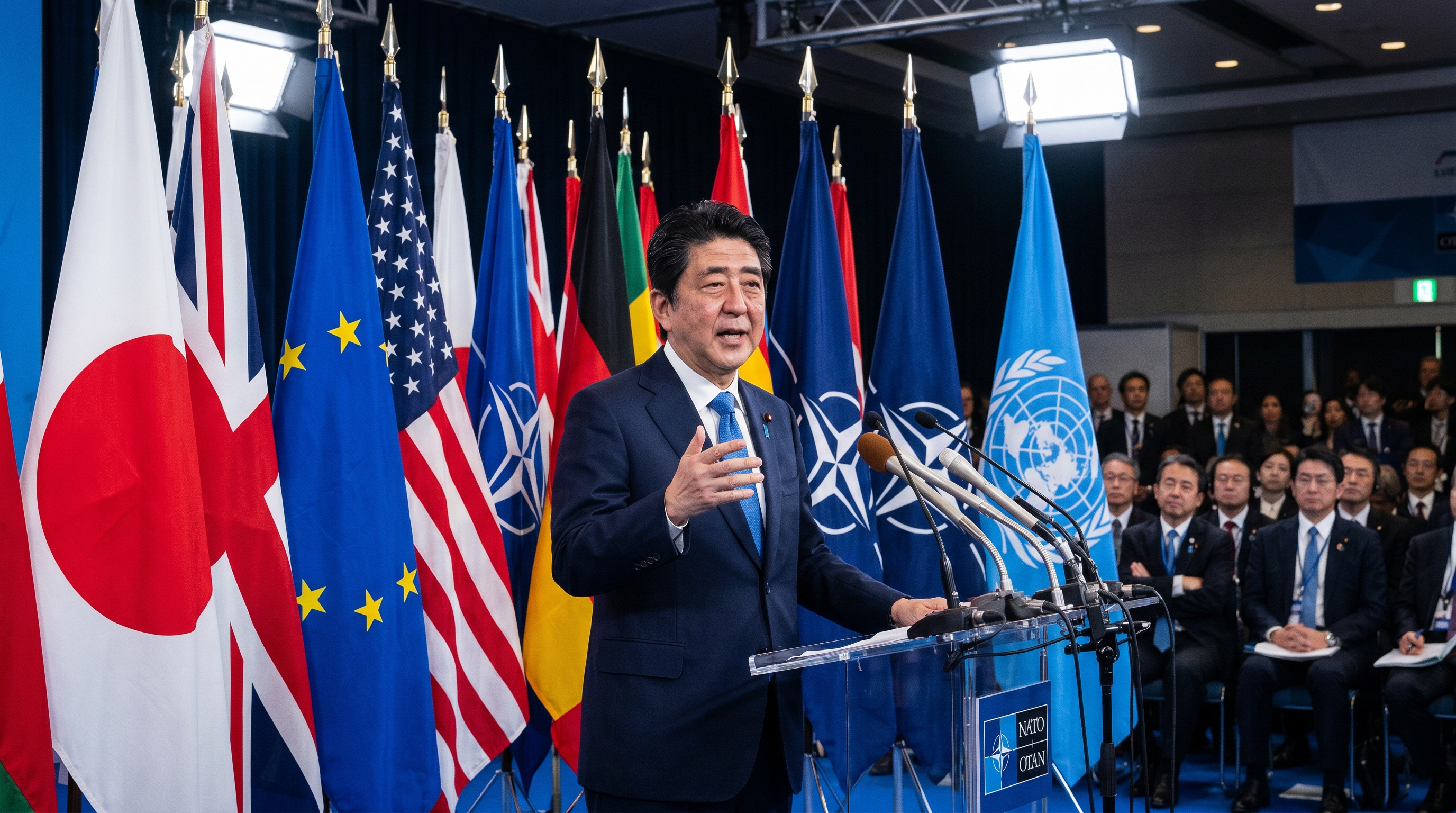
Japanese Defence Minister Shinjiro Koizumi dismissed accusations of 'new militarism' from China during a speech at the Shangri-La Dialogue in Singapore, criticizing Beijing's rapid and opaque military expansion.
By Factlen Editorial Team
- Deterrence Advocates
- Argue that a stronger, more capable Japanese military is essential for maintaining peace in the Indo-Pacific.
- Historical Skeptics
- View any expansion of Japan's military capabilities as a dangerous echo of its imperial past.
- Non-Aligned Observers
- Prioritize diplomatic de-escalation and fear that an arms race will destabilize regional trade.
What's not represented
- · Japanese domestic pacifist groups who oppose the defense budget increases.
- · Ordinary citizens in Okinawa, where a significant portion of US and Japanese military forces are concentrated.
- · Environmental groups concerned about the impact of military expansion in the East China Sea.
Why this matters
Japan's evolving defense posture and its diplomatic friction with China directly impact the security and economic stability of the Indo-Pacific region. Understanding this dynamic is crucial for anticipating future geopolitical shifts, the resilience of international trade routes, and the balance of power in Asia.
Key points
- Japanese Defence Minister Shinjiro Koizumi rejected Chinese claims of 'new militarism' at the Shangri-La Dialogue.
- Koizumi contrasted Japan's transparent defense policy with China's opaque military expansion.
- Japan plans to increase its defense spending to 2% of GDP by 2027 to bolster deterrence.
- The defense minister emphasized the importance of dialogue and crisis management to prevent conflict.
- Southeast Asian nations are closely monitoring the tensions, hoping to avoid regional destabilization.
- The US-Japan alliance was reaffirmed as the cornerstone of Tokyo's security strategy.
Japanese Defence Minister Shinjiro Koizumi used the prominent stage of the Shangri-La Dialogue in Singapore to firmly reject accusations that Tokyo is returning to a posture of militarism [1]. Addressing defense chiefs and diplomats from across the globe, Koizumi countered narratives pushed by Beijing, framing Japan's recent defense policy updates as a necessary, transparent evolution in response to a deteriorating regional security environment [2]. The annual summit, organized by the International Institute for Strategic Studies, frequently serves as a barometer for geopolitical tensions in the Indo-Pacific, and this year's exchange highlighted the deepening strategic friction between Asia's two largest economies [3].[1][2][3]
The core of the dispute centers on China's repeated assertions that Japan's historic defense buildup represents a dangerous resurgence of the imperial aggression seen in the early 20th century [4]. Chinese delegates at the summit have consistently characterized Tokyo's decision to double its defense spending and acquire counterstrike capabilities as a destabilizing departure from its post-World War II pacifist constitution [5]. Koizumi directly addressed these claims, dismissing the 'new militarism' label as a fundamental mischaracterization of a purely defensive and deterrence-oriented strategy [6].[4][5][6]
In his address, Koizumi drew a sharp contrast between Japan's legislative transparency and the opacity of China's own military expansion [1]. He pointed out that Japan's defense budget, while growing, is debated openly in the National Diet, with strict civilian control and adherence to international law [2]. Conversely, he criticized Beijing for its rapid accumulation of nuclear and conventional forces without the transparency expected of a major global power, arguing that this opacity is the true source of anxiety for neighboring nations [3].[1][2][3]
Japan's strategic shift, codified in its 2022 National Security Strategy, aims to bring defense spending to 2 percent of its gross domestic product by 2027, aligning it with NATO standards [4]. This includes the procurement of long-range cruise missiles designed to strike enemy launch sites if an attack on Japan is imminent [5]. While Beijing views this as an offensive pivot, Koizumi reiterated that these capabilities are strictly for deterrence, designed to make any potential adversary calculate that the costs of attacking Japan would far outweigh the benefits [6].[4][5][6]

Despite the firm rhetoric, Koizumi's speech also emphasized a constructive path forward, focusing on the necessity of dialogue and crisis management [1]. He stressed that Japan has no intention of seeking conflict or containment, but rather seeks to uphold the free and open international order that has facilitated decades of economic prosperity in Asia [2]. By publicly airing these positions, Japan aims to reassure regional partners that its military modernization is a stabilizing anchor rather than a disruptive force [3].[1][2][3]
Despite the firm rhetoric, Koizumi's speech also emphasized a constructive path forward, focusing on the necessity of dialogue and crisis management [1].
The Shangri-La Dialogue provides a unique forum where such starkly different security narratives can be addressed face-to-face [4]. For defense ministers, the value of the summit lies not just in the public plenary sessions, but in the bilateral meetings held on the sidelines [5]. Koizumi emphasized that maintaining open lines of communication with Chinese military leadership is essential to prevent tactical miscalculations in contested areas like the East China Sea from escalating into broader conflicts [6].[4][5][6]
The backdrop to this diplomatic sparring is the increasing frequency of encounters between Japanese and Chinese forces around the Senkaku Islands, which Japan administers but China claims as Diaoyu [1]. Koizumi noted that Beijing's unilateral attempts to change the status quo by force or coercion in these waters necessitate a more robust Japanese coast guard and maritime self-defense force [2]. However, he maintained that Japan's response remains measured and strictly within the bounds of international maritime law [3].[1][2][3]

Southeast Asian nations, heavily represented at the Singapore summit, watch the Sino-Japanese dynamic with a mixture of reliance and apprehension [4]. Many ASEAN members share Japan's concerns regarding China's expansive territorial claims in the South China Sea, yet they are deeply economically intertwined with Beijing [5]. Koizumi tailored his message to this audience, framing Japan's defense posture as a contribution to collective regional security that empowers smaller nations to protect their own sovereignty without being forced to choose sides [6].[4][5][6]
The United States' role as Japan's primary treaty ally was also a central theme of the defense minister's presentation [1]. Koizumi reaffirmed that the US-Japan alliance remains the cornerstone of peace in the Indo-Pacific, and that Tokyo's increased defense spending is designed to make Japan a more capable and equal partner within that framework [2]. This integration of forces and strategy is intended to present a unified front that deters aggression while keeping the door open for diplomatic engagement with Beijing [3].[1][2][3]
Ultimately, Koizumi's rejection of the 'new militarism' label at the Shangri-La Dialogue reflects a broader Japanese effort to control its own strategic narrative on the world stage [4]. By emphasizing transparency, adherence to the rule of law, and a commitment to dialogue, Japan is attempting to modernize its military capabilities without triggering a regional arms race [5]. The success of this delicate balancing act will depend heavily on continued diplomatic engagement and the establishment of reliable guardrails with China in the years to come [6].[4][5][6]
How we got here
December 2022
Japan releases its updated National Security Strategy, committing to doubling defense spending to 2% of GDP by 2027.
May 2023
Japanese and Chinese defense officials launch a military hotline to prevent accidental clashes in the East China Sea.
June 2026
Japanese Defence Minister Shinjiro Koizumi addresses the Shangri-La Dialogue, publicly rejecting Chinese claims of a return to militarism.
Viewpoints in depth
Japanese Defense Establishment
Views the military modernization as a necessary, transparent deterrent against regional instability.
From Tokyo's perspective, the rapid military modernization of neighboring countries, coupled with frequent incursions into Japanese-administered waters, necessitates a stronger defensive posture. The defense establishment argues that acquiring counterstrike capabilities and increasing budgets are not aggressive moves, but rather essential steps to maintain the status quo and ensure that the costs of any potential attack on Japan remain prohibitively high.
Chinese Foreign Ministry
Interprets Japan's defense buildup as a dangerous departure from pacifism and a threat to regional peace.
Beijing views Japan's shifting security policies through the lens of historical grievances and current geopolitical competition. Chinese officials frequently argue that Tokyo's alignment with US strategic interests and its acquisition of long-range weapons indicate a return to militaristic ambitions, framing these developments as a coordinated effort to contain China's rise and destabilize the Asia-Pacific region.
Southeast Asian Nations (ASEAN)
Seeks to balance economic ties with China against security cooperation with Japan and the US.
For many ASEAN countries, the escalating rhetoric between Tokyo and Beijing is a source of anxiety. While several member states quietly welcome a more robust Japanese security presence to counterbalance China's territorial claims in the South China Sea, they are deeply wary of being forced into a binary geopolitical choice that could jeopardize their vital economic relationships with Beijing.
What we don't know
- Whether China will agree to establish more robust military-to-military hotlines with Japan to prevent accidental clashes.
- How Japanese domestic politics and economic conditions might affect the timeline for achieving the 2% defense spending target.
- To what extent ASEAN nations will publicly support Japan's evolving security role in the face of Chinese pressure.
Key terms
- Shangri-La Dialogue
- An annual inter-governmental security forum held in Singapore, organized by the International Institute for Strategic Studies, attended by defense ministers and military chiefs.
- Counterstrike Capability
- The military capacity to hit enemy bases or launch sites directly in order to prevent an imminent attack, which Japan recently added to its defense strategy.
- Article 9
- A clause in the national Constitution of Japan outlawing war as a means to settle international disputes involving the state.
Frequently asked
What is the Shangri-La Dialogue?
It is an annual defense summit held in Singapore where military chiefs, diplomats, and security experts from the Asia-Pacific and beyond discuss regional security challenges.
Why is China accusing Japan of 'new militarism'?
Beijing points to Japan's decision to double its defense budget and acquire long-range counterstrike capabilities as a departure from its post-WWII pacifist constitution.
How does Japan justify its military buildup?
Tokyo argues the buildup is purely defensive, transparent, and necessary to deter aggression in an increasingly unstable security environment, particularly given the opaque military expansions of neighboring countries.
Sources
Source coverage
6 outlets
3 viewpoints surfaced






[1]The Japan Times
Japan rejects Chinese 'new militarism' label, spotlighting Beijing's own buildup
Read on The Japan Times →[2]South China Morning Post
Japanese defence minister rejects 'new militarism' label from China in Shangri-La speech
Read on South China Morning Post →[3]Channel News Asia
Japan refutes 'new militarism', accuses China of rapidly arming
Read on Channel News Asia →[4]The Guardian
Shinjiro Koizumi says Japan valued as a 'peace-loving' nation while China expands military capabilities 'without sufficient transparency'
Read on The Guardian →[5]CGTN
Japan's military expansion could heighten regional tensions, observers say
Read on CGTN →[6]Mothership
'Isn't it strange?': Japan defence minister addresses 'new militarism' accusations, compares with China at 2026 Shangri-La Dialogue
Read on Mothership →


Every angle. Every day.
Get news politics stories with full source coverage and perspective breakdowns delivered to your inbox.