
Israeli Forces Capture Beaufort Castle in Deepest Lebanon Incursion in 26 Years
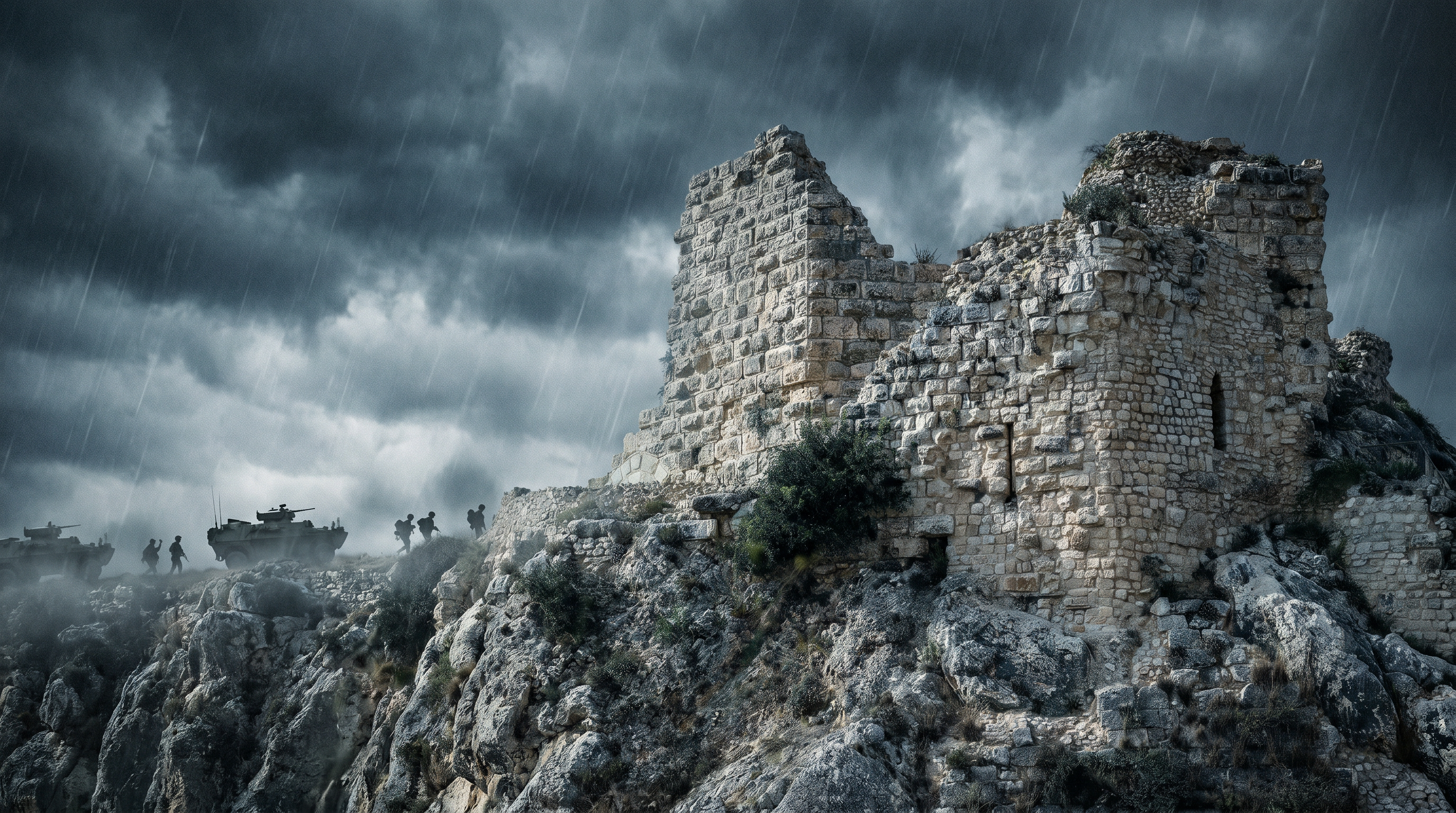
Israeli troops have captured the strategic Beaufort Castle in southern Lebanon, crossing the Litani River in a major escalation that has prompted France to request an emergency UN Security Council meeting.
By Factlen Editorial Team
- Tactical Security Imperative
- Israel must hold strategic high ground to protect its northern citizens from relentless Hezbollah attacks.
- Sovereignty & Survival
- Lebanon faces an existential threat from an illegal invasion and scorched-earth displacement tactics.
- Diplomatic Containment
- The international community must force a ceasefire to prevent the collapse of broader U.S.-Iran peace talks.
What's not represented
- · The specific tactical viewpoint of Hezbollah's ground commanders facing the IDF's combined-arms advance.
- · The economic perspective of Lebanese business owners and agricultural workers whose livelihoods in the south have been destroyed.
- · The operational perspective of the UNIFIL peacekeeping forces stationed in southern Lebanon whose mandate has been overrun by the invasion.
Why this matters
The capture of Beaufort Castle marks Israel's deepest ground incursion into Lebanon in 26 years, effectively shattering a fragile April ceasefire and signaling a long-term military reoccupation of the south. For global readers, this escalation threatens to derail broader U.S.-Iran peace negotiations and significantly raises the risk of a wider regional war that could disrupt international energy markets.
Key points
- Israeli forces captured the 12th-century Beaufort Castle, marking their deepest push into Lebanon in 26 years.
- The advance shatters a fragile April ceasefire and signals Israel's intent to establish a long-term security buffer.
- The offensive has displaced over 1.2 million Lebanese civilians and resulted in more than 3,400 deaths.
- France has called an emergency UN Security Council meeting to address the escalating crisis.
- The incursion threatens to derail ongoing U.S.-brokered peace negotiations with Iran.
In a dramatic escalation of the Middle East conflict, Israeli infantry forces have seized control of Beaufort Castle, a 12th-century Crusader fortress situated on a strategic mountaintop in southern Lebanon. The nighttime operation, which culminated in Israeli troops hoisting the Star of David over the ancient stone walls, marks the deepest and most symbolically significant military incursion into Lebanese territory by the Israel Defense Forces (IDF) in 26 years [1]. The capture of the site, located roughly 15 kilometers north of the de facto border, effectively nullifies the fragile U.S.-brokered ceasefire announced in mid-April and signals a profound shift in Israel's military objectives [2]. Rather than conducting limited border raids, the IDF's push beyond the Litani River indicates a clear intent to establish a prolonged, fortified presence deep inside southern Lebanon [3].[1][2][3]
The strategic value of Beaufort Castle has been recognized by conquerors for nearly a millennium, and its modern military utility remains unparalleled in the sector. Perched on a high ridge above the Litani River and the Wadi Al Saluki valley, the fortress provides a commanding, unobstructed view over vast swaths of southern Lebanon and straight into the communities of northern Israel [4]. According to Israeli military intelligence, Hezbollah had heavily fortified the surrounding ridge, utilizing the elevated terrain to direct combat activities, launch drones, and coordinate anti-tank fire against Israeli civilians and soldiers [5]. By seizing this high ground, the IDF has effectively blinded a key node in Hezbollah's tactical network while securing a critical vantage point to support further ground maneuvers toward the Nabatieh axis [3].[3][4][5]
Israeli leadership has been unequivocal about the permanence of this new territorial acquisition. Defense Minister Israel Katz declared that Israeli soldiers had "captured the Beaufort once again" and explicitly stated that forces would remain stationed at the fortress as an anchor for a revived "security zone" in southern Lebanon [1]. Prime Minister Benjamin Netanyahu echoed this permanence, describing the reconquest as a "dramatic change" in national security policy. Netanyahu announced that he had instructed the military to deepen and expand its hold over areas previously controlled by Hezbollah, signaling that the IDF intends to use the newly captured territory not merely as a static buffer, but as a forward launchpad for continuous, rolling ground operations against the militant group's heartland [4].[1][4]

The historical resonance of Beaufort Castle makes its recapture a deeply evocative event for both Israelis and Lebanese. The fortress is inextricably linked to the First Lebanon War; Israeli forces first captured the site in June 1982 after a bloody, close-quarters battle against Palestinian militants [5]. For the next 18 years, the castle served as a heavily fortified IDF outpost and a potent symbol of Israel's grueling occupation of southern Lebanon, which cost hundreds of Israeli lives in relentless guerrilla warfare [6]. When Israel finally withdrew its forces in May 2000, Hezbollah claimed the departure as a historic military victory, building its modern "resistance" mythos around the ejection of the IDF from Beaufort and the surrounding security zone [2].[2][5][6]
By returning to the castle 26 years later, Israel is actively attempting to dismantle that foundational Hezbollah narrative. Military analysts note that the operation was designed to inflict a severe psychological blow on the militant group, demonstrating that Hezbollah's vast arsenal and entrenched tunnel networks could not prevent the IDF from retaking the crown jewel of the south [7]. However, the symbolic victory comes at a steep operational cost. Hezbollah continues to launch daily rocket and drone barrages into northern Israel, and the militant group's fighters have engaged in fierce combat with advancing Israeli infantry. The IDF has acknowledged that dozens of soldiers have been killed in southern Lebanon since the broader ground offensive began, highlighting the lethal reality of reoccupying hostile territory [3].[3][7]
By returning to the castle 26 years later, Israel is actively attempting to dismantle that foundational Hezbollah narrative.
The humanitarian toll of the expanding Israeli offensive has been catastrophic for the Lebanese civilian population. Israeli airstrikes and systematic ground demolitions have leveled entire villages across the south, rendering vast stretches of the border region entirely uninhabitable [1]. According to the Lebanese Ministry of Public Health, more than 3,400 people have been killed since the broader conflict escalated, with women, children, and first responders accounting for a significant percentage of the casualties [2]. The relentless bombardment and advancing ground troops have triggered a massive displacement crisis, forcing an estimated 1.2 million Lebanese citizens to flee their homes for overcrowded shelters in Beirut and the northern provinces [5].[1][2][5]
Lebanese political leaders have reacted with outrage to the capture of Beaufort and the deepening invasion. In a televised address to the nation, Lebanon's Prime Minister Nawaf Salam vehemently condemned the incursion, accusing Israel of implementing a "scorched earth policy" and enacting collective punishment against the Lebanese people [1]. Salam warned that the expropriation of sovereign territory would not bring security to Israel, but would instead radicalize a new generation and deepen the divide between the two nations. He demanded an immediate, unconditional ceasefire and a full Israeli withdrawal, though Lebanese officials privately acknowledge they have little leverage to force the IDF's hand without robust international intervention [6].[1][6]

The international community has responded with mounting alarm to the collapse of the April ceasefire and the prospect of a prolonged Israeli occupation. France, which maintains deep historical and diplomatic ties to Lebanon, immediately requested an emergency meeting of the United Nations Security Council [1]. French diplomats condemned the deepening Israeli operations as a blatant violation of international law and argued that there is no justification for an expanding, permanent military presence inside Lebanese territory [5]. European allies have grown increasingly frustrated with Jerusalem's defiance of diplomatic off-ramps, warning that the unchecked escalation in Lebanon threatens to ignite a wider, uncontrollable regional conflagration [7].[1][5][7]
The capture of Beaufort Castle has severely complicated the geopolitical calculus for the United States, particularly regarding ongoing, delicate peace talks with Iran. The U.S. administration has been attempting to broker a comprehensive regional de-escalation, but Iran has firmly stated that any bilateral agreement must include a cessation of hostilities in Lebanon [3]. Former President Donald Trump, weighing in on the crisis, claimed he had recently spoken with Prime Minister Netanyahu to dissuade him from sending ground troops all the way to Beirut, while simultaneously acknowledging that Israel's aggressive maneuvers were complicating Washington's diplomatic efforts with Tehran [4]. The U.S. now finds itself caught between supporting its closest Middle Eastern ally and preventing the total collapse of its regional diplomatic strategy [7].[3][4][7]
The domestic political environment in Israel has played a crucial role in driving this renewed offensive. Prime Minister Netanyahu’s coalition government has faced immense pressure from displaced residents of northern Israel, who have spent years living in temporary accommodations due to the constant threat of Hezbollah rocket fire [4]. Hardline members of the Israeli cabinet have consistently argued that a diplomatic agreement would merely allow Hezbollah to rearm, insisting that only a physical occupation of the high ground could guarantee the safe return of Israeli citizens to their homes [1]. The imagery of the Israeli flag flying over Beaufort serves as a potent political symbol for Netanyahu, projecting strength and decisive action to a weary domestic electorate [5].[1][4][5]
Militarily, the operation to retake the fortress required a complex, combined-arms approach that highlights the evolution of the IDF's tactical doctrine since the 2006 Lebanon War. Advancing infantry units were heavily supported by coordinated drone swarms, precision artillery fire, and advanced electronic warfare systems designed to jam Hezbollah's communication networks and neutralize their anti-tank guided missile squads [3]. Despite these technological advantages, the rugged, mountainous terrain of the Wadi Al Saluki sector still forced Israeli troops into grueling, close-quarters combat to clear entrenched bunker systems hidden within the rocky ridges [6]. This reliance on heavy firepower has contributed significantly to the widespread destruction of nearby civilian infrastructure, drawing fierce international condemnation [7].[3][6][7]

Looking ahead, the central question is whether Israel can sustain a prolonged occupation of the Litani-Nabatieh axis without repeating the traumatic history of the 1980s and 90s. While the IDF possesses overwhelming conventional military superiority, holding static positions like Beaufort Castle makes troops vulnerable to asymmetric guerrilla tactics, improvised explosive devices, and targeted ambushes [6]. Critics within Israel warn that the government is being lured into a familiar quagmire, driven more by domestic political pressures and the desire for symbolic victories than by a coherent, long-term exit strategy [5]. As the Israeli flag flies over the Crusader ruins once more, the region braces for a protracted, grinding war of attrition that promises to reshape the security architecture of the Middle East [2].[2][5][6]
How we got here
June 1982
Israeli forces capture Beaufort Castle during the First Lebanon War, beginning an 18-year occupation of the south.
May 2000
Israel withdraws its troops from southern Lebanon, a move Hezbollah claims as a historic military victory.
April 17, 2026
A fragile U.S.-brokered ceasefire between Israel and Hezbollah is officially announced.
May 31, 2026
Israeli forces launch a renewed offensive, capturing Beaufort Castle and pushing past the Litani River.
June 1, 2026
France requests an emergency UN Security Council meeting in response to the deepening Israeli incursion.
Viewpoints in depth
Israeli Defense Establishment
Views the capture as a necessary tactical maneuver to secure northern Israel and permanently dismantle Hezbollah's military infrastructure.
Israeli military leaders argue that relying on airstrikes and fragile diplomatic agreements failed to stop Hezbollah's daily rocket fire into northern Israel. By seizing commanding terrain like Beaufort Castle and establishing a physical buffer zone north of the Litani River, the IDF believes it can permanently degrade Hezbollah's ability to launch direct attacks on Israeli border communities. They view the occupation of this high ground not as an expansionist land grab, but as a non-negotiable security imperative required to allow displaced Israeli citizens to safely return to their homes.
Lebanese Government & Civilians
Sees the incursion as an illegal occupation and a catastrophic humanitarian crisis driven by collective punishment.
For Lebanon, the return of Israeli troops to Beaufort is a traumatic repetition of the 18-year occupation that ended in 2000. Lebanese officials, including Prime Minister Nawaf Salam, argue that Israel's "scorched earth" tactics—leveling entire villages and displacing 1.2 million people—are designed to make the south permanently uninhabitable. They maintain that true security can only be achieved through diplomatic adherence to UN resolutions and respect for sovereign borders, viewing the current offensive as an illegal annexation that will only breed further radicalization.
International Diplomats
Fears the escalation will permanently derail regional peace efforts and spark a wider Middle Eastern war.
Nations like France and the United States view the collapse of the April ceasefire with deep concern. Diplomats argue that Israel's deepening ground offensive directly undermines delicate U.S.-Iran negotiations, as Tehran insists on a Lebanese ceasefire as a prerequisite for broader regional agreements. There is growing frustration in European capitals that Israel is ignoring international law and prioritizing short-term tactical military gains over long-term strategic stability, risking a conflict that could draw in external militaries and disrupt global markets.
What we don't know
- How long Israel intends to occupy the newly captured territory and what specific security conditions would prompt a withdrawal.
- Whether Hezbollah retains the capability and manpower to mount a sustained guerrilla insurgency against entrenched Israeli positions.
- How Iran will tangibly respond to the collapse of the Lebanese ceasefire amid its ongoing negotiations with the United States.
Key terms
- Beaufort Castle
- A strategic 12th-century Crusader fortress in southern Lebanon that overlooks the Litani River and northern Israel.
- Litani River
- A major waterway in southern Lebanon often used as a geographical benchmark for security buffers and United Nations resolutions.
- Security Zone
- A militarized buffer area established by an occupying force to prevent cross-border attacks into its own territory.
- Scorched Earth Policy
- A military strategy involving the deliberate destruction of infrastructure, homes, and agriculture to deny their use to the enemy.
Frequently asked
Why is Beaufort Castle so important?
The castle sits on a high ridge that provides a commanding, unobstructed view of both southern Lebanon and northern Israel, making it a highly valuable military vantage point for directing combat and monitoring enemy movements.
How long did Israel previously occupy the castle?
Israel held Beaufort Castle for 18 years, from its initial capture during the 1982 invasion until the IDF's withdrawal from southern Lebanon in May 2000.
What does this mean for the recent ceasefire?
The capture of the castle effectively nullifies the U.S.-brokered ceasefire announced on April 17, 2026, as Israel expands its ground operations deeper into Lebanese territory.
How is the international community reacting?
The reaction has been highly critical, with France calling an emergency UN Security Council meeting and the U.S. expressing concern that the invasion complicates broader regional peace talks with Iran.
Sources
Source coverage
7 outlets
3 viewpoints surfaced







[1]The Guardian
'A shock to all Lebanese': Israel sends a message as it takes ancient fort
Read on The Guardian →[2]The Times of Israel
France requests UN Security Council emergency meeting on Lebanon after IDF captures Beaufort Castle
Read on The Times of Israel →[3]Euractiv
Security Council to meet on Lebanon after Israel takes Beaufort castle
Read on Euractiv →[4]Quartz
Israeli forces capture Beaufort Castle in southern Lebanon
Read on Quartz →[5]Arab News
Netanyahu: Israel's Beaufort castle capture marks 'dramatic shift' in Lebanon offensive
Read on Arab News →[6]Foundation for Defense of Democracies
Lebanon Should Negotiate Under Fire
Read on Foundation for Defense of Democracies →[7]VINnews
Israeli Forces Capture Beaufort Castle in Southern Lebanon, Netanyahu Announces Expansion of Operations
Read on VINnews →


Every angle. Every day.
Get news politics stories with full source coverage and perspective breakdowns delivered to your inbox.