
Idrissov and Belak Headline Gymnastics World Challenge Cup Standings at Midseason
Following the Koper stop of the 2026 FIG World Challenge Cup, apparatus specialists are solidifying their rankings ahead of the autumn finals.
By Factlen Editorial Team
- Apparatus Specialists
- Athletes focused on mastering single events to secure individual titles and prize money.
- National Federations
- Governing bodies using the series to evaluate routines ahead of major championships.
- Gymnastics Analysts
- Observers tracking scoring trends and execution consistency across the international circuit.
What's not represented
- · All-around gymnasts who skip the Challenge Cup series to rest for the World Championships.
Why this matters
The World Challenge Cup standings dictate momentum heading into the 2026 World Championships in Rotterdam, highlighting which apparatus specialists are peaking at the right time to challenge for global titles.
Key points
- The 2026 FIG World Challenge Cup series has completed its spring leg with the Koper, Slovenia event.
- Kazakhstan's Zeinolla Idrissov won silver on the pommel horse, continuing his consistent podium streak.
- Slovenia's Teja Belak won gold on the vault in front of a home crowd.
- Croatia's Mateo Žugec edged out Idrissov for the pommel horse gold with a score of 14.166.
- The series will resume in September with stops in Hungary and France to determine the overall champions.
The 2026 FIG Artistic Gymnastics World Challenge Cup series has officially reached its halfway point, with the race for the overall apparatus titles intensifying following the conclusion of the Koper stop in Slovenia. Unlike the all-around focused World Championships, the Challenge Cup circuit is designed specifically for apparatus specialists, allowing them to accumulate ranking points on their strongest events across multiple international meets.[3][6]
The series is serving as a crucial battleground and testing environment ahead of the 2026 World Championships in Rotterdam this October. With the spring leg of the tour—comprising stops in Varna, Tashkent, and Koper—now complete, clear frontrunners are beginning to separate themselves from the pack in the overall standings.[3]
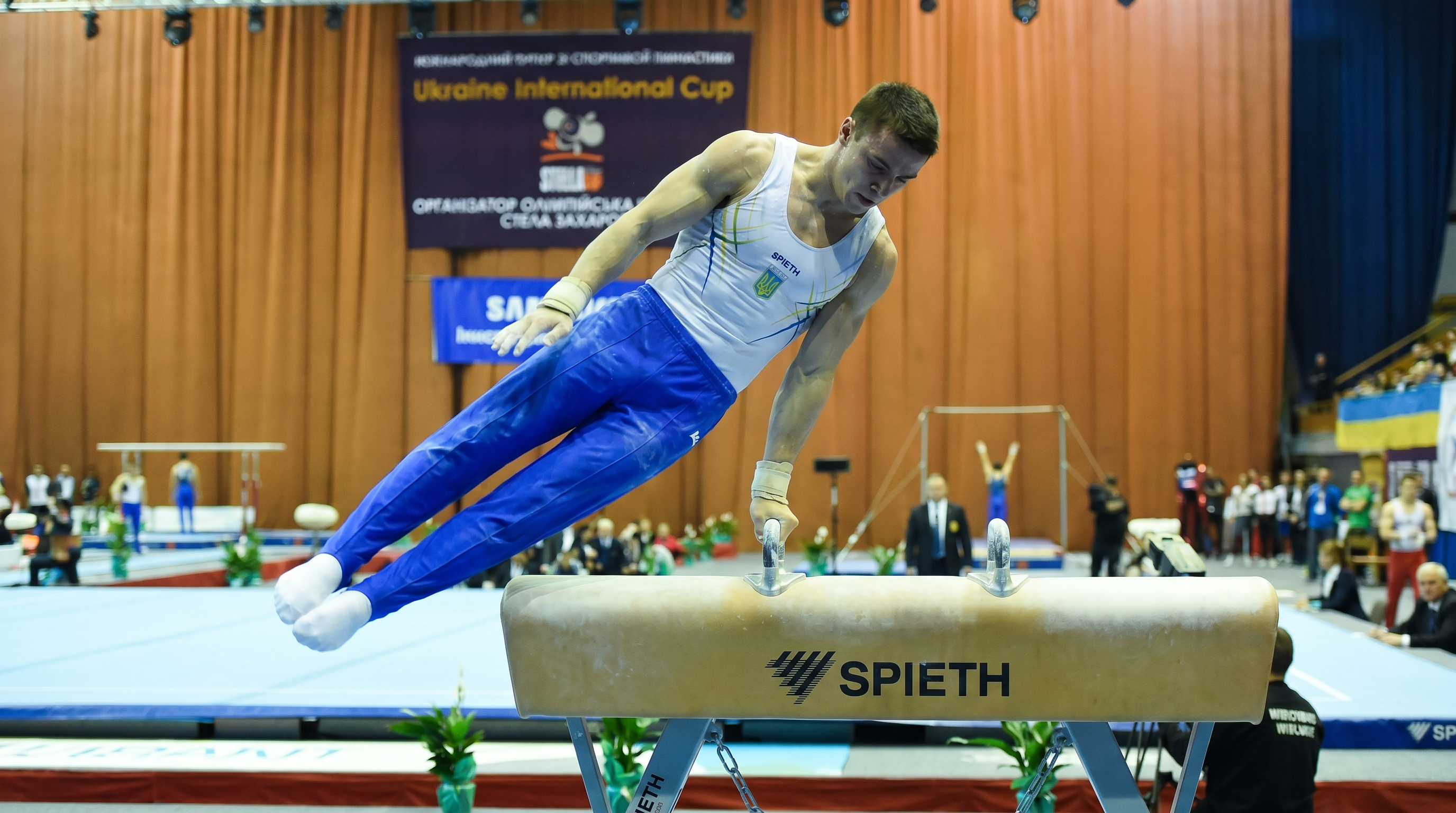
In the men's pommel horse standings, Kazakhstan's Zeinolla Idrissov is putting together a remarkably consistent season. The 20-year-old secured a silver medal in Koper with a score of 14.133, marking his second consecutive World Challenge Cup silver after a similarly strong showing in Varna earlier in May.[1][2]
Idrissov's performance in Koper was narrowly bested by Croatia's Mateo Žugec, who took the gold medal with a 14.166. Both athletes are cementing their status as premier pommel horse workers on the international circuit, trading places on the podium and racking up vital series points.[1][2]

On the women's side, Slovenian veteran Teja Belak delighted the home crowd in Koper by capturing gold on the vault. Belak posted an average score of 13.533 across her two vaults, reinforcing her position at the top of the vault standings after previously winning the overall series title in 2025.[3][4]
On the women's side, Slovenian veteran Teja Belak delighted the home crowd in Koper by capturing gold on the vault.
The uneven bars competition in Koper also saw spectacular difficulty and execution, with the Netherlands' Sanna Veerman posting a massive 14.333 in the qualification round to lead the field. High scores in the Challenge Cup events are closely monitored by international judges as a barometer for the upcoming World Championships.[1]
Croatia's young standout, 16-year-old Antea Šikić Kaučić, continues to be a major factor in the floor exercise standings. After winning the overall floor title in her debut senior season in 2025, she has consistently reached finals throughout the spring leg of the 2026 tour, proving that her breakout year was no anomaly.[5]

The World Challenge Cup format is uniquely demanding, requiring athletes to maintain peak execution across multiple international stops over several months, rather than peaking for a single weekend. This consistency is rewarded with overall series titles and prize money at the conclusion of the tour.[3][6]
With the spring leg now complete, the gymnasts will take a brief summer hiatus from the Challenge Cup circuit. Many of the European athletes will shift their immediate focus to the 2026 European Championships, which will be hosted in Zagreb, Croatia, this August.[5]

How we got here
May 7–10, 2026
The World Challenge Cup series kicks off its spring leg in Varna, Bulgaria.
May 21–24, 2026
The series moves to Tashkent, Uzbekistan, for the second stop of the tour.
May 28–31, 2026
The Koper, Slovenia event concludes the spring leg of the Challenge Cup.
August 2026
European athletes will compete at the European Championships in Zagreb, Croatia.
September 2026
The final two Challenge Cup stops take place in Szombathely and Paris.
Viewpoints in depth
Apparatus Specialists
Athletes who focus entirely on one or two events rather than the all-around competition.
For gymnasts who excel on a single apparatus, the World Challenge Cup is the premier international stage. Unlike the Olympics or World Championships, which heavily favor all-arounders and team compositions, the Challenge Cup allows specialists to build a season entirely around their best events, earning prize money and international ranking points that validate their mastery.
National Federations
The governing bodies using the series to test athletes ahead of major championships.
Federations view the spring Challenge Cup stops as a vital proving ground. By sending both established veterans and rising seniors to events like Varna and Koper, national team coordinators can evaluate how specific routines score in front of international judging panels. This data is critical for selecting the final rosters for the European and World Championships later in the year.
Gymnastics Analysts
Observers tracking routine construction and scoring trends across the circuit.
Analysts closely monitor the D-scores (difficulty) and E-scores (execution) awarded at Challenge Cup events to predict World Championship outcomes. A gymnast consistently scoring above 14.100 on the pommel horse or 13.500 on the vault in May is statistically highly likely to reach the event finals in Rotterdam in October, provided they maintain their routine's construction.
What we don't know
- Whether the current apparatus leaders will upgrade their routine difficulty (D-scores) ahead of the World Championships.
- How athletes returning from injury will disrupt the standings in the final two September events.
Key terms
- World Challenge Cup
- An international gymnastics series where athletes compete exclusively for medals and ranking points on individual apparatuses, rather than in team or all-around events.
- Apparatus Specialist
- A gymnast who focuses their training and competition entirely on one or two specific events (like the vault or pommel horse) rather than competing on all of them.
- D-Score
- The difficulty score of a gymnastics routine, calculated by adding the values of the hardest skills performed.
- E-Score
- The execution score of a gymnastics routine, starting at 10.0 and reduced by deductions for errors in form, technique, or landing.
Frequently asked
What is the FIG World Challenge Cup?
It is a series of international gymnastics competitions organized by the International Gymnastics Federation (FIG) that focuses exclusively on individual apparatus events.
How do gymnasts win the overall title?
Gymnasts accumulate ranking points based on their placements at each stop of the series. The athlete with the most points on a specific apparatus at the end of the year wins the overall title.
When are the next gymnastics World Championships?
The 2026 FIG Artistic Gymnastics World Championships will be held in Rotterdam, Netherlands, in October 2026.
Sources
Source coverage
6 outlets
3 viewpoints surfaced



[1]The GymternetGymnastics Analysts
2026 Koper Challenge Cup Results
Read on The Gymternet →[2]QazinformApparatus Specialists
Kazakh Zeinolla Idrisov pockets silver at World Challenge Cup Series in Slovenia
Read on Qazinform →[3]Eurovision SportGymnastics Analysts
Artistic Gymnastics World Challenge Cup Series 2026: Koper, Slovenia
Read on Eurovision Sport →[4]GIGA Pro GymGymnastics Analysts
KOPER WORLD CHALLENGE CUP 2026: WOMEN'S EVENT FINAL RESULTS
Read on GIGA Pro Gym →[5]ZG SportApparatus Specialists
Antea Šikić-Kaučič ukupna pobjednica Svjetskog Challenge kupa
Read on ZG Sport →[6]International Gymnastics FederationNational Federations
FIG World Challenge Cup 2026 KOPER (SLO)
Read on International Gymnastics Federation →

More in sports
See all 12 stories →NBA Finals
New York Knicks Win 2026 NBA Finals, Ending 53-Year Championship Drought
0 sources

NBA Finals
New York Knicks Capture First NBA Championship Since 1973
0 sources

Hockey Strategy
How the PWHL's 'Jailbreak' and 'No Escape' Rules Are Rewriting Hockey Strategy
0 sources

NBA Finals
New York Knicks Win First NBA Championship Since 1973, Defeating San Antonio Spurs
0 sources

Every angle. Every day.
Get sports stories with full source coverage and perspective breakdowns delivered to your inbox.