
Hub vs. Mid-Drive E-Bike Motors: The Complete Trade-Off Analysis
Choosing the right e-bike motor fundamentally alters a bicycle's performance, maintenance, and ride feel. This side-by-side analysis breaks down the mechanical advantages and ideal use cases for both hub and mid-drive systems.
By Factlen Editorial Team
- Urban Commuters
- Prioritizing simplicity, affordability, and low-sweat travel.
- Performance Cyclists
- Valuing natural ride dynamics, balance, and hill-climbing leverage.
- Bicycle Mechanics
- Focusing on long-term serviceability and wear-and-tear.
What's not represented
- · Traditional acoustic bicycle purists who oppose motor assistance entirely
- · City planners designing infrastructure for heavier, faster e-bikes
Why this matters
The motor is the most expensive and consequential component of an electric bicycle. Selecting the wrong system for your local terrain can lead to a frustrating ride, rapid battery drain, or costly trips to the repair shop.
Key points
- Hub motors operate independently of the bicycle's gears, offering a simpler, budget-friendly ride ideal for flat urban commuting.
- Mid-drive motors power the chain, leveraging the bike's mechanical gears to provide superior torque for steep hills and off-road trails.
- Mid-drive systems deliver a more natural, balanced ride feel but accelerate wear and tear on the chain and gear cassette.
- Hub motors preserve drivetrain life but make routine maintenance, such as fixing a rear flat tire, significantly more difficult.
The electric bicycle has fundamentally transformed urban commuting and outdoor recreation, but new buyers are immediately confronted with a critical, often confusing decision: choosing the right motor. The choice between a hub motor and a mid-drive motor is not merely a matter of brand preference; it dictates the bicycle's geometry, its maintenance requirements, and how it actually feels to ride. Making the wrong choice can lead to a frustrating experience on steep hills or unnecessary expenses at the repair shop. By understanding the mechanical trade-offs, riders can match the technology to their specific topography and budget.[1]
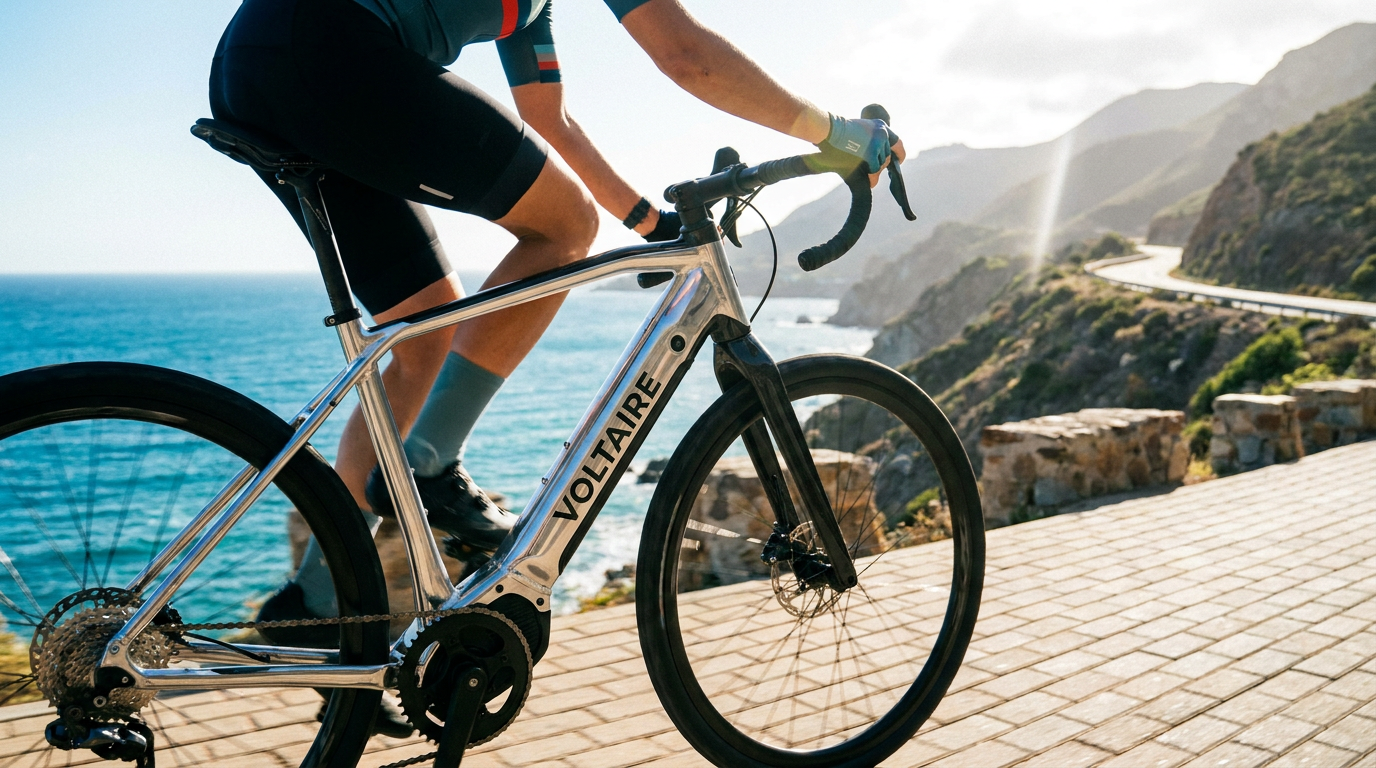
The core mechanical difference lies in placement and power delivery. Hub motors are built directly into the center of the bicycle's front or rear wheel. When activated, they spin the wheel independently of the pedals, effectively pushing or pulling the bike forward. In contrast, mid-drive motors are positioned low and dead-center at the bottom bracket, right between the rider's feet. Instead of powering the wheel directly, a mid-drive motor transfers its energy through the bicycle's existing chain and cassette, working in tandem with the mechanical gears.[2][7]
The case for the hub motor centers entirely on simplicity, durability, and cost-effectiveness. Because the motor operates completely outside of the bicycle's standard drivetrain, it places zero additional stress on the chain, derailleurs, or gear cassette. If a rider shifts gears clumsily, the hub motor does not care; it simply continues to spin the wheel. Furthermore, this independent operation provides a unique safety net: if the bicycle's chain breaks during a commute, a rider with a throttle-equipped hub motor can still power their way home without pedaling.[3][4]
The argument against the hub motor involves its lack of mechanical leverage and its impact on the bike's balance. Because hub motors cannot utilize the bicycle's gears, they must rely entirely on raw electrical wattage to overcome steep inclines. On a long, punishing hill, a hub motor can bog down, drain the battery rapidly, or even overheat. Additionally, placing a heavy motor inside the rear wheel shifts the bicycle's center of gravity backward, which can make the front end feel light and compromise handling on loose gravel or technical dirt trails.[4][5]

The evidence for hub motors shows they dominate the entry-level and commuter markets, typically found on e-bikes priced between $1,200 and $2,500. Performance data indicates they generally provide a reliable range of 25 to 30 miles on a standard battery. They excel on gradients below ten percent, where raw power is sufficient to maintain cruising speed. Because they require less complex frame engineering, manufacturers can offer hub-driven bikes at highly accessible price points, democratizing electric mobility for casual riders.[4]
A hub motor fits well when the rider is commuting on mostly flat urban terrain, prioritizing a budget-friendly purchase, and looking for a low-maintenance machine for running errands. It is the ideal choice for riders who want the option to use a throttle and cruise without breaking a sweat. Conversely, a hub motor does not fit well when the daily route involves steep, sustained hills, when the rider plans to tackle technical mountain bike trails, or when maximizing battery range on long-distance touring is the primary goal.[4][5]
It is the ideal choice for riders who want the option to use a throttle and cruise without breaking a sweat.
The case for the mid-drive motor is built on mechanical synergy and efficiency. By driving the chain rather than the wheel, a mid-drive system allows the motor to leverage the bicycle's gears exactly like a human rider does. When approaching a steep hill, the rider shifts into a lower gear, allowing the motor to spin at its optimal, high-efficiency RPM while the wheel turns slowly. This mechanical advantage allows mid-drives to produce vastly superior torque for climbing, making steep gradients feel effortlessly flat.[3][7]
The argument against the mid-drive motor focuses on accelerated wear and tear, alongside a significantly steeper entry price. Pushing up to 100 Newton-meters of electrical torque directly through a standard bicycle chain puts immense stress on the drivetrain. Riders must learn to ease off the pedals slightly while shifting to avoid snapping the chain or grinding the cassette teeth. Consequently, mid-drive owners will find themselves replacing chains and gear cassettes much more frequently than those riding hub-motor bikes.[3][6]

The evidence for mid-drive motors highlights their dominance in the premium and performance sectors. These systems are standard on e-bikes starting above $2,000, with high-end models scaling well past $4,000. Because of their gearing efficiency, mid-drives draw less current during acceleration and climbing, allowing them to stretch a standard battery to 40 or 45 miles. Specialized mid-drive touring models can even reach up to 60 real-world miles per charge, proving their superiority in energy management over long distances.[4][5]
A mid-drive motor fits well when the rider faces steep topographical challenges, carries heavy cargo, or ventures off-road where precise weight distribution and high torque are mandatory. It is the gold standard for electric mountain bikes and premium commuters. However, a mid-drive does not fit well when the rider wants a maintenance-free, twist-and-go experience, is strictly bound to a lower budget, or lacks the desire to actively manage mechanical gear shifts during their ride.[5][7]
Beyond the motors themselves, the sensor technology used to activate them creates a massive divergence in ride feel. Mid-drive systems almost universally employ advanced torque sensors. These sensors measure exactly how hard the rider is pushing on the pedals and deliver a proportional amount of electrical assistance. If you push lightly, the motor whispers; if you stand up and mash the pedals, the motor surges with power. This creates a natural, bionic sensation, making the rider feel like an Olympic athlete.[3][6]
Conversely, many budget-friendly hub motors rely on simpler cadence sensors. A cadence sensor merely detects whether the pedals are turning, acting like an on/off switch for the motor. This can result in a sudden, jerky acceleration that feels more like riding a small moped than a bicycle. While cycling purists often dislike this disconnected feel, many casual riders actually prefer it, as it allows for ghost pedaling—turning the cranks with zero physical effort while the motor does all the heavy lifting.[6]

Maintenance realities present a final, stark contrast between the two systems. While mid-drives wear out chains faster, fixing a flat rear tire on a mid-drive bike is identical to servicing a standard bicycle. The wheel drops out easily with a quick-release lever. Removing a rear wheel with a hub motor, however, involves disconnecting heavy-duty electrical cables, unbolting torque arms, and wrestling with a heavy, cumbersome wheel assembly—a daunting task on the side of a rainy road.[5][6]
Ultimately, the e-bike market has bifurcated to serve distinct needs, and the technology has matured to the point where both systems are highly reliable. The decision is no longer about finding a single objective winner, but rather matching the motor's mechanical profile to the specific topography, riding style, and budget of the user. Whether opting for the straightforward, budget-friendly push of a hub motor or the balanced, gear-driven synergy of a mid-drive, riders today have access to incredibly capable machines.[1][2]
How we got here
Early 2000s
Heavy, inefficient direct-drive hub motors dominate the early electric bicycle market.
2014
Bosch introduces its first dedicated mid-drive e-bike motor, shifting the performance landscape.
2018
Geared hub motors become smaller, lighter, and standard on direct-to-consumer budget e-bikes.
2022
Mid-drive systems integrate advanced torque sensors, creating the modern bionic ride feel.
2026
Both technologies reach maturity, with clear market segmentation between budget commuters and premium performance bikes.
Viewpoints in depth
Urban Commuters' View
Prioritizing simplicity, affordability, and low-sweat travel.
For daily city riders, the bicycle is a utilitarian tool for replacing car trips. This camp strongly favors hub motors because they are significantly cheaper upfront and require almost zero daily maintenance. The ability to use a throttle to accelerate from a dead stop at a traffic light without pedaling is seen as a massive advantage for arriving at the office sweat-free. They view the added weight in the rear wheel as a non-issue on paved streets.
Performance Cyclists' View
Valuing natural ride dynamics, balance, and hill-climbing leverage.
Mountain bikers and long-distance touring cyclists view the e-bike as an extension of their own physical effort. This group universally advocates for mid-drive motors. By keeping the heavy motor low and centered, the bike handles exactly like a traditional bicycle over jumps and loose corners. More importantly, the ability to use the bike's mechanical gears allows them to conquer 15-percent gradients that would cause a hub motor to stall and overheat, making the premium price tag entirely justified.
Bicycle Mechanics' View
Focusing on long-term serviceability and wear-and-tear.
Those who repair e-bikes see a distinct set of trade-offs. Mechanics note that mid-drive motors are notorious for eating chains and cassettes, as the immense electrical torque accelerates metal wear, requiring frequent drivetrain replacements. However, they also point out that fixing a flat rear tire on a mid-drive bike is a standard, two-minute job. Conversely, while hub motors save the drivetrain from wear, removing a motorized rear wheel to fix a simple puncture involves wrestling with heavy electrical cables and torque arms, which often frustrates home mechanics.
What we don't know
- Whether solid-state batteries will eventually make the weight penalty of hub motors negligible.
- How long-term maintenance costs truly compare over a 10-year lifespan, given the rapid evolution of both motor types.
- If automatic electronic shifting will eventually eliminate the drivetrain wear issues associated with mid-drive motors.
Key terms
- Hub Motor
- An electric motor built directly into the center (hub) of a bicycle's front or rear wheel.
- Mid-Drive Motor
- An electric motor positioned at the bicycle's bottom bracket, between the pedals, that powers the bike through its standard chain and gears.
- Torque Sensor
- A sensor that measures how hard the rider is pedaling and delivers a proportional amount of electrical assistance, creating a natural ride feel.
- Cadence Sensor
- A basic sensor that detects whether the pedals are turning, delivering a fixed amount of power regardless of how hard the rider is pushing.
- Drivetrain
- The mechanical system of a bicycle that transmits power to the driving wheel, including the pedals, cranks, chainrings, chain, and cassette.
Frequently asked
Can a hub motor climb steep hills?
Yes, but they rely entirely on raw electrical power rather than mechanical gears, which can drain the battery quickly and cause the motor to overheat on long, steep inclines.
Do mid-drive motors break bicycle chains?
They do put significantly more stress on the drivetrain. Riders need to shift gears properly and expect to replace their chain and cassette more frequently than on a hub-motor bike.
Which motor is easier to maintain?
Hub motors have fewer moving parts and don't wear out the bike's gears, but they make fixing a flat rear tire much more difficult due to the heavy motorized wheel and electrical cables.
Can I ride an e-bike if the battery dies?
Yes, but a mid-drive bike will feel much more like a normal (albeit heavy) bicycle because the weight is centered, whereas a hub motor adds significant drag and rear weight.
Sources
Source coverage
8 outlets
3 viewpoints surfaced







[1]Factlen Editorial TeamBicycle Mechanics
Synthesis by Factlen editorial team
Read on Factlen Editorial Team →[2]UpwayBicycle Mechanics
Hub or mid-drive? E-Bike debate
Read on Upway →[3]HimiwayUrban Commuters
Which Motor Should You Choose?
Read on Himiway →[4]EveloPerformance Cyclists
Mid-Drive vs Hub Motor eBikes
Read on Evelo →[5]Gazelle BikesPerformance Cyclists
Hub Drive vs Mid Drive Motor Overview
Read on Gazelle Bikes →[6]Reddit CommunityBicycle Mechanics
Hub motors vs mid-drive real world differences
Read on Reddit Community →[7]MokwheelPerformance Cyclists
Understanding Mid-Drive E-Bike Motors
Read on Mokwheel →[8]Randride BikesUrban Commuters
Principles of Mid-Drive Motor and Hub Motor in E-bikes
Read on Randride Bikes →

Every angle. Every day.
Get shopping stories with full source coverage and perspective breakdowns delivered to your inbox.