
Hub Motor vs. Mid-Drive E-Bikes: Which Architecture is Right for You in 2026?
As electric bicycles become highly specialized, the choice between a simple hub motor and a gear-leveraging mid-drive dictates everything from hill-climbing power to long-term maintenance costs.
By Factlen Editorial Team
- Performance & Off-Road Cyclists
- Demand high torque, gear synergy, and a natural, balanced ride feel for challenging terrain.
- Urban Commuters & Budget Riders
- Prioritize low maintenance, upfront affordability, and simple operation for flat city riding.
- High-Speed Power Enthusiasts
- Focus on maximum wattage, extreme durability, and top-end speed over natural pedal feel.
What's not represented
- · Traditional acoustic cyclists who argue against the necessity of motors altogether.
- · Local regulators concerned about the safety of high-powered hub motors on mixed-use paths.
Why this matters
Choosing the wrong electric bike motor can lead to thousands of dollars wasted on a machine that either struggles on your local hills or requires constant, expensive drivetrain repairs. Understanding the mechanical trade-offs between hub and mid-drive architectures ensures you invest in a bike that actually matches your daily riding reality.
Key points
- Hub motors are built into the wheel and operate independently of the bike's gears, making them ideal for flat terrain and low-maintenance commuting.
- Mid-drive motors sit at the pedals and drive the chain, leveraging the bike's gears for vastly superior hill-climbing efficiency.
- Mid-drives provide a more natural, balanced ride feel but accelerate wear and tear on the bicycle's chain and cassette.
- Hub motors are generally more affordable and reliable over the long term, as they place no additional stress on the drivetrain.
- The choice between the two architectures should be dictated by the rider's local topography, budget, and willingness to perform mechanical maintenance.
The electric bicycle market has matured significantly by 2026, moving past the early days of clunky retrofits into an era of highly specialized, purpose-built machines. For new buyers, the sheer volume of specifications—watts, amp-hours, and Newton-meters—can quickly become an overwhelming alphabet soup of technical jargon. Yet, beneath the marketing noise, the most consequential decision a rider must make comes down to a single architectural choice: where the motor is physically placed on the frame. This placement dictates how the bike handles, how efficiently it climbs, how often it needs mechanical repairs, and ultimately, how natural it feels to ride.[8]
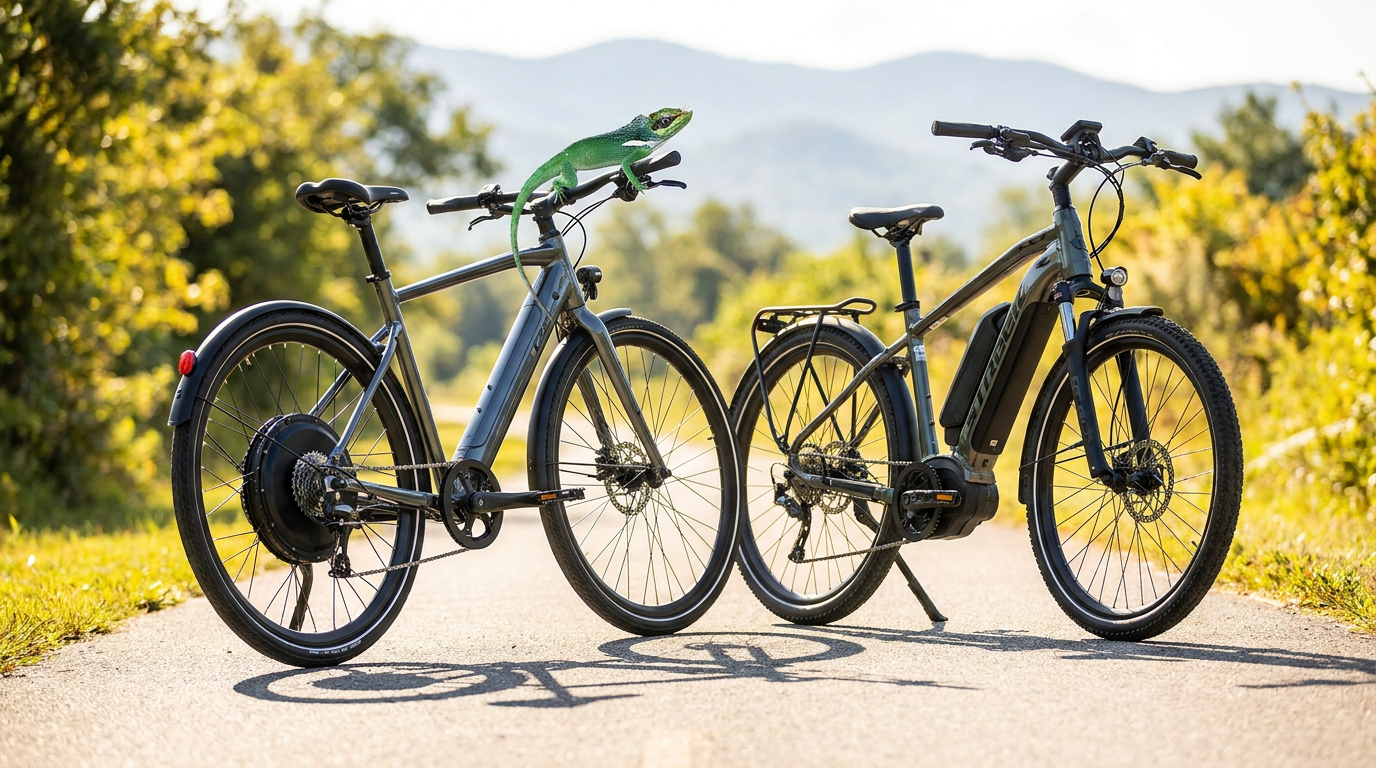
Every electric bike on the market today relies on one of two primary motor designs: the hub motor or the mid-drive motor. A hub motor is integrated directly into the center of either the front or rear wheel, applying rotational force directly to the axle to spin the tire. In contrast, a mid-drive motor is positioned at the bottom bracket—right between the rider's pedals—and delivers power through the bicycle's existing chain and gear system. Understanding this fundamental mechanical difference is the key to matching a bike to a specific riding lifestyle and local topography.[1][3]
Hub motors represent the older, simpler, and generally more affordable approach to e-bike propulsion. Because they operate entirely independently of the bicycle's drivetrain, they essentially push or pull the bike along the road without interacting with the chain. This design is highly favored in entry-level and mid-range commuter models. Riders often describe the sensation as feeling like they are being gently towed by a silent scooter, rather than pedaling a traditional bicycle. For many casual cyclists and daily commuters, this effortless cruising is exactly what they want out of an electric assist.[4][7]
Mid-drive motors, conversely, are engineered to create a mechanical synergy with the bicycle's existing components. By driving the chain rather than the wheel itself, a mid-drive system actively leverages the bike's rear cassette. When a rider shifts into a lower gear to tackle a steep incline, the motor gains the exact same mechanical advantage as the rider's legs. This multiplier effect allows a mid-drive motor to operate at its most efficient revolutions per minute (RPM) regardless of how fast the bike is traveling, mimicking the way a car transmission keeps an engine from stalling on a steep hill.[5][8]

This gearing advantage makes mid-drive motors the undisputed champions of hill climbing and heavy cargo hauling. While a hub motor must rely entirely on raw electrical wattage to overcome gravity—often struggling, draining the battery rapidly, and overheating on long, steep ascents—a mid-drive can simply gear down. Industry data shows that while typical hub motors produce between 35 and 80 Newton-meters (Nm) of torque, mid-drives routinely output 50 to 90 Nm, and they apply that force much more effectively. For riders navigating the steep ridges of cities like San Francisco or Brisbane, this mechanical leverage is an indispensable feature.[1][6]
However, for riders whose daily routes consist of flat city streets, paved beach paths, or gentle suburban inclines, the climbing superiority of a mid-drive is largely unnecessary. On flat terrain, a standard 500-watt or 750-watt rear hub motor provides more than enough power to maintain cruising speeds of 20 miles per hour with minimal effort. Because hub motors do not interact with the gears, riders can even shift poorly or forget to downshift at a stoplight without stalling the motor's acceleration. This makes hub-driven bikes exceptionally forgiving for beginners or those who prefer not to constantly manage their gears in stop-and-go traffic.[6][7]
On flat terrain, a standard 500-watt or 750-watt rear hub motor provides more than enough power to maintain cruising speeds of 20 miles per hour with minimal effort.
The placement of the motor also drastically alters the bicycle's weight distribution and overall handling characteristics. A mid-drive motor keeps the heaviest component of the e-bike low and perfectly centered between the two wheels. This centralized mass preserves the agile, balanced feel of a traditional acoustic bicycle, making it significantly easier to maneuver through tight turns, lift over curbs, or navigate technical off-road trails. This superior balance is precisely why virtually all premium electric mountain bikes (eMTBs) utilize mid-drive architectures, as off-road riders require precise control over the bike's center of gravity.[3][5]
In contrast, a rear hub motor places significant unsprung weight at the very back of the bicycle. This rear-heavy bias can make the bike feel cumbersome to lift and can negatively impact the performance of rear suspension systems when riding over rough, uneven terrain. Furthermore, repairing a simple flat tire on a rear hub motor bike is notoriously frustrating. The rider must manage a heavy, cumbersome wheel that is tethered to the bike's electrical system by a thick power cable, turning a routine five-minute repair into a complex mechanical chore.[2][7]

Ride feel is another critical differentiator, heavily influenced by the type of sensors each system typically employs. Mid-drive motors almost universally use advanced torque sensors, which measure exactly how hard the rider is pressing on the pedals and deliver proportional electrical assistance. This creates a seamless, intuitive experience where the motor feels like a bionic extension of the rider's own legs. Conversely, many budget hub motors still rely on simpler cadence sensors, which only detect whether the pedals are turning, resulting in a more abrupt, 'on-or-off' power delivery that can feel jerky to experienced cyclists.[1][7]
When it comes to long-term ownership, the maintenance realities of the two systems diverge sharply. Hub motors are entirely self-contained and sealed within the wheel hub, meaning they have very few moving parts exposed to the elements. Crucially, they place zero additional stress on the bicycle's chain, cassette, or derailleur. With proper care and avoiding sustained maximum loads, a high-quality hub motor can easily last for 20,000 miles with virtually no internal maintenance, making them the most economical choice over the total lifespan of the bicycle.[4][6]
Mid-drive motors, while highly efficient, are notoriously hard on traditional drivetrain components. Because the motor's substantial torque is channeled directly through the chain and cassette, these metal parts wear out significantly faster than they would on a standard human-powered bicycle. Riders who put heavy miles on a mid-drive e-bike must budget for more frequent chain replacements and gear tune-ups to prevent skipping. Additionally, a snapped chain on a mid-drive bike means a complete loss of motor propulsion, whereas a hub motor can still use its throttle to get a rider home even if the chain breaks entirely.[2][5][7]

There is one notable exception to the mid-drive's dominance in high-performance applications: extreme top speed. For custom builders and enthusiasts chasing speeds above 30 miles per hour on private land, heavy-duty, gearless direct-drive hub motors remain the architecture of choice. These massive motors can handle up to 10,000 watts of electrical power without instantly shredding a standard bicycle chain. For high-speed street commuters and extreme off-road builds where raw wattage trumps pedaling efficiency, the sheer durability of a direct-drive hub motor is unmatched by any mid-drive system.[2]
Ultimately, the decision requires an honest assessment of how the bike will actually be used in the real world. A hub motor fits perfectly when the rider prioritizes upfront affordability, low maintenance, and effortless cruising on mostly flat or gently rolling terrain. It is the pragmatic, sensible choice for the everyday commuter who wants a reliable transportation appliance without the mechanical upkeep of a high-end drivetrain. For these riders, paying a premium for a mid-drive system offers little tangible benefit and only introduces unnecessary mechanical complexity.[4][6]
Conversely, a mid-drive motor is the superior investment when the terrain gets steep, the cargo gets heavy, or the rider demands the natural, balanced feel of a traditional bicycle. While it requires a higher initial purchase price and more diligent drivetrain maintenance, the mid-drive's ability to conquer hills efficiently and seamlessly amplify human effort makes it the definitive choice for cycling purists, mountain bikers, and those living in challenging topographies. Choosing the right motor ensures the bike feels less like a heavy machine, and more like a natural extension of the rider.[1][6]
How we got here
Early 2010s
Hub motors dominate the early consumer e-bike market due to their simplicity and ease of retrofitting onto standard bicycle frames.
2014
Bosch introduces its first major mid-drive e-bike system, shifting the premium market toward gear-integrated motors.
2019
Mid-drive motors become the undisputed standard for electric mountain bikes (eMTBs) due to their superior weight distribution and climbing torque.
2022
Direct-to-consumer brands flood the market with affordable, high-wattage rear hub motor bikes, cementing their popularity for urban commuting.
2026
The market clearly bifurcates: hub motors rule the budget and flat-terrain commuter space, while mid-drives dominate cargo, off-road, and premium categories.
Viewpoints in depth
Urban Commuters & Budget Riders
Prioritize low maintenance, upfront affordability, and simple operation for flat city riding.
For riders navigating paved streets and relatively flat urban environments, the hub motor is widely considered the most pragmatic choice. This camp values the 'turn-key' reliability of a sealed motor that doesn't accelerate wear on the bicycle's chain or cassette. Because hub motors are cheaper to manufacture and integrate, they keep the overall cost of the e-bike down. Commuters also appreciate that a hub motor can often be operated via a throttle alone, providing a sweat-free ride to the office even if the rider chooses not to pedal.
Performance & Off-Road Cyclists
Demand high torque, gear synergy, and a natural, balanced ride feel for challenging terrain.
Mountain bikers, cargo haulers, and cycling purists strongly advocate for mid-drive architectures. This viewpoint emphasizes that an electric bike should still feel like a bicycle, just with superhuman legs. By leveraging the bike's existing gears, mid-drives offer vastly superior efficiency and climbing power on steep grades without overheating. This camp is generally willing to accept the higher upfront cost and the need for more frequent drivetrain maintenance in exchange for centered weight distribution and sophisticated torque-sensing power delivery.
High-Speed Power Enthusiasts
Focus on maximum wattage, extreme durability, and top-end speed over natural pedal feel.
A niche but vocal segment of the e-bike community focuses on custom builds and high-speed street commuting, often pushing past 30 miles per hour. For these riders, the mechanical limitations of a bicycle chain make high-powered mid-drives impractical. Instead, they champion heavy-duty, gearless direct-drive hub motors. These massive motors can handle thousands of watts of electrical power silently and reliably, offering motorcycle-like acceleration without the risk of snapping a delicate bicycle drivetrain under extreme load.
What we don't know
- Whether emerging continuously variable transmission (CVT) technologies will eventually eliminate the drivetrain wear issues associated with mid-drive motors.
- If solid-state battery advancements will make the weight penalty of hub motors negligible in future designs.
Key terms
- Hub Motor
- An electric motor integrated directly into the center of a bicycle's front or rear wheel, driving the wheel independently of the pedals and gears.
- Mid-Drive Motor
- An electric motor positioned at the bicycle's bottom bracket (between the pedals) that delivers power through the bike's chain and gear system.
- Torque Sensor
- A sensor that measures exactly how hard the rider is pedaling and adjusts the motor's power output proportionally, creating a smooth and natural ride feel.
- Cadence Sensor
- A basic sensor that detects whether the pedals are turning, delivering a set amount of power regardless of how hard the rider is pushing.
- Unsprung Weight
- The mass of the bicycle components not supported by the suspension, such as a heavy rear hub motor, which can negatively affect handling on rough terrain.
- Newton-meter (Nm)
- A unit of torque used to measure the rotational twisting force a motor can produce, which determines how well an e-bike accelerates and climbs hills.
Frequently asked
Can a hub motor e-bike climb steep hills?
Yes, but they are less efficient than mid-drives. On long, steep climbs, a hub motor cannot gear down, meaning it must rely entirely on raw power, which drains the battery faster and can lead to the motor overheating.
Why do mid-drive e-bikes cost more?
Mid-drive motors are more complex to manufacture and require specialized bicycle frames to house the motor at the bottom bracket. They also typically include more advanced torque sensors, driving up the overall price.
Which motor type requires more maintenance?
Mid-drive motors require significantly more maintenance. Because they drive power through the bicycle's chain and gears, those components wear out faster and need more frequent cleaning, lubrication, and replacement.
What happens if my chain breaks on an e-bike?
If the chain breaks on a mid-drive e-bike, you lose all motor propulsion because the motor relies on the chain to turn the wheel. On a hub motor e-bike, the motor drives the wheel directly, so you can still use the throttle to get home.
Sources
Source coverage
8 outlets
3 viewpoints surfaced







[1]Bikeline ToowoombaPerformance & Off-Road Cyclists
Hub Motor vs Mid-Drive E-Bike Pros and Cons: The Ultimate 2026 Comparison
Read on Bikeline Toowoomba →[2]Hi Power CyclesHigh-Speed Power Enthusiasts
Mid-Drive vs. Hub Motor E-Bikes: Which Is Better for Speed, Torque & Real-World Performance?
Read on Hi Power Cycles →[3]Gazelle BikesPerformance & Off-Road Cyclists
eBike Hub Motor vs Mid Motor : The Pros and Cons
Read on Gazelle Bikes →[4]ENGWE USAUrban Commuters & Budget Riders
Mid Drive Motor vs Hub Motor: Detailed Comparison!
Read on ENGWE USA →[5]TENWAYSUrban Commuters & Budget Riders
What's best: a mid-drive or a hub motor e-bike?
Read on TENWAYS →[6]E-Bike Tech GuidePerformance & Off-Road Cyclists
Mid-Drive Vs Hub Motor E-Bikes: Real-World Comparison (2026 Guide)
Read on E-Bike Tech Guide →[7]Reddit (r/ebikes)Urban Commuters & Budget Riders
What Actually Matters When Picking a Motor: Hub vs Mid-Drive
Read on Reddit (r/ebikes) →[8]Factlen Editorial TeamPerformance & Off-Road Cyclists
Synthesis by Factlen editorial team
Read on Factlen Editorial Team →
More in shopping
See all 116 stories →AI Shopping
AI Shopping Agents Take Over the Summer 2026 Deal Season, Automating Consumer Savings
7 sources

TV Tech
OLED vs. Mini-LED: The 2026 TV Buying Guide
6 sources

Portable Power
The 2026 Guide to Portable Power Stations: Why Battery Chemistry is Your Biggest Decision
7 sources
Material Science
Plant-Based vs. Traditional Leather: The 2026 Sustainability and Durability Showdown
9 sources
Every angle. Every day.
Get shopping stories with full source coverage and perspective breakdowns delivered to your inbox.