
How the Trump Administration's Overhaul of the National Security Workforce is Reshaping Federal Speech
A sweeping reorganization of federal agencies has driven thousands of national security professionals from their posts, sparking a fierce debate over whether the moves dismantle an entrenched censorship complex or create a new one.
By Layla Zaher
The machinery that protects U.S. national security relies on a vast, largely invisible workforce of analysts, diplomats, and intelligence officers who operate outside the public eye. When that workforce undergoes a massive, sudden contraction, the ripple effects touch everything from global counterterrorism operations to the security of domestic infrastructure. Over the past 19 months, the second Trump administration has executed a sweeping overhaul of the federal national security apparatus, driving thousands of career professionals out of their jobs.
The sheer scale of the departures has fundamentally altered the operational capacity of the U.S. government, leaving critical agencies operating with a fraction of their historical staffing levels. For the American public, this shift dictates how intelligence is gathered, how foreign policy is executed, and what information federal agencies are permitted to share.[1]
The restructuring has taken multiple forms, ranging from targeted dismissals of specific intelligence officers to the wholesale dismantling of entire agencies. According to former officials, this campaign has created an environment where internal debate is actively punished, leading to a mass exodus of institutional memory.
The administration and its allies, however, frame the overhaul not as a purge, but as the necessary dismantling of an unconstitutional "Censorship-Industrial Complex" that had embedded itself within the federal bureaucracy. This ideological clash has redefined the concept of federal censorship, with both sides accusing the other of weaponizing the government to suppress free expression. The resulting standoff has left the remaining federal workforce caught in the crossfire of a deeply polarized political landscape.[1][3][4]
The scale of the departures is unprecedented in modern federal history, touching nearly every corner of the national security establishment. Within its first week in January 2025, the administration sidelined 160 detailees from the National Security Council, signaling an immediate shift in how the White House would handle internal expertise.
At the FBI, all six executive assistant directors were removed, while the Justice Department saw the firing of at least 20 prosecutors and staff associated with Special Counsel Jack Smith. In the intelligence community, 100 officers were dismissed over messages in an officially sanctioned group chat, a move that sent shockwaves through agencies that traditionally pride themselves on apolitical service.[1]
The most significant structural change occurred at the U.S. Agency for International Development (USAID), an entity that has long served as the primary vehicle for American soft power abroad. The administration effectively shut down the agency, reducing a global workforce of more than 10,000 to a skeleton crew charged with winding down operations and turning off the lights.
Concurrently, the State Department saw cuts exceeding 1,300 employees, and its Global Engagement Center—which previously tracked foreign disinformation—was shuttered entirely. For critics, these moves represent a systematic dismantling of institutional capacity that leaves the United States vulnerable to foreign influence and degrades its ability to project diplomatic power.[1][4][5]
Former intelligence officers and legal analysts describe the resulting environment as a "censorship machine" designed to silence dissent and enforce ideological conformity. Writing in Lawfare, former CIA officer Julia Curlee characterized the silence of current and former public servants not as cowardice, but as a highly rational response to a labor market where speaking out can be professionally fatal and financially ruinous.
The fear of public retaliation has created a profound chilling effect across the remaining workforce, teaching career professionals that their survival depends on absolute silence. This dynamic, critics argue, deprives policymakers of the objective, unvarnished intelligence assessments required to make sound national security decisions.[1]
Civil liberties organizations have echoed these concerns, pointing to a broader pattern of retaliation against perceived critics that extends well beyond the federal bureaucracy. Amnesty International has warned of a "freedom of expression crisis," arguing that the administration's actions reflect an embrace of authoritarian practices intended to intimidate and punish dissent across American society.
Legal scholars note that while the First Amendment historically protects government employees from retaliation for speech on matters of public concern, the current environment has left many feeling vulnerable to targeted dismissal. The traditional safeguards that once protected career civil servants from political retribution appear to have been systematically dismantled.[2]
The chilling effect has extended beyond the federal workforce, impacting private citizens and organizations. Following the fatal shooting of conservative activist Charlie Kirk in September 2025, the administration and its allies launched a highly public campaign to punish individuals and organizations that mocked or celebrated his death.
Vice President JD Vance urged supporters to report critics to their employers, while the Justice Department explored civil rights investigations into private businesses that refused to print materials for pro-Kirk vigils. This aggressive posture has signaled to the broader public that the administration is willing to use the full weight of the federal government to police speech it deems unacceptable.
The administration fundamentally rejects the premise that it is silencing speech or engaging in a political purge. Instead, officials argue that the sweeping personnel changes are necessary to dismantle a network of federal agencies, non-governmental organizations, and tech companies that they accuse of suppressing conservative speech during previous administrations.
From this perspective, agencies like USAID and the State Department were weaponized to police domestic discourse under the guise of combating foreign disinformation. By removing the officials responsible for these programs, the administration claims it is excising a rot that had compromised the integrity of the federal government.[3][4]
On his first day in office, President Trump signed an Executive Order on Restoring Freedom of Speech and Ending Federal Censorship, which served as the foundational blueprint for the subsequent agency closures and funding cuts. Congressional allies have strongly supported this effort, arguing that taxpayer dollars should never fund organizations that coordinate with social media platforms to moderate content or flag domestic speech as disinformation.
For the administration's supporters, the mass firings are not a subversion of democratic norms, but a long-overdue correction that returns power to the American people and strips unelected bureaucrats of their ability to control the national narrative.[3][4]
This ideological clash has completely redefined the concept of federal censorship in the modern era. While critics point to the mass firings, the targeted retaliation, and the pervasive fear among career professionals as evidence of a government silencing its own workforce, the administration maintains that removing these officials is the exact mechanism required to restore free speech to the broader American public. The debate hinges on fundamentally different definitions of what constitutes censorship: the suppression of internal government dissent versus the government's alleged suppression of public discourse.[1][3]
The long-term consequences of this workforce exodus remain highly uncertain, but the immediate impact on the nation's operational readiness is undeniable. As veteran analysts, seasoned diplomats, and specialized intelligence officers depart, the institutional memory required to navigate complex geopolitical crises is severely degraded. Whether this sweeping overhaul ultimately streamlines a bloated federal bureaucracy or critically weakens the nation's security apparatus will likely be tested by the next major international crisis. Until then, the remaining federal workforce must navigate an environment where the rules of engagement have been entirely rewritten.[1]
Key points
- The Trump administration has driven thousands of professionals out of the national security workforce since January 2025.
- Entire agencies, including USAID and the State Department's Global Engagement Center, have faced massive cuts or closures.
- Former officials argue the firings have created a profound chilling effect that silences internal dissent and degrades institutional memory.
- The administration maintains these actions are necessary to dismantle an unconstitutional "Censorship-Industrial Complex" that suppressed conservative speech.
Unanswered questions
- How the massive reduction in the diplomatic and intelligence workforce will impact the U.S. response to the next major international crisis.
- Whether the courts will ultimately uphold the targeted dismissals of federal employees who claim First Amendment protections.
- The full extent of the operational degradation at agencies like the FBI and the State Department following the loss of senior leadership.
How we got here
January 2025
President Trump signs an Executive Order on Restoring Freedom of Speech and Ending Federal Censorship on his first day in office.
February 2025
The administration begins targeted dismissals, including 100 intelligence officers and 160 National Security Council detailees.
September 2025
Following the killing of activist Charlie Kirk, the administration launches a campaign to punish individuals and organizations that mocked his death.
August 2026
Former officials report that the ongoing overhaul has driven thousands of professionals out of the national security workforce.
- National Security Veterans
- Former officials argue the firings create a chilling effect that deprives the government of critical expertise.
- The Administration & Allies
- The administration argues it is fulfilling a mandate to dismantle an unconstitutional censorship complex.
- Civil Liberties Advocates
- Watchdog groups warn that the use of executive power to punish speech sets a dangerous authoritarian precedent.
Perspectives this story doesn't cover
- Current mid-level federal employees
- Allied foreign intelligence partners
Sources
Source coverage
5 outlets
3 viewpoints surfaced




- [1]LawfareNational Security Veterans
The Censorship Machine: Silencing the National Security Workforce
Read on Lawfare → - [2]Amnesty InternationalCivil Liberties Advocates
Amnesty International USA Raises Alarm at Freedom of Expression Crisis in the U.S.
Read on Amnesty International → - [3]U.S. Government Publishing OfficeThe Administration & Allies
Hearing on the Censorship-Industrial Complex
Read on U.S. Government Publishing Office → - [4]Senator Eric Schmitt (via Facebook)The Administration & Allies
Statement on Dismantling the Censorship-Industrial Complex
Read on Senator Eric Schmitt (via Facebook) → - [5]Atlantic CouncilCivil Liberties Advocates
Made in Mali, rented by Russia
Read on Atlantic Council →
More in Defense & Security
See all →Grid Defense
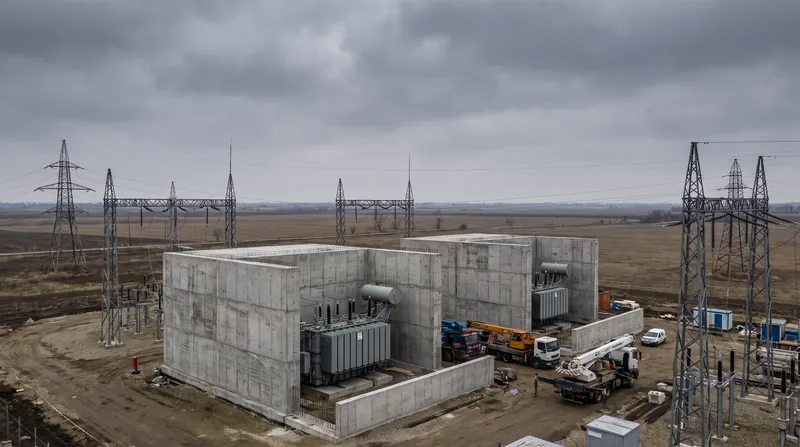
Lithuania Fortifies Key Power Substation Near Kaliningrad With Concrete 'Sarcophagi' Against Drone Attacks
7 sources
Military Doctrine
The Find, Fix, Track, Target, Engage, and Assess Sequence: How the Military Executes the Joint Targeting Cycle
6 sources

Nuclear Deterrence
The Bus, the Post-Boost Vehicle, and the Reentry Vehicles: How a MIRV System Delivers Multiple Warheads to Separate Targets
6 sources

International Law
The Two Exceptions to the UN Charter's Prohibition on the Use of Force: How Article 51 and Chapter VII Authorize Military Action
8 sources
Comments
Every angle. Every day.
Get Defense & Security stories with full source coverage and perspective breakdowns, free every day.