
How the Smithsonian is Bypassing the White House to Build the Latino Museum
The Smithsonian Institution is considering repurposing a historic 19th-century building to house the National Museum of the American Latino. The procedural maneuver would bypass the need for congressional approval amid escalating accusations of "ideological capture" from the White House.

The Smithsonian Institution's Board of Regents is scheduled to convene an emergency meeting on August 31, 2026, to discuss a procedural maneuver that could secure a permanent home for the National Museum of the American Latino. The proposal under consideration would house the nascent museum inside the historic Arts and Industries Building on the National Mall.
By utilizing an existing structure already owned by the Smithsonian, the institution aims to bypass the need for a congressional land transfer. This strategic shift is designed to avert a protracted legislative battle with the White House, which has recently escalated its scrutiny of the museum's curatorial direction.[1]
Establishing a new museum on the National Mall typically requires a complex, multi-step legislative process. While Congress authorized the creation of the Latino Museum in late 2020 as part of an omnibus spending bill, securing a physical footprint on the Mall usually necessitates a separate act of Congress to transfer land owned by the National Park Service.
By pivoting to the Arts and Industries Building, the Smithsonian leverages a provision in the 2020 authorizing act that listed the building as a potential site, effectively utilizing a loophole to avoid a second congressional debate over property.
The urgency behind the Board of Regents' meeting is driven by mounting political pressure and proposed budget cuts that threaten the museum's existence. In May 2026, the Trump administration submitted a fiscal year 2026 budget proposal that seeks to eliminate separate funding for the Latino Museum entirely. The administration's plan would instead replace the dedicated museum with a decentralized "Smithsonian Latino Center" model, which would integrate Latino programming across the institution's existing network of museums rather than granting the community its own standalone facility on the Mall.[2]
This funding threat follows the July 2026 release of a 162-page White House Domestic Policy Council report titled "Saving America's Story." The comprehensive review accused the Smithsonian's leadership of "ideological capture," claiming that the institution has moved away from celebrating a shared national inheritance and toward extreme political activism. The administration's report concluded that the Smithsonian could not be trusted to steward taxpayer dollars to tell an honest, unifying account of American history, setting the stage for a direct confrontation over the museum's future.
Conservative critics and think tanks have heavily scrutinized the Latino Museum's temporary exhibits, which currently operate out of a small gallery within the National Museum of American History. Reports from the Heritage Foundation have argued that the museum's planned programming is rooted in Marxist ideology and focuses excessively on grievance, identity politics, and European colonialism. These critics contend that the exhibits fail to celebrate the broader, positive contributions of Hispanic Americans to the nation's prosperity, instead framing the demographic primarily through a lens of historical victimhood.[3]
The Smithsonian has defended its approach to historical education, maintaining that its role is to present a comprehensive and unvarnished view of the American experience. While the institution has not formally responded to the latest site-selection maneuver, Smithsonian Secretary Lonnie G. Bunch III previously warned staff of impending budget reductions and emphasized the institution's commitment to independent scholarship. Proponents of the museum argue that reframing traditional narratives is not an erasure of history, but a necessary expansion to include marginalized voices.[2]
If the Board of Regents approves the Arts and Industries Building as the permanent site, the museum will inherit one of the most historically significant, yet structurally challenged, edifices in Washington. Designed by architects Adolf Cluss and Paul Schulze, the building opened in 1881 and is the second-oldest structure on the National Mall, predated only by the iconic Smithsonian Castle. It famously hosted President James A. Garfield's inaugural ball before opening to the public as the United States' first national museum.[1]
Despite its architectural pedigree and historical significance, the Arts and Industries Building has suffered from decades of deferred maintenance and structural neglect. The facility was completely closed to the public in 2004 due to severe structural decline, and it was subsequently listed as one of the country's most endangered historic places by the National Trust for Historic Preservation. While intermittent restoration work has occurred over the past twenty years, the building remains largely shuttered, opening only occasionally for special events and temporary pop-up exhibitions.[1]
Repurposing the building for a modern, state-of-the-art museum will require a massive financial investment. Preliminary estimates suggest that fully renovating the Arts and Industries Building to meet the rigorous climate and security standards required for Smithsonian collections could cost nearly $1 billion. Furthermore, operating the sprawling facility is projected to cost roughly $50 million annually, raising questions among conservative lawmakers about the fiscal viability of the project amid a soaring national debt.
The financial burden of the renovation would fall heavily on private philanthropy. By statute, the construction and development of the Latino Museum must be funded equally by congressional appropriations and private donations. As of mid-2025, the museum had raised approximately $70 million in private support, a fraction of the estimated $500 million target required to break ground on a new facility, let alone rehabilitate a historic landmark.
The procedural maneuver to secure the Arts and Industries Building also highlights the broader vulnerability of cultural institutions reliant on federal funding. The Latino Museum currently receives approximately $10 million in annual taxpayer funding through Interior appropriations bills. Even if the Smithsonian successfully bypasses the need for a land transfer, congressional appropriators still control the purse strings for the museum's operational budget and any federal matching funds required for the renovation.
The political friction surrounding the museum is not entirely unprecedented. The National Museum of the American Indian and the National Museum of African American History and Culture both faced decades of legislative hurdles, funding challenges, and debates over architectural and curatorial representation before opening their doors. However, the current conflict is uniquely polarized, unfolding against the backdrop of a broader national debate over how history is taught and commemorated as the United States approaches its 250th anniversary in 2026.[2]
For advocates of the Latino Museum, securing a permanent physical space on the National Mall is viewed as an essential, non-negotiable step toward institutionalizing the community's legacy in the United States. Members of the bipartisan Congressional Hispanic Caucus have consistently argued that failing to establish a dedicated museum is a profound disservice to the public. They maintain that a decentralized programming model undermines the historical contributions of a demographic that constitutes nearly a fifth of the U.S. population and deserves equal representation alongside other national museums.[2]
As the August 31 meeting approaches, the Smithsonian finds itself navigating a delicate balance between its mandate to expand cultural representation and the stark political realities of its federal oversight.
Whether the Arts and Industries Building becomes the final home for the National Museum of the American Latino will depend not only on the Board of Regents' vote, but on the institution's ability to weather the ensuing fiscal and ideological battles on Capitol Hill. The outcome will likely set a lasting precedent for how federal cultural projects survive in an era of intense partisan polarization.[1]
Key points
- The Smithsonian Board of Regents will vote on housing the Latino Museum in the Arts and Industries Building.
- Using an existing building bypasses the need for a congressional land transfer.
- The move follows a White House report accusing the Smithsonian of 'ideological capture.'
- The Trump administration's 2026 budget proposes eliminating separate funding for the museum.
Open questions
- Whether the Board of Regents will officially approve the Arts and Industries Building as the permanent site.
- How congressional appropriators will respond to the maneuver when finalizing the Smithsonian's 2026 operating budget.
- Whether the museum can successfully raise the estimated $500 million in private philanthropy required to fund the renovation.
Timeline
1881
The Arts and Industries Building opens on the National Mall as the first U.S. national museum.
2004
The building is closed to the public due to severe structural decline and deferred maintenance.
December 2020
Congress formally authorizes the creation of the National Museum of the American Latino.
May 2026
The Trump administration proposes a budget that eliminates separate funding for the museum.
July 2026
The White House releases a report accusing the Smithsonian of ideological capture and political activism.
August 2026
The Board of Regents schedules a meeting to discuss housing the museum in the Arts and Industries Building.
- Smithsonian Leadership
- Argues the institution must expand the American narrative to include marginalized voices and maintain independent scholarship free from political interference.
- Conservative Critics
- Argues the proposed museum promotes divisive, Marxist ideology and focuses on grievance rather than shared American heritage.
- Latino Representation Advocates
- Argues a dedicated museum on the National Mall is essential to honor the community's contributions and correct historical exclusion.
Perspectives this story doesn't cover
- National Park Service Officials
- Architectural Preservationists
Sources
Source coverage
3 outlets
3 viewpoints surfaced



- [1]The Art NewspaperSmithsonian Leadership
Smithsonian races to finalise site for national Latino museum
Read on The Art Newspaper → - [2]The Washington PostSmithsonian Leadership
Funding for Smithsonian's Anacostia, Latino museums cut in proposed Trump budget
Read on The Washington Post → - [3]Heritage FoundationConservative Critics
The Smithsonian's Latino Museum: Victimhood Culture Is in Its DNA
Read on Heritage Foundation →
More in Culture
See all →Zodiac Architecture
The 12-Year Cycle: How the Chinese Zodiac Maps Personality, Destiny, and Interpersonal Compatibility
5 sources

Archaeological Discovery
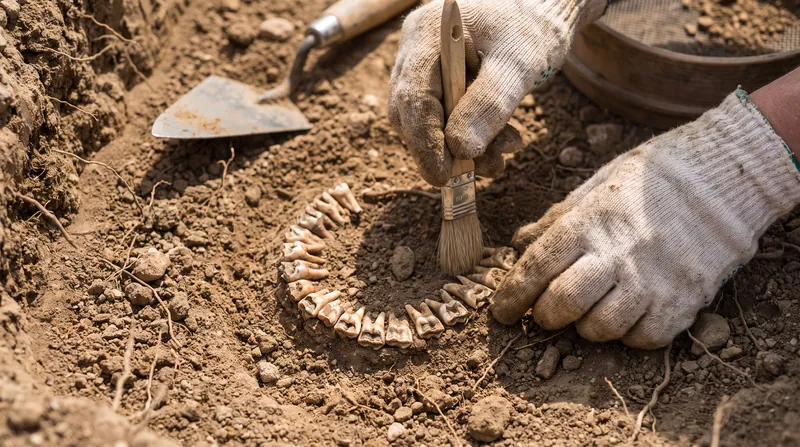
Archaeologists Unearth 5,000-Year-Old Grave in Poland Containing 42-Tooth Necklace and Extra Skulls
6 sources
Viking Archaeology
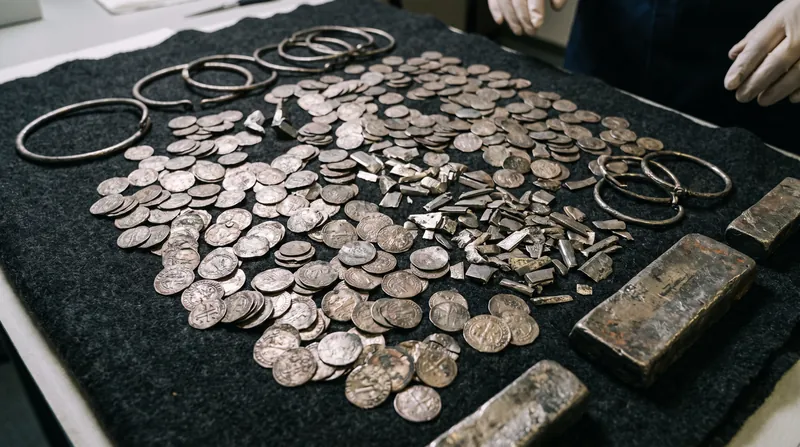
The Bullion Standard: Why the 18.5-Kilogram Rebild Hoard Was Weighed, Not Counted
6 sources
Cultural Heritage Law
How the EU's New Geographical Indication Rules Are Transforming Cultural Crafts into Protected Economic Assets
6 sources

Comments
Every angle. Every day.
Get Culture stories with full source coverage and perspective breakdowns, free every day.