
How the Shingles Vaccine Emerged as a Promising Defense Against Dementia
A new study of over 500,000 older adults reveals that the recombinant shingles vaccine reduces the risk of developing dementia by 24%, adding to mounting evidence that preventing viral infections could protect brain health.
By Factlen Editorial Team
- Public Health Epidemiologists
- Focused on the population-level data and the statistical challenges of proving causation.
- Immunology Researchers
- Focused on the biological mechanisms connecting viral infections to neurodegeneration.
- Geriatric Care Providers
- Focused on the immediate clinical implications for vulnerable seniors.
What's not represented
- · Patients currently living with early-stage dementia
- · Health insurance actuaries evaluating coverage incentives
Why this matters
With dementia affecting over 55 million people globally and lacking a definitive cure, discovering that an already-approved, widely available vaccine could prevent one in 17 cases offers an immediate, accessible tool for cognitive longevity.
Key points
- A new study of over 500,000 Medicare patients found the recombinant shingles vaccine lowers dementia risk by 24 percent.
- The absolute risk reduction translates to roughly one in 17 dementia cases potentially being prevented.
- Researchers hypothesize the vaccine works by preventing virus-induced neuroinflammation or by broadly boosting the aging immune system.
- While observational data is strong, scientists caution that a randomized controlled trial is needed to definitively prove causation.
The search for a dementia cure has cost billions of dollars and yielded only modest results. Yet, one of the most promising defenses against cognitive decline might already be sitting in local pharmacies, originally designed to prevent a painful skin rash.[3]
A major study published in the Annals of Internal Medicine has revealed that the recombinant shingles vaccine (RZV), widely known as Shingrix, significantly lowers the risk of developing dementia. The findings offer a rare bright spot in the notoriously difficult field of neurodegenerative disease research.[1][2]
Led by researchers at Brown University's School of Public Health, the study focused on a highly vulnerable population: older adults entering skilled nursing facilities. These patients are historically at high risk for both severe shingles outbreaks and rapid cognitive decline.[2][5]
The research team analyzed Medicare and electronic health records from more than 500,000 patients aged 66 and older. They carefully compared the cognitive outcomes of those who received at least one dose of the vaccine within a year of admission to those who remained unvaccinated.[2][3]
The results were stark and immediate. Patients who received the recombinant shingles vaccine had a 24 percent lower relative risk of being diagnosed with dementia over the following four years compared to their unvaccinated peers.[1][5]

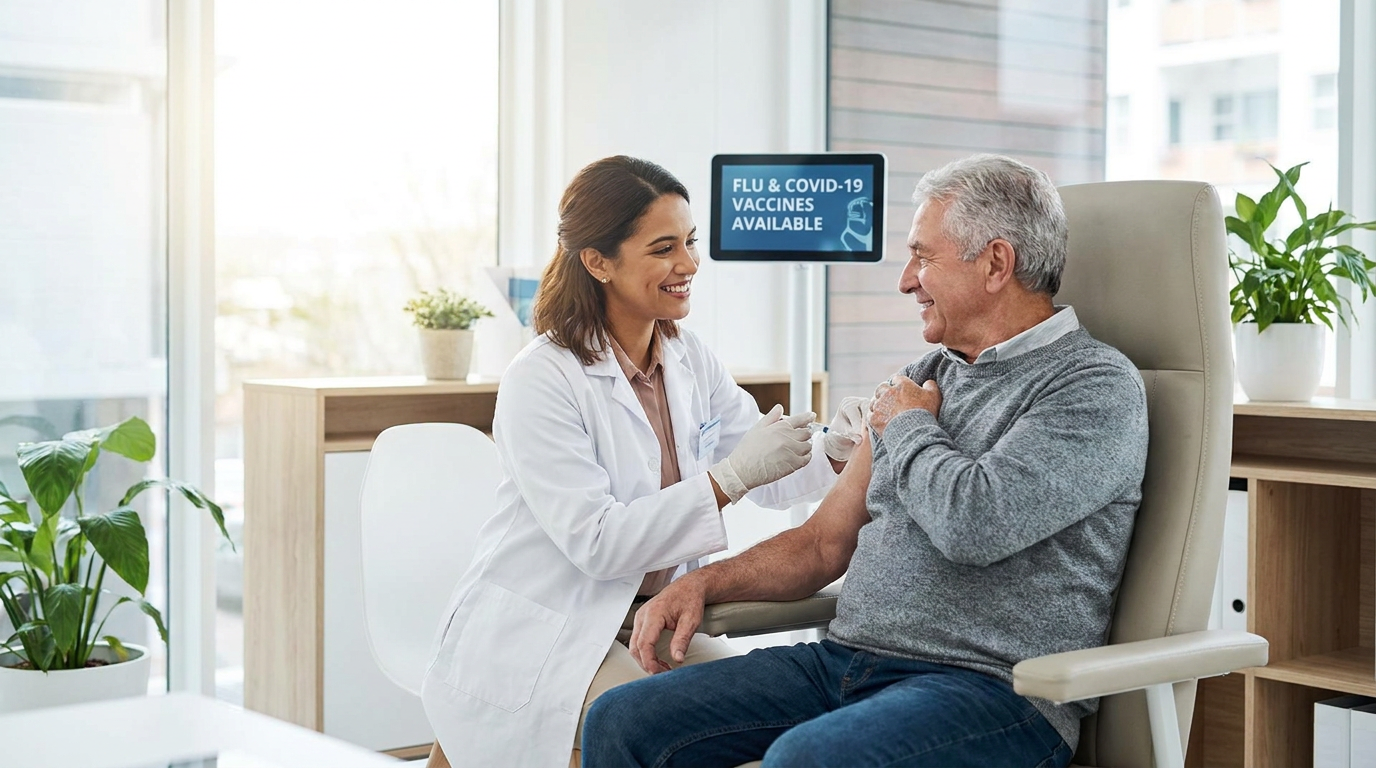
Beyond the relative drop, the data showed a 5.8 to 6 percentage point decrease in absolute risk. In practical terms, lead author Kaley Hayes noted that this translates to roughly one in 17 dementia cases potentially being prevented through a standard vaccination protocol.[2][3]
This is not an isolated anomaly. The Brown University findings add to a growing mountain of evidence linking shingles vaccination to cognitive protection, building on years of observational data that has increasingly caught the attention of neurologists.[2][4]
In 2025, a Stanford University study leveraged a "natural experiment" in Wales, where a strict age cutoff for the older, live-attenuated shingles vaccine allowed researchers to compare nearly identical populations. That study found a 20 percent reduction in dementia risk over seven years for those who received the shot.[6]
That study found a 20 percent reduction in dementia risk over seven years for those who received the shot.
Furthermore, recent data published in Nature Medicine demonstrated that the newer recombinant vaccine actually outperforms the older live vaccine. Researchers found that Shingrix provides patients with an average of 164 additional days lived without a dementia diagnosis compared to the previous generation of the shot.[7]
At first glance, the connection between a blistering skin rash and a degenerative brain disease seems tenuous. But the varicella-zoster virus, which causes both chickenpox and shingles, is fundamentally a disease of the nervous system.[3][6]
After a childhood chickenpox infection, the virus does not leave the body; it lies dormant in nerve cells for decades. When the immune system weakens with age, the virus can reactivate as shingles, triggering widespread inflammation along the nerve pathways.[3][4]
This reactivation doesn't just cause a painful rash on the torso. It can cause severe neuroinflammation and damage blood vessels. Researchers hypothesize that preventing these micro-vascular events and tiny strokes directly protects the brain's delicate cognitive infrastructure.[3]

There is a second, broader theory at play. Immunologists suggest that vaccines like Shingrix might trigger "trained immunity"—a process where the vaccine's powerful adjuvant provides a general, robust boost to the aging immune system.[3][4]
A rejuvenated immune system might be better equipped to clear out the toxic amyloid plaques and tau tangles that are the hallmark of Alzheimer's disease, or it might simply be better at fighting off other undetected infections that contribute to cognitive decline.[4][6]
Despite the compelling data, researchers remain cautious about declaring a definitive cause-and-effect relationship due to a statistical phenomenon known as "healthy vaccine bias."[6]
People who proactively get vaccinated often have better access to healthcare, higher education levels, and generally healthier lifestyles—all of which independently lower a person's risk of developing dementia.[2][4]
While the Brown University team used advanced statistical models to adjust for these demographic differences, observational studies can never entirely eliminate the bias. Only a large-scale, randomized controlled trial can definitively prove that the vaccine directly prevents dementia.[2][7]

How we got here
2017
The FDA approves Shingrix, a highly effective recombinant vaccine for shingles, which rapidly replaces the older live-attenuated vaccine.
2023
Wales scraps its upper age limit for the shingles vaccine, expanding a natural experiment that researchers use to study cognitive outcomes.
April 2025
A Stanford University study of Welsh health records reveals that the older live shingles vaccine reduced dementia risk by 20 percent.
June 2026
Brown University researchers publish data showing the newer recombinant vaccine lowers dementia risk by 24 percent in nursing home patients.
Viewpoints in depth
Public Health Epidemiologists
Focused on the population-level data and the statistical challenges of proving causation.
Epidemiologists view the 24 percent risk reduction as a massive public health signal, but they remain cautious about 'healthy vaccine bias.' Because patients who proactively seek out vaccinations often have better baseline health, higher incomes, and more frequent medical care, it is difficult to isolate the vaccine's exact impact using observational data alone. This camp argues that while the data is highly promising, only a large-scale randomized controlled trial can definitively prove that the vaccine directly prevents cognitive decline.
Immunology Researchers
Focused on the biological mechanisms connecting viral infections to neurodegeneration.
For immunologists, the shingles vaccine data is a window into how the immune system interacts with the brain. This camp is currently divided between two primary theories. Some believe the protection is highly specific: by preventing the varicella-zoster virus from reactivating, the vaccine stops targeted neuroinflammation and micro-strokes. Others advocate for the 'trained immunity' hypothesis, suggesting that the vaccine's powerful adjuvant simply wakes up an aging immune system, making it better at clearing out the toxic proteins that cause Alzheimer's disease.
Geriatric Care Providers
Focused on the immediate clinical implications for vulnerable seniors.
Doctors and nurses working in skilled nursing facilities see the immediate practical value of these findings. Older adults admitted to long-term care are at the highest risk for both painful shingles outbreaks and rapid cognitive decline. For this camp, the debate over the exact biological mechanism is secondary to the clinical reality: the recombinant vaccine is already proven safe and effective for preventing shingles. The potential that it also preserves memory makes it an essential, low-risk intervention that should be prioritized during patient intake.
What we don't know
- Whether the vaccine directly prevents dementia, or if vaccinated individuals simply lead healthier lifestyles that protect their cognition.
- Which biological mechanism is responsible for the protection—preventing viral neuroinflammation or broadly boosting the immune system.
- How long the cognitive protection lasts beyond the four-to-six-year windows analyzed in current observational studies.
Key terms
- Recombinant Zoster Vaccine (RZV)
- A non-live vaccine (marketed as Shingrix) that uses a piece of the virus combined with an adjuvant to trigger a strong immune response against shingles.
- Varicella-Zoster Virus
- The virus that causes chickenpox in childhood and remains dormant in the nervous system, potentially reactivating later in life as shingles.
- Neuroinflammation
- Inflammation of the nervous tissue in the brain or spinal cord, increasingly linked to neurodegenerative diseases like dementia.
- Healthy Vaccine Bias
- A statistical phenomenon where people who choose to get vaccinated tend to have healthier overall lifestyles, making it harder to isolate the vaccine's specific effect.
- Trained Immunity
- A process where exposure to a vaccine provides a broad, long-lasting boost to the innate immune system, helping it fight off various unrelated threats.
Frequently asked
Does the shingles vaccine cure dementia?
No, it does not cure dementia, but observational studies suggest it may significantly lower the risk of developing the condition or delay its onset.
Which shingles vaccine was studied?
The recent Brown University study focused on the recombinant zoster vaccine (RZV), commonly known as Shingrix, which is the standard vaccine currently available in the U.S.
How does a skin rash virus affect the brain?
The virus that causes shingles lives in the nervous system. When it reactivates, it can cause severe inflammation that may damage blood vessels and brain tissue, increasing dementia risk.
Should I get the vaccine just to prevent dementia?
The vaccine is currently recommended to prevent shingles and its painful complications. The potential dementia protection is considered a highly promising incidental benefit, though clinical trials are needed to confirm a direct link.
Sources
Source coverage
7 outlets
3 viewpoints surfaced






[1]STAT NewsGeriatric Care Providers
Shingles vaccine may lower dementia risk, new study finds
Read on STAT News →[2]Brown UniversityPublic Health Epidemiologists
Study suggests shingles vaccine may lower dementia risk
Read on Brown University →[3]Inc.Immunology Researchers
A common vaccine may be the secret to avoiding cognitive decline
Read on Inc. →[4]Vaccines TodayImmunology Researchers
How might shingles vaccines reduce dementia risk?
Read on Vaccines Today →[5]The MicrobiologistGeriatric Care Providers
Shingles vaccine linked to lower dementia risk in older adults, study suggests
Read on The Microbiologist →[6]Stanford MedicinePublic Health Epidemiologists
Shingles vaccine may protect against dementia
Read on Stanford Medicine →[7]Nature MedicineImmunology Researchers
The recombinant shingles vaccine is associated with lower risk of dementia
Read on Nature Medicine →
More in health
See all 8 stories →Regenerative Medicine
A Japanese Biotech Company is Advancing Human Trials for a Tooth-Regrowing Drug
6 sources

Exercise Mimetics
The Evidence for 'Exercise in a Pill': How AMPK Activators Are Rewiring Longevity Science
7 sources

Exercise Mimetics
The Science of Exercise Mimetics: How Researchers Are Bottling the Benefits of a Workout
7 sources
Dementia Research
Common Shingles Vaccine Linked to 24% Lower Dementia Risk in Major Study
6 sources
Every angle. Every day.
Get health stories with full source coverage and perspective breakdowns delivered to your inbox.